Understanding SS 316 coil technical specifications is essential for ensuring durability, corrosion resistance, and overall project performance. As a high temperature steel manufacturer in China, Hongteng Fengda provides SGS certified steel for construction and coil stainless steel for automotive industry applications. From stainless steel roll for food processing to flat stainless steel for architectural design, our precision-engineered solutions meet international standards and diverse industry needs, helping global partners achieve excellence in every project.
Definition and Overview of SS 316 Coil
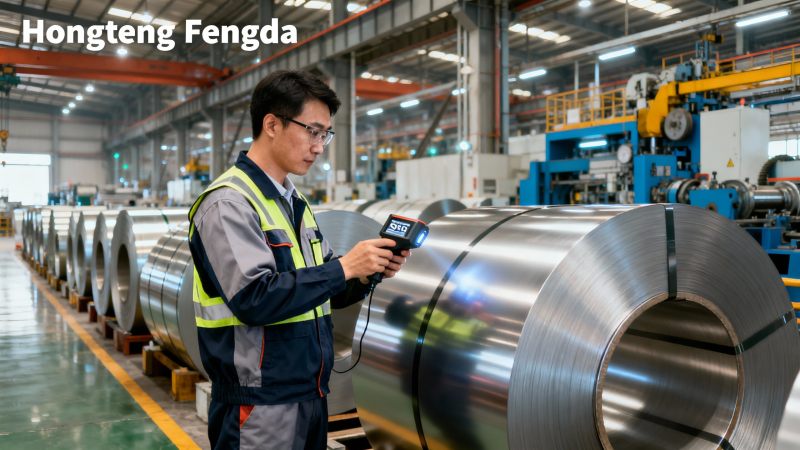
SS 316 stainless steel coil, also known as AISI 316 coil, is an austenitic chromium-nickel steel alloy containing molybdenum that enhances its corrosion resistance, particularly against chlorides and industrial chemicals. This alloy is one of the most widely used materials across marine, chemical, and architectural industries due to its superior oxidation resistance at high temperatures and mechanical strength even in aggressive environments. Knowing the ss 316 coil technical specifications allows engineers and buyers to match project requirements more accurately, prevent quality deviations, and optimize long-term operational reliability. Manufacturers like Hongteng Fengda integrate advanced melting, rolling, and annealing technologies to maintain stable chemical composition and dimensional precision, ensuring consistent output across all coil thickness ranges. Whether for welded stainless tubing price list management or surface finish comparison with 304 variants, SS 316 coils stand out for their balance between performance and cost efficiency, enabling robust design implementation that withstands extreme conditions found in processing plants or offshore structures.
Technical Performance and Key Parameters
The technical attributes of SS 316 coils determine their engineering versatility. The alloy’s typical composition includes 16–18% chromium, 10–14% nickel, and 2–3% molybdenum, giving it enhanced protection in marine or acidic settings where 304 coils may fail. The tensile strength usually lies between 515–620 MPa, while yield strength averages around 205 MPa. This high mechanical integrity allows for pressure vessel manufacturing, food processing systems, and high-load structural applications. By adhering to ASTM A240 and EN 10088 standards, Hongteng Fengda ensures every batch meets thickness uniformity within ±0.05 mm tolerance. This control helps maintain sheet stability during forming and welding, suitable for automated assembly lines. Moreover, our plant adopts SGS third-party inspection standardization to verify hardness, grain size, and surface cleanliness before shipment, which is critical for buyers who prioritize traceable quality and SGS certified steel for construction projects. In terms of thermal stability, SS 316 coils can operate continuously up to 870°C, making them ideal for petrochemical refineries and industrial heating equipment where oxidation control is essential. The combination of mechanical strength, corrosion resistance, and welding capability defines why high temperature steel manufacturer in China products are trusted globally.
Market Overview and Industrial Demand
Global demand for coil stainless steel for automotive industry and food-grade manufacturing has increased steadily due to rapid industrial modernization. The stainless steel market, particularly for SS 316 variants, is projected to grow continuously as end users seek materials with longer lifespans and lower maintenance cycles. Automakers, for instance, prefer SS 316 coils for exhaust systems and sensor housings because of their capability to resist pitting caused by road salts. In Asia-Pacific, rapid urban development stimulates structural steel demand, creating synergy between coil producers and component fabricators. Hongteng Fengda aligns its supply chain with international distributors and OEMs, supporting logistical efficiency for partners in North America, the Middle East, and Europe. Buyers profit not only from competitive welded stainless tubing price list options but also from flexible coil thickness customization tailored for diverse project scales. As construction codes tighten across markets, compliance with CE and ISO guidelines becomes a key purchasing condition for engineers and procurement specialists. Through continuous investment in R&D and digital inventory tracking, Hongteng Fengda strengthens its positioning as a distinctive stainless and carbon steel solution provider serving multipurpose industrial and architectural domains.
Application Scenarios and Cross-Industry Integration
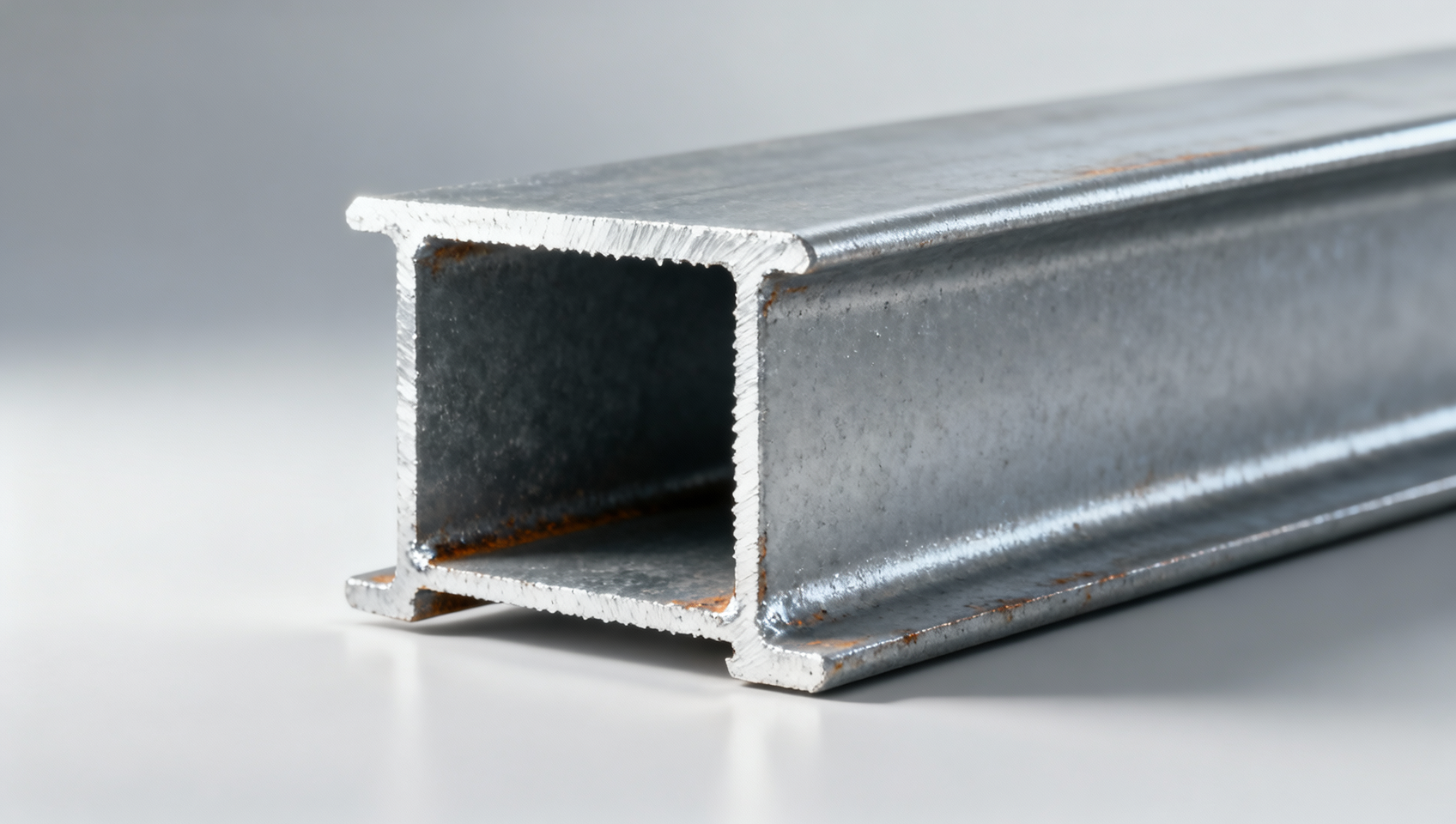
SS 316 coil applications span various sectors where material longevity dictates safety and cost efficiency. In the food processing segment, stainless steel roll for food processing ensures hygiene by preventing bacterial accumulation on equipment. Similarly, pharmaceutical and chemical facilities rely on 316 coils for reactor vessels and piping systems where contact with corrosive solutions occurs daily. In architecture, flat stainless steel for architectural design provides both functional integrity and aesthetic visual finish, especially on façades and modern roofing elements. For automotive customers, coil stainless steel for automotive industry parts offers lightweight yet durable alternatives to coated carbon materials. Hongteng Fengda’s portfolio also integrates complementary structural solutions, including angle steel, channel steel, and precision-engineered sections like the Z-beam. This Z-shaped steel profile, available in grades such as Q235B, Q345B, and S355, with thickness from 6–25 mm and customizable 2–12 m length, is widely used in roof brackets, wall beams, and lightweight frameworks. By combining SS 316 coils with advanced structural components, contractors achieve better mechanical integration across entire building systems—from cladding to load-bearing frameworks—while maintaining uniform aesthetic finish and compliance with EN and SGS certification standards.
Comparison Analysis: SS 316 vs. 304 and Alternative Alloys
While both 304 and 316 belong to the austenitic stainless family, the inclusion of molybdenum in SS 316 significantly improves resistance to chlorides and industrial solvents. For instance, when exposed to saltwater environments, 304 tends to pit faster, driving maintenance costs upward. The nominal price difference between 316 and 304 coils, as reflected in global welded stainless tubing price list indexes, is justified by the reduced risk of failure and extended service intervals. Compared with duplex 2205 stainless steel, SS 316 displays slightly lower yield strength but higher ductility, granting greater ease of fabrication and on-site welding. For construction clients using SGS certified steel for construction, material selection often balances both mechanical and fiscal priorities. Hongteng Fengda’s technical team frequently assists clients in distinguishing appropriate alloys depending on operating pressure, chemical exposure, and regional climatic factors. Moreover, our collaboration with third-party inspection agencies like BV and TUV ensures that each shipment meets traceability requirements and matches expected physical indicators—ultimately establishing confidence among project managers and safety auditors during critical infrastructure execution.
Procurement Guide for Global Buyers
Selecting the appropriate SS 316 coil supplier involves evaluating production capacity, inspection systems, and international certification coverage. Buyers responsible for procurement need to confirm that every batch originates from a plant capable of maintaining traceable mill certificates, dimensional uniformity, and surface finish conformity (2B, BA, or No.4). Hongteng Fengda’s integrated production line coordinates raw material melting, hot rolling, and cold finishing under one quality umbrella, ensuring reduced lead time and consistent coil availability. When analyzing quotations from a high temperature steel manufacturer in China, decision-makers should assess not only the base price but also after-sales support, customization flexibility, and compliance with SGS inspection norms. Procurement experts must also consider logistics reliability, especially for cross-border orders to regions like the Middle East or Southeast Asia. Through our predictive inventory modeling and cloud-based order tracking, Hongteng Fengda offers transparency that minimizes sourcing risk. With increasing inquiries from 304 coil supplier in Middle East networks, maintaining optimal balance between cost and superior SS 316 performance becomes a strategic sourcing goal. The presence of additional structural products, including customized profiles and perforated galvanizing solutions, enables buyers to negotiate bundled contracts that further reduce overall procurement costs while meeting annual consumption targets.
Standards, Certification, and Quality Compliance
SS 316 coil production must comply with multiple international standards to be accepted in critical sectors. ASTM A240 defines chemical composition and mechanical requirements, while EN 10088 and JIS G4305 outline dimensional and surface quality criteria. Hongteng Fengda ensures full adherence to CE, BV, and SGS verification processes, guaranteeing consistent performance under real field conditions. Third-party testing covers tensile testing, hardness evaluation, and corrosion resistance in simulated marine environments. These certifications strengthen buyer confidence, particularly where SGS certified steel for construction is mandatory. For export markets, conformity documentation simplifies customs clearance and downstream quality audits. Maintaining ISO 9001 management certification also implies traceability along the production chain—critical for contract documentation among large-scale EPC firms. By highlighting compliance transparency, Hongteng Fengda positions its stainless coil and complementary Z-shaped structural profiles as reliable additions to certified construction portfolios. Clients integrating both SS 316 coils and Z-beam components can therefore align product data sheets, technical drawings, and safety approvals under unified certification frameworks, leading to efficient engineering verification and reduced rework during onsite implementation.
Trends and Future Insights in Stainless Steel Coil Applications
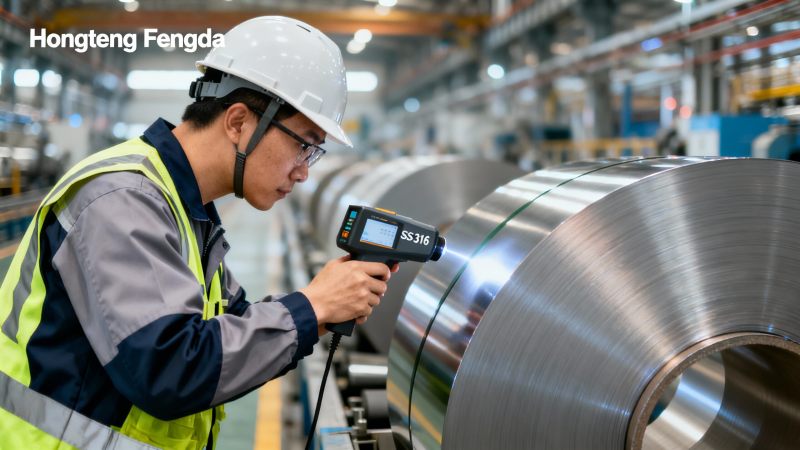
Technological progress continuously reshapes how stainless steel coils are specified and utilized. With growing sustainability mandates, demand shifts toward recyclable alloys and greener surface treatments. SS 316 coil manufacturing now incorporates precision laser welding and AI-based thickness monitoring to minimize material waste and improve process stability. Additionally, digital twin systems in steel mills allow proactive quality prediction, helping maintain tolerance consistency that aligns with SGS certified steel for construction reporting standards. In automotive manufacturing, lightweight design continues to expand coil usage for electric vehicle platforms, while in the food industry, hygienic compliance drives adoption of brighter, particle-free finishes. Global competition pushes stainless suppliers to diversify services—from welded stainless tubing price list transparency to integrated technical consulting that helps reduce downtime during retrofitting projects. Hongteng Fengda invests heavily in sustainable furnace operations and recyclable water cooling systems, helping partners achieve eco-compliance certifications without compromising production efficiency. Such forward-looking initiatives underline the future wherein stainless material innovation merges with digital management, forming intelligent supply ecosystems that deliver data-driven procurement and assured material integrity across continents.
FAQ and Common Misconceptions
One frequent misconception is that SS 316 coils are over-specified for general indoor use. In reality, cost analysis reveals that their superior life expectancy often compensates for higher upfront expense, lowering total lifecycle cost. Another question arises regarding the difference between 316 and 316L: the “L” grade includes reduced carbon content, mitigating intergranular corrosion after welding—ideal for piping networks and plate welding applications. Purchasers also ask whether imported coils differ significantly from domestic versions. As Hongteng Fengda’s operations are audited under international frameworks like ISO and SGS, product properties remain consistent with overseas benchmarks. Buyers new to SGS certified steel for construction should also remember to verify Mill Test Certificates (MTC) that prove compliance. Regarding finishes, matte versus mirror surface selection depends on both intended appearance and cleaning frequency. For high-humidity settings, mirror-polished 316 is preferred. Finally, the perception that SS 316 is resistant to all chemicals is inaccurate; certain strong acids and chloride concentrations above seawater threshold can still trigger localized attack, for which duplex or super-austenitic alternatives may be recommended. Such clarity in understanding prevents design mismatches and enhances procurement precision across multi-sector projects.
Why Choose Hongteng Fengda
As a structural steel manufacturer and exporter from China, Hongteng Fengda combines decades of expertise in metallurgy and project fulfillment. Our manufacturing facility operates with advanced automation to guarantee dimensional and chemical control of every SS 316 coil and structural component. Packing processes ensure coils remain contamination-free during ocean transit, while logistics teams optimize delivery schedules to meet time-sensitive projects worldwide. The company’s product lineup—including angle steel, channel steel, and cold formed profiles—accompanies international contractors from blueprint design to final installation. By delivering SGS certified steel for construction and coil stainless steel for automotive industry applications, Hongteng Fengda continues to add tangible value to industrial clients, distributors, and end users. For professional consultation or OEM cooperation on stainless steel roll for food processing and other specialized alloys, contact our expert team to obtain up-to-date specifications and technical support. Choosing Hongteng Fengda means choosing consistency, transparency, and a trusted partnership committed to enhancing your project’s longevity and performance.
- channel steel
- angle steel
- steel coil
- structural steel
- Structural Steel
- high temperature steel
- SGS certified steel
- 316 stainless steel coil
- welded stainless tubing
- stainless steel coil
- stainless coil
- ss coil
- coil stainless
- 304 coil
- ss 316 coil
- stainless steel roll
- flat stainless steel
- Profile
- Z-beam
- carbon steel
- steel profile
- flat stainless steel for architectural design
- stainless steel roll for food processing
- ss 316 coil technical specifications
- 304 coil supplier in Middle East
- coil stainless steel for automotive industry
- welded stainless tubing price list
- SGS certified steel for construction
- high temperature steel manufacturer in China
Related recommendations
 How long does acero prepintado retain gloss and color stability in direct desert sunlight?Acero prepintado gloss & color stability in desert sun? Discover real-world performance data, PVDF vs. polyester longevity, and spec-critical insights for GCC projects.
 Does acero pregalvanizado maintain coating integrity after cold bending to 90 degrees?Acero pregalvanizado maintains coating integrity after 90° cold bending — when engineered right. Discover how Hongteng Fengda guarantees real-world performance, adhesion & corrosion resistance.
 Do the advantages of galvanized steel include reduced fire risk compared to untreated carbon steel?Advantages of galvanized steel include measurable fire-risk reduction vs. untreated carbon steel—learn how zinc delays ignition, buys critical escape time, and enhances safety without false 'fireproof' claims.
 What is the minimum bend radius for 12mm steel wire rope without permanent deformation?12mm steel wire rope capacity depends on bend radius — discover the safe 72–96mm minimum to prevent permanent deformation, fatigue & failure. Expert rigging insights inside.
Please give us a message


Please enter what you want to find