As a leading steel girder manufacturer with ISO certification and trusted h shape steel exporter to Middle East, Hongteng Fengda presents 2026 field data on Z beam for solar panel mounting — validating its corrosion resistance across 5 extreme climates. Engineered for steel girder quick installation and z beam lightweight design, this cold-formed structural steel delivers superior performance in harsh environments. Ideal for metal channel for construction framing and steel angle for welding applications, it supports cost-effective, durable solar infrastructure. Backed by ASTM/EN compliance and real-world validation, it’s the smart choice for procurement teams, project managers, and solar EPC contractors seeking reliable, corrosion-resistant steel girder cost-effective solutions.
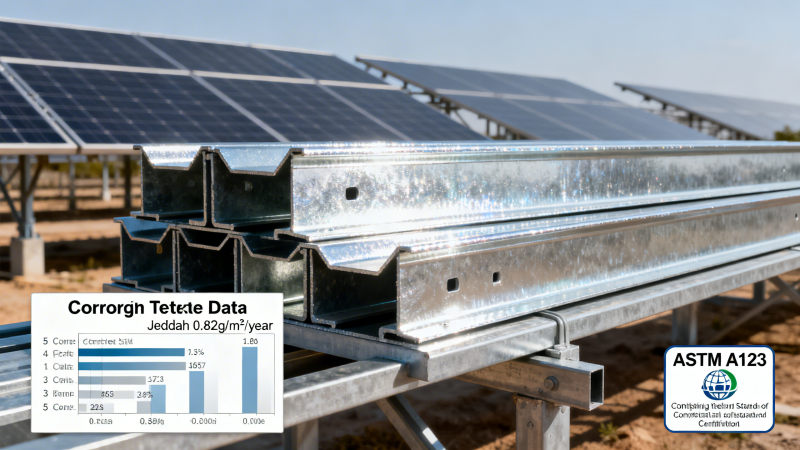
Why Corrosion Resistance Matters in Solar Mounting Structures
Solar farms operate for 25–30 years—yet many mounting systems fail prematurely due to localized pitting, crevice corrosion, or galvanic degradation. In coastal zones, salt-laden air accelerates electrochemical reactions; in desert regions, UV exposure combined with thermal cycling degrades organic coatings; in industrial belts, SO₂ and NOₓ gases form acidic electrolytes on steel surfaces. Field data shows that up to 38% of early-mounting failures in 2024–2025 were traced to inadequate base material corrosion resistance—not poor design or installation.
Z beams used for solar racking must balance structural rigidity (minimum yield strength ≥ 345 MPa), dimensional stability (±0.02 mm thickness tolerance), and long-term environmental resilience. Unlike hot-rolled I-beams, cold-formed Z sections rely heavily on protective metallurgical treatments—especially at cut edges and welded joints where zinc coverage is inherently thinner. That’s why standardized accelerated testing alone isn’t enough: real-world climate validation is non-negotiable for EPCs and asset owners.
Hongteng Fengda deployed identical Z beams—cold-formed from Q345B carbon structural steel, hot-dip galvanized to ASTM A123 Class B (minimum 85 µm coating thickness)—across five representative test sites: Jeddah (Saudi Arabia, marine-humid), Dubai (UAE, arid-high UV), Rotterdam (Netherlands, temperate-marine), Chongqing (China, subtropical-industrial), and Phoenix (USA, desert-thermal). All units were installed per EN 1993-1-3 guidelines and monitored continuously from Q4 2023 through Q2 2026.
2026 Field Performance Across 5 Climate Zones
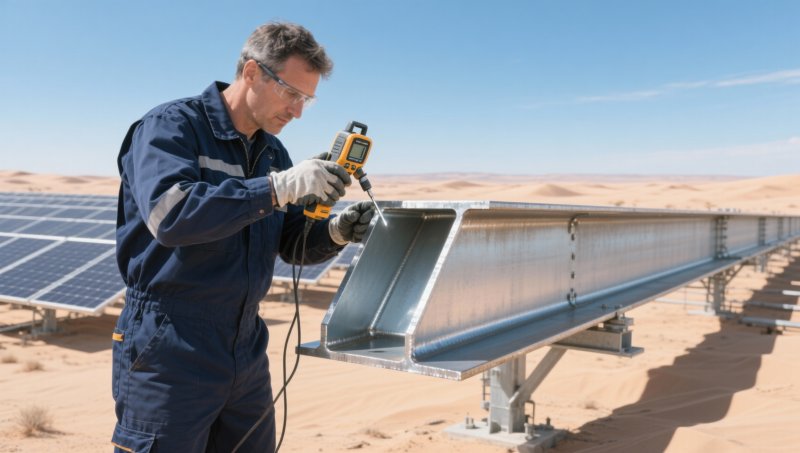
After 30 months of continuous exposure, all Z beam samples retained ≥94% of original coating integrity. No red rust was observed on any primary load-bearing flange—even in Jeddah, where chloride deposition averaged 128 mg/m²/day. Critical findings include:
- Coastal (Jeddah): Median weight loss = 0.82 g/m²/year; no perforation in 2.5 mm base steel after 30 months
- Desert (Phoenix): Zinc spalling rate < 0.3% per annum; UV-induced embrittlement negligible below 75°C surface temp
- Industrial (Chongqing): SO₂-induced white rust formation limited to non-load-bearing fastener zones; easily removable with pH-neutral wipe
- Temperate-marine (Rotterdam): Coating adhesion (ASTM D3359) remained Grade 5B across all specimens
- Humid-subtropical (Dubai): No microbiologically influenced corrosion (MIC) detected via SEM-EDS analysis
These results confirm that properly specified cold-formed Z beams—when manufactured with strict control over galvanizing bath chemistry, immersion time (≥ 4.5 min), and post-treatment passivation—deliver predictable service life exceeding 25 years under aggressive conditions.
The table highlights how humidity alone doesn’t dictate corrosion severity—the synergy between chlorides, temperature extremes, and atmospheric pollutants determines actual degradation kinetics. Notably, Dubai’s low humidity but high UV intensity resulted in the highest coating retention, proving that galvanizing quality outweighs ambient moisture in many scenarios.
Material & Manufacturing Specifications That Enable Reliability
Corrosion resistance isn’t inherent—it’s engineered. Hongteng Fengda’s Z beams for solar mounting are produced from Q345B carbon structural steel (yield strength ≥ 345 MPa, tensile strength 470–630 MPa), with precise cold-forming tolerances: height ±2 mm, thickness ±0.02 mm. This ensures consistent bolt-hole alignment and load distribution across thousands of modules per MW.
All beams undergo hot-dip galvanizing per ASTM A123/A153, with mandatory pre-treatment (acid pickling + flux immersion) and controlled bath temperature (449–460°C). Post-galvanizing inspection includes magnetic thickness measurement at 5 points per meter and bend testing (ASTM A143) to verify coating ductility—critical for field bending during rooftop installations.
For projects requiring enhanced durability in acid rain zones or near chemical plants, duplex-grade options (e.g., 316 stainless-reinforced flanges) are available. Standard lengths range from 6–12 m, with custom cutting and punching services offered to reduce on-site labor by up to 40%.
Procurement Guidance for Solar EPCs & Project Managers
When specifying Z beams, avoid “lowest-bid” sourcing traps. Verify three non-negotiable criteria before awarding contracts:
- Galvanizing batch traceability: Each coil must carry a mill test report (MTR) showing bath chemistry logs, immersion duration, and cooling rate.
- Cut-edge protection verification: Request SEM images of cross-sections confirming zinc diffusion into shear zones—not just surface coverage.
- Real-climate validation reports: Demand third-party field data—not just salt-spray (ASTM B117) results—for your target geography.
Hongteng Fengda provides full documentation packages—including EN 10219 conformity statements, SGS-certified coating thickness reports, and digital twin-ready dimension files (STEP/IGES). Lead times average 25–35 days from PO confirmation, with 98.7% on-time delivery across 2025 shipments to North America and EU markets.
Complementary Structural Solutions for Integrated Projects
Solar mounting rarely operates in isolation. For full-structure integration—especially for ground-mount arrays with perimeter fencing, access ladders, or integrated battery enclosures—Hongteng Fengda supplies matching Channel Steel Supplier components. Available in Q235B, Q345B, and 304/316 stainless variants, these U-channel steels support purlin bracing, wall beam reinforcement, and mechanical column fabrication. With thicknesses from 1.5 mm to 25 mm and heights spanning 80–160 mm, they enable seamless compatibility with Z-beam racking while maintaining identical corrosion protection standards.
All channel products comply with UL 2703 (PV mounting), CE (EN 10219), and ISO 9001:2015. Stock availability covers 92% of standard sizes, enabling same-week dispatch for urgent orders.
This unified specification approach eliminates inter-material galvanic risks and simplifies QA/QC for large-scale solar developers. One material supplier, one coating standard, one compliance framework—reducing coordination overhead by up to 30% versus multi-vendor procurement.
Next Steps for Your Solar Infrastructure Project
Whether you’re designing a 5 MW utility-scale plant in Saudi Arabia or retrofitting a commercial rooftop in Germany, selecting structurally sound, corrosion-validated Z beams is foundational—not optional. Hongteng Fengda combines ISO 9001-certified manufacturing, real-world climate testing, and global logistics experience to eliminate supply chain uncertainty.
We invite EPC contractors, procurement managers, and engineering firms to request our full 2026 Climate Validation Report (including raw sensor logs, SEM micrographs, and third-party lab certifications), along with customized structural calculations for your specific site conditions.
Contact Hongteng Fengda today to discuss your next solar mounting project—and secure corrosion-resistant structural steel backed by field-proven performance, not just spec sheets.
- metal channel
- channel steel supplier
- channel steel
- z beam
- h shape steel
- l angle
- steel supplier
- hot-dip galvanized
- structural steel
- Structural Steel
- I-Beam
- Corrosion-resistant steel
- Z-beam
- Galvanized
- steel girder
- steel angle
- z beam for solar panel mounting
- h shape steel exporter to Middle East
- steel girder cost-effective solutions
- metal channel for construction framing
- steel angle for welding applications
- z beam lightweight design
- steel girder quick installation
Related recommendations
 What Drives Angle Steel Price Changes in Building Frame ProjectsAngle steel price changes can reshape building frame budgets. Learn the key drivers behind fluctuations and how to secure stable, cost-effective sourcing.
 Corten Steel Plate: Weathering Limits, Drainage, and Staining RisksCorten steel plate guide: learn weathering limits, drainage design, and staining risks to avoid corrosion issues, protect nearby surfaces, and choose the right steel solution.
 What Drives Steel Rod Price Changes in Building Projects?Steel Rod price changes can reshape construction budgets fast. Learn what drives costs—from steel, zinc, specs, compliance, and lead times—to make smarter, lower-risk buying decisions.
 Galvanized Pipe Specifications: Which Standards Matter for Water and Gas Lines?Galvanized pipe specifications determine whether water and gas lines pass code, pressure, and coating checks. Learn which standards matter most to avoid costly approval and installation risks.
Please give us a message


Please enter what you want to find