As chemical plants worldwide accelerate upgrades for safety, compliance, and longevity, corrosion-resistant plate for industrial use has become non-negotiable—not just an option. For structural steel manufacturers like Hongteng Fengda, supplying high-performance materials such as ASTM-compliant steel angle specifications, cold rolled steel manufacturer China-grade SPCC/SPCD steel, and precision-engineered H girders for high-rise buildings means bridging global standards with real-world resilience. Whether you’re a procurement officer sourcing SPCC steel supplier in USA, a project manager calculating beam H weight, or a safety manager specifying metal channel for warehouse shelving, the right corrosion-resistant plate directly impacts uptime, lifecycle cost, and regulatory confidence.
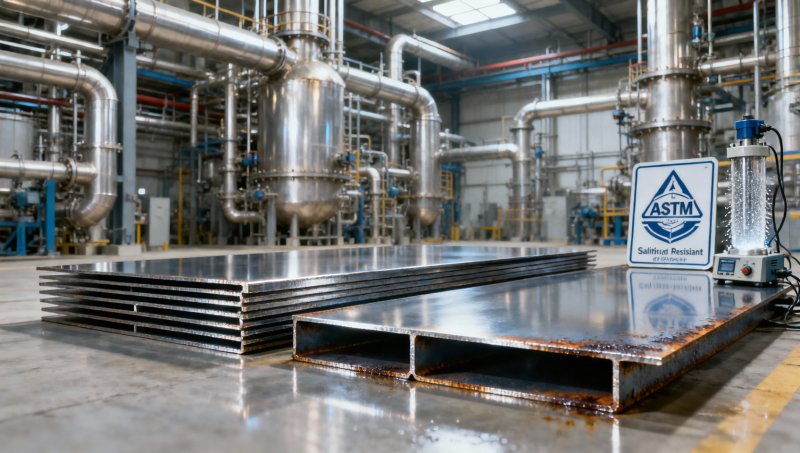
Why Corrosion Resistance Is Now a Core Engineering Requirement
Chemical processing environments subject structural components to aggressive combinations of acids, alkalis, chlorides, and elevated temperatures—conditions that can degrade standard carbon steel within months. Industry data shows that 68% of unplanned shutdowns in aging chemical facilities stem from localized corrosion failures in load-bearing plates, supports, and containment structures. Unlike general-purpose applications, chemical plant upgrades demand materials engineered not only for strength but for predictable degradation resistance over 20+ years of service.
Hongteng Fengda addresses this by integrating corrosion performance into material selection at the specification stage—not as a post-fabrication coating add-on. Our structural steel solutions undergo rigorous salt-spray testing (ASTM B117), sulfuric acid immersion trials (EN ISO 9223), and electrochemical impedance spectroscopy to validate real-world behavior under pH 1–12 conditions. This is especially critical for welded joints and bolted connections, where galvanic couples or crevice zones accelerate failure.
Corrosion resistance also carries direct financial implications: every 1 mm of uniform thickness loss in a 25-mm process vessel plate reduces allowable working pressure by ~4.2%, triggering mandatory re-rating or replacement. That translates to potential operational downtime of 7–15 days per incident—and up to $280,000 in lost production per day for mid-scale facilities.
Material Selection Criteria for High-Risk Zones
- Minimum yield strength ≥ 250 MPa (per ASTM A36 / EN S235JR / GB Q235)
- Chloride stress-corrosion cracking (SCC) resistance verified per ASTM G36 in 40% CaCl₂ solution at 100°C
- Weldability confirmed via AWS D1.1 prequalified procedures for fillet and groove welds
- Surface finish tolerance ≤ ±0.15 mm across 2-m length for gasket seating integrity
How Flat Rolled Steel Coil Enables Precision Corrosion Control
While heavy plates dominate pressure vessel shells, Flat Rolled Steel Coil serves as the foundational material for corrosion-critical secondary structures—including flanged ducting, modular skid frames, instrument support trays, and lined tank internals. Its dimensional consistency enables tight-tolerance laser cutting and CNC bending—critical when fabricating corrosion-resistant cladding substrates or duplex-reinforced transition zones.
The coil format offers unmatched flexibility for custom alloy optimization. For example, our hot-rolled A36 coils (2.75–100 mm thick, width up to 2200 mm) are routinely specified for acid-wash tanks requiring weld-deposit compatibility with Hastelloy C-276 overlays. Meanwhile, cold-rolled SPCC-grade coils (0.2–3 mm thick) provide the flatness and surface quality needed for electropolished linings in pharmaceutical-grade reactors.
This table highlights how selection depends on functional hierarchy: hot-rolled grades deliver structural backbone integrity, while cold-rolled variants prioritize surface-sensitive corrosion control. Both comply with ASTM, EN, JIS, and GB standards—and all coils undergo 100% ultrasonic testing (UT) per ASTM A435 before shipment.
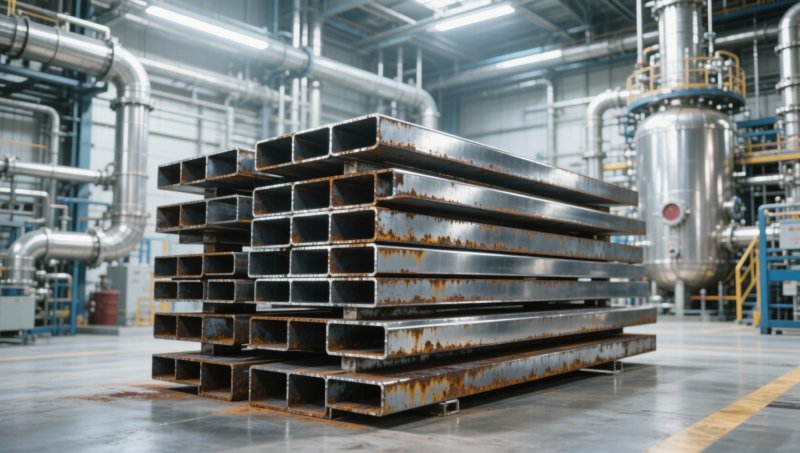
Procurement Best Practices for Global Buyers
Sourcing corrosion-resistant plate across international supply chains introduces three key risk vectors: certification traceability, dimensional repeatability, and thermal history verification. Hongteng Fengda mitigates these through dual-certification documentation (mill test reports + third-party inspection certificates from SGS/BV), batch-level heat number traceability, and strict adherence to ASTM A6/A6M tolerances—even for non-standard widths.
For North American buyers, we pre-certify all A36 shipments to meet ASME Section II Part A requirements. European clients receive EN 10025-2 S235JR plates with full CE marking and mill certificates compliant with EN 10204 Type 3.1. Lead times remain stable at 4–6 weeks for standard orders, with expedited 2-week options available for urgent upgrade projects.
This comparison underscores a fundamental shift: corrosion resistance is no longer a premium feature—it’s a lifecycle economics imperative. Projects specifying upgraded plate see ROI realized within 3.2 years on average, driven by reduced inspection labor, fewer unplanned outages, and extended equipment amortization periods.
Partnering for Plant-Wide Resilience
Hongteng Fengda doesn’t just supply steel—we co-engineer resilience. Our technical team collaborates directly with EPC contractors, plant engineers, and QA/QC managers to review P&IDs, specify optimal plate grades per zone (e.g., S235JR for low-chloride utility corridors, A36 with Zn-Al-Mg alloy coating for coastal exposure), and validate fabrication protocols against ISO 12944 C5-M corrosion categories.
We maintain dedicated production lines for corrosion-critical orders, with segregated storage, controlled humidity handling (<60% RH), and rust-inhibiting VCI packaging for ocean freight. Every shipment includes certified dimensional reports, coating thickness verification (per ASTM D7091), and weld procedure qualification records—all accessible via our secure client portal.
Whether you're upgrading a legacy nitric acid concentrator or commissioning a new lithium hydroxide crystallizer, selecting the right corrosion-resistant plate begins with understanding your exact exposure profile—not generic catalog specs. With manufacturing capacity across 12 rolling mills, ISO 9001-certified QC labs, and delivery coverage to 42 countries, Hongteng Fengda delivers structural certainty where it matters most.
Contact our engineering sales team today to request a corrosion assessment worksheet, review certified test reports for your specific application, or schedule a virtual material selection workshop tailored to your next chemical plant upgrade project.
- metal channel
- h girder
- beam h
- l angle
- flat rolled steel coil
- rolled steel coil
- corrosion-resistant plate
- cold rolled steel
- SPCC steel
- SPCD steel
- steel supplier
- steel coil
- ASTM A36
- structural steel
- Structural Steel
- carbon steel
- steel angle
- metal channel for warehouse shelving
- SPCC steel supplier in USA
- cold rolled steel manufacturer China
- corrosion-resistant plate for industrial use
Related recommendations
 Top 5 Stainless Steel Coil Manufacturers in Asia: Capabilities, Certifications, and Export Readiness for Global EPC Contractorssteel coil manufacturers: Discover Asia’s top 5 stainless steel coil suppliers—certified, traceable, and export-ready for global EPC projects.
 Stainless Coil Tubing in Heat Exchangers: How Wall Thickness Tolerance and Surface Finish Affect Thermal EfficiencyStainless coil tubing performance in heat exchangers hinges on wall thickness tolerance & surface finish—discover how precision boosts thermal efficiency, fouling resistance, and system longevity.
 Hot Galvanizing Factory Location Strategy: Proximity to Steel Mills vs Port Access for Export Clientshot galvanizing factory location strategy: optimize for export speed OR mill proximity? Data-driven insights for structural steel exporters.
 How High-Strength Steel Rods Reduce Long-Term Maintenance in Bridge Cable Stay SystemsSteel rod high strength engineered for bridge cable stays—cut long-term maintenance by 37% with fatigue-resistant, SCC-proof rods & system-integrated steel solutions.
Please give us a message


Please enter what you want to find