In today’s era of resilient construction, choosing high‑performance materials like steel rebar for earthquake resistance is crucial to protecting infrastructure and lives. As a professional structural steel manufacturer and exporter from China, Hongteng Fengda provides reliable solutions such as Steel Channel for structural support, carbon steel for pressure vessels, pre‑painted and corrugated steel sheet, and steel profile for architectural design—helping global builders deliver safer, stronger, and more sustainable projects. By integrating advanced material engineering, strict quality control, and ISO‑certified production lines, the company meets the growing global demand for reliable structural steel in earthquake‑prone regions where durability truly matters.
Definition and Importance of Earthquake‑Resistance in Structural Steel
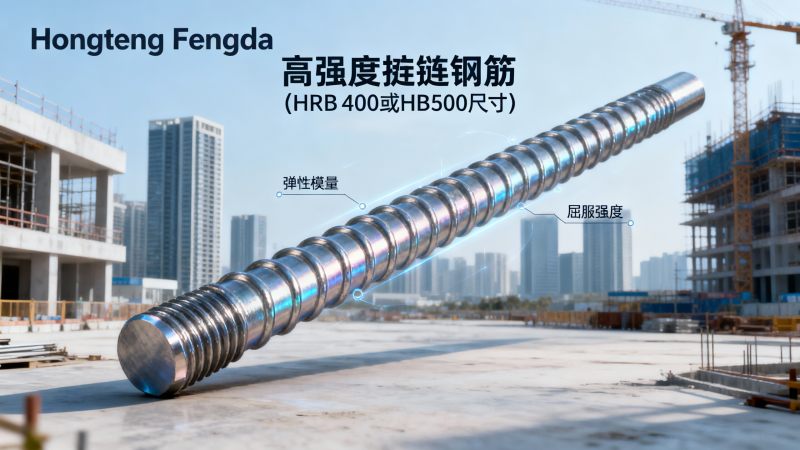
Steel rebar for earthquake resistance represents the backbone of reinforced concrete structures. In seismic design, this material functions as the tensile component within concrete systems, absorbing shock energy and preventing catastrophic collapse. Rebars such as HRB335, HRB400, and HRB500, made from reliable alloys like Q235 or 16Mn, ensure flexibility and structural ductility when ground motion occurs. During dynamic stress—a typical scenario in high‑magnitude earthquakes—each steel bar redistributes the load more evenly across foundations, beams, and columns. The elasticity modulus, yield strength, and fatigue resistance define how effectively structures perform in both slight tremors and severe quakes. In comparison with traditional carbon steel for pressure vessels or basic steel channels for mezzanine floors, reinforcement steel bars are explicitly engineered to comply with international references like ASTM A615‑A615M‑04a and BS4449‑2005, ensuring performance uniformity across regions and climates. The result is a safer built environment supported by materials capable of maintaining integrity long after seismic events.
Market Overview and Industry Development
Global infrastructure expansion in earthquake‑sensitive zones—such as Southeast Asia, the Pacific coastlines of North America, and southern Europe—has created sustained demand for reliable structural materials. The steel industry, particularly producers of steel rebar for earthquake resistance, has observed steady annual growth driven by urbanization and the modernization of transportation networks. Construction of bridges, high‑speed rail stations, and residential complexes increasingly depends on steels conforming to EN and JIS specifications. Meanwhile, innovations in pre‑painted steel sheet and corrugated steel sheet production have diversified applications beyond traditional concrete reinforcement, blending aesthetic and structural functions for architectural design. Hongteng Fengda, serving markets in North America, Europe, the Middle East, and Southeast Asia, continues to offer robust supply chains that reduce procurement risks. By leveraging in‑house milling, rolling, and surface treatment—including galvanized and PVC coating—the company guarantees uniform quality and traceability. As governments tighten codes for civil engineering construction, verified suppliers with international certification such as ISO 9001, SGS, and BV stand to gain substantial competitive advantages.
Technical Performance and Product Specifications
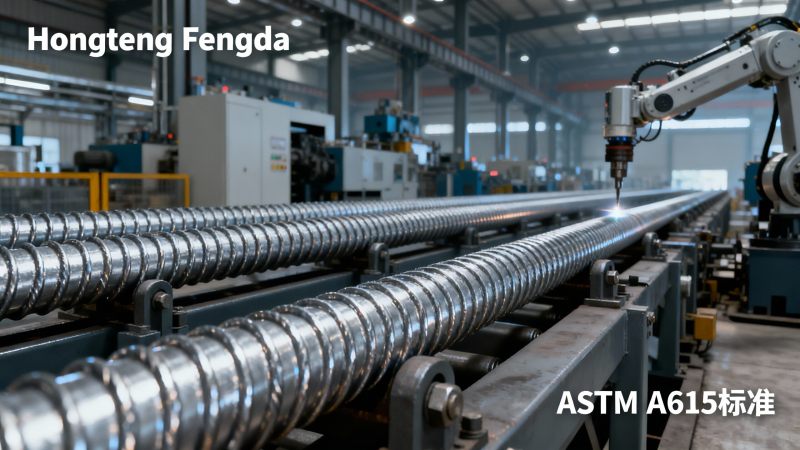
Technological advancement in steel metallurgy enables the precise control of composition and microstructure within Rebar. These enhancements produce mechanical properties like improved yield ratios and enhanced weldability. Depending on the project’s stress requirements, engineers can select from HRB335, HRB400, or HRB500, matched with section variations between 6 mm to 50 mm diameters and lengths of 5 m–14 m. Unique spiral shapes and tolerance limits of ±1 % ensure straightforward assembly in beams, columns, and slabs. For anti‑corrosion demands, finishing variants—galvanized, PVC, black or color painting, transparent or anti‑rust oil—offer extended lifecycle protection especially valuable in high‑humidity or marine zones such as port construction projects using steel piles. To complement earthquake resilience, Hongteng Fengda implements stringent tensile tests, bending inspections, and ultrasonic flaw detection. These procedures validate compliance with ASTM, JIS G3112‑2004, and GB1449.2‑2007, ensuring consistent micro‑grain distribution essential for seismic energy dissipation. Such characteristics surpass those of general carbon steel for automotive industry usage or standard steel bars for railway construction, reaffirming the vital role of properly engineered reinforcement steel.
Application Scenarios Across Modern Infrastructure
Steel rebar finds broad applications from high‑rise towers to public infrastructures like dams, tunnels, and flood‑control systems. Its ability to absorb and redistribute seismic stress is the cornerstone of structural stability. In civil engineering and residential housing, rebar combined with concrete forms the skeleton for beams, columns, and slabs. Highway overpasses and railway bridges rely on heavy‑gauge bars like HRB500 for load‑bearing zones that experience frequent vibration. Port facilities utilize robust steel piles reinforced with corrugated steel sheet and Steel Channel for mezzanine floors to resist both wave pressure and earth tremor. Additionally, architectural designers employ custom steel profiles for aesthetic façades while preserving critical load‑capacity. Hongteng Fengda’s extensive export portfolio demonstrates adaptability—offering engineered solutions not only for domestic infrastructure but also for global clients pursuing sustainability goals such as low‑emission cement composites combined with upgraded carbon steel bars. This synergy delivers energy‑efficient, long‑lasting buildings ready for future environmental challenges.
Procurement Guide and Supplier Selection
Selecting the right steel supplier goes beyond comparing price lists. Key parameters include the producer’s quality management framework, compliance certifications, and logistical reliability. A qualified manufacturer should provide documentation for each batch, covering mechanical test results, chemical composition analysis, and tolerance verification. Buyers, especially procurement officers and project managers, should ensure suppliers maintain certifications like ISO 9001 and meet regional construction codes. When considering steel profile for architectural design or carbon steel for pressure vessels, assess surface finishing options that match end‑use conditions. Hongteng Fengda stands out through its rigorous quality control that spans material sourcing to finished‑product packaging. Stable lead times, consistent grade quality, and OEM customization allow partners to manage projects efficiently and control costs. For distributors or agents, the assurance of continuous stock availability minimizes back‑order delays, while for end‑users, dependable documentation simplifies compliance during inspection or third‑party auditing. Ultimately, transparent communication and engineering support define a reliable partnership in an industry where precision and safety cannot be compromised.
Standards, Certification, and Global Compliance
The growing globalization of construction supply chains requires uniform standards that transcend borders. Rebar production certified under ASTM A615‑A615M‑04a, BS4449‑2005, and JIS G3112‑2004 represents not only material quality but legal recognition. For instance, in North America, ASTM is commonly accepted for both private and public projects, while EN 10080 or JIS standards predominate across Europe and Asia. Hongteng Fengda integrates advanced test facilities capable of performing yield strength and bend property verification under each applicable protocol. The company’s internal laboratory ensures every lot complies with international benchmarks alongside domestic GB 1449.2‑2007, serving civil engineering construction, foundations, and pillars. Furthermore, audits by SGS and BV guarantee impartial quality assessment. For clients in port development, bridges, and high‑rise towers, these certifications translate directly into simplified permit acquisition, reduced inspection time, and long‑term operational assurance. Such harmonized regulatory adherence, aligned with global best practices, remains indispensable in earthquake‑resistant construction strategies.
Comparison Analysis and Cost Efficiency
When comparing different reinforcement materials, steel rebar outperforms alternatives such as fiber‑reinforced polymer or bamboo reinforcement in seismic durability. Its unparalleled combination of tensile strength, ductility, and affordability makes it ideal for mass application. Although some building projects utilize composite solutions, hot‑rolled and cold‑rolled rebar options maintain cost‑to‑performance superiority, particularly where structural integrity cannot be compromised. Innovations in rolling technology have significantly reduced energy consumption, bringing sustainable advantage without inflationary pricing. By contrast, lightweight substitutes often face challenges of brittleness under cyclic loads typical in earthquakes. When factoring life‑cycle costs, inspection intervals, and repair expense, Hongteng Fengda’s steel systems deliver a lower total cost of ownership. Projects spanning bridges, tunnels, or railways also benefit from unified supply with Steel Channel for structural support and other elements supplied from the same source, ensuring harmonized mechanical compatibility. Thus, cost efficiency and reliability converge, securing both financial and structural resilience in complex engineering scenarios.
Case Study: Successful Seismic Project Integration
A notable urban redevelopment project in Southeast Asia demonstrates the performance of steel rebar for earthquake resistance under actual seismic pressure. The project incorporated HRB400 grade rebar produced by Hongteng Fengda, complying with ASTM and JIS standards. Positioned across a newly developed harbor area, it required integration with steel pile foundations and corrugated steel sheet shielding to counter both tidal and seismic stress. Field data revealed that structures reinforced with certified bars sustained minimal cracking even after a 7.0‑magnitude event. The robust anchorage and ductile behavior prevented progressive failure, and post‑quake inspection confirmed the structural core remained intact. The engineering team credited this success to the synergy between material design and fabrication precision, attributes central to Hongteng Fengda’s production philosophy. Beyond demonstrating technical excellence, the outcome reinforces how careful supplier selection and adherence to quality standards translate into life‑saving reliability for communities exposed to natural hazards.
Trend and Future Insights
The future of steel rebar for earthquake resistance is closely linked with sustainability and digital transformation. Smart manufacturing systems employing AI‑based quality monitoring are optimizing rolling precision, while low‑carbon steel production aligned with carbon neutrality targets reshapes industry priorities. The integration of Building Information Modeling (BIM) and digital twins enhances traceability from steel mill to construction site, improving resource allocation and reducing waste. Pre‑painted steel sheet and cold‑formed sections are being customized to pair with advanced rebars for lightweight, resilient composite assemblies. Global infrastructure investment continues expanding toward eco‑efficient solutions that maintain safety thresholds without sacrificing environmental stewardship. Hongteng Fengda engages in this transformation through continuous technological upgrading and environmental responsibility initiatives such as emission control and recycling. With innovations across Q235 and Q345 grades and hot‑rolled techniques, modern construction will benefit from stronger yet more sustainable reinforcement materials that protect both people and the planet.
FAQ & Common Misconceptions
A frequent misconception is that all steel bars offer equal seismic performance. In fact, only certified reinforcement like the internationally tested Rebar meets ductility and strength criteria required for earthquake‑resistant structures. Another misunderstanding involves coating selections: some assume galvanized steel alone fully prevents corrosion, yet environmental factors such as chloride presence or humidity require combined treatments, for example, transparent oil plus proper concrete cover depth. Engineers also question whether thicker diameter always improves seismic strength; in reality, balance between flexibility and stiffness defines resistance efficiency. Regular quality audits and matching bar grades (e.g., HRB500 for high stress, HRB335 for general applications) deliver optimal reliability. Proper storage and pre‑installation surface cleaning further prevent microcracking or welding defects. Lastly, choosing suppliers lacking verifiable certification remains a prime error that risks project delays. Ensuring international compliance and consistent production traceability remains the key to long‑term performance.
Why Choose Hongteng Fengda
Hongteng Fengda stands as a trusted long‑term structural steel partner, merging technical expertise with client‑centered service. As a Structural Steel Manufacturer & Exporter from China, the enterprise specializes in angle steel, channel steel, steel beams, cold‑formed steel profiles, and customized structural components. Every production line operates under stringent controls to guarantee alignment with ASTM, EN, JIS, and GB standards. Customers from North America, Europe, the Middle East, and Southeast Asia benefit from stable production capacity, dependable delivery schedules, and responsive engineering consultation. By supporting partners in reducing sourcing risks and maintaining consistent quality, Hongteng Fengda ensures success for distributors, contractors, and project managers alike. Whether selecting carbon steel for automotive industry fabrication or steel rebar for earthquake resistance in massive civil structures, the company’s mission remains clear: delivering quality, reliability, and professional service that protects lives and strengthens infrastructure for generations to come.
- channel steel
- steel i
- angle steel
- steel supplier
- galvanized steel
- structural steel
- steel beams
- steel profiles
- Structural Steel
- Steel Beams
- Profile
- Rebar
- Galvanized
- Steel Beam
- Steel Channel
- carbon steel
- steel sheet
- steel rebar
- steel profile
- steel pile
- steel bar
- corrugated steel sheet
- carbon steel for automotive industry
- Steel Channel for structural support
- steel profile for architectural design
- steel rebar for earthquake resistance
- carbon steel for pressure vessels
- Steel Channel for mezzanine floors
Related recommendations
 Why do 20 feet square pipe prices vary significantly between inland and port-adjacent warehouses?20 feet square pipe price varies by location—discover why port-adjacent warehouses often deliver better total cost, speed & ROI. Get the finance-approved breakdown.
 Do the advantages of galvanized steel outweigh long-term maintenance costs in humid industrial zones?Advantages of galvanized steel in humid industrial zones? Yes—when engineered right. Discover how proper specification cuts long-term maintenance costs by 2–3×.
 How much longer does galvanized steel sheet for roofing last compared to painted steel in humid tropicsgalvanized steel sheet for roofing lasts 2–3× longer than painted steel in humid tropics—25–40 vs. 10–15 years. Proven durability, zero scheduled maintenance, and lower lifecycle cost.
 Why galvanized steel sheet price per ton fluctuates beyond raw material costsGalvanized steel sheet price per ton fluctuates due to coating specs, order volume, logistics & certifications—not just zinc. Discover actionable cost levers.
Please give us a message


Please enter what you want to find