Why Galvanized Steel Sheet Price Per Ton Fluctuates Beyond Raw Material Costs
For finance approvers managing multi-million-dollar procurement budgets, understanding galvanized steel sheet price per ton isn’t just about tracking zinc or hot-rolled coil costs—it’s about identifying *non-commodity cost levers* that drive 12–28% variance in landed unit pricing, even when base material indices stay flat. At Hongteng Fengda—a certified structural steel manufacturer exporting to North America, EU, and the Middle East—we’ve observed this firsthand across 300+ project tenders: a 5% swing in raw steel prices rarely translates to more than a 2–3% change in final galvanized sheet quotations. The rest? Driven by operational, regulatory, and commercial factors finance teams can—and should—actively influence.
Hidden Cost Drivers That Move the Needle More Than Zinc Prices
Raw material input (steel substrate + zinc) typically accounts for only 55–65% of the final galvanized steel sheet price per ton. The remaining 35–45% reflects value-added layers that vary significantly by order profile, destination, and specification—not market volatility. These are the levers finance approvers control.
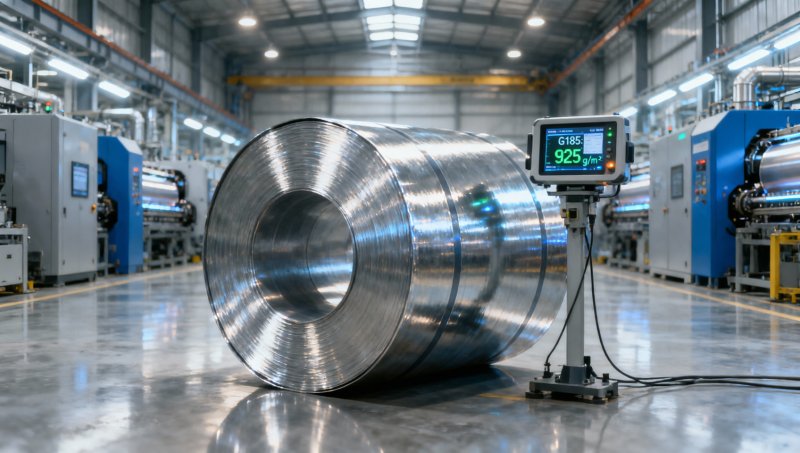
1. Zinc Coating Thickness & Compliance Tier: Not All “Galvanized” Is Equal
A standard G90 coating (500 g/m² total, 250 g/m² per side) adds ~$85–$110/ton over bare steel—but specifying G185 (925 g/m²) increases zinc consumption by 85%, pushing coating-related cost up to $200+/ton. Crucially, many international projects (e.g., EU infrastructure tenders or U.S. DOT contracts) mandate minimum coating weights *plus* third-party verification (e.g., ISO 1461 testing). Each verification step adds $3–$7/ton in lab fees, documentation, and hold-time penalties. Finance teams often overlook this: choosing “standard galvanizing” may save $15/ton upfront but trigger $120/ton rework if coating fails post-installation audit.
2. Order Volume & Production Batch Efficiency
Below 50 tons, galvanizing lines operate at sub-optimal throughput—requiring manual handling, extended furnace cycles, and higher labor allocation per ton. Our data shows galvanized steel sheet price per ton drops 14–18% between 50-ton and 200-ton orders, not from bulk discounting, but from reduced energy waste, lower rejection rates, and amortized setup costs. For finance approvers consolidating purchases across regional sites, aggregating volume into fewer, larger shipments delivers measurable ROI—without renegotiating supplier terms.
3. Logistics Complexity: From Port Handling to Final Mile
Galvanized steel sheet is highly susceptible to surface damage during transit. Sea freight quotes rarely reflect mandatory protective packaging (VCI paper, edge protectors, interlayer separation)—adding $12–$22/ton. Inland transport to remote job sites (e.g., GCC desert projects or Southeast Asian island locations) triggers surcharges for specialized flatbeds and off-hour unloading—often unbudgeted until invoice review. At Hongteng Fengda, we pre-validate logistics pathways with clients and embed these costs transparently into our galvanized steel sheet price per ton—eliminating post-shipment cost surprises.
4. Certification & Traceability Requirements
A single ASTM A653 or EN 10346 certificate adds negligible cost. But layered compliance—ASTM + ISO 9001 + SGS mill test reports + heat traceability down to coil ID—requires dedicated QA staffing, digital traceability systems, and audit-ready documentation. For projects under public procurement (e.g., EU Green Public Procurement criteria), carbon footprint reporting adds another $4–$9/ton. Finance teams benefit most when they define *minimum required certification scope* upfront—not accepting “full package” as default.
5. Currency Hedging & Payment Terms: The Silent Margin Erosion
Most galvanized steel sheet price per ton quotes are USD-based, but payments often settle in EUR, CNY, or local currency. A 3% FX fluctuation over a 90-day LC term directly impacts landed cost—yet few finance departments hedge steel payables. Similarly, shifting from 30-day net to 60-day terms may reduce working capital pressure but triggers 1.2–1.8% price premiums from manufacturers covering extended credit risk. At Hongteng Fengda, we offer fixed-rate USD quotes with forward-cover options—giving finance teams predictable budget line items, not variable exposure.
How Finance Approvers Can Turn Volatility Into Leverage
Instead of treating galvanized steel sheet price per ton as a black box, top-performing procurement teams use three actionable tactics:
First, benchmark against *delivered-in-full (DIF) cost*, not ex-works quotes—include verified packaging, port handling, inland freight, insurance, and certification fees. We provide full DIF breakdowns on request, enabling apples-to-apples comparisons across suppliers.
Second, align order timing with zinc futures windows. While zinc price alone doesn’t dictate final cost, locking in raw material exposure 60–90 days ahead—paired with firm production slots—reduces uncertainty in the 55–65% commodity portion. We support this via joint planning with key partners.
Third, co-develop specifications with engineering and procurement. For example, 235JR Patterned steel plate offers anti-skid performance without galvanizing—cutting coating cost entirely while meeting safety specs in walkways or equipment platforms. This substitution analysis, backed by ASTM-certified test reports, delivers 20–35% savings where corrosion resistance isn’t primary.
Conclusion: Price Isn’t Volatile—It’s Strategic
Galvanized steel sheet price per ton fluctuates beyond raw material costs because it reflects real operational complexity—not market speculation. For finance approvers, the priority isn’t predicting zinc prices; it’s mastering the variables *within their control*: order scale, specification precision, logistics transparency, and certification scope. At Hongteng Fengda, we design quoting and contracting processes around this reality—providing granular cost visibility, fixed-term FX options, and technical alternatives like 235JR Patterned steel plate—so finance teams secure budget certainty *and* project resilience. When every ton carries strategic weight, clarity—not guesswork—drives ROI.
Please give us a message


Please enter what you want to find