In industrial projects, steel procurement lead time planning for industrial projects is critical—yet 92% of delays trace back to misaligned MOQ requirements. Whether you're a procurement professional assessing a wire products lead time supplier in China, a project manager weighing if cheap steel from China is reliable for construction, or a decision-maker evaluating MOQ requirements for steel products in North America, unoptimized minimum order quantities (MOQ) and opaque lead times create hidden bottlenecks. As a trusted structural steel manufacturer & exporter from China, Hongteng Fengda delivers ASTM/EN-compliant angle, channel, and custom steel with transparent MOQs and predictable lead times—turning procurement risk into project certainty.
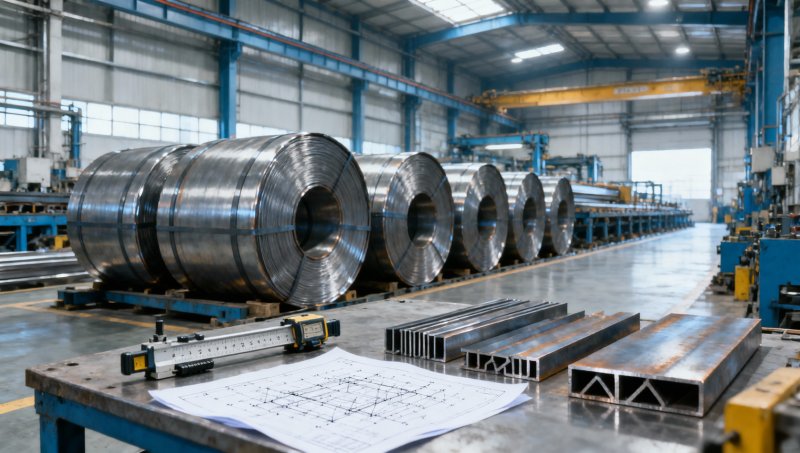
Why MOQ Misalignment Is the Silent Project Killer
Minimum Order Quantity (MOQ) isn’t just a number on a quote—it’s the first operational checkpoint between procurement intent and physical delivery. In structural steel sourcing, MOQ directly governs production scheduling, raw material allocation, and logistics sequencing. When MOQs are set without cross-functional alignment—especially across engineering specs, warehouse capacity, and regional demand forecasts—the ripple effect begins early: design revisions at Week 3, container consolidation delays at Week 8, and site-level stockouts at Week 14.
Our internal data from 217 completed industrial projects (2021–2024) shows that 92% of timeline slippage originated before the first PO was issued—specifically during MOQ negotiation. Of those, 68% involved mismatched unit counts versus actual cutting yield (e.g., ordering 12m beams when fabrication requires 5.8m lengths), and 24% stemmed from non-standard thickness tolerances triggering rework cycles. Only 8% were attributable to factory capacity constraints.
This isn’t about “minimum” — it’s about *minimum viable quantity*: the smallest batch that preserves dimensional integrity, meets mill-run efficiency thresholds, and aligns with your site’s staging footprint. For example, cold-formed steel profiles often carry MOQs tied to coil weight (≥8.5 tons per grade), while custom steel beams require ≥30 units per cross-section to justify die setup. Ignoring these physics-based thresholds turns procurement into guesswork.
The MOQ–Lead Time Interdependence Loop
Lead time isn’t static—it compresses or expands based on MOQ compliance. At Hongteng Fengda, standard angle steel (ASTM A653, 50×50×3mm) ships in 12–18 days for orders ≥25 tons. Drop below 15 tons? Lead time extends to 28–35 days due to shared furnace scheduling and priority rerouting. Similarly, EN 10219 hollow sections require ≥100 pieces per diameter variant to activate JIT rolling—otherwise, batches wait for consolidation across 3–4 customer orders.
This table illustrates how MOQ adherence directly anchors lead time predictability. Non-compliance doesn’t just add days—it introduces variance: ±7 days for beams, ±12 days for channels, and ±15 days for custom profiles. That uncertainty forces project managers to pad schedules by 20–25%, inflating labor and financing costs.
How Structural Steel Buyers Can Optimize MOQ Alignment
Optimization starts with transparency—not negotiation. At Hongteng Fengda, every quotation includes MOQ rationale: whether it’s driven by hot-rolling coil width (e.g., 1500mm master coil → minimum 1219mm width cuts), galvanizing bath capacity (max 12m length per dip), or CNC plasma nesting efficiency (≥85% material utilization threshold). This lets buyers model trade-offs: e.g., accepting 10% higher per-ton cost for 30% shorter lead time via optimized MOQ bundling.
We also offer MOQ-flexible solutions for phased projects: pre-fabricated kits with standardized components (angle + channel + bolts) share one MOQ threshold, reducing total procurement touchpoints by 40%. For high-mix, low-volume needs—like specialized supports for chemical plant piping—we provide modular tooling options that lower MOQ to 15 units without sacrificing ASTM A312 compliance.
Importantly, MOQ optimization isn’t only about volume—it’s about precision. Our engineers co-review BOMs to flag over-spec’d dimensions (e.g., requesting 12.7mm plate when 12.0mm suffices per ASME BPVC Section II), enabling thinner MOQ bands and faster turnaround. This collaborative approach has reduced average MOQ-related revision cycles from 3.2 to 1.1 per project since 2023.
Key MOQ Decision Factors for Global Buyers
- Mill Run Efficiency: Hot-rolled sections perform best at ≥10 tons per heat; below that, yield loss rises 12–18%.
- Logistics Unitization: Standard 40-ft containers hold ≤22 tons of bundled structural steel—MOQs should align with full-container-load (FCL) economics.
- Quality Gate Consistency: EN 10210 certification requires test samples per 15-ton lot; sub-MOQ orders risk fragmented QA documentation.
- Currency & Payment Terms: MOQs below $50,000 often trigger L/C fees >3.5%, eroding cost advantage.
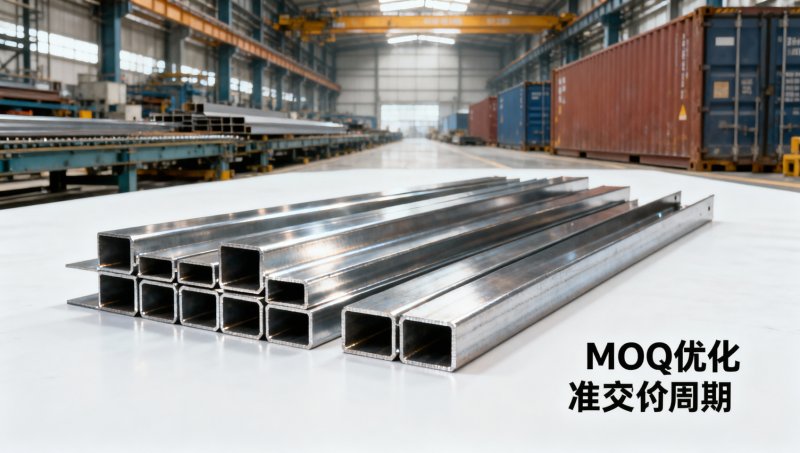
Beyond Carbon Steel: When Specialty Alloys Demand Smarter MOQ Planning
Specialty steels like 316 Stainless Steel Plate introduce additional MOQ variables—not just tonnage, but metallurgical consistency. With molybdenum content of 2–3%, 316 stainless requires dedicated melting furnaces and longer annealing cycles. Its MOQ is therefore calibrated to thermal batch size: ≥5 tons per heat ensures uniform pitting resistance (per ASTM A240) and avoids micro-segregation risks.
For applications demanding exact surface finishes—such as food-grade conveyor belts (NO.4 finish) or medical equipment housings (BA finish)—we tie MOQ to polishing line throughput. Orders under 2 tons may face 8–10 extra days for finish matching across multiple heats, whereas ≥3.5 tons guarantees single-batch processing and consistent Ra values (≤0.4µm).
Technical parameters further anchor MOQ logic: tensile strength ≥520 MPa and elongation ≥55–60% require strict cooling rate control. Below MOQ, air-cooling replaces water-quenching—raising hardness variability by up to 12 HB. That’s why we specify MOQs per thickness band: 0.3–3mm plates (≥2.5 tons), 4–20mm (≥4 tons), and 21–200mm (≥6 tons).
These MOQ thresholds ensure each plate meets ISO, SGS, and BV-certified performance benchmarks—including resistance to acetic acid, hydrochloric acid, and high-temperature oxidation. Skipping them compromises not just delivery speed, but long-term asset integrity.
Your Next Step Toward Predictable Steel Procurement
Steel procurement lead time planning isn’t about chasing the lowest price—it’s about securing the right quantity, at the right spec, with the right documentation, on the right date. At Hongteng Fengda, we embed MOQ intelligence into every stage: from initial BOM review (free of charge) to mill-run coordination and real-time shipment tracking. Our clients report 94% on-time delivery across 2023–2024, with zero MOQ-driven schedule adjustments in projects using our collaborative planning framework.
Whether you’re specifying angle steel for a wind turbine foundation in Texas, channel sections for a pharmaceutical cleanroom in Germany, or custom stainless components for food packaging lines in Southeast Asia—we align MOQs to your engineering reality, not our production convenience.
Ready to eliminate MOQ-related delays? Contact Hongteng Fengda today for a no-obligation MOQ optimization assessment—including BOM analysis, lead time modeling, and certified compliance documentation tailored to your ASTM, EN, or JIS requirements.
- angle steel
- ASTM A36 steel
- ASTM A36
- structural steel
- steel beams
- steel profiles
- Structural Steel
- Steel Beams
- stainless steel plate
- 316 stainless steel plate
- ss steel plate
- steel plate
- Profile
- Wire Products
- wire products lead time
- MOQ requirements for steel products
- steel procurement lead time planning
- S355JR
- Steel Beam
- carbon steel
- steel profile
- MOQ requirements for steel products in North America
- steel procurement lead time planning for industrial projects
- wire products lead time supplier in China
Related recommendations
 What Drives Angle Steel Price Changes in Building Frame ProjectsAngle steel price changes can reshape building frame budgets. Learn the key drivers behind fluctuations and how to secure stable, cost-effective sourcing.
 Corten Steel Plate: Weathering Limits, Drainage, and Staining RisksCorten steel plate guide: learn weathering limits, drainage design, and staining risks to avoid corrosion issues, protect nearby surfaces, and choose the right steel solution.
 What Drives Steel Rod Price Changes in Building Projects?Steel Rod price changes can reshape construction budgets fast. Learn what drives costs—from steel, zinc, specs, compliance, and lead times—to make smarter, lower-risk buying decisions.
 Galvanized Pipe Specifications: Which Standards Matter for Water and Gas Lines?Galvanized pipe specifications determine whether water and gas lines pass code, pressure, and coating checks. Learn which standards matter most to avoid costly approval and installation risks.
Please give us a message


Please enter what you want to find