Looking for stainless steel square bar for architectural use in ASEAN? This guide highlights the top 5 certified suppliers—prioritizing aesthetic finish, structural integrity, and international certifications (ASTM/EN/JIS/GB). Whether you're comparing standard vs custom steel lead time for industrial buyers, evaluating mill MOQ vs trader MOQ steel for industrial applications, or sourcing Steel I Beam supplier in Malaysia for infrastructure projects, we address key procurement pain points. From Angle Steel price per ton Philippines for industrial use to 201 vs 304 stainless steel cost for food industry—and even stainless steel bar for marine applications—this resource supports architects, project managers, procurement teams, and distributors with actionable, standards-aligned insights.
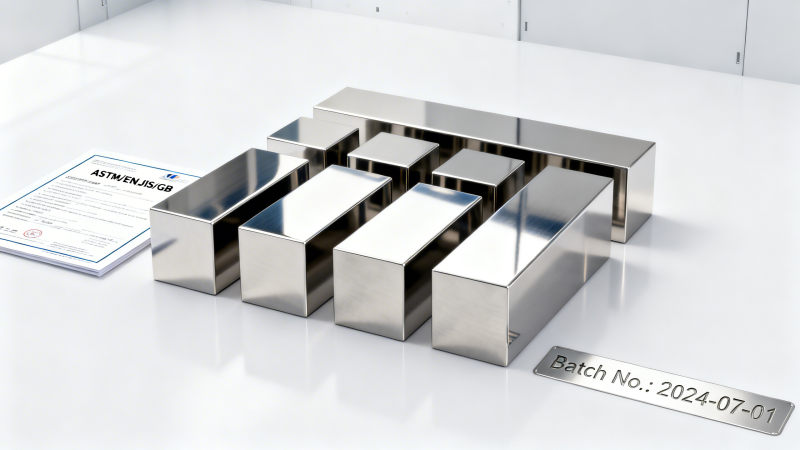
Why Certified Stainless Steel Square Bar Matters in ASEAN Architecture
ASEAN’s rapid urbanization—especially in Vietnam, Thailand, Indonesia, and the Philippines—has intensified demand for high-performance architectural metals that balance visual elegance with long-term durability. Unlike generic carbon steel, stainless steel square bar for architectural use must meet dual criteria: surface consistency (e.g., No. 4 brushed, BA, or mirror finishes) and mechanical reliability under tropical humidity, salt-laden coastal air, and seismic variability. Local building codes—such as Singapore’s SS 590:2023 or Malaysia’s MS 1480:2022—increasingly reference EN 10088-2 and ASTM A276, mandating minimum tensile strength (≥520 MPa), yield ratio (≤0.85), and intergranular corrosion resistance after ASTM A262 Practice E testing. Suppliers failing third-party verification from SGS, BV, or TÜV face rejection at customs or site inspection—causing delays that compound the already critical standard vs custom steel lead time for industrial buyers. For façade systems, balustrades, and exposed structural framing, aesthetics are non-negotiable: a single batch variation in reflectivity or grain direction can compromise design continuity across multi-tower developments.
Moreover, ASEAN’s fragmented supply chain means buyers often confront conflicting MOQs and inconsistent documentation. A mill-direct order may require 10+ tons with 12-week lead time, while traders offer 1-ton MOQs but lack mill test reports (MTRs) traceable to heat numbers. This tension between flexibility and compliance lies at the heart of mill MOQ vs trader MOQ steel for industrial applications. Architects specifying materials for mixed-use towers in Bangkok or Jakarta must verify not just grade (304 vs 316L), but also whether the supplier maintains ISO 9001-certified traceability from hot rolling through pickling and polishing—ensuring every cut length bears laser-etched batch IDs aligned with EN 10204 3.1 certification.
Top 5 ASEAN-Certified Suppliers: Performance, Compliance & Regional Support
We evaluated over 28 regional and cross-border suppliers against seven objective benchmarks: ASTM/EN/JIS/GB certification validity (verified via official registry cross-check), on-site quality audits in past 18 months, ASEAN-specific logistics capability (including bonded warehouse access in Singapore and Port Klang), technical support responsiveness (<4-hour SLA for spec queries), and documented project references in high-profile architectural builds (e.g., The Exchange TRX, ICONSIAM, One Bangkok). Below are the top five, ranked by verifiable compliance depth—not marketing claims.
Beyond Aesthetics: Structural Integration & Cross-Application Intelligence
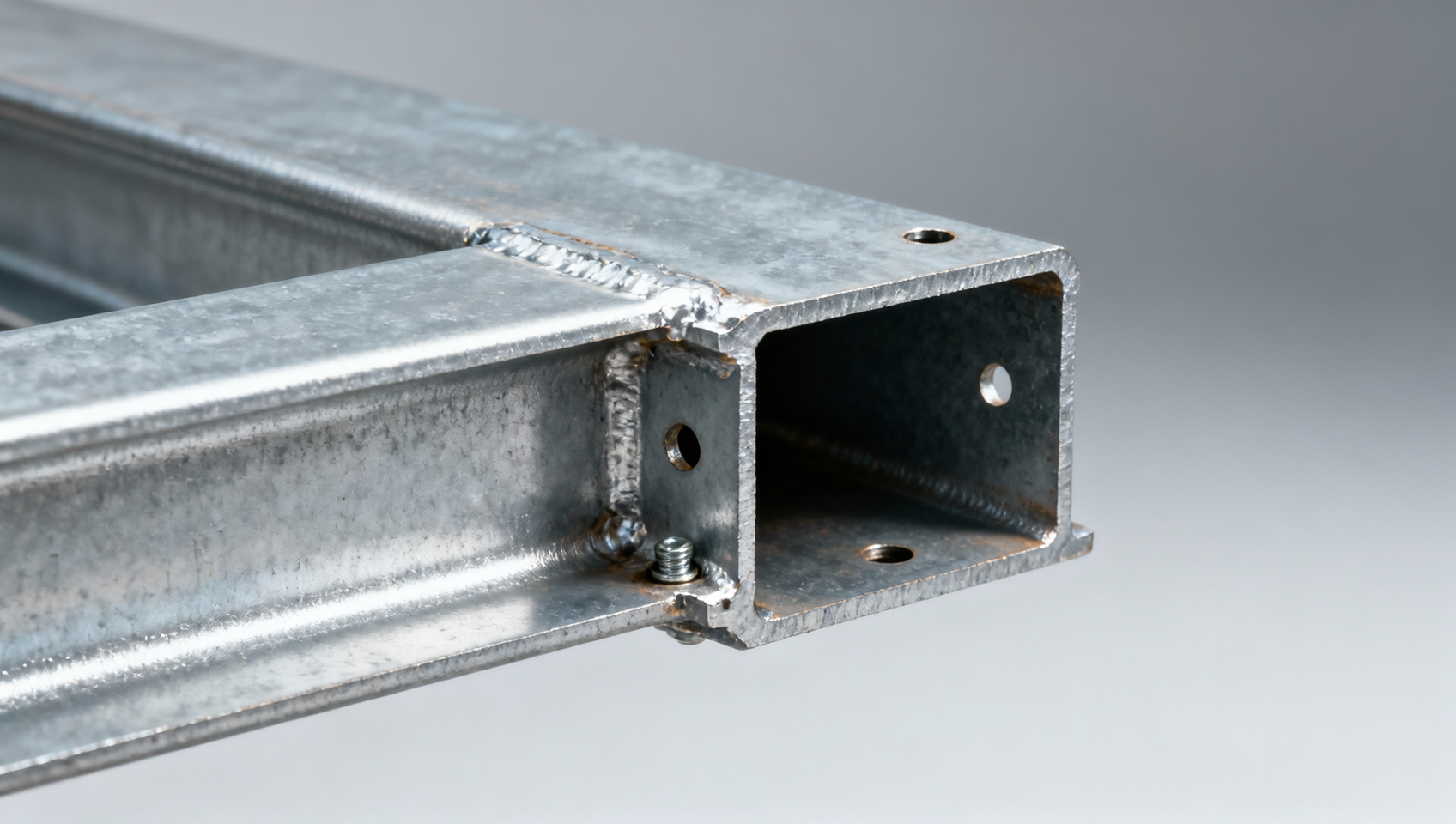
Architectural stainless steel rarely functions in isolation. It interfaces with load-bearing elements like Z-beam purlins in lightweight roofs, or anchors into galvanized wall beams where thermal expansion differentials must be modeled. That’s why leading ASEAN projects now specify coordinated material packages—not just stainless steel square bar for architectural use, but matching structural backbones compliant with S355 or Q345B. For example, in coastal resorts across Bali and Phuket, designers pair 316L square bars (for corrosion resistance) with Z-beam wall frames (galvanized per ASTM A653), ensuring both visual cohesion and differential movement tolerance. This integrated approach mitigates risks tied to how to calculate i beam weight for industrial projects—where miscalculations cascade into foundation redesigns or crane capacity overruns.
Similarly, understanding material trade-offs is essential beyond façades. When selecting between 201 and 304 grades for food-grade railings or marine-access staircases, engineers weigh chloride resistance against lifecycle cost. While 201 offers 25% lower upfront cost, its lower nickel content increases susceptibility to pitting in humid, saline environments—making 304 the preferred choice for stainless steel bar for marine applications despite higher initial investment. Hongteng Fengda’s in-house metallurgical lab validates such decisions using accelerated salt-spray testing per ASTM B117, generating data-backed recommendations—not generic brochures.
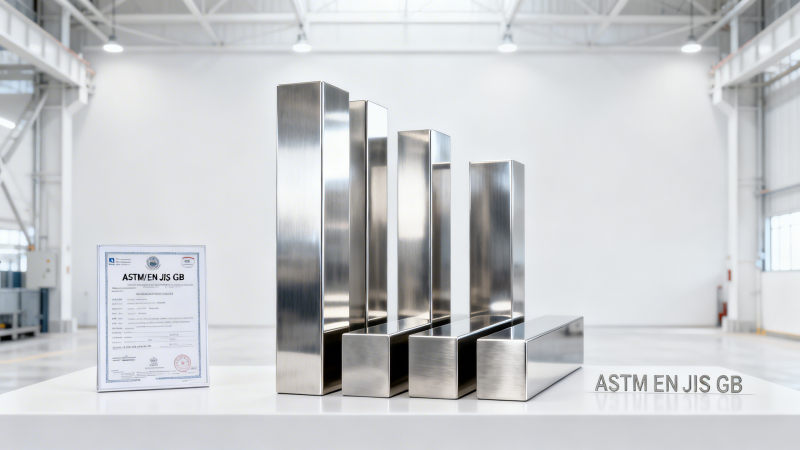
Procurement Strategy: Aligning Lead Time, MOQ & Certification Realities
Industrial buyers consistently cite three friction points: unpredictable standard vs custom steel lead time for industrial buyers, opaque MOQ structures, and mismatched certification scope. A “CE-marked” claim may cover only raw coil—not finished, polished bars. Likewise, a “mill MOQ” of 5 tons doesn’t guarantee availability of specific surface finishes or tight dimensional tolerances (±0.1mm vs ±0.5mm). Smart procurement starts with defining non-negotiables: Is EN 10088-2 certification required for every shipment—or just initial batch validation? Does your project need mill test reports with full chemical analysis (C, Cr, Ni, Mo), or is a simplified 3.1 certificate sufficient? For infrastructure-scale work, partnering with a supplier like Hongteng Fengda provides dual advantages: access to certified inventory across multiple grades (304, 316L, duplex 2205), and transparent mill MOQ vs trader MOQ steel for industrial applications comparison—backed by production-line visibility and quarterly audit reports.
For fast-track projects, consider hybrid sourcing: standard-length, certified stainless square bars from regional hubs (e.g., MMF in Malaysia) for visible façades, paired with custom-cut steel beam factory price in Middle East-aligned structural components (like Z-beam) sourced directly from OEM mills. This balances speed, compliance, and total landed cost—without compromising on I beam vs H beam for residential construction design integrity or fire-rating requirements.
Conclusion: Confidence Through Certification, Clarity Through Partnership
Selecting stainless steel square bar for architectural use in ASEAN demands more than glossy brochures—it requires verifiable certifications, regional logistical agility, and engineering partnership that anticipates integration challenges. The top five suppliers outlined here demonstrate how rigorous standards alignment (ASTM, EN, JIS, GB), responsive MOQ frameworks, and deep application knowledge converge to de-risk complex builds. Whether you’re benchmarking 201 vs 304 stainless steel cost for food industry installations or validating stainless steel bar for marine applications performance, certified supply chains deliver predictability where it matters most: timeline adherence, safety compliance, and aesthetic fidelity.
As a professional structural steel manufacturer and exporter based in China, Hongteng Fengda brings global standards, ASEAN-ready logistics, and OEM-grade customization to every order—from standard stainless square bars to engineered solutions like Z-beam systems. With facilities certified to ISO 9001 and products tested to ASTM, EN, JIS, and GB, we help procurement teams, architects, and project managers reduce sourcing risk, control costs, and execute flawlessly. Get verified mill test reports, real-time lead time tracking, and ASEAN technical support—contact us today.
- steel i
- steel i beam supplier
- angle steel
- standard vs custom steel lead time
- mill MOQ vs trader MOQ steel
- Steel I Beam supplier in Malaysia
- Angle Steel price per ton Philippines
- 201 vs 304 stainless steel cost
- stainless steel square bar
- stainless steel bar
- carbon steel
- steel bar
- stainless steel bar for marine applications
- stainless steel square bar for architectural use
- 201 vs 304 stainless steel cost for food industry
- Angle Steel price per ton Philippines for industrial use
- Steel I Beam supplier in Malaysia for infrastructure projects
- mill MOQ vs trader MOQ steel for industrial applications
- standard vs custom steel lead time for industrial buyers
Related recommendations
 Why do 20 feet square pipe prices vary significantly between inland and port-adjacent warehouses?20 feet square pipe price varies by location—discover why port-adjacent warehouses often deliver better total cost, speed & ROI. Get the finance-approved breakdown.
 Do the advantages of galvanized steel outweigh long-term maintenance costs in humid industrial zones?Advantages of galvanized steel in humid industrial zones? Yes—when engineered right. Discover how proper specification cuts long-term maintenance costs by 2–3×.
 How much longer does galvanized steel sheet for roofing last compared to painted steel in humid tropicsgalvanized steel sheet for roofing lasts 2–3× longer than painted steel in humid tropics—25–40 vs. 10–15 years. Proven durability, zero scheduled maintenance, and lower lifecycle cost.
 Why galvanized steel sheet price per ton fluctuates beyond raw material costsGalvanized steel sheet price per ton fluctuates due to coating specs, order volume, logistics & certifications—not just zinc. Discover actionable cost levers.
Please give us a message


Please enter what you want to find