As global demand for flat plate stainless steel for architectural design, stainless flat sheet for architectural use, and stainless steel metal plates for oil and gas industry surges, SS sheets price per ton in 2026 faces unprecedented pressure—from nickel volatility to rising freight costs and new ASEAN export duties. Whether you're a procurement professional sourcing stainless round bar for construction projects, a distributor seeking a trusted flat plate stainless steel supplier in Middle East, or an engineer specifying stainless flat plate for chemical processing, understanding these cost drivers is critical. Hongteng Fengda, a leading SST plate manufacturer in Southeast Asia and structural steel exporter from China, delivers stable pricing, ASTM/EN-compliant quality, and agile supply—helping buyers across North America, Europe, and the Middle East mitigate risk and lock in value.
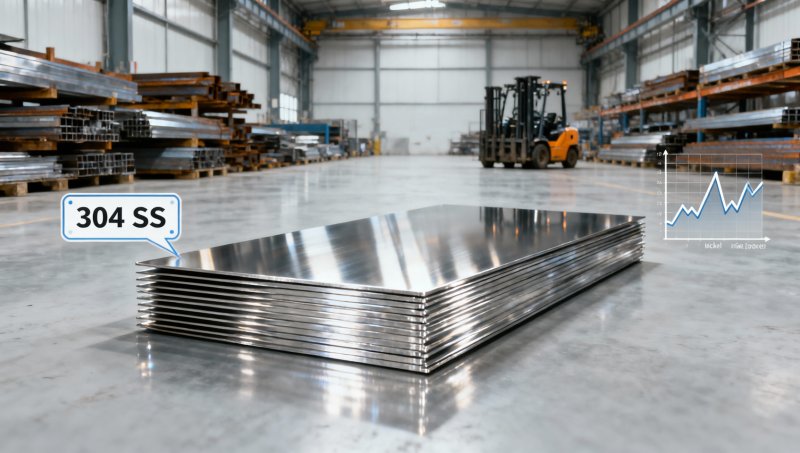
Nickel Volatility: The Core Price Lever in Stainless Steel Sheets
Nickel accounts for 60–75% of raw material cost in austenitic stainless steel grades (e.g., 304, 316). In 2024, LME nickel prices swung between $12,800 and $24,500 per metric ton—a 91% range—driven by Indonesia’s export policy shifts, EV battery demand growth (+22% YoY), and speculative trading. By Q1 2026, market consensus forecasts nickel volatility to persist, with standard deviation expected to remain above ±18% annually.
For structural steel buyers, this translates directly into SS sheet price uncertainty: a $5,000/ton nickel price shift moves 304 SS sheet cost by $1,100–$1,400 per ton. Unlike commodity traders, project-based purchasers lack hedging tools—making forward pricing agreements essential. Hongteng Fengda offers fixed-price contracts up to 180 days, backed by strategic nickel inventory buffers and real-time LME-linked adjustment clauses.
Importantly, not all stainless products are equally exposed. Duplex grades (e.g., 2205) reduce nickel dependency by 30–40%, while lean duplex and ferritic alternatives (e.g., 430, 444) cut it further—offering viable trade-offs for non-corrosive applications like interior cladding or support structures.
The table above shows how nickel sensitivity varies across common grades. Buyers specifying for bridge panels or transmission towers may prioritize 2205 for lifecycle cost control—even with longer lead times—while architects selecting stainless flat plate for façades often accept 304’s higher volatility for aesthetic consistency. Hongteng Fengda provides grade-matching consultation to align material selection with budget resilience.
Freight Costs & Logistics Realities in 2026
Ocean freight from China to key markets has risen 38% since 2022. As of Q4 2025, average spot rates stand at $1,950/FEU (North America West Coast), $2,280/FEU (Europe), and $1,720/FEU (Middle East). These figures exclude peak-season surcharges (+15–25%) and ASEAN port congestion fees—now averaging $180–$320 per container.
Unlike bulk commodities, stainless steel sheets ship as high-value, low-density cargo. A 20’ container holds only ~12–14 tons of 3mm-thick SS sheet—making freight cost per ton disproportionately high. For example, shipping 25 tons to Dubai adds $4,200–$4,800, or $168–$192/ton—nearly 12% of landed cost at current FOB levels.
Hongteng Fengda mitigates this through three levers: (1) consolidated container loading (up to 28 tons via optimized stacking), (2) dual-port dispatch (Qingdao + Nansha) to avoid single-port delays, and (3) Incoterms flexibility—including CFR Dubai and DAP Riyadh—to stabilize landed cost forecasting. We also maintain bonded warehousing in Singapore and Jebel Ali, enabling just-in-time deconsolidation for regional distributors.

ASEAN Export Duties: New Cost Layers for Regional Buyers
Effective January 2026, ASEAN’s new “Regional Value Content” (RVC) rule imposes tiered export duties on imported semi-finished steel. Products with<40% ASEAN-sourced content now face 7.5% ad valorem duty—up from 0% under previous ASEAN-China FTA terms. This impacts buyers in Thailand, Vietnam, and Malaysia who import Chinese-made SS sheets for local fabrication.
However, structural steel components with >55% RVC—including fabricated angle steel, channel steel, and cold formed steel profiles—retain duty-free access. That’s why Hongteng Fengda’s OEM service model gains strategic relevance: we perform final cutting, drilling, and surface treatment in our Guangdong facility before export, lifting RVC to 62–68% and preserving tariff exemption for partners across Southeast Asia.
For distributors seeking flat plate stainless steel supplier in Middle East, this also enables hybrid sourcing: base plates from China (FOB), then localized finishing in UAE free zones—reducing total landed cost by 9–13% versus full-import models.
Why Mild Steel Plate Remains a Strategic Counterbalance
While stainless dominates corrosion-critical applications, mild steel remains indispensable where strength-to-cost ratio matters most. Our Mild Steel Plate Supplier offers A572 and S355JR grades engineered for construction equipment, bridge panels, and mechanical mounting plates—with yield strengths ranging from 42 to 65 Ksi and thickness options spanning 0.1mm to 400mm.
These low-carbon, low-alloy high-strength steels deliver superior mechanical properties and excellent weldability—without nickel exposure. For instance, a 20mm-thick S355JR plate used in transmission towers carries 35% lower material cost than equivalent 304 SS, while meeting EN 10025-2 structural integrity requirements.
This comparative clarity helps procurement teams allocate budgets intelligently: use stainless where environment demands it (chemical plants, offshore platforms), and optimize with certified mild steel for load-bearing frames, racks, and support structures. All our A572 and S355JR plates comply with ASTM A572/A656 and EN 10025-2, with mill test reports traceable to batch-level heat numbers.
Actionable Strategies for 2026 Budget Planning
To insulate your 2026 steel procurement from volatility, adopt these five evidence-based actions:
- Lock in 60–70% of annual volume via multi-tier contracts: 40% firm-fixed price, 30% LME-linked with ±$800/ton collar, 30% spot-based for flexibility.
- Pre-qualify dual-material specs—e.g., “S355JR for non-exposed members; 316 SS only for splash zones”—to enable substitution without re-engineering.
- Require certified mill test reports for every shipment, verifying compliance with ASTM, EN, or JIS standards—not just commercial invoices.
- Optimize logistics timing: Schedule Q2 and Q4 shipments to avoid peak Q3 container shortages and holiday surcharges.
- Leverage regional finishing: Use Hongteng Fengda’s bonded warehousing and light fabrication services in Singapore or Dubai to defer duties and reduce handling costs.
With over 15 years exporting structural steel to 32 countries—and ISO 9001-certified production lines serving ASTM, EN, and GB specifications—Hongteng Fengda provides more than product. We provide predictability. Contact us today to receive a customized 2026 SS sheet and mild steel plate pricing forecast, including nickel hedge scenarios, freight optimization maps, and ASEAN duty mitigation pathways.
- channel steel
- angle steel
- mild steel plate supplier
- stainless steel sheet
- Mild Steel Plate
- Steel Plate Supplier
- ASTM A572
- steel supplier
- structural steel
- steel profiles
- Structural Steel
- stainless steel supplier
- sst plate
- stainless steel metal plates
- stainless flat plate
- stainless flat sheet
- flat plate stainless steel
- stainless round
- ss sheets price
- steel plate
- stainless steel sheets
- Profile
- S355JR
- Galvanized
- steel sheet
- steel profile
- flat plate stainless steel supplier in Middle East
- stainless flat sheet for architectural use
- stainless flat plate for chemical processing
- stainless steel metal plates for oil and gas industry
- sst plate manufacturer in Southeast Asia
- ss sheets price per ton
- stainless round bar for construction projects
- flat plate stainless steel for architectural design
Related recommendations
 Why do 20 feet square pipe prices vary significantly between inland and port-adjacent warehouses?20 feet square pipe price varies by location—discover why port-adjacent warehouses often deliver better total cost, speed & ROI. Get the finance-approved breakdown.
 Do the advantages of galvanized steel outweigh long-term maintenance costs in humid industrial zones?Advantages of galvanized steel in humid industrial zones? Yes—when engineered right. Discover how proper specification cuts long-term maintenance costs by 2–3×.
 How much longer does galvanized steel sheet for roofing last compared to painted steel in humid tropicsgalvanized steel sheet for roofing lasts 2–3× longer than painted steel in humid tropics—25–40 vs. 10–15 years. Proven durability, zero scheduled maintenance, and lower lifecycle cost.
 Why galvanized steel sheet price per ton fluctuates beyond raw material costsGalvanized steel sheet price per ton fluctuates due to coating specs, order volume, logistics & certifications—not just zinc. Discover actionable cost levers.
Please give us a message


Please enter what you want to find