Industrial projects are increasingly seeking ways to reduce long-term costs without compromising performance. By using galvanized steel pipe in industrial piping systems, businesses can achieve excellent ROI through durability, corrosion resistance, and low maintenance. As a leading structural steel manufacturer and exporter, Hongteng Fengda provides high-quality galvanized steel pipe, Galvanized Channel Steel, and stainless steel tubing, ensuring efficient project execution and cost control for construction, manufacturing, and infrastructure applications. The company also offers customized structural steel components and precision-engineered Steel Coil Galvanized, meeting standards such as ASTM, EN, and JIS to support projects worldwide.
Definition and Overview of Galvanized Steel Pipe
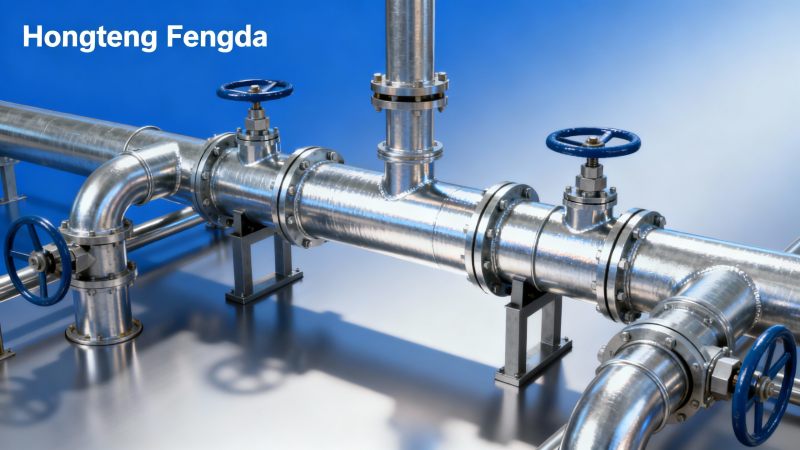
A galvanized steel pipe is a carbon steel pipe coated with zinc to protect it from corrosion and enhance its lifespan. This zinc layer acts as a protective barrier, delaying oxidation and providing sacrificial protection where scratches or exposure exist. In modern structural and industrial piping, galvanized steel pipe serves critical roles across water supply systems, gas transmission, and chemical processing facilities. Compared to untreated pipes, its maintenance cycle is significantly reduced, improving lifecycle cost performance for project operators. When paired with materials such as steel angle bar or U channel steel, galvanized pipes contribute to both structural strength and reliable system integrity.
Market Overview and Industrial Context
The demand for galvanized steel pipe continues to grow globally, driven by rapid industrialization and infrastructure investment. In markets like North America and Southeast Asia, industries prioritize materials that balance cost efficiency and sustainability. By incorporating products like Galvanized Channel Steel, C-shaped steel profile, and stainless steel pipe, many facilities have successfully reduced maintenance breaks and extended replacement intervals. According to market analysis, galvanized steel wire and electro galvanized wire also register increasing consumption in power, telecommunications, and construction sectors. These trends highlight a shift toward materials that ensure safety compliance, environmental durability, and predictable financial returns. For procurement managers and decision-makers, adopting galvanized steel pipe aligns perfectly with the strategic objective of lowering total cost of ownership while achieving compliance with global standards such as ASTM A53, EN 10255, and JIS G3442.
Technical Performance and Specifications
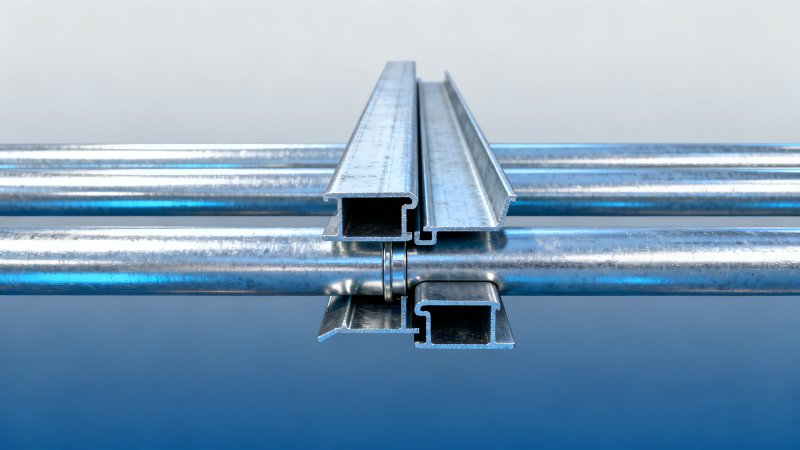
From a performance standpoint, the strength and resistance characteristics of galvanized steel pipe stem from its manufacturing process. The zinc coating—typically ranging between 60-275g/m² for hot-dipped coatings—provides exceptional corrosion protection even in marine or acidic environments. In facilities where mechanical strength is critical, carbon steel coil and stainless steel tubing are integrated with galvanized networks to optimize load-bearing capabilities. Key parameters such as yield strength, tensile resistance, and elongation values determine the mechanical stability over long operating lifespans. Equivalent grades like DX51D+Z and S350GD+Z, commonly applied in Hongteng Fengda’s product lines, ensure consistent mechanical integrity across pipelines. The company’s Steel Coil Galvanized models—ranging in thickness from 0.12mm to 3.5mm and widths between 600mm to 1500mm—support custom specifications suitable for high-pressure and precision industrial systems.
Comparison Analysis: Galvanized vs. Other Piping Materials
When comparing galvanized steel pipe to stainless steel pipe or PVC equivalents, several economic and technical differences emerge. While stainless steel tubing offers higher corrosion resistance, its procurement cost and welding difficulty are significantly greater. On the other hand, PVC lacks the structural load-bearing properties necessary for industrial contexts. Galvanized pipe achieves a balanced compromise: it provides long-term resistance to humidity, moderate chemical protection, and superior mechanical strength—all at competitive cost. When lifecycle and maintenance data are analyzed, galvanized piping often demonstrates up to 30% longer service periods compared to non-galvanized solutions, translating into measurable ROI benefits for end-users. Engineering teams often select galvanized over stainless for low-to-medium temperature systems, where its cost per linear meter justifies both capital reduction and reliability targets. This equilibrium makes galvanized steel products essential components in pipelines, scaffolding systems, and heavy industrial frameworks that also employ channel steel and C-shaped steel profiles.
Application Scenarios in Industrial Projects
Industrial piping applications for galvanized steel pipe extend across oil and gas facilities, waste processing networks, compressed air systems, and building mechanical services. In oil refineries, its superior resistance to rust reduces unplanned downtime. In mechanical rooms or manufacturing workshops, galvanized steel wire combined with U channel steel ensures both grounding protection and cable support safety. Construction firms rely on consistent sizing and threading options, ensuring ease during on-site installation. Similarly, the use of stainless steel tubing in conjunction with galvanized piping supports hybrid network systems where high purity and structural resilience must co-exist. Design engineers prefer galvanized materials due to their adaptability in welding, threading, and cutting processes. The advantage is particularly visible in metropolitan infrastructure where water transmission and HVAC systems require decades of maintenance-free performance. Hongteng Fengda’s supply reliability and adherence to standards like GB/T3091 further ensure project managers meet schedule and quality benchmarks with confidence.
Procurement Guide and Cost Optimization Strategies
Selecting suitable galvanized steel pipe involves assessing coating thickness, pipe diameter, and production standards. Procurement specialists should evaluate ASTM, JIS, or EN-certified suppliers to guarantee consistent coating bond and ductility. Hongteng Fengda supports OEM customization, enabling clients to specify dimensions compatible with project designs while controlling procurement budgets. Integrating products like carbon steel coil and Galvanized Channel Steel allows unified sourcing from a single, reliable vendor. Through centralized supply, project management teams avoid compatibility issues and can maintain synchronized quality inspection. Moreover, choosing suppliers with advanced galvanizing lines minimizes surface roughness, improving welding compatibility. For long-term investments, ROI analysis should factor in reduced transportation damage and coating uniformity that lower repair costs. An optimized sourcing plan not only cuts direct purchase cost but also ensures low environmental footprint—an increasingly vital factor for companies pursuing sustainable construction certifications or ISO-compliant quality assurance frameworks.
Standards, Certification, and Quality Assurance
Compliance with international standards ensures that galvanized steel pipe behaves predictably under operational stress. Hongteng Fengda manufactures in alignment with ASTM, EN, GB, and JIS specifications, supported by advanced coating inspection systems. The company measures zinc adhesion, galvanization thickness, and mechanical performance in accordance with protocols such as ISO 1461 and ASTM A123/A153. These rigorous checks help customers, especially quality control supervisors, mitigate structural risks and warranty claims. Additionally, every batch’s material traceability is recorded through batch codes and chemical analyses, providing transparency across the logistics chain. Certification across AISI, DIN, SUS, and EN reflects the manufacturer’s commitment to consistent product reliability. Combined with stable production capability, these practices make galvanized pipes a safe, long-term material choice for mission-critical operations. Such attention to detail directly contributes to improved ROI, as maintenance cycles, replacement intervals, and operational safety metrics all experience upward efficiency shifts over time.
Case Studies: Proven ROI through Galvanized Pipe Applications
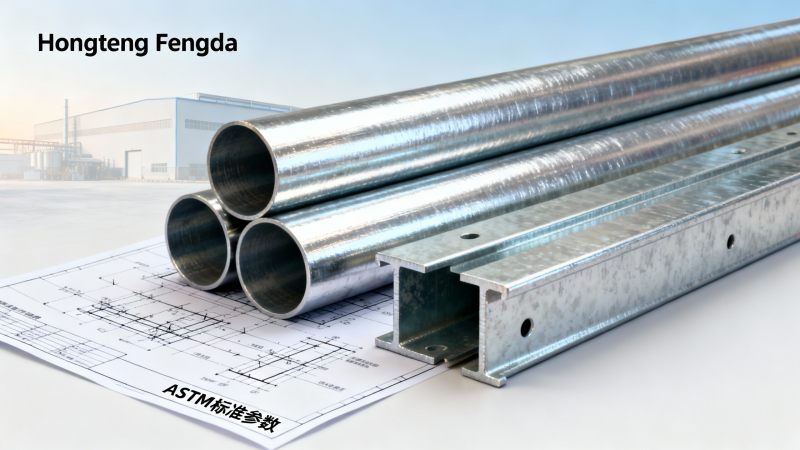
One notable case involves a manufacturing complex in Southeast Asia that upgraded its gas distribution network using galvanized steel pipe supplied by Hongteng Fengda. Previously reliant on black steel tubing, the facility faced yearly corrosion-related leaks and repainting costs. After transitioning to galvanized pipelines, inspection reports showed a 60% reduction in corrosion incidents within two years. In another European water treatment project, combining Galvanized Channel Steel and stainless steel tubing resulted in an extended operating life exceeding expected benchmarks. ROI improved as labor expenses and maintenance frequency dropped drastically. Distributors and agents appreciate similar outcomes when reselling galvanized pipes and related items like steel angle bar or U channel steel, as their customers associate the brand with longevity and reliability. These real-world examples validate the financial and operational benefits claimed during technical assessments and demonstrate why galvanized piping remains an engineering staple for cost-controlled yet durable infrastructure.
Trends and Future Insights in Galvanized Steel Piping
Future developments in galvanized steel technology focus on eco-friendly coatings and digital tracking. Smart galvanizing processes leveraging AI monitoring predict coating anomalies and adjust zinc consumption in real-time, ensuring material consistency while reducing waste. As global policies emphasize sustainable steel use, demand for recyclable materials like galvanized steel pipe and carbon steel coil is projected to rise steadily. Manufacturers are also experimenting with alloying layers to enhance corrosion resistance without toxic additives. The trend extends toward integrating digital lifecycle management, enabling end-users to estimate performance through data visualization. In global construction, modular frameworks combining C-shaped steel profile and galvanized pipe are becoming mainstream due to efficient assembly and reduced logistics costs. Moreover, future adoption of hybrid coatings is expected to improve lifespan in acidic industrial environments, providing another ROI layer for stakeholders focused on longevity and regulatory compliance without inflating initial capital expenditure.
Why Choose Hongteng Fengda as Your Structural Steel Partner
Hongteng Fengda distinguishes itself through manufacturing precision, international standard compliance, and client-centered customization. As a professional structural steel manufacturer and exporter from China, its portfolio includes angle steel, channel steel, steel beams, cold formed profiles, and stainless steel pipe—all engineered to sustain rigorous industrial environments. For enterprise decision-makers requiring scalable supply and guaranteed quality, partnering with Hongteng Fengda ensures delivery reliability, reduced sourcing risks, and competitive pricing. The company’s global footprint spans North America, Europe, the Middle East, and Southeast Asia, enabling consistent cross-border logistics performance. Each product, including galvanized steel wire and stainless steel tubing, is produced under strict quality control protocols that safeguard every project’s operational integrity. Whether for new installations or refurbishment works, choosing Hongteng Fengda means choosing a long-term strategic partner dedicated to efficient project fulfillment and measurable ROI improvement across all industrial applications.
- channel steel
- l angle
- angle steel
- steel coil galvanized
- coil galvanized
- galvanized steel wire
- galvanized wire
- carbon steel pipe
- galvanized steel pipe
- Electro Galvanized Wire
- steel tubing
- carbon steel coil
- DX51D
- galvanized pipe
- steel pipe
- steel coil
- galvanized steel
- structural steel
- steel beams
- steel profiles
- C-shaped steel profile
- C-shaped steel
- Galvanized Channel Steel
- U channel steel
- galvanized channel steel
- Structural Steel
- steel angle bar
- Steel Beams
- U Channel Steel
- stainless steel tubing
- stainless steel pipe
- ss pipe
- Profile
- Galvanized
- Steel Beam
- Steel Wire
- carbon steel
- steel profile
- steel angle
Related recommendations
 What Affects the Cost of Galvanized Steel in Fabrication Projects?Galvanized steel costs vary far beyond raw material price. Learn how coating, steel grade, fabrication, logistics, and hidden quote items affect project budgets before you buy.
 Steel Wire Strand Applications in Lifting and Support: Key Load and Safety ConsiderationsSteel wire strand selection for lifting and support starts with real load, fatigue, corrosion, and anchoring conditions. Learn how to improve safety, service life, and structural reliability.
 Architectural Steel Angle in Facades, Edges, and Clean LinesArchitectural steel angle improves facade edges, clean lines, and structural precision. Discover how it supports durability, faster installation, and smarter project control.
 Where Cold Formed Steel Angle Works Best in Modern BuildsCold formed steel angle works best in modular builds, secondary framing, and utility supports. Learn where it adds value, what to verify, and how to choose the right profile with confidence.
Please give us a message


Please enter what you want to find