As aerospace engineering evolves, the demand for advanced carbon steel for aerospace applications is defining new standards of performance and reliability. Hongteng Fengda, a leading structural steel manufacturer and exporter from China, integrates precision manufacturing to supply high-quality materials such as steel channel for modular construction, cold rolled steel sheet, and steel bar for power plants. From steel pile for offshore platforms to customized steel profile for greenhouse construction, our expertise supports engineering innovation and sustainable growth across global industries. Driven by a strong commitment to quality, every batch of material adheres to international codes, including ASTM, EN, JIS, and GB, making our products trusted choices across aerospace, infrastructure, and manufacturing projects worldwide. This article explores the emerging trends of carbon steel for aerospace applications, discussing its properties, application advantages, and how Hongteng Fengda continues to strengthen global supply chains with reliable steel solutions.
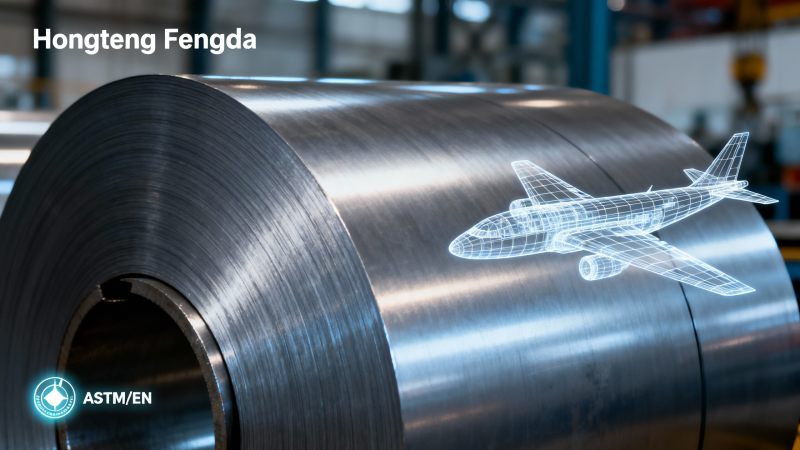
Definition and Material Overview
Carbon steel remains one of the most versatile materials in the Metallurgical and Aerospace sectors. By altering the carbon content and adding specific alloying elements, engineers achieve a precise balance between strength, ductility, and fatigue resistance. For aerospace use, carbon steel grades must meet rigorous mechanical tolerance and durability requirements, as these materials are frequently exposed to vibration, thermal fluctuation, and aggressive environments. Compared with other metallic solutions, this material’s advantage lies in its superior structural integrity and cost-effectiveness in manufacturing processes such as forging, deep drawing, and precision machining. Hongteng Fengda’s production of carbon steels is supported by modern cold forming lines, ensuring stable dimensional accuracy and surface quality. Alongside products like steel rebar for precast concrete and steel pile for retaining walls, our carbon steel provides outstanding stability for both dynamic and static loading structures. The integration of advanced galvanizing and finishing processes improves corrosion protection even under challenging aerospace conditions.
Market Overview and Supply Dynamics
The global aerospace materials market has undergone structural transformation. The preference for lighter yet stronger materials pushes steel producers to innovate continuously. While titanium and composites are widely used, carbon steel still represents a fundamental segment for auxiliary systems, tooling, hangar structures, and support frames surrounding aircraft maintenance facilities. The recovery of commercial aviation after pandemic disruptions and the expansion of satellite infrastructure projects have both driven fresh momentum in carbon steel for aerospace. China’s position as a core supplier strengthens due to refined production control and performance testing technologies. As a Structural Steel Manufacturer & Exporter from China, Hongteng Fengda delivers consistent outputs aligned with North American and European standards. Our steel bar for agricultural machinery and Steel Channel for mezzanine floors are essential for industrial constructs supporting aerospace research and logistics. Procurement officers and project directors favor suppliers that can guarantee stable lead times, and Hongteng Fengda’s capacity planning directly aligns with those expectations, allowing flexible order scheduling and customization options for special alloys and structural profiles.
Application Scenarios in Aerospace
The application of carbon steel in aerospace engineering covers numerous facets beyond flight parts. Aerospace production facilities depend on steel channel for modular construction to create precision platforms, while maintenance docks use steel beams and piles for load-bearing infrastructures. In ground support equipment, designers prefer high-yield carbon steels to ensure impact resistance and long-term operational endurance. Cold rolled steel sheet is extensively applied in fairing molds, tool frames, and testing machines due to its uniform thickness and tight tolerance. For offshore testing bases and aircraft component factories near coastal locations, corrosion-resistant solutions like galvanized steel piles for offshore platforms and reinforced steel profile for greenhouse construction are in high demand. Hongteng Fengda complements these use cases with its advanced galvanizing processes that improve the service life of metal surfaces. A representative example is our Steel Coil Galvanized, which utilizes zinc-based coatings that act as a protective barrier, effectively delaying oxidation even in salt-air environments critical for aerospace assembly zones. Yield and tensile strength consistency make these products suitable for both aerospace ancillary construction and transportation platforms.
Technical Performance and Specifications
To deliver qualified carbon steel for aerospace sectors, material performance must satisfy multiple mechanical benchmarks. Typical parameters include yield strength above 350–550 MPa, tensile strength exceeding 500 MPa, and elongation levels to ensure adequate formability. Hongteng Fengda employs numerical-controlled rolling and precise heat treatment to achieve microstructural uniformity and grain refinement. The galvanizing process with zinc decomposition mechanisms improves surface protection, as zinc decomposes first to defend the underlying metal. Our technical divisions measure fatigue cycles under simulated altitude conditions to confirm long-term stability. Detailed comparisons reveal that compared with stainless alternatives, carbon steel maintains a higher modulus of elasticity, ensuring dimensional integrity under high load. Combined with coatings like hot-dip zinc, it’s better suited for assembling maintenance hangars, scaffolding, and ground simulators. Specifications such as those used in DX51D+Z, SGCC, and S350GD+Z grades are widely compatible with aerospace auxiliary equipment. These standards have been formulated around recognized certifications: ASTM A653, EN 10346, JIS G3302, ensuring international interoperability. For instance, materials like DX53D+Z show excellent forming properties required for aerodynamic tooling. Engineers can refer to Hongteng Fengda’s internal database, which features the property coefficient charts and performance categorization for each coil thickness and width range, offering transparency and traceability during sourcing reviews.
Procurement Guidelines and Cost Considerations
When purchasing carbon steel for aerospace projects, procurement specialists must combine technical understanding with supply risk control. Essential assessment metrics include production certification validity, welding compatibility, dimensional tolerance, and shipping stability. Working closely with the supplier allows engineers to obtain a balanced cost-performance ratio while meeting safety margins. Hongteng Fengda’s operational model emphasizes continuous quality tracking from smelting to dispatch, guaranteeing manufacturing repeatability and minimizing variation batches. For projects requiring hybrid use materials—like a fusion of steel bar for power plants with high-precision cold rolled steel sheet—our procurement guide recommends thorough hardness mapping and coating inspection before assembly. Cost-wise, carbon steel remains advantageous compared with advanced composites, offering easier machinability, recyclability, and lower investment during field modification. To further reduce expenses, galvanized coatings can extend service life by up to 40%, decreasing overall maintenance frequency. In this sense, a product such as Steel Coil Galvanized exemplifies durability and extended performance with thickness options from 0.12 mm to 3.5 mm and widths up to 1500 mm, supporting customization. Decision-makers can align budget optimization with environmental stewardship by selecting these recyclable materials, thus aligning procurement with sustainable, circular objectives in aerospace infrastructure.
Standards and Certification Compliance
Aerospace clients often impose stringent audit processes on raw material suppliers. Certification under standards such as AISI, ASTM A1011, DIN 17100, JIS G 3101, and GB 700 ensures systemic reliability. Hongteng Fengda adheres to multi-level inspection covering chemical composition analysis, ultrasonic non‑destructive testing, and mechanical property verification. For galvanized products, coating adhesion tests and neutral salt spray exposure validations are executed regularly. Compliance with EN ISO 1461 defines zinc coating thickness uniformity and its corrosion resistance lifespan estimation. As a global supplier, Hongteng Fengda establishes an integrated quality documentation system, enabling easy traceability for clients across aerospace and industrial sectors. Every batch of steel pile for retaining walls or steel channel for mezzanine floors is supplied with a mill test certificate stating tensile strength, elongation, and coating parameters. This transparency reassures both project managers and quality control personnel that each structural part fulfills regulatory and safety requirements before entering assembly lines or ground support stations, consolidating long-term trust and stable partnerships between suppliers and aerospace contractors.
Case Studies and Industry Practices
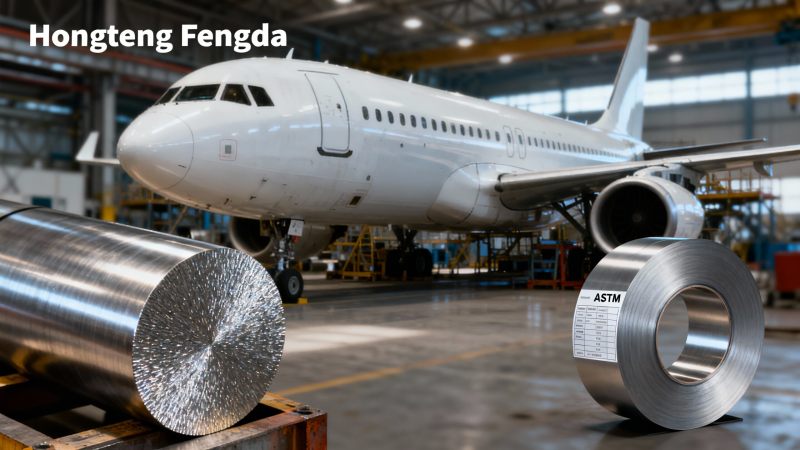
In recent aerospace infrastructure development, several projects showcase the reliability of Hongteng Fengda’s structural steels. For instance, an aviation maintenance base in Southeast Asia adopted our carbon steel beams and channels for its hangar expansion, reducing fabrication time by 18%. Another project involving hybrid offshore launch platforms utilized steel pile for offshore platforms with enhanced galvanization and modular installation systems, demonstrating superior wind load tolerance. Collaboration with European aerospace integrators also led to custom cold formed steel profiles tailored for high-precision assembly jigs, aligning with EN 1993 structural design frameworks. The company’s adaptive manufacturing lines support changing client requirements by applying digital nesting optimization, improving material yield and reducing scrap ratios. Reports from project managers indicated that Hongteng Fengda’s supply consistency reduced logistics uncertainty and compliance documentation time. These experiences verify our capacity to combine technical capability with real-world project reliability. The excellent field results reflect the strength of both our material quality and our professional service as a Structural Steel Manufacturer & Exporter from China, ultimately aiding partners in achieving safer, more efficient aerospace operations.
Trends and Future Insights
The future of carbon steel for aerospace applications will likely revolve around intelligent processing and environmental adaptation. Industry forecasts predict wider integration of data-driven quality control, additive surfacing treatments, and hybrid coatings leveraging nano‑zinc particles for enhanced corrosion resistance. Moreover, life cycle cost analysis is emerging as a decisive factor guiding material selection. Carbon steel, with its recyclability advantage and affordable metallurgical upgrading, aligns with sustainable aviation goals. Innovative manufacturing routes such as thermo‑mechanical controlled rolling and vacuum degassing will continue to refine grain structure homogeneity and reduce impurity-induced crack risk. Hongteng Fengda is investing in these advancements, combining automation, sensor monitoring, and technical engineering expertise to support continuously evolving aerospace requirements. In addition, cross-sector collaboration between steelmakers and aerospace R&D institutions foster material databases and predictive fatigue modeling essential for long-service operations. Decision-makers prioritizing productivity, reliability, and regulatory compliance can rely on suppliers that integrate intelligent planning into the manufacturing process—precisely the framework Hongteng Fengda has established in its facilities, setting a new benchmark for carbon steel innovation across international markets.
Why Choose Hongteng Fengda
Choosing Hongteng Fengda means partnering with a trusted structural steel manufacturer that understands the profound link between engineering precision and material reliability. We combine technological depth, robust manufacturing capability, and client‑centric services. Our extensive product portfolio—from steel bar for agricultural machinery to carbon steel for aerospace—supports both standard and customized specifications. Engineers, procurement officers, and project coordinators worldwide benefit from our consistent lead times and immediate technical support. Continuous technological improvement and strict adherence to ASTM, EN, JIS, and GB standards confirm that Hongteng Fengda’s steel products comply with the most demanding aerospace regulations. We believe long-term collaboration empowers our clients to minimize sourcing risks, maintain quality assurance, and elevate efficiency. To discuss project requirements or request technical data sheets, we encourage interested buyers and industry professionals to contact our dedicated overseas trade team. Hongteng Fengda remains fully committed to providing dependable solutions that reinforce the next generation of aerospace infrastructure and innovative engineering worldwide.
- steel i
- carbon steel beams
- steel coil galvanized
- coil galvanized
- cold rolled steel
- DX51D
- SGCC
- steel coil
- galvanized steel
- structural steel
- steel beams
- steel profiles
- Structural Steel
- Steel Beams
- Profile
- Rebar
- Galvanized
- Steel Beam
- Steel Channel
- carbon steel
- steel sheet
- steel rebar
- steel profile
- steel pile
- steel bar
- Steel Channel for mezzanine floors
- steel bar for agricultural machinery
- steel pile for retaining walls
- steel profile for greenhouse construction
- steel rebar for precast concrete
- cold rolled steel sheet
- carbon steel for aerospace
- Steel Channel for modular construction
- steel bar for power plants
- steel pile for offshore platforms
Related recommendations
 What Affects the Cost of Galvanized Steel in Fabrication Projects?Galvanized steel costs vary far beyond raw material price. Learn how coating, steel grade, fabrication, logistics, and hidden quote items affect project budgets before you buy.
 Steel Wire Strand Applications in Lifting and Support: Key Load and Safety ConsiderationsSteel wire strand selection for lifting and support starts with real load, fatigue, corrosion, and anchoring conditions. Learn how to improve safety, service life, and structural reliability.
 Architectural Steel Angle in Facades, Edges, and Clean LinesArchitectural steel angle improves facade edges, clean lines, and structural precision. Discover how it supports durability, faster installation, and smarter project control.
 Where Cold Formed Steel Angle Works Best in Modern BuildsCold formed steel angle works best in modular builds, secondary framing, and utility supports. Learn where it adds value, what to verify, and how to choose the right profile with confidence.
Please give us a message


Please enter what you want to find