Choosing the right Steel Channel for modular construction is crucial to ensure structural integrity, cost efficiency, and project scalability. Whether you’re evaluating steel channel options for mezzanine floors, comparing carbon steel for aerospace projects, or sourcing steel rebar for precast concrete applications, understanding material performance by project scale is key. This guide helps procurement teams, engineers, and project managers identify the optimal steel profile—from steel piles for retaining walls to cold rolled steel sheets—so every construction stage benefits from Hongteng Fengda’s proven quality and global supply reliability.
Definition and Overview of Steel Channels in Modular Construction
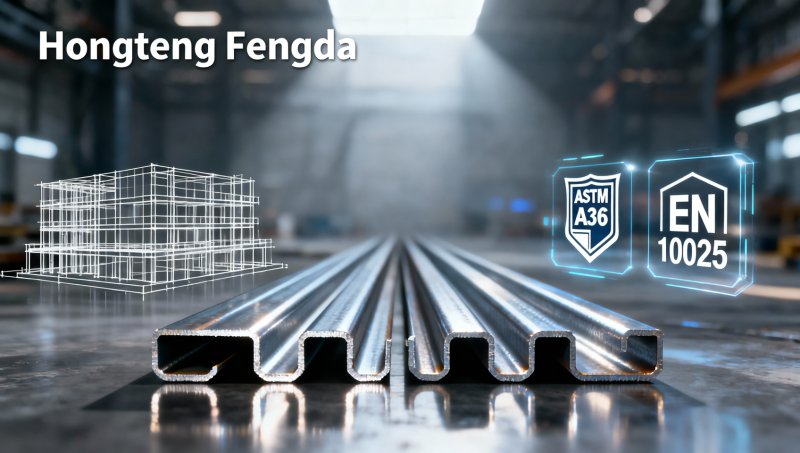
Steel channels serve as primary structural elements in modular assemblies, mezzanine floors, prefabricated housing units, and industrial plants. They are characterized by their U- or C-shaped cross-section, which provides both rigidity and weight efficiency for vertical and horizontal load-bearing structures. In modular construction, the choice among different sizes and grades of channels—such as hot-rolled, cold-formed, or galvanized—depends largely on project scale and load capacity. Small and mid-sized modular projects often rely on light-gauge cold formed steel profiles to maintain flexibility, while large-scale commercial or industrial facilities employ high-strength rolled channels meeting ASTM A36 or EN 10025 standards. Hongteng Fengda, a professional structural steel manufacturer and exporter from China, specializes in producing high-performance channel steel, beam sections, steel rebar for precast concrete, and steel profiles for greenhouse construction. All products conform to rigorous international standards, ensuring compatibility for global construction codes. Engineers and quality managers value these products for their dimensional accuracy and consistent performance across project phases. This is particularly vital for projects requiring precision alignment, such as steel bar reinforcement in agricultural machinery or carbon steel components for aerospace-grade applications.
Market Overview and Industry Dynamics
The rising global demand for modular and prefabricated construction systems continues to boost the need for reliable steel channel suppliers. From North America’s commercial developments to Middle Eastern industrial complexes, project managers prioritize structural materials that promise strength-to-weight efficiency and predictable lead times. Steel channel production capacity has shifted toward smart manufacturing, with automated rolling mills and digital inspection ensuring superior consistency. In 2023, the global market for modular construction steel profiles grew by over 10%, largely driven by increased usage of steel piles for offshore platforms and steel rebar for precast concrete foundations. Moreover, cost optimization remains central to procurement strategies. Firms sourcing from Hongteng Fengda benefit from steady output and cost-effective logistics. By offering a broad portfolio including cold rolled steel sheet and specialized carbon steel for aerospace, Hongteng Fengda supports a vast range of projects — from transportation infrastructure to renewable energy facilities. The market also reveals a trend toward corrosion-resistant materials. Hot dip galvanizing and customized coatings are becoming standard requirements for steel channels used in challenging marine or industrial conditions. This is where value-added solutions, such as integrating components like Galvanized Steel Wire Rope for crane or modular lifting assemblies, further enhance project safety and durability across multiple engineering disciplines.
Technical Performance and Evaluation Criteria
Evaluating a Steel Channel for modular construction involves technical parameters such as section modulus, yield strength, tolerance, surface treatment, and weldability. Engineers often assess cross-sectional geometry to ensure adequate stiffness under axial and bending loads. For mezzanine floors or modular industrial platforms, choosing the right combination of thickness and height helps optimize cost without compromising safety. Typical hot rolled channels used in large-scale projects feature yield strengths ranging from 235 MPa to over 450 MPa, suitable for high-load applications such as freight terminals or prefabricated logistics warehouses. In contrast, small modular units—schools, offices, or temporary facilities—favor lighter channels made from cold formed steel profiles for easy handling. At Hongteng Fengda, strict quality inspection ensures compliance with ASTM, EN, JIS, and GB standards. Each steel bar, channel, or beam is tested for dimensional tolerance, coating adhesion, and microstructure consistency, vital for maintaining structural reliability. Additionally, when modular systems incorporate lifting or tensile components, manufacturers may use accessories such as Galvanized Steel Wire Rope, whose tensile strength ranges from 1470 MPa to 1960 MPa, ensuring compatibility for cranes, tower cranes, and foundation drilling operations. For offshore platforms, the synergy between steel pile for retaining walls and channel framing provides immense resistance against torsion and oceanic pressure. Such integration underscores the importance of precise channel evaluation, especially when modular units are subjected to wind, vibration, or seismic influences.
Comparison Analysis: Project Scale vs. Material Choice
Project scale determines the steel channel’s load-bearing classification, coating requirements, and fabrication approach.
- Small-scale Projects: Such as portable classrooms or light mezzanine floors, usually adopt cold-rolled steel channels for cost efficiency. These designs value ease of assembly and minimal weight. Corrosion protection is achieved through electro-galvanized finishes, ideal for interior installations.
- Mid-scale Industrial Units: Projects like workshops or commercial extensions require medium-strength channels with higher web thickness, often EN-standard sections combined with steel bar for power plants. Weldability and modularity are the key parameters guiding material selection.
- Large-scale Infrastructural Projects: Offshore platforms, heavy factories, and transport depots use carbon steel for aerospace grade toughness or reinforced profiles conforming to ASTM A572. Here, safety margins must consider both vertical and lateral stability. Steel piles for offshore platforms, connected via channel assemblies, form structural skeletons that resist dynamic loading over decades.
Procurement Guide and Best Practices
Selecting the right supplier and specification is central to successful project delivery. Procurement officers should evaluate steel channels based on mechanical certification, supplier credibility, and logistical consistency.
- Assess Certification: Verify compliance with ISO 9001 and relevant construction codes. Hongteng Fengda provides full documentation, ensuring conformity with ASTM, EN, and GB requirements.
- Check Material Traceability: Consistent batch control and mill certifications confirm steel origin and chemical composition accuracy.
- Review Coating Options: For environments like marine terminals or photovoltaic structures, thick galvanized coatings—ranging from 75 to 260 g/m²—ensure long-term corrosion defense, as practiced in the production of hot dipped galvanized profiles.
- Plan for Scalability: As modular projects expand, structural re-use and alignment accuracy depend on the channel’s dimensional control. Hongteng Fengda’s automated cutting lines support these precision requirements.
Cost management also includes evaluating alternatives. For moderate-load scenarios, replacing large beams with optimized channel systems can achieve up to 20% material cost savings. When combined with steel pile for retaining walls or rebar foundations, these channels create a cohesive load path ideal for extended modular growth. Equipped with digital inspection and stable capacity, Hongteng Fengda remains a reliable partner for global construction buyers—helping reduce sourcing risk, control cost, and achieve timely installation across modular construction ecosystems.
Case Studies and Industry Examples
Case applications demonstrate the performance adaptability of structural steel channels. 1. Mezzanine Floor Warehousing Project (Europe): A logistics company utilized standardized hot-rolled channels supplied by Hongteng Fengda. Integration with steel rebar for precast concrete basements improved load distribution without increasing total frame weight. 2. Offshore Wind Platform Project (Southeast Asia): Implementing double-layered steel pile for offshore platforms combined with customized channel joints enhanced torsional stiffness and reduced fatigue. 3. Agricultural Machinery Plant (North America): Structural beams and steel bar for agricultural machinery applications achieved optimized cost-performance, aligning with ISO 9001 quality standards. In each case, consistent supply, international compliance, and engineering support from Hongteng Fengda allowed project teams to meet tight deadlines while adhering to safety criteria.
Trends and Future Insights
The future of modular construction favors prefabricated, digitally integrated, and eco-friendly steel systems. Smart design collaboration allows engineers to simulate load paths and select appropriate Steel Channel configurations based on data-driven modeling. Sustainability also underscores the trend—recyclable carbon steel materials and cold rolled steel sheet elements are being prioritized to reduce the ecological footprint. Globally, demand for multifunctional profiles like steel profile for greenhouse construction and high-performance steel for renewable infrastructure is expanding. Integration of advanced coatings and smart sensors enables real-time monitoring of structural health, ensuring longer service life. Hongteng Fengda continues to invest in automation, precision forming, and customized surface treatment technologies to meet evolving global standards. Whether for aerospace, power plant systems, or large commercial structures, our mission is to enhance reliability, deliver scalable consistency, and sustain long-term partnerships worldwide.
Why Choose Hongteng Fengda
As a Structural Steel Manufacturer and Exporter from China, Hongteng Fengda provides more than just steel—it offers project assurance. Our range includes angle steel, channel steel, cold formed profiles, and specialized components for modular systems. Backed by ISO, EN, JIS, and GB certifications, every product guarantees both mechanical precision and reliable supply continuity. Clients across continents recognize our commitment to stable production, on-time delivery, and full after-sales technical support. We help partners transform design concepts into efficient modular solutions through agile sourcing and engineering support. Whether your next build involves steel piles for retaining walls, steel bars for power plants, or advanced profiles for mezzanine floors, Hongteng Fengda stands ready to serve as your trusted structural steel partner—delivering durability, integrity, and value for every project scale.
- structural steel channel
- channel steel
- angle steel
- galvanized steel wire
- cold rolled steel
- ASTM A572
- construction steel
- galvanized steel
- ASTM A36
- structural steel
- steel profiles
- Structural Steel
- Profile
- Rebar
- Galvanized Steel Wire Rope
- Galvanized
- Steel Wire
- Steel Channel
- carbon steel
- steel sheet
- steel rebar
- steel profile
- steel pile
- steel bar
- steel wire rope
- steel bar for agricultural machinery
- steel pile for retaining walls
- steel profile for greenhouse construction
- steel rebar for precast concrete
- cold rolled steel sheet
- carbon steel for aerospace
- Steel Channel for modular construction
- steel bar for power plants
- steel pile for offshore platforms
Related recommendations
 How much does 2 inch ss pipe price increase when upgrading from Schedule 40 to Schedule 80 for high-pressure systems?2 inch ss pipe price increases 18–35% when upgrading from Sch 40 to Sch 80—discover why, when it’s truly needed, and how to avoid overpaying.
 Which 304 stainless steel coil suppliers meet ISO 9001 and EN 10088-2 for food-grade fabrication?Discover verified 304 stainless steel coil suppliers meeting ISO 9001 & EN 10088-2 for food-grade fabrication—traceable, audited, and ready for regulatory validation.
 How does 2 inch ss pipe price compare between 304 and 316 grades for marine environments?2 inch ss pipe price varies significantly between 304 and 316 — but in marine environments, choosing 304 risks costly failures. Discover why 316 is the true value choice.
 Is 20 feet square pipe price affected more by raw material volatility or regional logistics costs?20 feet square pipe price is driven primarily by raw material volatility—not logistics. Discover why billet costs dominate pricing & how to forecast smarter with Hongteng Fengda.
Please give us a message


Please enter what you want to find