Choosing the right zinc coating method is critical for outdoor structural steel durability—especially in harsh environments. Among galvanizing options, hot galvanizing stands out for its thick, metallurgically bonded zinc layer, offering superior corrosion resistance and longevity compared to electrogalvanizing and sherardizing. As a leading structural steel manufacturer and exporter from China, Hongteng Fengda helps global project teams evaluate these processes objectively—balancing performance, cost, compliance (ASTM/EN/GB), and lifecycle maintenance needs. This article compares all three methods head-to-head for real-world infrastructure applications.
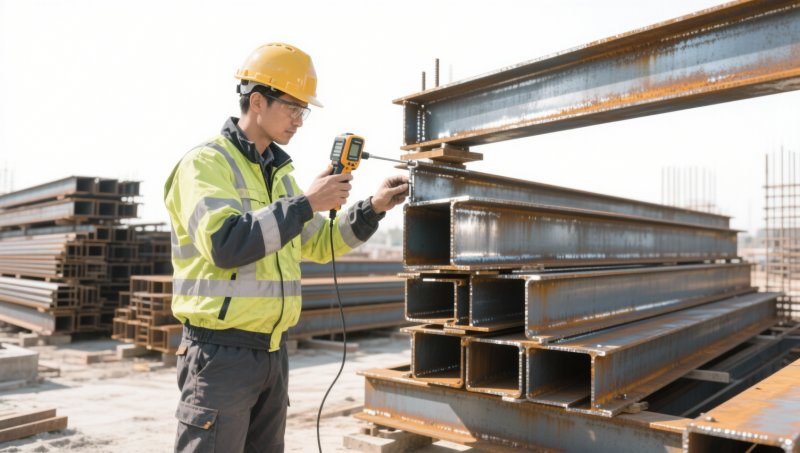
How Zinc Coating Methods Differ at the Metallurgical Level
Zinc coatings protect structural steel through barrier protection and cathodic action—but their bonding mechanism, thickness uniformity, and microstructure vary significantly. Hot-dip galvanizing forms a series of intermetallic alloy layers (Gamma, Delta, Zeta) with a pure zinc outer layer, resulting in a typical coating thickness of 50–120 µm on structural sections. Electrogalvanizing deposits pure zinc via electrolysis, yielding only 5–25 µm thickness with no alloy layer—making it vulnerable to mechanical damage and edge thinning. Sherardizing uses zinc powder diffusion at 320–380°C to create a uniform, matte gray zinc-iron alloy coating (10–30 µm), ideal for small, complex parts but impractical for large beams or columns.
The metallurgical bond dictates service life: hot-dip coatings withstand abrasion, impact, and thermal cycling common in bridge girders or transmission towers. Electrogalvanized surfaces may begin showing red rust within 2–5 years in coastal zones (ISO 9223 C4/C5), while hot-dip systems routinely deliver 20–70 years of maintenance-free performance depending on environment. Sherardized coatings perform well indoors or in mildly corrosive settings but lack the mass and adhesion needed for exposed structural frames.
For structural integrity, ASTM A123/A123M mandates minimum average coating thicknesses: 85 µm for steel >6 mm thick, and 100 µm for items like anchor bolts or embedded plates. EN ISO 1461 specifies similar thresholds—both standards explicitly exclude electrogalvanizing for primary load-bearing outdoor structures due to insufficient thickness and adhesion reliability.
This table confirms why hot-dip galvanizing remains the globally accepted standard for outdoor structural steel—its thickness, bond strength, and compliance alignment make it irreplaceable where safety, longevity, and regulatory acceptance are non-negotiable.
Performance in Real-World Infrastructure Environments
In marine or industrial atmospheres (ISO 9223 C4/C5), hot-dip galvanized steel demonstrates predictable corrosion rates: 0.8–1.5 µm/year loss in splash zones, translating to 30+ years before base steel exposure. Electrogalvanized components often fail within 3–7 years under identical conditions due to rapid localized pitting at scratches or cut edges. Sherardizing offers better uniformity than electroplating but lacks the sacrificial mass to sustain decades of exposure—its thinner coating depletes faster in high-chloride settings.
Structural welds present another key differentiator. Hot-dip galvanizing tolerates post-weld re-coating via touch-up zinc-rich paints (ASTM A780), preserving continuity across joints. Electrogalvanizing cannot be locally reapplied without stripping and reprocessing the entire part—a logistical and cost burden for field-assembled bridges or power substations. Sherardizing requires batch processing, making repair impossible without full component removal and re-diffusion.
Hongteng Fengda’s structural steel products—including angle steel, channel steel, and custom beams—are routinely hot-dip galvanized per ASTM A123, EN ISO 1461, and GB/T 13912. Our production facilities maintain strict bath chemistry control (zinc purity ≥98.5%, Al 0.005–0.02%) and immersion times calibrated to section thickness—ensuring consistent coverage even on hollow sections and bolted assemblies.
Cost, Lead Time, and Lifecycle Value Analysis
While electrogalvanizing has lower upfront costs (15–30% less than hot-dip), its lifecycle TCO is higher: 3–5x more frequent inspections, 2–4x more touch-up labor, and earlier replacement cycles. Hot-dip galvanizing adds ~8–12% to raw material cost but reduces total maintenance expenditure by 60–75% over 25 years. Sherardizing sits between them in price but suffers from limited scalability—batch sizes are capped at ~500 kg, causing lead time variability of 10–25 days versus hot-dip’s stable 7–15 day turnaround.
For procurement professionals evaluating bids, consider these four decision criteria:
- Compliance alignment: Does the coating meet ASTM A123/EN ISO 1461 for structural use?
- Coating verification: Is thickness measured per ASTM B499 (magnetic induction) at 3+ points per surface?
- Adhesion test: Does it pass the ASTM A123 hammer test (no flaking under 10 J impact)?
- Traceability: Are mill test reports (MTRs) provided with batch-specific coating data?
Hongteng Fengda includes full MTRs with every shipment and supports third-party inspection (SGS/BV) at origin. We also offer pre-galvanizing consultation to optimize part design—e.g., venting holes for hollow sections, avoiding trapped acid pockets—to ensure 100% coverage and eliminate post-process rejection.
When Wire Rod Applications Demand Integrated Corrosion Strategy
Corrosion protection doesn’t stop at primary structural members. Reinforcing Wire rod used in foundations, beams, and slabs must also resist early-stage chloride ingress. Our HRB400 and HRB500 grade wire rods—available in diameters from 6mm to 40mm—support multiple surface treatments: hot-dip galvanizing (per ASTM A641), PVC coating (for chemical plants), or anti-rust oil (for short-term storage). For projects requiring dual-layer defense, we supply galvanized wire rod with additional black painting—meeting BS4449-2005 and ASTM A615 requirements for civil engineering construction.
Unlike standalone coating decisions, wire rod treatment must align with concrete pH compatibility and bond strength requirements. Galvanized wire rod maintains >90% tensile bond strength vs. black steel in normal concrete (per ACI 408R-16), whereas electrogalvanized variants risk hydrogen embrittlement in high-strength grades and show inconsistent pull-out performance.
Selecting the right method isn’t about “best” in isolation—it’s about matching metallurgical behavior, environmental severity, inspection protocols, and lifecycle budgeting. Hot-dip galvanizing remains the benchmark for outdoor structural steel, while electrogalvanizing and sherardizing serve niche roles where thickness, scale, or geometry constrain alternatives.
Partner with a Manufacturer Who Understands Your Project’s Full Coating Lifecycle
Hongteng Fengda doesn’t just supply coated steel—we engineer coating readiness into every stage: from raw material selection (Q235, Q345, ASTM A53) and pre-treatment optimization (pickling, fluxing, drying) to post-galvanizing inspection and documentation. Our ISO 9001-certified quality system tracks coating thickness, adhesion, appearance, and chemical composition per batch—ensuring full traceability from coil to construction site.
Whether you’re specifying steel for a wind farm substation in Saudi Arabia, a metro viaduct in Southeast Asia, or a flood-control dam in North America, our team provides technical support in English, Arabic, Spanish, and Mandarin—and delivers compliant, on-time shipments to over 40 countries. With production capacity exceeding 500,000 MT/year and flexible MOQs starting at 5 tons, we help procurement and engineering teams mitigate sourcing risk without compromising performance.
Ready to validate your next structural steel specification against real-world coating performance? Contact Hongteng Fengda today for a free technical review, sample testing report, or customized galvanizing compliance checklist.
Related recommendations
 Sustainability Trends in the Global Steel Tubing MarketsExplore sustainability trends in the global steel tubing market. Discover insights on carbon accounting, metallurgical limits, and lifecycle optimization to enhance procurement and reduce emissions.
 Lifecycle Cost Analysis of Steel Roofing vs. Traditional TilesDiscover how Steel Roofing outperforms traditional tiles in lifecycle cost analysis. Learn about CapEx savings, lower maintenance, and higher ROI for your commercial project.
 Why do 20 feet square pipe prices vary significantly between inland and port-adjacent warehouses?20 feet square pipe price varies by location—discover why port-adjacent warehouses often deliver better total cost, speed & ROI. Get the finance-approved breakdown.
 Do the advantages of galvanized steel outweigh long-term maintenance costs in humid industrial zones?Advantages of galvanized steel in humid industrial zones? Yes—when engineered right. Discover how proper specification cuts long-term maintenance costs by 2–3×.
Please give us a message


Please enter what you want to find