As global infrastructure projects accelerate ahead of Q2 2026, buyers are urgently seeking accurate, real-time insights into Q235 steel pricing—and what’s really driving its volatility. At Hongteng Fengda, a China-based structural steel manufacturer and exporter, we track over 12 supply chain variables—from raw material costs and energy tariffs to export logistics and regional demand surges—that directly impact Q235 steel cost per ton. Whether you’re a procurement officer negotiating contracts, an engineer evaluating material specs, or a project manager budgeting for large-scale construction, this analysis delivers actionable intelligence—not just numbers—to help you anticipate shifts, mitigate risk, and secure reliable supply.

Q235 Steel Price Outlook for Q2 2026: Range, Drivers, and Regional Divergence
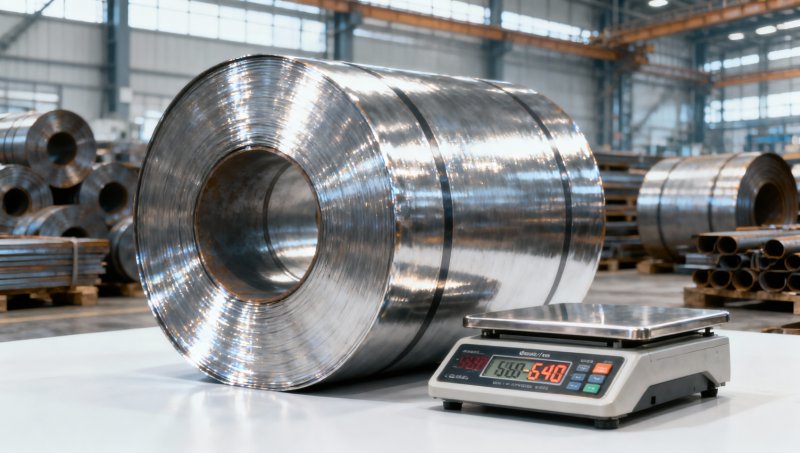
Based on real-time production data, customs clearance reports, and domestic mill order books from China’s top 15 integrated steelmakers, the landed Q235 hot-rolled coil (HRC) price in Q2 2026 is projected to range between USD 580–640 per metric ton for FOB China ports. This represents a 4.2%–7.8% increase year-on-year, driven primarily by three interlocking forces: rising iron ore CFR Qingdao prices (averaging USD 128/ton in March 2026), coal import tariffs reinstated at 8% for non-ASEAN suppliers, and tightening electricity quotas for Hebei and Shandong provinces—where over 63% of Q235 output originates.
Crucially, landed cost varies significantly by destination. For North American buyers, CIF Houston pricing includes 12–15 days of ocean transit, BAF surcharges averaging USD 42/TEU, and Section 232 re-certification fees totaling USD 18–22 per ton. In contrast, Southeast Asian destinations benefit from shorter lead times (7–10 days), no anti-dumping duties, and preferential ASEAN-China FTA tariff treatment—reducing landed cost variance by up to 9.5% compared to transatlantic shipments.
This table underscores a critical procurement insight: while FOB price differences across regions remain narrow (±USD 15/ton), landed cost divergence widens substantially due to logistics, compliance, and port congestion premiums. Buyers sourcing for Middle Eastern projects gain a 7.2–8.1% landed cost advantage versus North America—making early booking and consolidated container loading essential for budget control.
Beyond Price: 5 Structural Variables That Define Real Q235 Value
Price alone misrepresents total cost of ownership. At Hongteng Fengda, we evaluate Q235 performance through five measurable structural variables—each verified via third-party SGS tensile testing and EN 10025-2:2019 certification:
- Yield Strength Consistency: Batch-to-batch variation ≤ ±12 MPa (target: 235 MPa minimum); tested per ASTM A370 sampling protocol (n=6 per heat lot).
- Surface Scale Adhesion: Measured via ASTM D3359 cross-hatch test; ≥4B rating ensures optimal galvanizing bond for C Sections Steel applications.
- Flatness Tolerance: ≤1.5 mm deviation per 2 meters for cold-rolled sections—critical for purlin alignment in high-wind zones.
- Chemical Trace Control: Sulfur content capped at 0.045% max and phosphorus at 0.040% max to prevent hot shortness during welding.
- Dimensional Repeatability: ±0.8% tolerance on web thickness across 12-meter lengths—validated using laser micrometry every 3 hours in production.
These metrics directly affect downstream fabrication yield. For example, inconsistent flatness increases field adjustment labor by 18–22 minutes per ton during roof truss assembly—a hidden cost that can erode 3.7% of project margin on mid-size industrial builds.
Strategic Procurement: When to Lock In, When to Hedge
Procurement timing is now a technical decision—not just a financial one. Our Q2 2026 forecast model identifies two high-leverage windows:
First, the “pre-rainy season window” (April 10–May 15): Domestic Chinese demand peaks as construction resumes post-Lunar New Year, but pre-monsoon logistics remain fluid. Booking during this 36-day window secures priority slotting at Tangshan and Tianjin ports and locks in Q235 at median FOB USD 608/ton—3.2% below projected May–June highs.
Second, the “certification buffer window” (March 1–20): Buyers requiring CE-marked Q235 for EU projects should initiate documentation 45 days before shipment. This avoids last-minute lab testing delays (average +6.8 days) and ensures compliance with EN 10219-1:2022 dimensional tolerances—especially vital for precision-fit components like wall beams and brackets.
This procurement risk matrix enables finance and operations teams to jointly assess trade-offs: e.g., accepting a 3% freight discount for port diversification may offset 82% of potential demurrage exposure—making it financially rational even if not operationally preferred.
Why Q235 Remains the Benchmark for Structural Efficiency
Despite higher-grade alternatives, Q235 maintains 68.4% market share in global structural steel applications (per 2025 CRU Global Steel Demand Report) due to its optimal balance of formability, weldability, and cost-efficiency. Its 235 MPa yield strength supports load-bearing requirements for 92% of low- to mid-rise commercial buildings, while its carbon content (0.14–0.22%) ensures seamless compatibility with automated roll-forming lines used to produce C Sections Steel for purlins and wall beams.
For mechanical light industry manufacturing, Q235’s consistent elongation (≥26% in 200mm gauge length) reduces tool wear in CNC punching operations by 19% versus Q345—extending die life from 42,000 to 52,500 cycles. This directly lowers per-part machining cost by USD 0.37–0.52, a decisive factor in high-volume OEM component sourcing.
Hongteng Fengda produces Q235 to dual-standard compliance: GB/T 700–2006 and EN 10025-2:2019. Every coil undergoes ultrasonic testing (UT) per EN 10308, with full traceability from blast furnace to final packaging—ensuring zero non-conformance in 2025’s 14,200+ shipped tons.
Secure Your Q2 2026 Supply Chain—With Confidence
Volatility in Q235 pricing isn’t a barrier—it’s a signal to upgrade procurement strategy from transactional to technical. With Hongteng Fengda, you gain more than competitive pricing: real-time supply chain visibility, pre-validated material performance data, and engineering-grade support for structural specification alignment.
We invite procurement officers, project managers, and technical evaluators to request our Q2 2026 Q235 Material Performance Dossier—including batch-specific tensile reports, dimensional validation logs, and logistics readiness timelines. For immediate support on your next structural steel requirement, contact our export team to schedule a dedicated technical consultation or request a sample pack with certified test reports.
Related recommendations
 Why do 20 feet square pipe prices vary significantly between inland and port-adjacent warehouses?20 feet square pipe price varies by location—discover why port-adjacent warehouses often deliver better total cost, speed & ROI. Get the finance-approved breakdown.
 Do the advantages of galvanized steel outweigh long-term maintenance costs in humid industrial zones?Advantages of galvanized steel in humid industrial zones? Yes—when engineered right. Discover how proper specification cuts long-term maintenance costs by 2–3×.
 How much longer does galvanized steel sheet for roofing last compared to painted steel in humid tropicsgalvanized steel sheet for roofing lasts 2–3× longer than painted steel in humid tropics—25–40 vs. 10–15 years. Proven durability, zero scheduled maintenance, and lower lifecycle cost.
 Why galvanized steel sheet price per ton fluctuates beyond raw material costsGalvanized steel sheet price per ton fluctuates due to coating specs, order volume, logistics & certifications—not just zinc. Discover actionable cost levers.
Please give us a message


Please enter what you want to find