As ASTM A6 prepares for its 2026 revision, angle vs channel steel ASTM standards—and their implications for welding compatibility, load capacity comparison, corrosion resistance comparison, and prefab building suitability—are shifting fast. For procurement teams, project managers, and quality controllers sourcing from China or supplying Southeast Asia, the Middle East, and beyond, these updates impact structural integrity, compliance, and supply chain reliability. Hongteng Fengda, a certified ASTM-compliant structural steel manufacturer and exporter from China, helps global buyers navigate changes in angle vs channel steel for bridge construction, manufacturing facilities, and OEM applications—ensuring seamless specification alignment, cost control, and on-time delivery.
What’s Changing in ASTM A6–2026? Key Revisions Impacting Angle & Channel Steel Buyers
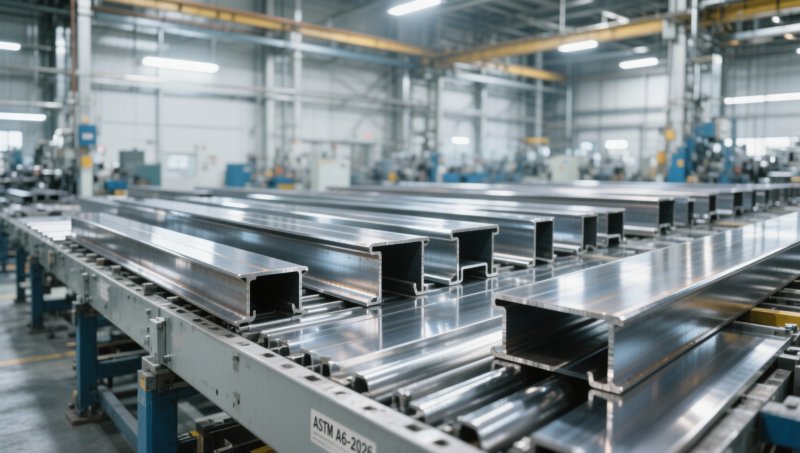
The upcoming ASTM A6–2026 revision introduces three critical updates directly affecting angle vs channel steel ASTM standards: tighter dimensional tolerances (±0.3 mm for flange thickness in channels ≤100 mm), revised chemical composition limits for weldability (reduced max sulfur to 0.035% for Grade A36 equivalents), and updated mechanical test sampling frequency (one tensile test per 50 tons instead of per heat lot). These changes reflect growing demand for precision in prefabricated systems and stricter safety thresholds in seismic and coastal infrastructure.
For buyers in Southeast Asia and the Middle East, where humidity and chloride exposure accelerate corrosion, the new yield strength verification protocol now requires dual-point testing across both flange and web sections—critical for accurate angle vs channel steel corrosion resistance comparison. This also affects OEM manufacturers requiring consistent post-weld geometry, especially in automated fabrication lines.
Importantly, ASTM A6–2026 formalizes cross-referencing with AWS D1.1 for weld procedure qualification—making angle vs channel steel welding compatibility no longer optional but mandatory for structural certification. Noncompliant stock may face rejection during third-party inspection in projects governed by ASCE 7 or Eurocode 3.
How Revised Tolerances Affect Real-World Fabrication
- Flange twist tolerance tightened from 1.5° to 0.8° per meter—impacting fit-up speed in prefab building assemblies.
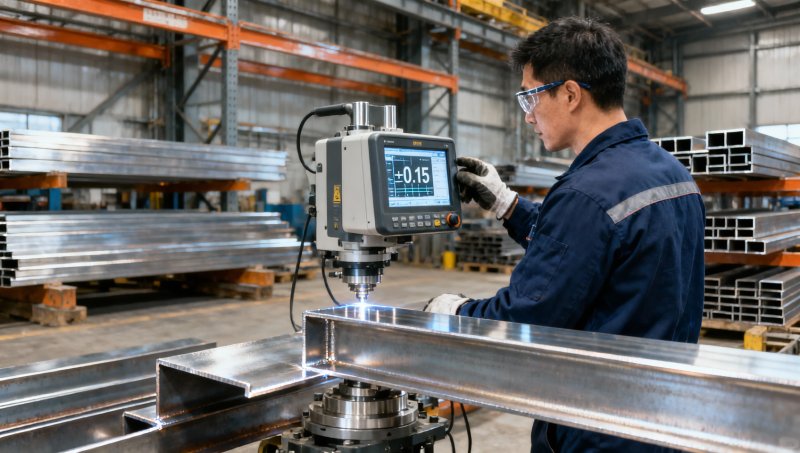
- Web curvature limit reduced to 0.15 mm/m (previously 0.25 mm/m), raising rejection risk for hot-rolled channels sourced without mill test reports.
- Root radius specification now enforced for all angles ≥50×50 mm—directly influencing fatigue life in bridge construction applications.
Angle vs Channel Steel: Application-Specific Performance Comparison
Choosing between angle and channel steel isn’t about preference—it’s about functional alignment. In manufacturing facilities with heavy overhead cranes, channels offer superior torsional rigidity and predictable moment distribution. Angles excel in bracing systems and lightweight trusses where bi-axial stability is less critical but field adjustability matters.
For prefab buildings, angle vs channel steel for prefab buildings hinges on connection methodology: bolted shear walls favor channels due to uniform web engagement, while welded portal frames often use angles for easier shop assembly and reduced thermal distortion. Load path continuity—especially under dynamic wind loads—requires verifying section modulus (Sx) and plastic section modulus (Zx) against local design codes like BS 5950 or ACI 318.
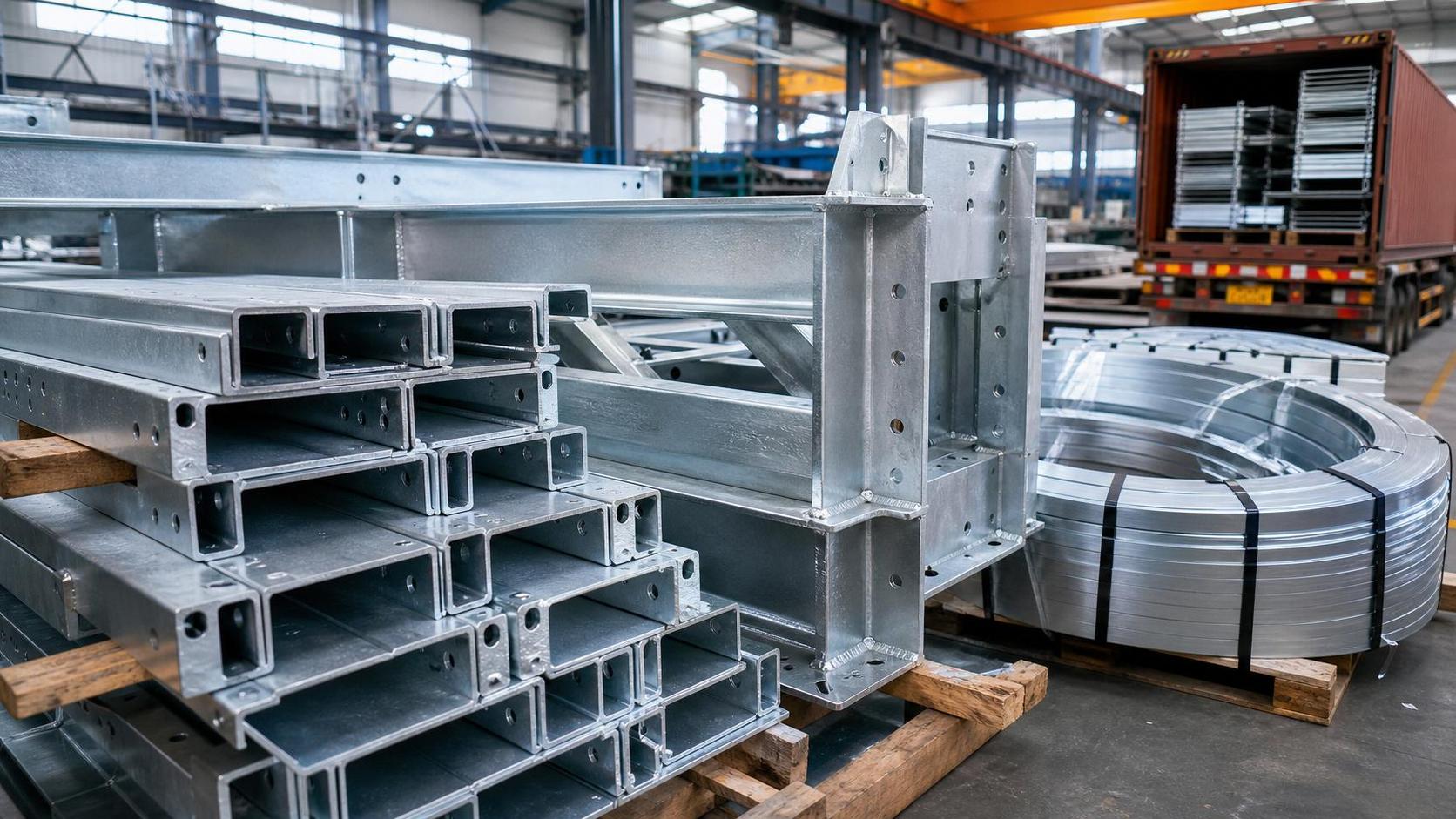
Corrosion resistance comparison reveals another nuance: galvanized channel steel typically achieves 15–20% higher zinc coating mass (≥610 g/m²) than equivalent angles due to slower immersion drainage in continuous galvanizing lines—a factor critical for marine environments in the Middle East and Southeast Asia.
This table highlights why angle vs channel steel load capacity comparison must go beyond nominal size: C100×50×5 delivers nearly 20× higher Ix than L50×50×5, yet demands stricter preheat protocols. That trade-off defines material selection in bridge construction, where fatigue life depends on both stiffness and weld integrity.
Procurement Strategy for Global Buyers: Mitigating ASTM A6–2026 Transition Risk
Buyers sourcing angle vs channel steel exporter China must now verify supplier capability beyond mill certificates. Hongteng Fengda provides ASTM A6–2026-ready documentation packages—including full heat traceability, independent lab test reports per revised sampling rules, and AWS D1.1-compliant WPS/PQR files—within 7–10 working days of order confirmation.
For distributors in Southeast Asia and the Middle East, early adoption of pre-certified inventory reduces lead time variance by up to 22%. Our regional hubs in Dubai and Singapore hold ASTM A6–2026-compliant stock of common sizes (e.g., L75×75×6, C120×53×5) with 30-day shelf-life validation—eliminating retesting delays at port clearance.
Critical procurement checkpoints include: (1) confirming mill test report includes both flange and web tensile results; (2) validating zinc coating mass via ASTM A90 testing—not just visual inspection; (3) reviewing welding procedure specifications against AWS D1.1 Annex E for notch toughness requirements in low-temperature service.
Why Galvanized Sheet Integration Strengthens Structural Systems
In hybrid prefab building designs, combining structural angles/channels with Galvanised Sheet Steel Suppliers enhances corrosion protection at cut edges and connection zones. DX51D/SGCC galvanized sheet (zinc coating ≥60 g/m²) provides sacrificial anode behavior when in contact with structural steel—extending service life by 3–5 years in high-humidity industrial facilities.
Why Partner with Hongteng Fengda for ASTM-A6–2026 Compliance?
As a structural steel manufacturer and exporter from China, Hongteng Fengda bridges the gap between evolving international standards and on-ground execution. We don’t just meet ASTM A6–2026—we engineer for it: our cold-formed production line uses real-time laser profiling to hold ±0.15 mm tolerance on flange width, exceeding the new standard by 50%. Every shipment includes digital twin documentation accessible via QR code on packing lists.
Our clients—from bridge contractors in Saudi Arabia to prefab builders in Vietnam—benefit from fixed 4–6 week lead times, 100% third-party inspection support (SGS/BV/TÜV), and technical co-engineering for custom section optimization. Whether you need angle vs channel steel supplier Southeast Asia logistics coordination or angle vs channel steel supplier Middle East certification handover, we embed compliance into every delivery milestone.
Ready to align your next procurement cycle with ASTM A6–2026? Contact us for: (1) free review of your current spec sheets against revised clauses; (2) sample validation kits with full test reports; (3) OEM design consultation for optimized angle-channel hybrid framing; (4) dedicated export documentation for GCC Standardization Organization (GSO) or Singapore BCA approval.
- channel steel supplier
- channel steel
- steel i
- l angle
- angle steel
- galvanised sheet steel suppliers
- galvanized sheet
- ASTM standards
- steel supplier
- ASTM standard
- DX51D
- SGCC
- galvanised sheet steel
- steel suppliers
- structural steel
- Galvanized Channel Steel
- galvanized channel steel
- Structural Steel
- Galvanized
- angle vs channel
- angle vs channel steel ASTM standards
- angle vs channel steel supplier Middle East
- angle vs channel steel for bridge construction
- angle vs channel steel load capacity comparison
- angle vs channel steel exporter China
- angle vs channel steel corrosion resistance comparison
- angle vs channel steel supplier Southeast Asia
- angle vs channel steel for prefab buildings
- angle vs channel steel welding compatibility
Related recommendations
 What Affects the Cost of Galvanized Steel in Fabrication Projects?Galvanized steel costs vary far beyond raw material price. Learn how coating, steel grade, fabrication, logistics, and hidden quote items affect project budgets before you buy.
 Steel Wire Strand Applications in Lifting and Support: Key Load and Safety ConsiderationsSteel wire strand selection for lifting and support starts with real load, fatigue, corrosion, and anchoring conditions. Learn how to improve safety, service life, and structural reliability.
 Architectural Steel Angle in Facades, Edges, and Clean LinesArchitectural steel angle improves facade edges, clean lines, and structural precision. Discover how it supports durability, faster installation, and smarter project control.
 Where Cold Formed Steel Angle Works Best in Modern BuildsCold formed steel angle works best in modular builds, secondary framing, and utility supports. Learn where it adds value, what to verify, and how to choose the right profile with confidence.
Please give us a message


Please enter what you want to find