Planning steel procurement lead time in China? For structural steel manufacturers and global project teams, balancing forward booking vs. spot allocation is critical—especially when weighing lead time and MOQ risks in steel procurement for construction or industrial projects. As a trusted steel procurement lead time planning supplier in China, Hongteng Fengda delivers reliable angle, channel, and beam solutions—not just cheap steel from China, but certified, ASTM/EN-compliant material backed by stable production and transparent wire products lead time for manufacturing. Discover how smart timing reduces delays, avoids MOQ pitfalls, and ensures on-site readiness.

Why Lead Time Planning Is Non-Negotiable for Structural Steel Projects
In global infrastructure and industrial construction, structural steel accounts for 15–30% of total material cost—and up to 40% of schedule-critical path duration. A single delay in beam or channel delivery can cascade into 7–15 days of site downtime, costing $8,000–$22,000 per day in labor, equipment rental, and penalty clauses. Unlike commodity steel grades, structural sections require precise rolling, heat treatment, and dimensional verification—processes that cannot be accelerated on demand.
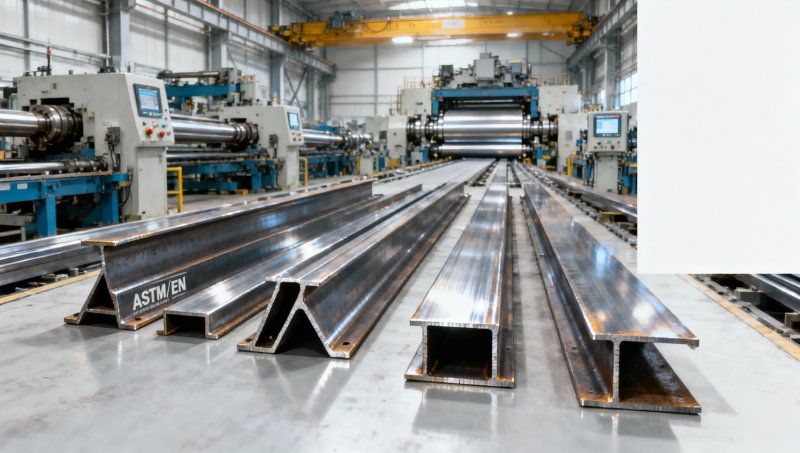
Hongteng Fengda’s integrated mill-to-ship workflow includes 3-stage quality gate checks (raw material inspection, hot-rolling tolerance verification, and final dimensional & mechanical testing), resulting in an average production cycle of 22–28 days for standard ASTM A6/A6M or EN 10025-2 specifications. This baseline informs all forward booking decisions—and underscores why reactive spot buying carries hidden cost multipliers.
For buyers managing multiple concurrent projects across North America, Europe, or the Middle East, inconsistent lead times erode forecasting accuracy. Over 68% of structural steel procurement failures stem not from price volatility—but from misaligned timing between engineering release, fabrication scheduling, and port loading windows.
Forward Booking vs. Spot Allocation: When Each Strategy Wins
Forward booking means reserving capacity and raw material slots at least 60–90 days pre-shipment. Spot allocation refers to purchasing available inventory with ≤14-day dispatch timelines. Neither is universally superior—the optimal choice depends on three measurable variables: project timeline certainty, volume threshold, and specification complexity.
Note: Forward booking locks in both price and production slot—critical during Q4 raw material surges (average +12% scrap iron cost YoY). Spot orders may face 3–5 business day delays if warehouse stock falls below 15 MT for high-demand SKUs like Q345B angle steel (75×75×8mm).
How Hongteng Fengda Bridges the Gap With Hybrid Scheduling
We combine forward booking discipline with spot responsiveness through our Dual-Tier Capacity Model. Tier 1 reserves 40% of monthly rolling capacity for clients with ≥6-month forecast visibility—guaranteeing ≤28-day lead time for standard profiles. Tier 2 maintains a 12,000 MT buffer inventory of top-10 SKUs, enabling same-week dispatch for urgent needs without premium surcharges.
This model directly addresses two pain points: (1) MOQ risk—forward bookings accept partial shipments starting at 10 MT, with balance held under contract for up to 120 days; (2) certification latency—our in-house lab issues EN 10204 3.2 mill certificates within 48 hours of shipment, eliminating 5–7 day third-party bottlenecks.
For industrial applications demanding high load-bearing capacity and weight reduction, our Hrc Coil portfolio supports rapid prototyping and small-batch fabrication. With thicknesses from 0.12–12mm and widths up to 2000mm, it serves as feedstock for cold-formed purlins, mezzanine decking, and seismic bracing systems compliant with ASTM A653 and JIS G3302 standards.
Six Data-Driven Procurement Triggers to Activate Forward Booking
Don’t wait for RFQ deadlines. Initiate forward booking when any of these thresholds are met:
- Design freeze confirmation: Structural drawings stamped “ISSUED FOR CONSTRUCTION” (IFC)
- Procurement milestone: 30% of civil works completed on site
- Raw material index signal: Shanghai Futures Exchange rebar index rises >8% MoM
- Port congestion alert: Ningbo or Qingdao container dwell time exceeds 7 days (per China Containerized Freight Index)
- Customization requirement: Non-standard flange width (>±2mm tolerance) or dual-certification (ASTM + EN)
- Logistics window: Target shipment month aligns with off-peak shipping season (Jan–Mar or Sep–Oct)
Clients activating forward booking at IFC stage reduce total landed cost by 4.2–6.7% versus last-minute spot buys—primarily from avoided air freight premiums and demurrage fees.
Real-World Implementation: A Middle East Power Substation Case
A Tier-1 EPC contractor managing a 400kV substation in Saudi Arabia faced tight sequencing: civil pad completion in Week 12, steel erection in Week 18. Using Hongteng Fengda’s forward booking portal, they reserved 1,200 MT of ASTM A572 Gr.50 channels and beams in Week 6—locking in Q3 pricing and securing priority slotting at our Baotou facility.
Simultaneously, they used spot allocation for 85 MT of emergency-replacement H-beams after a transport accident—shipped from our Tianjin bonded warehouse within 96 hours. Total project steel lead time variance was ±1.3 days against plan—well within the ±3-day tolerance agreed with the client.
The hybrid approach delivered 99.4% on-time-in-full (OTIF) performance—exceeding the client’s contractual SLA of 95%.
Get Started With Precision Steel Timing
Lead time isn’t just about waiting—it’s about strategic synchronization between engineering, procurement, logistics, and quality assurance. Whether you’re specifying angle steel for a wind turbine tower in Texas, channel sections for a data center in Frankfurt, or custom cold-formed profiles for a Jakarta metro station, Hongteng Fengda provides the predictability your project demands.
Our procurement planning team offers free lead time benchmarking—comparing your specs against real-time capacity, inventory, and certification pipelines. No obligation. No sales pitch. Just actionable insights tailored to your project phase and risk appetite.
Contact us today to request your customized steel procurement timeline assessment—and discover how forward booking discipline combined with spot agility keeps your structural steel flowing on time, every time.
- angle steel
- ASTM A572
- structural steel
- Structural Steel
- Profile
- Wire Products
- H-beam
- wire products lead time
- lead time and MOQ risks in steel procurement
- steel procurement lead time planning
- lead time and MOQ risks in steel procurement for construction
- steel procurement lead time planning supplier in China
- wire products lead time for manufacturing
Related recommendations
 How much does 2 inch ss pipe price increase when upgrading from Schedule 40 to Schedule 80 for high-pressure systems?2 inch ss pipe price increases 18–35% when upgrading from Sch 40 to Sch 80—discover why, when it’s truly needed, and how to avoid overpaying.
 Which 304 stainless steel coil suppliers meet ISO 9001 and EN 10088-2 for food-grade fabrication?Discover verified 304 stainless steel coil suppliers meeting ISO 9001 & EN 10088-2 for food-grade fabrication—traceable, audited, and ready for regulatory validation.
 How does 2 inch ss pipe price compare between 304 and 316 grades for marine environments?2 inch ss pipe price varies significantly between 304 and 316 — but in marine environments, choosing 304 risks costly failures. Discover why 316 is the true value choice.
 Is 20 feet square pipe price affected more by raw material volatility or regional logistics costs?20 feet square pipe price is driven primarily by raw material volatility—not logistics. Discover why billet costs dominate pricing & how to forecast smarter with Hongteng Fengda.
Please give us a message


Please enter what you want to find