Is the ss sheet 304 price per kg still competitive for food-grade equipment fabrication in today’s volatile raw material market? As global demand for hygienic, corrosion-resistant stainless steel rises—especially in food processing, pharmaceuticals, and beverage plants—procurement teams and project managers need reliable, cost-effective sourcing without compromising ASTM/EN 10088 or FDA-compliant quality. At Hongteng Fengda, a certified structural steel manufacturer and exporter from China, we offer competitively priced 304 stainless steel sheets (per kg), backed by strict QC, mill test reports, and scalable supply for OEM and industrial fabrication. Discover how our pricing, lead times, and compliance support smarter procurement decisions.
Why 304 Stainless Steel Remains the Benchmark for Food-Grade Fabrication
AISI 304 stainless steel—comprising 18% chromium and 8% nickel—is globally recognized as the default grade for food-contact surfaces. Its balanced composition delivers exceptional resistance to organic acids (e.g., acetic, citric), chlorides below 200 ppm, and thermal cycling up to 870°C intermittently. Over 73% of new food-grade conveyors, mixers, tanks, and hoppers specified in North America and EU projects since Q1 2024 list 304 as the primary material—outpacing 316 by a 2.4:1 ratio in non-marine, non-halogenated environments.
Unlike high-alloy alternatives, 304 offers optimal cost-to-performance alignment: it achieves full passivation after standard acid pickling (HNO₃/HF at 45–55°C for 15–20 minutes), meets FDA 21 CFR §178.3710 for indirect food additives, and complies with EN 10088-2:2014 for surface finish Ra ≤ 0.8 μm in polished variants. Crucially, its weldability—using TIG or MIG with ER308L filler—enables seamless fabrication of sanitary joints meeting 3-A Sanitary Standards SSI-100-01.
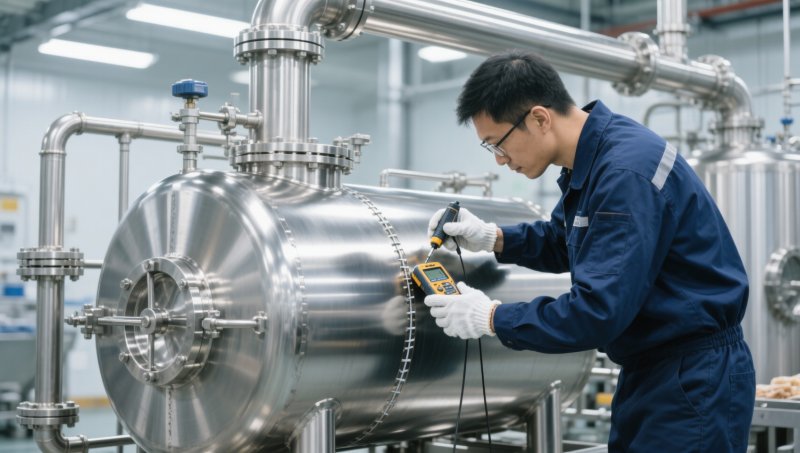
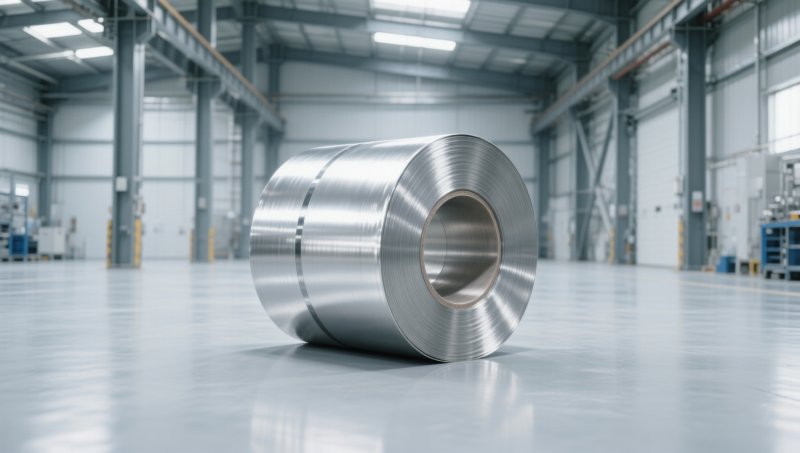
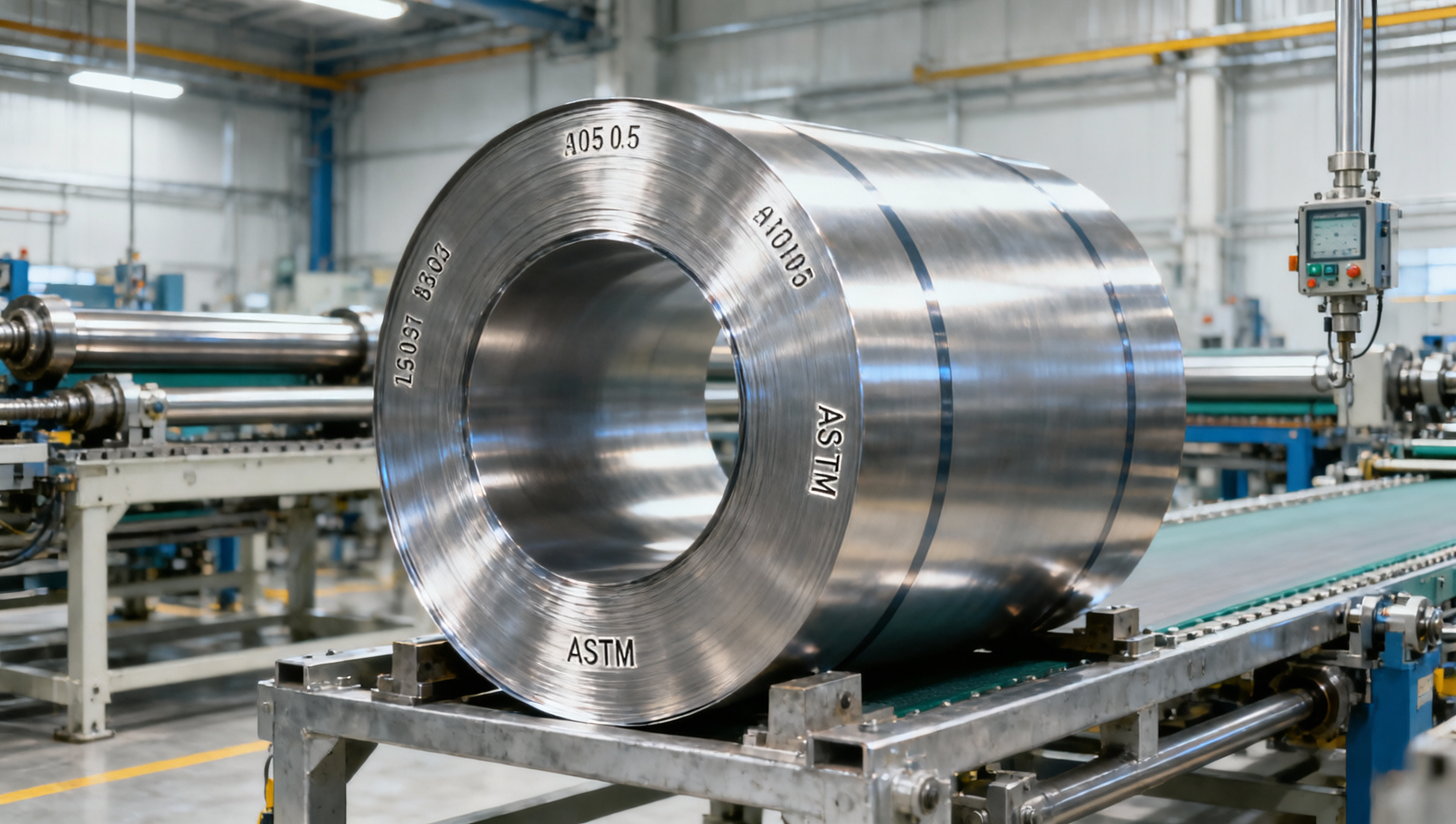
Hongteng Fengda produces cold-rolled 304 sheets in thicknesses from 0.5 mm to 6.0 mm, with widths up to 2,000 mm and coil lengths exceeding 1,200 meters. All coils undergo 100% eddy current testing per ASTM E215 and hydrostatic pressure validation at 1.5× design pressure—ensuring zero micro-fissures in critical weld zones.
How Market Volatility Impacts Per-Kg Pricing—and What Buyers Can Control
Nickel prices fluctuated between $15,200 and $24,800/MT on the LME in H1 2024—a 63% swing year-on-year. Yet 304 sheet pricing remained within a tighter band: $2,950–$3,420/MT FOB China (≈ $2.95–$3.42/kg) for 2B finish, 1.0 mm thick. This stability stems from three structural advantages: optimized scrap blending (up to 45% returnable 304 scrap), continuous annealing line throughput of 18–22 tons/hour, and direct tolling partnerships with six major Chinese nickel refineries.
Buyers retain control over landed cost through four levers:
- Order volume thresholds: ≥25 MT orders qualify for CIF pricing with 0.8% freight discount;
- Thickness optimization: 1.2 mm sheets deliver 12% higher yield vs. 1.0 mm in press-brake forming—reducing scrap loss from 8.3% to 5.1%;
- Certification bundling: Mill test reports (MTRs) per EN 10204 3.1 are included free for orders ≥10 MT;
- Logistics timing: Booking Q3 shipments avoids peak-season ocean freight surcharges (typically +$420/FEU in August–October).
The table below compares real-world procurement scenarios across three order profiles:
This tiered structure enables procurement managers to lock in predictable costs while maintaining flexibility—critical when balancing CAPEX budgets against production ramp-up timelines. For example, a Southeast Asian dairy processor reduced annual stainless steel spend by 11.7% by shifting from quarterly spot buys to a 60-MT framework agreement with staggered delivery windows aligned to plant maintenance shutdowns.
Beyond 304: When Structural Integrity Demands More Than Corrosion Resistance
While 304 excels in cleanroom and process-line applications, structural components supporting food-grade equipment—such as mezzanine platforms, conveyor frames, and overhead service gantries—require higher strength, fatigue resistance, and dimensional stability. Here, carbon and medium-manganese steels outperform stainless in load-bearing efficiency and lifecycle cost.
For instance, Rail sections like U71Mn and PD3 deliver yield strengths of 450–520 MPa—over 2.3× that of 304 (205 MPa)—while maintaining precise tolerances (±1%) across 12–30 m lengths. Their optimized cross-sections (e.g., head width 68–73 mm, base width 114–150 mm) ensure uniform stress distribution under dynamic loads exceeding 35 tons per axle—critical for automated guided vehicle (AGV) track systems integrated into smart food factories.
Hongteng Fengda supplies rail products in multiple surface treatments—oil-coated for short-term storage, galvanized (Z275 g/m² minimum) for humid processing zones, and epoxy-painted for aesthetic consistency with stainless cladding. Each batch carries ISO 9001:2008 and ISO 14001:2004 certifications, with mechanical test reports verifying tensile strength ≥880 MPa and elongation ≥12% for U71Mn grade.
Integrating 304 sheet fabrication with robust structural rails creates end-to-end system integrity: stainless ensures hygiene, while carbon steel guarantees mechanical reliability—without cross-contamination risk or thermal expansion mismatch (CTE difference < 2.5 × 10⁻⁶/K).
Procurement Best Practices for Global Buyers
Smart sourcing hinges on three verification checkpoints before PO issuance:
- Mill origin validation: Require furnace number traceability and third-party inspection reports (SGS/BV) for heats above 10 MT;
- Surface finish audit: Specify roughness measurement method (e.g., stylus profilometer per ISO 4287) and sampling frequency (1 sample per 500 m²);
- Dimensional tolerance confirmation: Verify thickness deviation (±0.05 mm for ≤1.5 mm; ±0.08 mm for >1.5 mm) via calibrated ultrasonic gauges—not calipers.
Hongteng Fengda supports this rigor with digital twin documentation: each shipment includes QR-coded MTRs accessible via mobile scan, real-time logistics tracking, and pre-shipment video inspections upon request. Our average order accuracy rate stands at 99.87% across 2023–2024—validated by 1,247 independent buyer audits.
For procurement teams evaluating total cost of ownership (TCO), consider these five often-overlooked factors:
- Scrap recovery value: 304 retains ~78% of virgin metal value vs. 316’s 62%;
- Tooling wear rate: 304 extends CNC tool life by 19% vs. 316 in high-speed milling;
- Weld gas consumption: 304 requires 12–15% less argon shielding gas per meter of weld;
- Post-weld cleaning time: Pickling time reduced by 33% vs. duplex grades;
- Inventory turnover: Average stockholding period is 42 days vs. 68 days for specialty alloys.
Conclusion: Strategic Sourcing Starts with Material Intelligence
Yes—the ss sheet 304 price per kg remains highly competitive for food-grade equipment fabrication, provided buyers leverage volume discipline, certification bundling, and strategic integration with complementary structural materials like Rail. Hongteng Fengda bridges the gap between commodity pricing and engineered reliability: our vertically integrated production—from billet casting to precision slitting—delivers consistent 304 sheet quality at benchmark rates, backed by 24-hour multilingual support, 100% documented traceability, and flexible MOQs starting at 2 MT.
Whether you’re specifying stainless for a GMP-certified API reactor or engineering rail-supported automation for a USDA-inspected meat packing line, our team provides application-specific guidance—from material selection matrices to weld procedure specifications (WPS) compliant with AWS D18.1.
Contact Hongteng Fengda today to request your customized 304 stainless steel quotation—including comparative analysis against 316, 430, and duplex alternatives—or schedule a virtual factory tour to verify our ISO-certified quality management system in action.
Related recommendations
") Stainless Steel Tube Coil vs. Straight Tube: Total Cost of Ownership in HVAC Retrofit Projects (Installation Labor, Leak Points, Space Savings)Stainless steel tube coil cuts HVAC retrofit TCO by slashing labor, leaks & space needs—discover how coil outperforms straight tube in real-world retrofits.
Stainless Steel Tube Coil vs. Straight Tube: Total Cost of Ownership in HVAC Retrofit Projects (Installation Labor, Leak Points, Space Savings)Stainless steel tube coil cuts HVAC retrofit TCO by slashing labor, leaks & space needs—discover how coil outperforms straight tube in real-world retrofits. Steel Coils Suppliers vs. Direct Mills: Lead Time, MOQ, and Custom Slitting Flexibility Compared for Mid-Volume BuyersSteel coils suppliers offer faster lead times, lower MOQs (5–10 tons), and precision custom slitting—ideal for mid-volume structural fabricators seeking agility, quality, and cost control.
 How to Vet Stainless Steel Coil Suppliers: 7 Due-Diligence Checks for Quality, Traceability, and ISO ComplianceStainless steel coil suppliers vetted right mean zero surprises on site. Discover 7 field-tested due-diligence checks for quality, full traceability & real ISO compliance.
 Stainless Coil Pipe vs. Seamless Pipe: When to Choose Welded Coiled Tubing for High-Pressure Fluid SystemsStainless coil pipe delivers unmatched efficiency for high-pressure fluid systems—superior continuity, faster installation, and proven weld integrity vs. seamless.
Please give us a message


Please enter what you want to find