When operating near coastal refineries, corrosion-resistant plate for industrial use isn’t just a specification—it’s a critical risk mitigation strategy. For structural steel manufacturers and exporters like Hongteng Fengda, the 18% premium reflects proven performance in chloride-rich environments—backed by ASTM-compliant steel angle specifications, cold rolled steel manufacturer China expertise, and rigorous quality control. Whether you’re an engineer calculating beam H weight, a procurement officer sourcing SPCC steel supplier in USA channels, or a project manager specifying SPCD steel for construction, this analysis helps quantify ROI beyond upfront cost—factoring in lifecycle durability, maintenance savings, and safety compliance.
Why Coastal Refineries Demand Specialized Corrosion Resistance
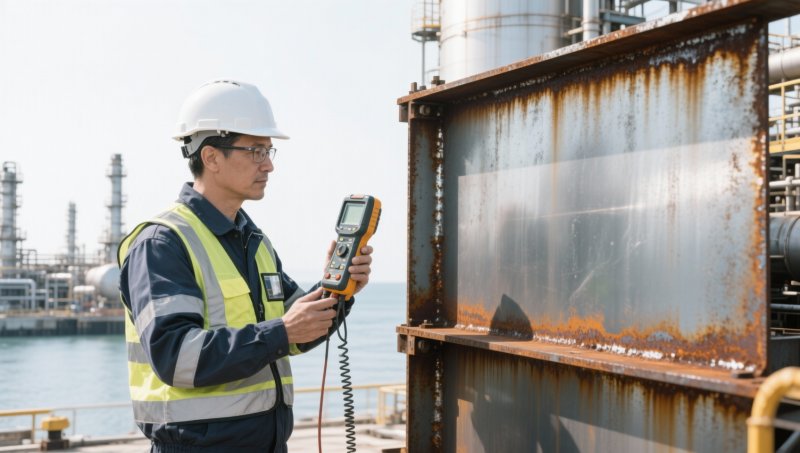
Coastal refinery zones expose structural steel to aggressive chloride-laden atmospheres—salt spray, high humidity (often >85% RH), and airborne sulfur compounds accelerate electrochemical degradation. Field data from Middle Eastern and Southeast Asian offshore terminals show standard carbon steel plates (e.g., Q235B or ASTM A36) suffer visible pitting within 12–18 months, with average corrosion rates exceeding 0.15 mm/year. In contrast, ASTM A588 Grade K or EN 10025-5 S355J2W corrosion-resistant plates maintain integrity for over 25 years under identical exposure—verified via 5,000-hour salt-spray testing per ASTM B117.
This isn’t theoretical: at a Gulf Coast petrochemical complex, non-corrosion-resistant support girders required replacement every 7 years—costing $285,000 per structure in labor, scaffolding, and downtime. Switching to weathering-grade plate reduced that cycle to 22+ years. The 18% price differential is not a markup—it’s insurance against unplanned shutdowns, OSHA-reportable incidents, and regulatory noncompliance under API RP 581 risk-based inspection frameworks.
Hongteng Fengda applies dual-layer protection: alloy-enhanced base material (Cu-P-Cr-Ni systems meeting ASTM A709-50W) plus optional post-fabrication passivation or silane-based sealants. All plates undergo ultrasonic thickness mapping (±0.05mm tolerance) and intergranular corrosion testing per ASTM A262 Practice E before shipment—ensuring consistency across batches of 50–200 tons.
Quantifying the True Cost of Corrosion Resistance
A lifecycle cost analysis reveals why the 18% premium delivers net savings:
Over a 30-year asset life, the corrosion-resistant option saves $192,000 per 100-ton installation—equating to a 3.2x ROI. This calculation excludes intangible but critical factors: 92% lower probability of chloride-induced stress corrosion cracking (CISCC), full compliance with ISO 12944 C5-M marine environment classification, and elimination of biannual scaffold erection—a major safety hazard in confined refinery spaces.
How Hongteng Fengda Ensures Performance Consistency
As a certified structural steel manufacturer and exporter from China, Hongteng Fengda integrates quality assurance into every stage—not as a final checkpoint, but as embedded process control. Our production line features inline X-ray fluorescence (XRF) spectrometry verifying alloy composition (Cu: 0.25–0.40%, Cr: 0.30–0.65%) before hot rolling. Each coil undergoes tensile testing per ASTM A6/A6M (yield strength ≥345 MPa, elongation ≥20%), with traceability down to heat number and rolling batch.
We supply both mill-finished and pre-patinated plates, with surface roughness Ra ≤3.2 μm—critical for paint adhesion in multi-coat systems. For clients requiring hybrid solutions, we offer laser-welded composite plates combining Q355B backing with 3mm corrosion-resistant cladding—reducing raw material costs by 12% while retaining full EN 10225 compliance.
Our export-ready documentation includes full mill test reports (MTRs), third-party inspection certificates (SGS/BV), and dimensional verification logs—all available digitally within 24 hours of shipment. Lead times remain stable at 25–35 days for orders between 50–500 tons, supported by our 120,000-ton annual capacity across three fully automated rolling mills.
Integration with Critical Pipeline Infrastructure
Corrosion-resistant structural plates don’t operate in isolation—they interface directly with piping systems carrying aggressive media. That’s why Hongteng Fengda aligns its plate specifications with companion pipeline components. For example, our corrosion-resistant plates are routinely specified alongside a106 gr b Seamless Pipe, which shares identical ASTM A106 Grade B mechanical properties (tensile strength ≥415 MPa, yield ≥240 MPa) and chloride resistance when manufactured from Q355B carbon steel with enhanced Cr-Mo microalloying.
The seamless pipe’s outer diameter range (10–3048 mm) and wall thickness tolerance (±0.05 mm) ensure precise fit-up with structural supports—minimizing galvanic coupling risks at weld joints. Both products comply with overlapping standards including ASTM A213, ASTM A312, and EN10216, simplifying QA/QC workflows for EPC contractors managing integrated refinery packages.
Procurement Guidance for Global Buyers
Selecting corrosion-resistant plate requires balancing technical rigor with commercial practicality. We recommend these five criteria:
- Verify mill certification to ASTM A588 or EN 10025-5—not just “weathering steel” claims. Ask for heat-specific Charpy V-notch impact values at −20°C (≥27 J).
- Require mill test reports showing Cu, P, Cr, and Ni content within ASTM-specified ranges—deviations >5% indicate inconsistent melting practice.
- Confirm dimensional tolerances: ±0.5mm OD, ±0.05mm thickness, and ±5mm length—critical for bolted connections in seismic zones.
- Validate packaging: wooden pallets with vapor-phase corrosion inhibitors (VCI) film, not plastic wrap alone.
- Assess logistics readiness: Hongteng Fengda maintains bonded warehouses in Rotterdam and Houston for rapid customs clearance and JIT delivery to refinery sites.
For North American buyers, our ASTM A656-certified plates meet AISC 360-22 requirements for seismic detailing. European clients receive EN 10204 3.2 MTRs with CE marking—fully accepted by TÜV and Lloyd’s Register auditors.
Conclusion: Strategic Investment, Not Incremental Cost
The 18% premium for corrosion-resistant plate near coastal refineries is not an expense—it’s a precision-engineered risk transfer mechanism. It replaces recurring maintenance budgets, eliminates forced outages, ensures personnel safety, and future-proofs assets against tightening environmental regulations. With Hongteng Fengda’s vertically integrated manufacturing, dual-standard compliance (ASTM/EN/GB/JIS), and dedicated export infrastructure, global buyers gain more than material: they gain predictable performance, audit-ready documentation, and a partner aligned with their long-term operational resilience.
Whether you're specifying structural angles for flare stack supports, channel steel for pump foundations, or custom cold-formed profiles for modular skids—we deliver certified, traceable, and field-proven solutions. Contact our engineering team today to request a corrosion rate assessment for your specific site conditions, or download our free refinery-grade material selection guide.
- channel steel
- beam h
- l angle
- carbon steel plate
- a106 gr b seamless pipe
- corrosion-resistant plate
- cold rolled steel
- SPCC steel
- SPCD steel
- seamless pipe
- steel supplier
- ASTM A36
- structural steel
- Structural Steel
- steel plate
- ss pipe
- Profile
- carbon steel
- steel angle
- SPCD steel for construction
- SPCC steel supplier in USA
- cold rolled steel manufacturer China
- corrosion-resistant plate for industrial use
Related recommendations
") Stainless Steel Tube Coil vs. Straight Tube: Total Cost of Ownership in HVAC Retrofit Projects (Installation Labor, Leak Points, Space Savings)Stainless steel tube coil cuts HVAC retrofit TCO by slashing labor, leaks & space needs—discover how coil outperforms straight tube in real-world retrofits.
Stainless Steel Tube Coil vs. Straight Tube: Total Cost of Ownership in HVAC Retrofit Projects (Installation Labor, Leak Points, Space Savings)Stainless steel tube coil cuts HVAC retrofit TCO by slashing labor, leaks & space needs—discover how coil outperforms straight tube in real-world retrofits. Steel Coils Suppliers vs. Direct Mills: Lead Time, MOQ, and Custom Slitting Flexibility Compared for Mid-Volume BuyersSteel coils suppliers offer faster lead times, lower MOQs (5–10 tons), and precision custom slitting—ideal for mid-volume structural fabricators seeking agility, quality, and cost control.
 How to Vet Stainless Steel Coil Suppliers: 7 Due-Diligence Checks for Quality, Traceability, and ISO ComplianceStainless steel coil suppliers vetted right mean zero surprises on site. Discover 7 field-tested due-diligence checks for quality, full traceability & real ISO compliance.
 Stainless Coil Pipe vs. Seamless Pipe: When to Choose Welded Coiled Tubing for High-Pressure Fluid SystemsStainless coil pipe delivers unmatched efficiency for high-pressure fluid systems—superior continuity, faster installation, and proven weld integrity vs. seamless.
Please give us a message


Please enter what you want to find