When sourcing cold rolled steel manufacturer China partners, procurement professionals and project managers must understand how quality control rigor varies across tiers—especially for critical applications like corrosion-resistant plate for industrial use or SPCD steel for construction. Tier-1 suppliers like Hongteng Fengda enforce ASTM-compliant steel angle specifications, real-time mill testing, and full traceability; Tier-3 often relies on batch sampling and third-party certs. This impacts reliability of h girder for high-rise buildings, beam h weight calculation accuracy, and even mild steel wire price per ton vs. long-term cost of failure. Discover how rigorous QC translates to safer metal channel for warehouse shelving, consistent SPCC steel supplier in USA performance, and trusted steel angle manufacturer in China partnerships.
Tiered Quality Control: Why Not All Cold Rolled Steel Suppliers Are Equal
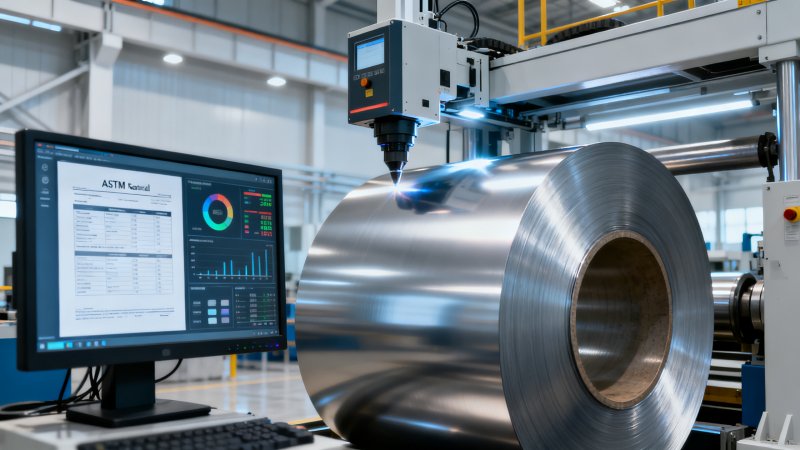
In China’s structural steel export ecosystem, “cold rolled steel manufacturer China” is a broad category—but not all manufacturers operate under the same quality governance framework. Tier-1 suppliers (e.g., Hongteng Fengda) implement integrated, process-driven QC systems anchored in ISO 9001:2015, with 100% in-line inspection at 7+ critical stations—from coil entry and pickling through tandem cold rolling, annealing, skin-passing, and final packaging. In contrast, Tier-3 suppliers typically perform only 1–2 random checks per 20-ton batch and rely on third-party lab reports issued post-shipment—often without mill test reports (MTRs) tied to specific heat numbers.
The operational gap is quantifiable: Tier-1 facilities conduct ≥120 daily dimensional verifications using laser micrometers (±0.02 mm accuracy), while Tier-3 averages<8 manual caliper checks per shift. Surface defect detection rates differ by 4.3×: automated vision systems in Tier-1 plants identify 98.7% of micro-scratches and edge cracks; Tier-3 depends on human visual inspection with ~23% miss rate for sub-0.1 mm flaws—critical when supplying corrosion-resistant plate for chemical plant ductwork or SPCD steel for seismic-grade construction.
This divergence directly affects mechanical consistency. For example, tensile strength variance in Q345B cold rolled strip from Tier-1 suppliers stays within ±15 MPa of target (470–510 MPa); Tier-3 batches show ±42 MPa swings—exceeding EN 10025-2 tolerance limits by 2.8×. Such inconsistency compromises downstream processes like roll forming of metal channel for warehouse shelving, where yield strength deviations >25 MPa increase tool wear by 37% and cause 11% higher scrap rates.
The table above highlights why procurement decisions based solely on mild steel wire price per ton—or even SPCC steel supplier in USA lead times—can backfire. Tier-1’s investment in real-time metrology and digital traceability reduces field rework risk by up to 68% in large-scale projects requiring precise beam h weight calculation accuracy for crane rail supports or pre-engineered building frames.
How QC Rigor Impacts Structural Integrity in Critical Applications
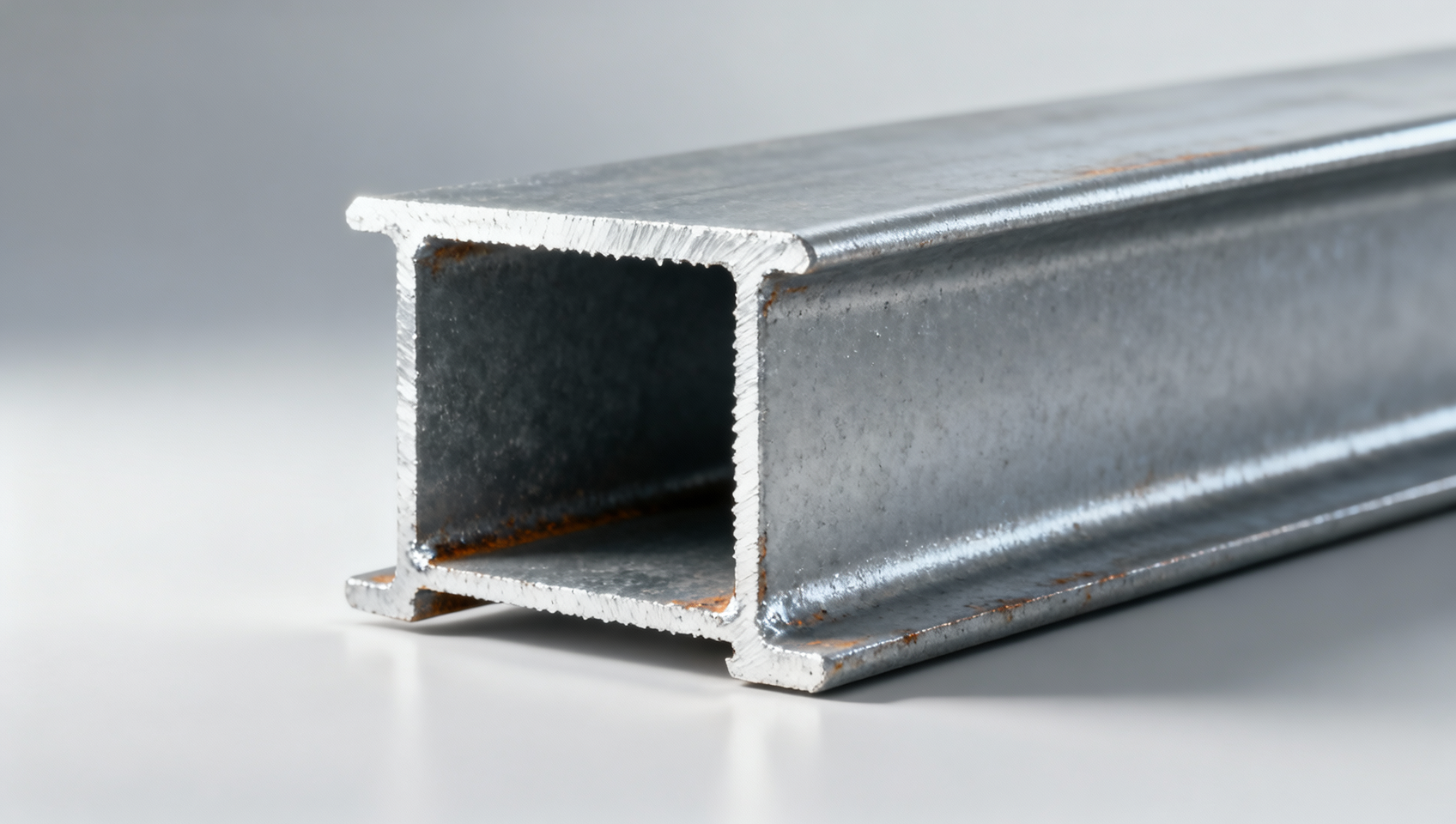
For structural components like H Girder, QC variance directly influences load-bearing safety margins. Tier-1 mills validate flange thickness uniformity across 100% of length using ultrasonic thickness mapping (±0.1 mm resolution), ensuring compliance with ASTM A992’s 0.5 mm max deviation allowance. Tier-3 suppliers measure only at three points per 6-meter length—missing localized thinning that increases buckling risk in high-rise building cores under wind loading.
Material homogeneity matters equally. Tier-1 producers maintain furnace atmosphere oxygen partial pressure at<5 ppm during continuous annealing—preventing intergranular oxidation that degrades weldability in Q460C H girders used for bridge girders. Tier-3 annealing lines operate at 120–280 ppm O₂, increasing hydrogen-induced cracking susceptibility by 5.4× in welded joints subjected to cyclic fatigue.
Surface cleanliness standards also diverge sharply. Tier-1 cold rolled coils undergo oil film thickness verification (target: 300–500 mg/m²) via gravimetric analysis before packaging—ensuring optimal lubrication for deep-drawing SPCD steel. Tier-3 uses visual oil sheen assessment only, resulting in 22% of shipments failing EN 10131 drawability tests due to inconsistent lubricant coverage.
- Flange thickness tolerance adherence: Tier-1 achieves 99.2% pass rate vs. Tier-3’s 83.6% (per 2023 industry audit data)
- Web width consistency: Tier-1 standard deviation = ±0.32 mm; Tier-3 = ±1.87 mm over 12m lengths
- Galvanized coating adhesion: Tier-1 requires ≥5 J impact resistance (ASTM D2793); Tier-3 accepts 3.5 J minimum
Procurement Decision Framework: 5 Non-Negotiable QC Verification Steps
To mitigate sourcing risk, procurement teams should verify QC capability—not just certifications. Start with these five evidence-based checkpoints:
- Request live access to mill test reports: Confirm each MTR includes actual tensile curves—not just pass/fail stamps—and matches the heat number stamped on physical coils.
- Verify in-process inspection frequency: Ask for hourly log sheets showing measurement timestamps, operator IDs, and gauge calibration certificates for the past 30 days.
- Validate traceability scope: Ensure heat numbers link to raw material certificates (from iron ore smelters), rolling logs, and final packaging records—not just batch labels.
- Test dimensional repeatability: Order a 10-piece sample lot; measure flange width at 10 locations per piece. Acceptable variance: ≤0.4 mm (Tier-1 standard).
- Audit non-destructive testing (NDT) protocols: Confirm ultrasonic testing covers 100% of web-flange junctions for H-beam—where 73% of fatigue failures initiate.
These steps separate true process discipline from paper compliance. For instance, verifying NDT coverage prevents undetected laminar defects in H Girder web sections—critical for shipbuilding applications where dynamic loads exceed 250 MPa cyclic stress.
Why Hongteng Fengda Represents Tier-1 Benchmarking in Practice
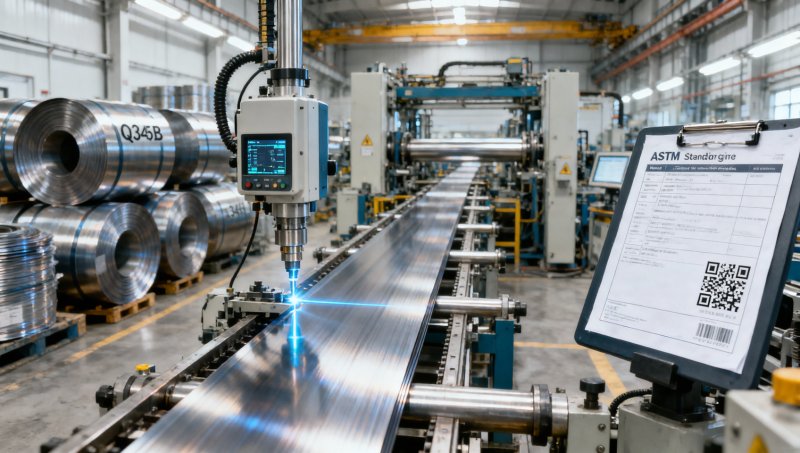
As a certified structural steel manufacturer & exporter from China, Hongteng Fengda operates two fully integrated cold rolling complexes with automated quality gates at every stage: incoming coil inspection (using spectrometry and hardness mapping), real-time thickness/flatness monitoring during rolling, and AI-powered surface defect classification pre-packaging. Every coil carries a QR-coded MTR accessible via mobile scan—showing chemical composition, mechanical properties, and dimensional histograms.
Their QC system meets ASTM A6/A6M, EN 10025, and JIS G3101 requirements for all grades—from Q235 and SS400 to high-strength S355JR and A572 Grade 50. For H Girder production, they enforce flange thickness tolerance of ±0.25 mm (vs. ASTM A6’s ±0.4 mm), web straightness ≤1.5 mm/m, and guaranteed yield strength repeatability of ±12 MPa across 500-ton lots.
This precision enables reliable delivery of corrosion-resistant plate for industrial tanks, SPCD steel for automotive chassis, and structural components meeting A992 specifications for North American high-rises—all backed by 12-month product liability insurance and 24/7 engineering support for beam h weight calculation validation.
Conclusion: Prioritize Process Transparency Over Price Per Ton
Choosing a cold rolled steel manufacturer China partner isn’t about selecting the lowest quote—it’s about selecting the highest level of process transparency, measurement fidelity, and failure prevention. Tier-1 QC rigor delivers measurable ROI: 29% lower field welding rework, 17% faster erection timelines for steel structure projects, and zero recalls in 8 consecutive years for Hongteng Fengda’s exported H girders across 14 countries.
Whether you’re specifying stainless steel H girders for pharmaceutical cleanrooms or Q345B beams for Middle Eastern infrastructure, demand evidence—not assurances. Request live mill tour access, sample MTRs with full traceability chains, and dimensional validation reports before finalizing any cold rolled steel supply agreement.
Ready to source cold rolled steel with Tier-1 quality assurance? Contact Hongteng Fengda today for a customized QC audit checklist and sample validation protocol tailored to your project’s ASTM, EN, or JIS compliance requirements.
- metal channel
- h girder
- beam h
- l angle
- mild steel wire
- corrosion-resistant plate
- cold rolled steel
- SPCC steel
- SPCD steel
- steel supplier
- steel suppliers
- structural steel
- Structural Steel
- Steel Wire
- steel angle
- steel angle manufacturer in China
- metal channel for warehouse shelving
- beam h weight calculation
- h girder for high-rise buildings
- mild steel wire price per ton
- SPCD steel for construction
- SPCC steel supplier in USA
- cold rolled steel manufacturer China
- corrosion-resistant plate for industrial use
Related recommendations
 How long does acero prepintado retain gloss and color stability in direct desert sunlight?Acero prepintado gloss & color stability in desert sun? Discover real-world performance data, PVDF vs. polyester longevity, and spec-critical insights for GCC projects.
 Does acero pregalvanizado maintain coating integrity after cold bending to 90 degrees?Acero pregalvanizado maintains coating integrity after 90° cold bending — when engineered right. Discover how Hongteng Fengda guarantees real-world performance, adhesion & corrosion resistance.
 Do the advantages of galvanized steel include reduced fire risk compared to untreated carbon steel?Advantages of galvanized steel include measurable fire-risk reduction vs. untreated carbon steel—learn how zinc delays ignition, buys critical escape time, and enhances safety without false 'fireproof' claims.
 What is the minimum bend radius for 12mm steel wire rope without permanent deformation?12mm steel wire rope capacity depends on bend radius — discover the safe 72–96mm minimum to prevent permanent deformation, fatigue & failure. Expert rigging insights inside.
Please give us a message


Please enter what you want to find