Choosing the right Steel Channel for mezzanine floors is crucial to ensure structural stability, load-bearing efficiency, and long-term safety in modern construction projects. In 2024, builders and project managers must balance design requirements with new performance standards, materials, and supply chain considerations. As a trusted Structural Steel Manufacturer & Exporter from China, Hongteng Fengda provides high-quality steel solutions—ranging from carbon steel for pressure vessels to corrugated steel sheet and steel profile for architectural design—to help global partners optimize their mezzanine floor construction with confidence and precision. Mezzanine systems have become more than just intermediate platforms; they now represent integral structural spaces that require precise material selection to ensure durability, cost efficiency, and compliance with safety regulations. Structural engineers and decision-makers are looking beyond mere strength—they require reliability, weldability, and long-term corrosion resistance that aligns with international codes like ASTM, EN, JIS, and GB. This makes the selection of the right Steel Channel for structural support an engineering decision that directly affects project longevity, maintenance cycles, and safety ratings.
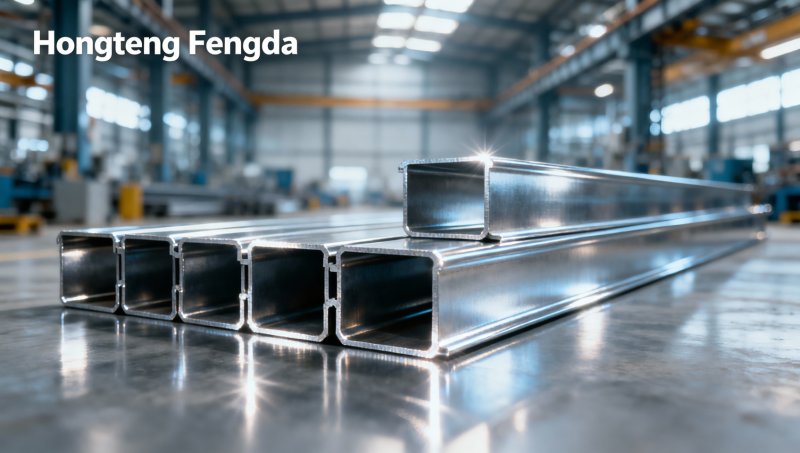
Definition and Structural Role of Steel Channels
A steel channel is a long, continuous section typically shaped like a “C” or “U,” designed to bear loads primarily through the flanges and the web. In mezzanine floor construction, Steel Channel for mezzanine floors acts as the main horizontal structural member that connects columns and distributes load evenly across the floor slab. Unlike solid beams or I-beams, channels offer a balance between weight, strength, and ease of fabrication. The channel’s geometry makes it suitable for lightweight mezzanine platforms or heavy-duty warehouses where maintaining maximum usable height is essential. Common materials include carbon steel for pressure vessels and carbon steel for automotive industry frameworks due to their durability and excellent mechanical properties. When paired with other materials such as pre-painted steel sheet or steel pile for port construction, channels form hybrid systems capable of handling tension, compression, and bending forces in complex environments. Hongteng Fengda manufactures multiple variations including hot-rolled and cold-formed channels, ensuring versatility across industrial, commercial, and civil applications where both precision and performance define success.
Market Overview and Trends in 2024
The global structural steel market in 2024 has shifted toward high-strength, low-alloy materials complemented by sustainable manufacturing practices. Rapid urbanization, smart warehouses, and modular construction trends have increased the demand for reliable Steel Channel for structural support and steel rebar for earthquake resistance. The rise of prefabrication has driven manufacturers like Hongteng Fengda to enhance dimensional accuracy, surface finish, and compatibility with automation-based installation processes. In emerging markets such as Southeast Asia and the Middle East, steel profiles for architectural design are now integral to green buildings where aesthetics meet performance. Moreover, infrastructure expansion in America and Europe continues to rely on durable products like carbon steel for pressure vessels and corrugated steel sheet for modern facades. Project managers seek consistency and traceability, prompting suppliers to provide digital documentation, mill test certificates, and compliance tracking for every production batch. The shift to smart supply chains makes choosing a reputable exporter more critical than ever, ensuring both stability of quality and reliability of on-time delivery across continents.
Application Scenarios: Mezzanine Floor Design Optimization
Steel channels play versatile roles across warehouse mezzanines, retail showrooms, industrial workshops, and logistic hubs. Their robust yet lightweight nature makes them ideal for supporting live and dead loads while reducing the need for heavy columns that could disrupt floor space. Designers often combine Steel Channel for mezzanine floors with steel beams or hybrid frameworks to create multi-level operations zones capable of accommodating storage, offices, or machinery. For earthquake-prone regions, steel rebar for earthquake resistance is incorporated alongside channels to enhance seismic performance. In architectural projects focusing on aesthetics, steel profile for architectural design offers sleek edges and consistent alignment when visible framework designs are preferred. For marine-related applications such as docks or port storage buildings, a combination of corrosion-resistant channel sections and steel pile for port construction ensures durability against saline exposure. Additionally, Hongteng Fengda’s wide product line—ranging from channel steel to angle steel and cold-formed profiles—allows engineers to specify solutions that balance strength, weight, and economy according to project function and regional safety standards.
Technical Performance and Material Parameters
When assessing the performance of a Steel Channel for mezzanine floors, several key attributes matter: yield strength, tensile strength, dimensional tolerance, and surface treatment. High-precision rolling processes maintain tight geometries to ensure easy assembly and consistent alignment with prefabricated structures. For projects demanding superior corrosion resistance, galvanized or pre-painted options—such as pre-painted steel sheet—offer efficient protection without needing post-fabrication coating. ASTM, EN, and GB standards define the mechanical parameters and chemical compositions, guaranteeing uniformity across international supply chains. Hongteng Fengda follows strict quality control and non-destructive testing on each batch, making sure channels can withstand load-bearing requirements typical in large warehouses or retail mezzanines. The use of carbon steel for automotive industry components demonstrates performance flexibility; similar mechanical reliability benefits mezzanine systems where high impact or vibration loads are expected. Moreover, welding and bolting compatibility remain a major advantage of these channels—facilitating faster assembly and minimized onsite welding work. Such predictability supports multitier facilities designed under lean construction principles.
Procurement Guide: Selecting the Right Channel
Choosing the correct channel type depends on several decision variables—load requirements, span length, intended use, installation environment, and compliance standards. Engineers should start by evaluating structural modeling outcomes to define section modulus and deflection limits. For light commercial mezzanines, cold-formed C-channels may suffice, while heavy industrial floors require hot-rolled U-channels with thicker webs. Evaluating compatibility with adjoining elements, such as corrugated steel sheet decking or carbon steel for pressure vessels used as ancillary frameworks, ensures uniform stress distribution. Hongteng Fengda provides OEM customization allowing modifications in flange angles, lip reinforcement, and surface galvanizing according to project-specific climate conditions. International project procurement teams should request mill certificates verifying ASTM A36, EN 10025, or GB standard compliance. To further enhance project efficiency, coordination with supply chain partners for lead time accuracy and logistics optimization is crucial. With a supplier maintaining stable production like Hongteng Fengda, mezzanine builders reduce sourcing risks and improve scheduling reliability, key metrics for project success in competitive 2024 timelines.
Cost Considerations and Alternative Solutions
While the mechanical performance of the Steel Channel for mezzanine floors remains paramount, cost-efficiency and lifecycle management cannot be overlooked. Comparative cost analysis shows that structural channel steel can lower total material cost by up to 15% when paired with intelligent design software that minimizes waste through optimized cut-to-length planning. For large-scale distribution centers, using pre-engineered channels combined with steel rebar for earthquake resistance results in fewer repairs and safety incidents over time, thus lowering operational cost. Alternatives such as cold-formed thin-gauge systems or aluminum supports may appear cost-effective upfront but often fail to deliver the same long-term strength and weldability as carbon steel options. Incorporating efficient materials such as carbon steel for automotive industry standards ensures rapid fabrication cycles and reliable performance under cyclic loading. Additionally, products like Wire Rod with models including GB1499.2 HRB400 and ASTM A615 Grade 60 serve as excellent complementary reinforcements. Their carbon steel composition (0.06–0.22%) offers great weldability, providing strong joint integrity within mezzanine frames and brackets. This interoperability across product categories maximizes resource utilization and aligns with green construction objectives.
Standards and Certification Importance
Adhering to steel standards and certifications ensures consistency, safety, and performance validation throughout the entire construction process. Major standards followed by Hongteng Fengda include ASTM for global export projects, EN for European specifications, and GB/JIS for Asia-Pacific applications. ISO 9001 quality management certifications substantiate process reliability from raw material selection to final inspection. For mezzanine floor systems, compliance with local building codes and fire safety norms must be verified during procurement. Certified Steel Channel for structural support not only simplifies approval during project inspection but also enhances resale and valuation potential of industrial facilities. Partnering with a manufacturer maintaining transparent test documentation and mechanical traceability reduces the risk of defective batches. Hongteng Fengda’s laboratory performs yield strength verification and coating thickness testing on every production line, ensuring each batch meets or exceeds industry benchmarks. Such adherence guarantees that the mezzanine floors built today remain durable, safe, and compliant throughout their operational lifecycle.
Case Studies and Practical Implementation
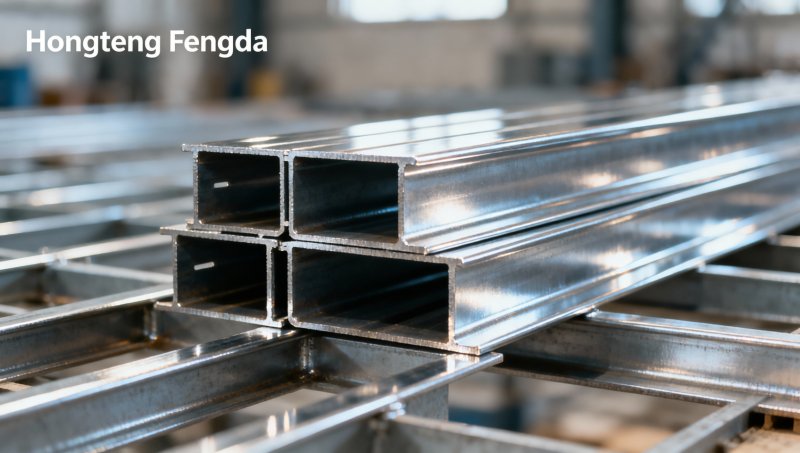
Several industrial projects highlight how Steel Channel for mezzanine floors improves construction efficiency. In an automotive assembly plant in Europe, the integration of hot-rolled channel frameworks and carbon steel for pressure vessels significantly reduced installation time by 18%. Another logistics center in Southeast Asia adopted Hongteng Fengda’s customized galvanized channels to create a modular mezzanine spanning 40 meters without intermediate support columns, resulting in greater operational space utilization. The combination of steel profile for architectural design and corrugated steel sheet enhanced both structural aesthetics and acoustic insulation. For marine repair workshops requiring robust substructures, the installation team integrated channel units with port-grade foundations similar to steel pile for port construction, ensuring vibration stability under heavy crane load conditions. These real-world examples exhibit how material standardization coupled with manufacturer expertise enables clients to execute projects faster, safer, and more economically while maintaining high design flexibility—a crucial criterion for global construction projects in 2024.
FAQ and Common Misconceptions
Q1: Are all Steel Channels suitable for mezzanine floor use? A: Not exactly; channel selection depends on yield strength, cross-sectional geometry, and usage environment. Cold-formed units suit lighter loads, while hot-rolled variants handle higher stress zones. Q2: How does Steel Channel compare to I-beam construction? A: Though I-beams can carry higher vertical loads, Steel Channel for mezzanine floors offers reduced weight, easier assembly, and more economical connections for horizontal frameworks. Q3: Can channels be customized for architectural purposes? A: Yes, especially using steel profile for architectural design to meet aesthetics and functionality simultaneously. Q4: Are carbon steel grades prone to corrosion? A: Without coating, yes; however, Hongteng Fengda provides pre-painted, galvanized, or powder-coated channels for corrosion resistance equivalent to long-life performance in adverse climates. Q5: What are the latest innovations? A: Integration of machine learning in load simulations and sustainable material sourcing reflect 2024 trends ensuring that mezzanine systems remain eco-friendly and cost-effective. Q6: Can accessories like Wire Rod improve channel performance? A: Certainly. Reinforcing junctions or tension zones with wire rods enhances structural continuity, reducing localized fatigue failures. Understanding these misconceptions allows stakeholders—from project managers to procurement officers—to make scientifically grounded decisions that optimize long-term structural integrity.
Trend and Future Insights
Looking ahead, the demand for high-performance Steel Channel for mezzanine floors will grow as industrial automation expands and e-commerce logistics reshape spatial layouts. Sustainable production, digital twin modeling, and AI-driven predictive maintenance will redefine how designers approach mezzanine engineering. Carbon steel for pressure vessels and carbon steel for automotive industry applications are merging into unified material ecosystems driven by advanced metallurgy and data integration. Future channels will incorporate smart sensors for real-time stress monitoring, helping facility managers anticipate maintenance before issues occur. Pre-painted and corrugated steel sheet combinations will find an even greater presence in aesthetic commercial interiors due to durability and ease of maintenance. Hongteng Fengda continues to invest in eco-efficient rolling mills and intelligent inspection lines, aligning with carbon neutrality targets while ensuring clients receive globally compliant steel products that meet the evolving architectural and industrial expectations.
Why Choose Hongteng Fengda
Partnering with Hongteng Fengda ensures you access a globally recognized Structural Steel Manufacturer & Exporter from China with experience across multiple continents. Our expertise extends beyond supply—we deliver engineering consultation, design adaptation, and quality assurance combined with certifications that satisfy ASTM, EN, JIS, and GB standards. Every Steel Channel for mezzanine floors and related product such as carbon steel for pressure vessels, steel rebar for earthquake resistance, or steel bar for railway construction is crafted in modern facilities ensuring tight control over chemical composition and dimensional accuracy. Serving markets in North America, Europe, the Middle East, and Southeast Asia, we maintain consistent production capacity, competitive pricing, and customer-centered service philosophy. If you are a procurement manager seeking reliability, an engineer desiring precision, or a distributor pursuing scalable partnerships, Hongteng Fengda stands ready as your trusted ally. Contact us today to discuss your project requirements and discover how our steel solutions—from mezzanine structures to architectural design components—can help you build stronger, safer, and smarter for 2024 and beyond.
- structural channel
- channel steel
- angle steel
- wire rod
- steel standards
- ASTM A36
- structural steel
- steel beams
- steel profiles
- Structural Steel
- I-Beam
- Steel Beams
- Profile
- Rebar
- Galvanized
- Steel Beam
- Steel Channel
- carbon steel
- steel sheet
- steel rebar
- steel profile
- steel pile
- steel bar
- corrugated steel sheet
- carbon steel for automotive industry
- Steel Channel for structural support
- steel bar for railway construction
- steel pile for port construction
- steel profile for architectural design
- steel rebar for earthquake resistance
- pre-painted steel sheet
- carbon steel for pressure vessels
- Steel Channel for mezzanine floors
Related recommendations
 How to Select the Correct Steel Sheet Grade for Auto PartsSelect the ideal steel sheet for auto parts by balancing performance and cost. Discover expert sourcing strategies to avoid manufacturing traps and optimize procurement. Read our guide now!
 Choosing the Right Zinc Coating Weight for Galvanized SheetOptimize your galvanized sheet selection by choosing the right zinc coating weight. Discover expert strategies to balance corrosion resistance, formability, and project costs.
 How to Specify Wall Thickness for Structural Steel TubingMaster wall thickness specification for structural steel tubing. Balance engineering loads, global tolerances, and costs. Read our expert guide to optimize procurement and ensure project safety!
 How much does 2 inch ss pipe price increase when upgrading from Schedule 40 to Schedule 80 for high-pressure systems?2 inch ss pipe price increases 18–35% when upgrading from Sch 40 to Sch 80—discover why, when it’s truly needed, and how to avoid overpaying.
Please give us a message


Please enter what you want to find