Understanding how Indian distributors negotiate ss sheets price in India with mills is critical for global buyers—from procurement teams and project managers to steel round plate suppliers in Europe and flat plate stainless steel suppliers in the Middle East. This article unpacks key levers: volume tiers, payment terms, and penalty clauses that directly impact cost, delivery reliability, and quality compliance—especially for applications like stainless flat sheet ASTM standard projects, marine or food processing industries, and automotive-grade stainless round bar sourcing. Whether you're an importer, distributor, or structural steel manufacturer like Hongteng Fengda, mastering these negotiation dynamics helps reduce sourcing risks and optimize total landed cost.
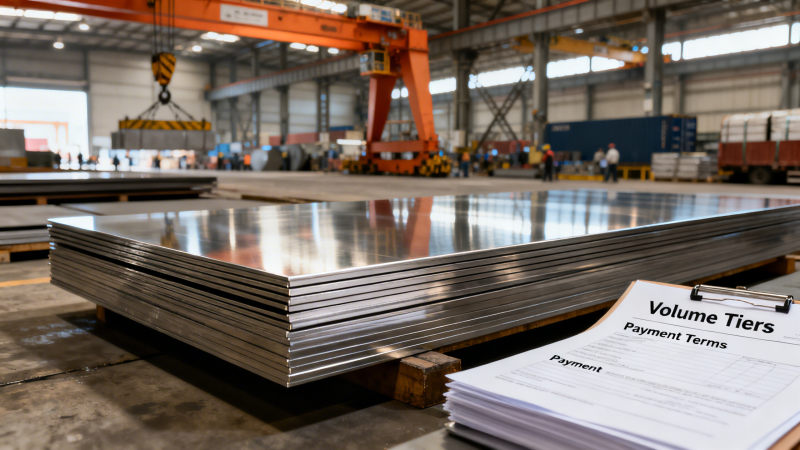
Volume Tiers: How Order Scale Dictates Pricing Power
In India’s competitive stainless steel (SS) sheets market, mill pricing is rarely flat-rate—it’s tiered. Distributors typically qualify for discounts only when committing to predefined monthly or quarterly volume thresholds. Common tiers include: 50–100 MT/month (entry-level discount of 1.5–2.5%), 100–250 MT/month (3–4.5% off list), and 250+ MT/month (5–7% with optional freight absorption). These tiers are not static; mills revise them quarterly based on raw material volatility (e.g., nickel price swings ±12% YoY) and domestic demand forecasts.
What’s often overlooked is the “effective volume” calculation. Mills exclude trial orders, urgent short-lead-time shipments, or non-standard finishes (e.g., No. 4 brushed vs. 2B) from tier eligibility. A distributor booking 180 MT/month may still fall into the mid-tier if 30 MT is classified as “non-qualifying.” Hongteng Fengda advises global partners to benchmark tier thresholds across 3–5 Indian mills before finalizing a master supply agreement—especially when sourcing for multi-site projects across Southeast Asia or the Middle East.
Moreover, volume commitments carry carryover obligations. If a distributor misses its quarterly target by >15%, the mill may downgrade the next quarter’s tier—or impose a “make-up clause” requiring double-volume in Q2 to retain Q1’s rate. This directly affects landed cost predictability for OEMs and EPC contractors.
The table above reflects actual tier structures observed across six major Indian SS mills in FY2023–24. Note that Metal C Beam inclusion in bundled orders qualifies for cross-product volume aggregation—a strategic lever often underutilized by international buyers.
Payment Terms: Beyond Net-30 — Currency, Timing & Security Levers
While “Net-30” appears standard, Indian mills increasingly enforce layered payment conditions. The most impactful variables are currency denomination (INR vs. USD), advance payment %, and documentary requirements. For export-bound SS sheets, 70% of mills now mandate 30% irrevocable LC at sight (not TT) for first-time buyers—and require full LC coverage for orders exceeding ₹2.5 crore (~USD 300,000).
Currency risk is actively managed: mills quote INR prices with built-in 1.2–1.8% forex buffer for USD-linked contracts. Distributors paying in USD face automatic revaluation if RBI exchange rate deviates >±0.7% between order confirmation and LC issuance. This adds unpredictability for European importers hedging EUR/INR exposure.
Hongteng Fengda supports clients navigating this by offering dual-currency invoicing (INR/USD) with fixed conversion rates locked for 45 days—enabling precise budgeting for infrastructure projects in Oman or Kenya where local currency volatility exceeds 5% quarterly.

Penalty Clauses: Delivery, Quality & Documentation Triggers
Penalties aren’t just about late delivery—they’re multidimensional. Top triggers include: (1) delivery delay beyond 7-day grace period (0.5% of order value/day, capped at 5%); (2) dimensional tolerance breach (>±1% on thickness or width per IS 6911:2018); and (3) missing documentation (e.g., MTC EN 10204 3.1, SGS test report)—incurring ₹50,000–₹2 lakh per incident.
Crucially, penalties apply *even if the deviation is within ASTM A240 tolerances*—because Indian mills align strictly with domestic standards unless explicitly contracted otherwise. This creates friction for global buyers specifying ASTM-grade SS sheets for food-grade conveyors or pharmaceutical cleanrooms.
To mitigate, Hongteng Fengda embeds third-party pre-shipment inspection (SGS/BV) at origin and issues EN-compliant MTCs certified to EN 10204 Type 3.1—ensuring zero documentation penalties and seamless customs clearance in EU ports.
Strategic Takeaways for Global Structural Steel Buyers
For procurement teams and project managers, negotiating SS sheets in India isn’t transactional—it’s relational and contractual. Volume tiers reward consistency, payment terms expose forex and liquidity risk, and penalty clauses reveal operational rigor. As a China-based structural steel manufacturer serving over 42 countries, Hongteng Fengda bridges this gap: we combine Indian mill pricing intelligence with our own ISO 9001-certified production (Q235/Q345/A36/s235jr grades), enabling hybrid sourcing—e.g., SS sheets from India + Metal C Beam from our Shandong facility—under one QC protocol and consolidated logistics.
Whether you’re tendering for a 50,000-ton industrial park in Saudi Arabia or upgrading purlins in a Mumbai data center, optimizing SS sheet procurement requires looking beyond unit price. It demands integrated visibility across volume commitment cycles, payment security mechanisms, and contractual liability boundaries.
Ready to align your stainless sheet sourcing strategy with real-world mill dynamics—and integrate complementary structural components like cold-formed Metal C Beam under unified quality control? Contact Hongteng Fengda today for a no-obligation procurement audit and customized supply roadmap.
Related recommendations
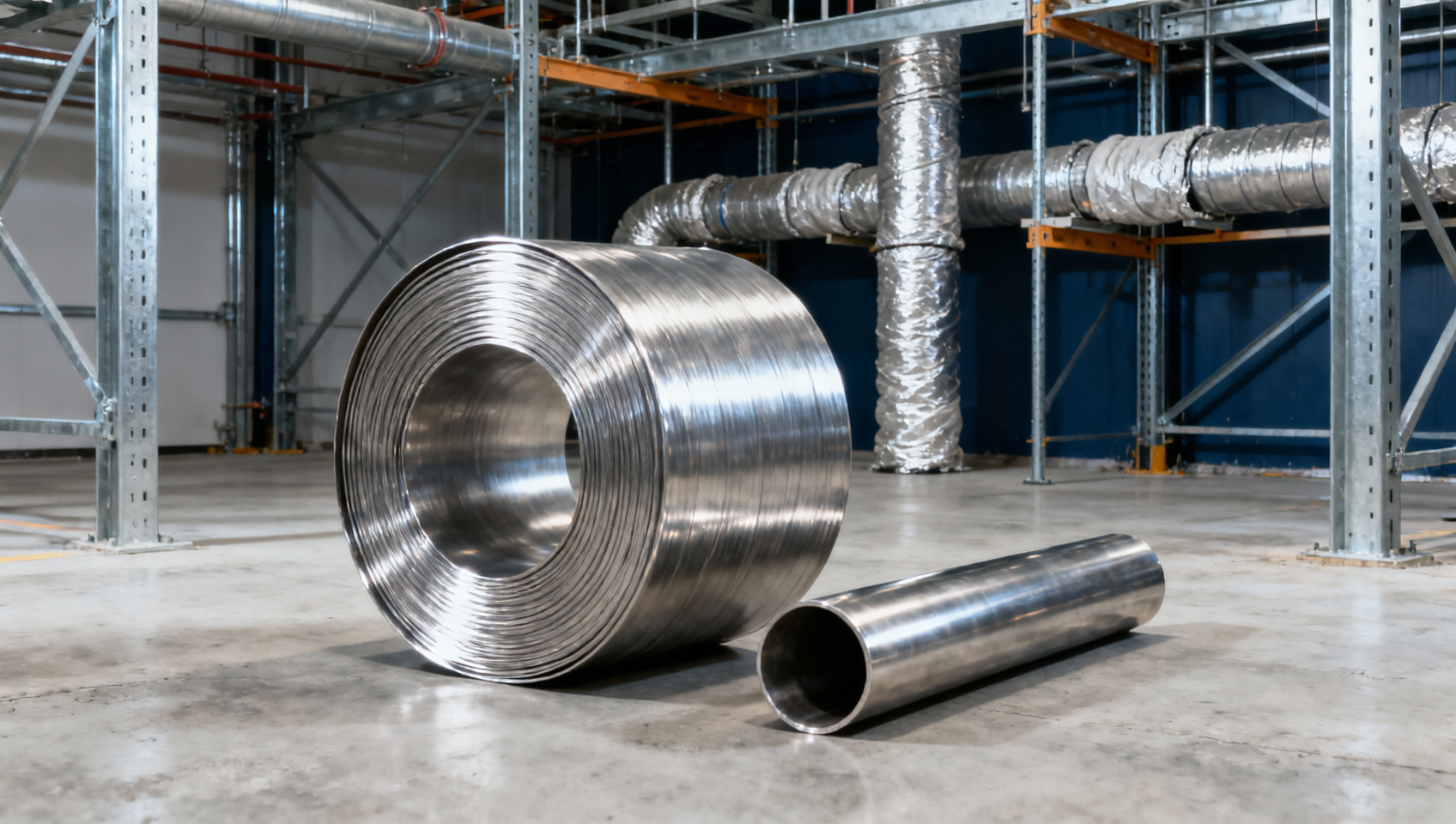
") Stainless Steel Tube Coil vs. Straight Tube: Total Cost of Ownership in HVAC Retrofit Projects (Installation Labor, Leak Points, Space Savings)Stainless steel tube coil cuts HVAC retrofit TCO by slashing labor, leaks & space needs—discover how coil outperforms straight tube in real-world retrofits.
Stainless Steel Tube Coil vs. Straight Tube: Total Cost of Ownership in HVAC Retrofit Projects (Installation Labor, Leak Points, Space Savings)Stainless steel tube coil cuts HVAC retrofit TCO by slashing labor, leaks & space needs—discover how coil outperforms straight tube in real-world retrofits. Steel Coils Suppliers vs. Direct Mills: Lead Time, MOQ, and Custom Slitting Flexibility Compared for Mid-Volume BuyersSteel coils suppliers offer faster lead times, lower MOQs (5–10 tons), and precision custom slitting—ideal for mid-volume structural fabricators seeking agility, quality, and cost control.
 How to Vet Stainless Steel Coil Suppliers: 7 Due-Diligence Checks for Quality, Traceability, and ISO ComplianceStainless steel coil suppliers vetted right mean zero surprises on site. Discover 7 field-tested due-diligence checks for quality, full traceability & real ISO compliance.
 Stainless Coil Pipe vs. Seamless Pipe: When to Choose Welded Coiled Tubing for High-Pressure Fluid SystemsStainless coil pipe delivers unmatched efficiency for high-pressure fluid systems—superior continuity, faster installation, and proven weld integrity vs. seamless.
Please give us a message


Please enter what you want to find