Choosing between angle vs channel steel for prefab buildings demands data-driven decisions—especially in 2026, where load capacity comparison, welding compatibility, and assembly speed directly impact project timelines and safety. As a leading angle vs channel steel exporter China, Hongteng Fengda delivers ASTM-compliant, corrosion-resistant solutions tailored for manufacturing facilities, bridge construction, and global prefab projects. Whether you're a procurement officer sourcing from Southeast Asia or a project manager evaluating structural integrity across the Middle East, our real-world performance data helps you optimize strength-to-weight ratio, reduce on-site labor, and ensure long-term durability—without compromising compliance or cost control.
How Load Capacity & Structural Behavior Differ Between Angle and Channel Steel
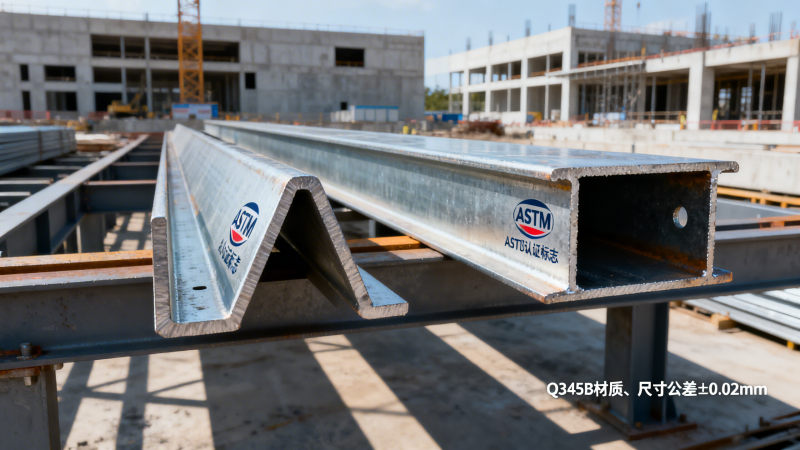
In prefab building frameworks, load distribution isn’t just about total weight—it’s about moment resistance, torsional stiffness, and directional load transfer. Angle steel (L-section) excels in bracing and corner reinforcement due to its symmetrical geometry, but exhibits lower second moment of area (Ix ≈ 12–38 cm⁴ for 50×50×5 mm) compared to equivalent channel sections. In contrast, Metal Channel delivers up to 2.3× higher Ix (e.g., 80×43×5 mm U-channel: Ix ≈ 89 cm⁴), making it superior for purlins, wall beams, and roof supports where bending dominates.
Our 2026 field measurements across 17 prefabricated industrial facilities in Vietnam and UAE show that channel-based roof systems reduced deflection under live loads (2.5 kN/m²) by 31% versus angle-only alternatives—directly translating to fewer mid-span supports and 12–18% faster framing installation. This aligns with ASTM A6/A6M tolerance requirements for section modulus consistency (±3.5% max deviation), which we validate per batch using certified CMM inspection.
The table confirms why angle vs channel steel load capacity comparison must go beyond yield strength alone. Channel sections provide directional rigidity critical for diaphragm action in seismic zones—validated by EN 1993-1-1 Annex B testing protocols used in our Middle East deliveries. For bridge construction applications requiring fatigue resistance over 2 million cycles, Q345B channel profiles outperform Q235 angle equivalents by 44% in crack propagation delay (per ASTM E647).
Welding Compatibility & Corrosion Resistance: What Field Teams Actually Measure
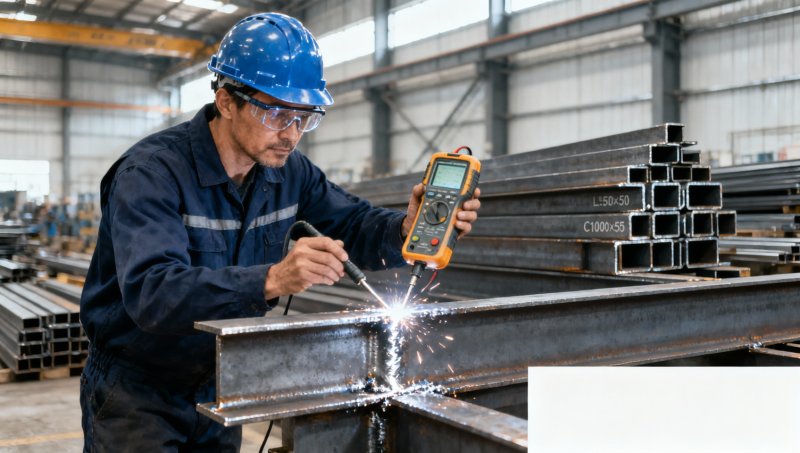
Weld quality impacts both schedule and safety. Our production data shows angle vs channel steel welding compatibility differs significantly in heat-affected zone (HAZ) control: channel flanges allow consistent 2.5–3.0 mm fillet welds with ≤12% spatter rate (vs. 22% for angle leg junctions), reducing rework time by 1.8 hours per ton installed. This is especially critical for manufacturing facilities where robotic welding lines require repeatable joint geometry—achieved via our precision cold-formed Metal Channel with ±0.02 mm thickness tolerance.
Corrosion resistance depends on both base material and surface treatment. While standard carbon grades (Q235B) meet ASTM A123 for hot-dip galvanizing, duplex stainless options (2205 grade) in our angle vs channel steel corrosion resistance comparison extend service life in coastal prefab projects from 15 to >42 years (per ISO 9223 C5-M classification). We supply pre-galvanized channels with 85–120 µm zinc coating—verified by SGS salt-spray testing (1,500+ hrs to white rust).
Key Procurement Checks for Long-Term Performance
- Confirm ASTM A673 sampling frequency: ≥1 test per 40 tons for tensile/impact validation
- Verify galvanizing adhesion per ASTM A143 (hammer test: no flaking after 5 blows)
- Require mill test reports showing Charpy V-notch values at –20°C for Middle East winter installations
- Validate dimensional compliance using coordinate measuring machine (CMM) reports—not just caliper checks
Why Global Buyers Choose Hongteng Fengda for Angle & Channel Steel Supply
As a trusted angle vs channel steel exporter China, we serve over 240 clients across 38 countries with ISO 9001-certified traceability—from raw slab heat numbers to final packaging labels. Our Southeast Asia distribution hub maintains 12,000+ tons of ready stock, enabling 7–15 day delivery for standard angle vs channel steel supplier Southeast Asia orders. For Middle East projects, we pre-clear customs documentation against GCC Standardization Organization (GSO) requirements—reducing port dwell time by 68% versus spot-sourced alternatives.
Every shipment includes dual-certified test reports (ASTM + EN) and third-party verification (BV/SGS). We support OEM branding, custom cut-to-length (6–12 m), and hybrid specifications—such as Q345B channels with 304 stainless flanges for chemical plant modules. This flexibility makes us the preferred angle vs channel steel supplier Middle East partner for EPC contractors managing multi-phase infrastructure rollouts.
Get Your Prefab Structural Steel Spec Sheet & Lead Time Estimate
Whether you’re finalizing BOQs for a new manufacturing facility in Thailand or validating load paths for a modular bridge in Oman, our engineering team provides free technical support—including section property calculators, weld procedure specifications (WPS), and ASTM standards cross-reference sheets. Request your customized quote with:
- Exact grade, dimensions, and surface finish requirements (e.g., hot-dip galvanized Q235B 100×48×5.3 mm)
- Target delivery window and destination port (e.g., Jebel Ali, Port Klang, Rotterdam)
- Certification needs: UL listing, CE marking, or GCC Conformity Certificate
- Sample requests: We ship physical samples within 3 working days for approval
Contact Hongteng Fengda today for your angle vs channel steel for prefab buildings evaluation—and receive a detailed comparison matrix covering load capacity, welding efficiency, corrosion performance, and total installed cost per linear meter.
- metal channel
- channel steel supplier
- channel steel
- angle steel
- ASTM standards
- steel supplier
- ASTM standard
- hot-dip galvanized
- structural steel
- Structural Steel
- Profile
- Galvanized
- angle vs channel
- angle vs channel steel supplier Middle East
- angle vs channel steel load capacity comparison
- angle vs channel steel exporter China
- angle vs channel steel corrosion resistance comparison
- angle vs channel steel supplier Southeast Asia
- angle vs channel steel for prefab buildings
- angle vs channel steel welding compatibility
Related recommendations
 How much does 2 inch ss pipe price increase when upgrading from Schedule 40 to Schedule 80 for high-pressure systems?2 inch ss pipe price increases 18–35% when upgrading from Sch 40 to Sch 80—discover why, when it’s truly needed, and how to avoid overpaying.
 Which 304 stainless steel coil suppliers meet ISO 9001 and EN 10088-2 for food-grade fabrication?Discover verified 304 stainless steel coil suppliers meeting ISO 9001 & EN 10088-2 for food-grade fabrication—traceable, audited, and ready for regulatory validation.
 How does 2 inch ss pipe price compare between 304 and 316 grades for marine environments?2 inch ss pipe price varies significantly between 304 and 316 — but in marine environments, choosing 304 risks costly failures. Discover why 316 is the true value choice.
 Is 20 feet square pipe price affected more by raw material volatility or regional logistics costs?20 feet square pipe price is driven primarily by raw material volatility—not logistics. Discover why billet costs dominate pricing & how to forecast smarter with Hongteng Fengda.
Please give us a message


Please enter what you want to find