When planning storage systems, many buyers ask whether angle iron for shelving will sag under heavy loads and how it compares with structural steel beams for construction. The answer depends on span, steel thickness, load distribution, and support design. For engineers, buyers, and project managers, understanding these factors helps improve safety, control costs, and choose reliable steel solutions for long-term performance.
What Really Causes Angle Iron Shelving to Sag?
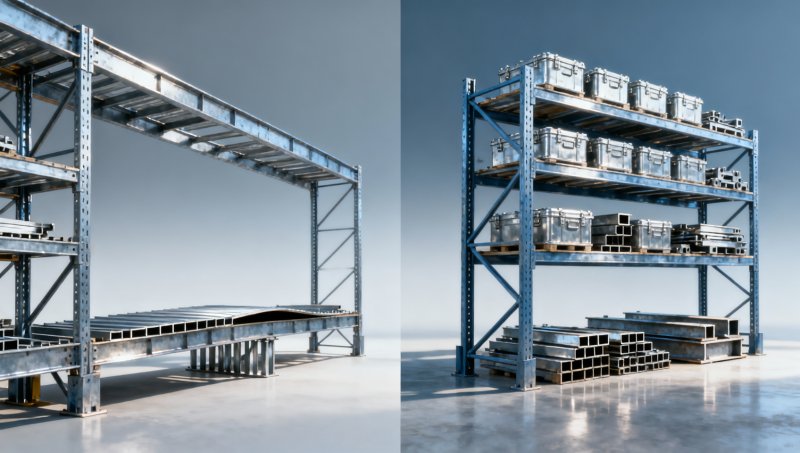
Angle iron shelving does not automatically fail under heavy loads, but it can sag when the design is underspecified for the actual working condition. In most practical steel shelving systems, deflection is influenced by 4 core variables: span length, section size, material thickness, and how the load is distributed across the shelf. A short span with proper bracing can perform well, while a longer unsupported span may bend even if the steel grade itself is acceptable.
For warehouse users and industrial buyers, the most common mistake is focusing only on total load capacity. A shelf rated for 300 kg may still experience visible deflection if that load sits at the center over a 1.5 m span instead of being shared across 3 support points. In shelving design, bending stiffness matters as much as nominal strength, which is why section geometry often determines performance more than simple weight alone.
Another key issue is the difference between temporary loading and continuous loading. A shelf that holds tools for 2 hours during maintenance may perform differently from one that carries motors, parts, or boxed goods 24 hours a day for months. Operators, safety managers, and project owners should evaluate not only peak load but also service duration, impact loading, and whether forklifts or manual handling create vibration during operation.
In steel fabrication and export supply, a reliable manufacturer should help buyers review these variables before production. Hongteng Fengda, as a structural steel manufacturer and exporter from China, supports global customers with angle steel, channel steel, steel beams, and customized structural steel components that align with ASTM, EN, JIS, and GB requirements. This helps reduce sourcing risk when shelving frames must balance cost, strength, and lead time.
The 5 most common reasons for shelf deflection
- Unsupported spans that are too long, especially beyond typical light-duty shelving ranges of 900 mm to 1800 mm.
- Thin angle sections selected to save cost, but without checking moment resistance and stiffness.
- Point loads placed near the center instead of evenly distributed loads across the full shelf width.
- Insufficient bracing, weak welds, or loose bolted joints that allow frame movement under repeated use.
- Use in corrosive or humid environments where section thickness is gradually reduced over time.
For technical evaluators, these points show why the question is not simply whether angle iron will sag, but under what loading pattern, over what span, and with what support condition. That distinction is critical in industrial procurement.
How Does Angle Iron Compare with Other Structural Steel Options?
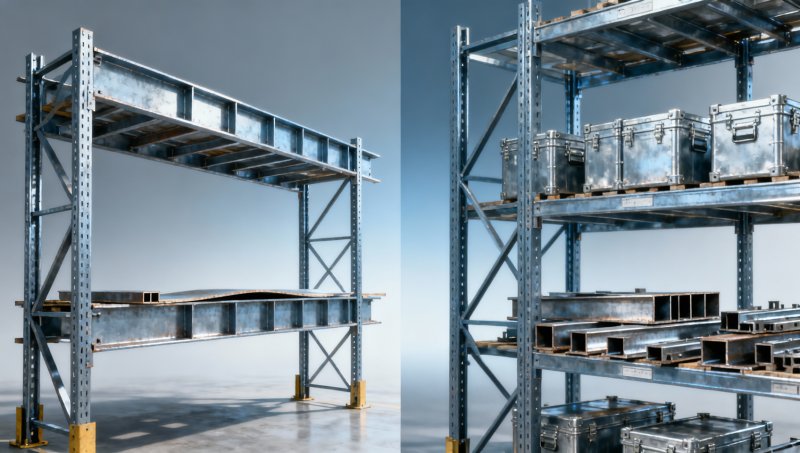
Angle iron is widely used for shelving because it is economical, easy to fabricate, and suitable for bolted or welded frames. However, when loads increase or spans become wider, buyers often compare it with channel steel, rectangular tubes, or steel beams. The best option depends on whether the project prioritizes low material cost, easier assembly, higher rigidity, or lower long-term maintenance.
As a practical rule, angle iron works well in light-duty to medium-duty shelving, maintenance racks, workshop storage, and equipment frames where spans are controlled and vertical support spacing is frequent. If the application involves palletized goods, concentrated loads, or repetitive heavy loading cycles, channel steel or tubular sections may provide better torsional stability and lower visible deflection over the same clear span.
For procurement teams, the decision should include at least 3 dimensions: initial steel weight, fabrication complexity, and service reliability. Angle iron may reduce raw material cost, but if the shelf requires extra intermediate supports, thicker sections, or later reinforcement, the total installed cost can rise. This is why many project managers request a side-by-side comparison before final approval.
The table below summarizes common steel section choices for shelving and related support structures. These are general engineering references rather than universal limits, because actual capacity always depends on grade, profile size, fixing details, and safety factors.
This comparison shows why angle iron remains popular, but not universal. For buyers managing budgets across multiple racks, a hybrid design is often efficient: angle steel for secondary framing and stronger sections at long-span or high-load positions. That approach can lower steel tonnage without ignoring safety.
Where inserted product solutions can support related projects
In some industrial projects, shelving systems are part of a larger steel package that also includes towers, brackets, machined components, ancillary supports, or corrosion-resistant round members. In these cases, buyers may also evaluate Galvanized Round Steel for related fabrication needs where anti-corrosion performance, roundness tolerance, and custom diameter supply are important.
This product is available in diameter ranges from 16 mm to 250 mm, with customized lengths, galvanized surface finish, and tensile strength listed at 570–820 MPa. It is commonly used in electric power towers, communication towers, highway protection, marine components, substation facilities, and precision processing applications. For buyers handling mixed steel procurement, combining shelving materials with compatible structural and accessory steel sourcing can simplify quality control and delivery coordination.
For projects exposed to humidity, outdoor storage, or coastal environments, galvanized round steel and angle steel may be selected together depending on the load path and fabrication method. This is especially relevant when the procurement team needs one supplier capable of standard products plus OEM steel components under ASTM, EN, JIS, or GB-aligned production systems.
How to Judge Load Capacity Before You Buy
A practical procurement decision should start with application data, not only catalog dimensions. Before selecting angle iron for shelving, technical teams should define at least 6 points: shelf span, shelf depth, expected total load, load distribution, support spacing, and environmental exposure. Without these basics, any quotation is only a rough commercial estimate rather than a dependable engineering basis.
Many disputes arise because the buyer says “heavy load” while the supplier interprets that phrase differently. For one workshop, heavy load may mean 150 kg per level. For another, it may mean 800 kg concentrated in steel dies or machine parts. A better approach is to define whether the shelf sees uniformly distributed load, central point load, or moving impact load, and whether the design target is occasional use or continuous 24/7 service.
The following evaluation table can help engineers, purchasers, and project managers screen options in the early stage. It does not replace structural calculation, but it helps organize supplier discussions and avoid under-specification.
Using this checklist early can save 2 to 4 rounds of drawing revision and reduce the risk of ordering a section that looks economical on paper but performs poorly in use. For distributors and contractors, it also improves quotation accuracy and customer confidence.
A simple 4-step selection method
- Define the maximum load per level and separate static load from impact load.
- Confirm the unsupported span and whether intermediate supports are possible.
- Choose the section type based on stiffness, fabrication, and corrosion exposure.
- Request section details, standards, tolerances, and delivery schedule before approval.
For finance approvers and commercial evaluators, this method helps compare suppliers on more than price per ton. It supports total-cost judgment, including rework risk, coating life, and installation efficiency.
Why support design matters as much as steel grade
Even when steel complies with recognized standards, poor frame layout can still cause excessive shelf sag. Cross-bracing, upright spacing, anchor condition, and deck connection all influence how the load is transferred. In many real projects, improving support intervals from 1800 mm to 1200 mm can reduce deflection more effectively than changing to a much heavier section.
This is why experienced structural steel suppliers do more than ship material. They help buyers align section choice with fabrication logic, transport constraints, and final installation method. That practical support becomes especially important in export projects where lead time, communication clarity, and documentation consistency affect the full project schedule.
Standards, Corrosion Protection, and Service Life Considerations
For shelving and structural support systems, load performance is only one part of the decision. Buyers also need to consider dimensional tolerance, material consistency, coating treatment, and compliance with project standards. In global sourcing, common reference systems include ASTM, EN, JIS, and GB. The exact applicable standard depends on region, customer specification, and end-use requirement.
Corrosion is often underestimated in shelving projects. In dry indoor conditions, painted or untreated steel may be acceptable depending on the application. In humid factories, marine-adjacent sites, or outdoor storage, galvanized or otherwise protected steel can significantly improve maintenance intervals and reduce replacement frequency over a 3-year to 10-year service window. The right coating is therefore a procurement decision, not just a finishing detail.
Quality control teams should also inspect straightness, thickness consistency, hole location accuracy, and weld quality where relevant. For bolted shelving, tolerance mismatch can create installation delays even before loading begins. For welded systems, heat distortion and joint execution can affect alignment and stiffness. A disciplined supplier with modern manufacturing facilities and stable process control helps reduce these avoidable issues.
Hongteng Fengda supplies structural steel products and customized solutions for global construction, industrial, and manufacturing projects. With production support for angle steel, channel steel, steel beams, cold formed steel profiles, and OEM steel components, the company helps customers manage specification matching, quality consistency, and dependable lead times across different markets.
3 compliance questions buyers should ask
- Which material standard applies to the project, and does the supplier understand the required documentation format?
- Is the selected corrosion protection suitable for indoor, outdoor, or high-humidity service conditions?
- Can the supplier maintain tolerance and delivery consistency across repeat orders or batch shipments?
These questions are especially important for distributors, project managers, and safety personnel who must balance speed, compliance, and lifecycle cost without overdesigning the system.
FAQ and Buying Advice for Heavy-Duty Shelving Projects
Below are common questions from users, engineers, and procurement teams evaluating angle iron shelving for heavy loads. These answers are intended to help narrow the decision and prepare a more accurate inquiry package.
Can thicker angle iron completely prevent sagging?
Not completely. Increasing thickness improves section capacity, but sagging still depends on span, load position, support rigidity, and connection quality. In some cases, reducing span by 20% to 30% or adding a center support is more effective than simply choosing a thicker angle section.
Is angle iron suitable for warehouse shelving?
Yes, for many light-duty and medium-duty warehouse applications. However, if the system stores dense metal parts, palletized goods, or heavy machine components, buyers should compare angle iron with channel steel or beam-supported designs. The right choice depends on load per level, span range, and operating frequency.
What should purchasers send to a structural steel supplier for quotation?
At minimum, provide 5 items: required section type, dimensions, quantity, intended application, and target standard. If available, also include drawings, surface treatment requirements, destination country, and required lead time such as 2 weeks, 4 weeks, or a phased shipment plan. Better inquiry detail usually leads to faster and more accurate pricing.
How can buyers reduce sourcing risk for customized steel shelving components?
Work with a supplier that can support both standard structural steel and OEM customization, while maintaining quality control and export experience. Review production capability, applicable standards, inspection approach, and shipment coordination. This is particularly useful when a project includes multiple steel items rather than one simple profile order.
Why Choose Us for Structural Steel and Shelving-Related Supply?
If your team is deciding whether angle iron for shelving will sag under heavy loads, the best next step is not guessing from appearance or unit price. It is confirming span, section, load pattern, support method, and corrosion environment with a supplier that understands structural steel applications. That approach protects safety, reduces redesign, and improves long-term value.
Hongteng Fengda supports global buyers with angle steel, channel steel, steel beams, cold formed steel profiles, and customized structural steel components. We serve construction, industrial, and manufacturing projects across North America, Europe, the Middle East, and Southeast Asia, with attention to stable production capacity, consistent quality, and dependable lead times.
You can contact us for practical project support, including section parameter confirmation, shelving material selection, anti-corrosion options, drawing-based customization, standard matching under ASTM, EN, JIS, or GB, sample discussion, and delivery schedule review. If you are comparing suppliers, we can also help evaluate whether angle steel, channel steel, beam sections, or combined solutions make better technical and commercial sense for your project.
For a faster quotation, send your size range, estimated load per level, support spacing, application environment, quantity, and target shipment timeline. This allows our team to respond with a more relevant steel solution instead of a generic price list.
Please give us a message


Please enter what you want to find