Choosing the right rebar for a concrete slab usually comes down to this: for many light residential slabs, #3 or #4 rebar is commonly used, while heavier-duty slabs often require #4 or #5, depending on slab thickness, loads, soil conditions, and local code. The best size is not simply the biggest bar—it is the size that provides enough tensile reinforcement, crack control, and long-term reliability without adding unnecessary cost or congestion.
If you are planning a driveway, warehouse floor, workshop slab, foundation slab, or industrial concrete surface, rebar selection should be based on expected use, spacing, support conditions, and design requirements. For project managers, buyers, and technical evaluators, the key question is not only “what size works best,” but also “what size is appropriate for this slab, this load, and this budget?”
What size rebar is best for a concrete slab?
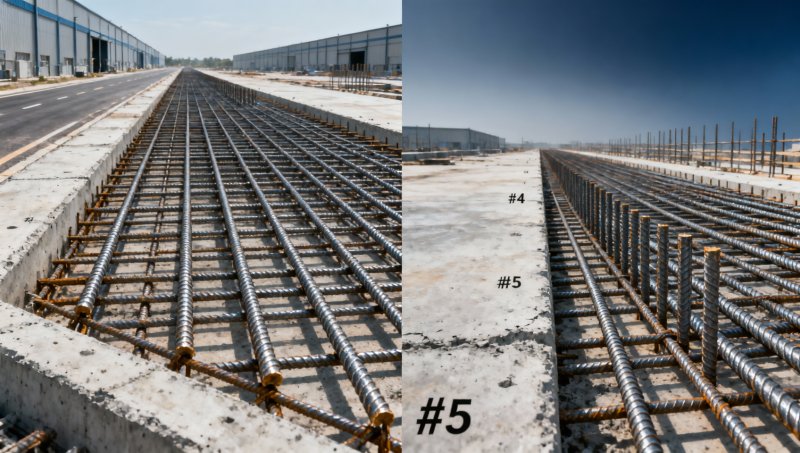
There is no single rebar size that fits every slab. In practice, the most common choices are:
- #3 rebar (3/8 inch / about 9.5 mm): often used in lighter residential slabs, patios, sidewalks, and slabs with modest loads.
- #4 rebar (1/2 inch / about 12.7 mm): one of the most common options for driveways, garage slabs, and general-purpose concrete slabs.
- #5 rebar (5/8 inch / about 15.9 mm): more suitable for heavier loads, thicker slabs, commercial floors, and some industrial applications.
As a general rule, #4 rebar is often the practical middle-ground choice because it balances strength, availability, and installation ease. However, “best” depends on more than bar diameter. Engineers also consider spacing, concrete strength, subgrade quality, slab thickness, and whether the slab is on grade or suspended.
For example:
- A residential patio may perform well with #3 bars at suitable spacing.
- A garage or driveway slab often uses #4 bars.
- A warehouse or equipment slab may need #5 bars or engineered reinforcement layouts.
What factors actually determine the right rebar size?
Readers searching for rebar for concrete slab sizing are usually trying to avoid two costly mistakes: under-reinforcing the slab and overspending on steel that adds little real benefit. The right decision depends on several practical factors.
1. Slab thickness
Thicker slabs generally support heavier loads and may require larger or more strategically spaced reinforcement. A 4-inch slab for light foot traffic is very different from a 6-inch or 8-inch slab designed for vehicles, racking systems, or industrial equipment.
2. Load conditions
The expected load is one of the most important design drivers. Light residential use, passenger vehicles, forklifts, storage racks, and machinery all create different structural demands. Heavy point loads often call for stronger reinforcement and careful detailing.
3. Soil and subgrade quality
Even a strong slab can crack if the base underneath is weak, poorly compacted, or prone to movement. Expansive soils, poor drainage, and uneven support can increase the need for reinforcement to control cracking and distribute stresses.
4. Crack control requirements
Rebar does not prevent all cracking, but it helps hold concrete together when cracks form. If crack width control matters for durability, appearance, or service life, reinforcement design becomes more important.
5. Local building code and engineering standards
ASTM, EN, JIS, and GB standards influence steel quality, while local construction codes define minimum reinforcement requirements. For commercial and infrastructure projects, engineer approval is usually essential.
6. Installation conditions
Larger bars are not always better. If the slab is thin, oversized bars can create placement issues, reduce proper concrete cover, or increase congestion. Good constructability matters as much as theoretical strength.
Common rebar sizes for different slab applications
Below is a practical reference that helps many users, buyers, and project teams evaluate options before final engineering review.
- Sidewalks and patios: #3 rebar is often sufficient when loads are light and the base is well prepared.
- Residential driveways: #4 rebar is frequently preferred, especially where vehicles regularly enter and exit.
- Garage slabs: #4 rebar is commonly used, with spacing adjusted for slab dimensions and loads.
- Workshop and farm slabs: #4 or #5 rebar may be selected depending on equipment traffic and slab thickness.
- Warehouse and commercial floors: #5 rebar or engineered layouts are often required for higher loads and longer service demands.
- Heavy industrial slabs: reinforcement should be fully engineered based on dynamic loads, machine foundations, and subgrade conditions.
In many cases, spacing matters just as much as bar size. A slab with properly spaced #4 bars may perform better than one with larger bars placed too far apart.
Rebar vs welded wire mesh: which is better for slab reinforcement?
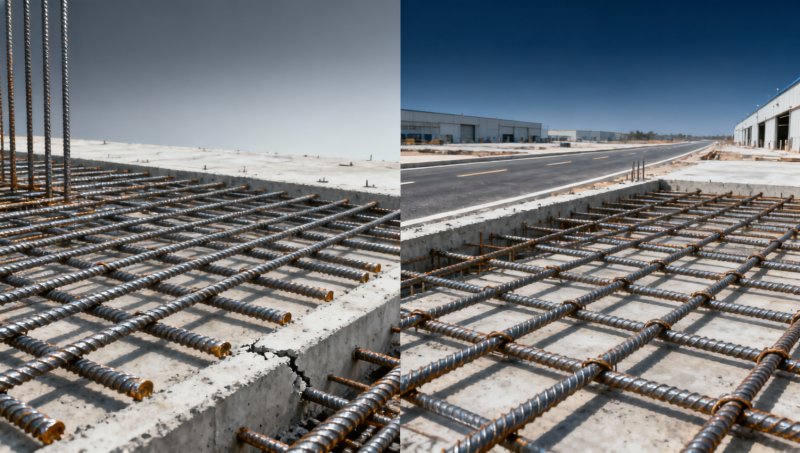
This is another common search-related concern. Some slabs use rebar, some use welded wire reinforcement, and some use both depending on the application.
Rebar is usually preferred when higher structural strength, better load distribution, and stronger crack control are required. It is especially useful in driveways, foundations, commercial slabs, and heavy-use floors.
Welded mesh can be effective for crack control in lighter slab applications, provided it is correctly specified and properly positioned during concrete placement. In some environments, material selection also matters. For projects requiring corrosion resistance in aggressive conditions, products such as 316 Stainless Steel Welded Mesh may be considered for specialized filtration, architectural, chemical, or industrial applications where resistance to rust, corrosion, acid, alkali, heat, and chemicals is important.
Its available grades may include SS 201, 304, 304L, 316, 316L, and 430, with technical options such as diameter from 0.0008″ to 0.12″, mesh from 2 to 635 mesh, and roll width up to 240″. While this type of welded mesh is not a direct replacement for every structural slab design, it can be relevant in projects where corrosion resistance, durability, and specific screening or architectural functions are part of the specification.
For most concrete slabs carrying meaningful loads, deformed rebar for concrete remains the more common structural choice. Mesh may supplement or serve different project purposes depending on design intent.
How to avoid choosing the wrong rebar for your slab
From a cost and risk perspective, these are the most common mistakes to avoid:
- Choosing by habit instead of load requirements: what works for a patio may fail in a warehouse or equipment area.
- Ignoring subgrade preparation: poor base conditions can undermine slab performance regardless of rebar size.
- Using larger bars without checking slab thickness: this can reduce placement quality and concrete cover.
- Overlooking spacing and placement: improperly supported bars may end up at the wrong depth and lose effectiveness.
- Focusing only on steel cost: a cheaper reinforcement choice may increase repair, maintenance, or failure costs later.
For procurement teams and business evaluators, the best approach is to compare reinforcement not only by unit price, but by total installed value: material cost, labor efficiency, service life, and risk reduction.
What buyers, engineers, and project managers should check before ordering
Before purchasing rebar for a concrete slab, confirm the following:
- Required bar size and spacing from drawings or engineering calculations
- Applicable grade and compliance standard
- Slab thickness and concrete cover requirements
- Expected load type: static, rolling, impact, or concentrated loads
- Corrosion exposure, moisture, or chemical conditions
- Lead time, supply consistency, and mill quality documentation
For international buyers, supply reliability matters as much as technical compliance. A qualified structural steel manufacturer should be able to provide stable production, standard-compliant materials, and customized support for project-specific needs. This is especially important when reinforcement decisions must align with broader structural packages that may also include angle steel, channel steel, steel beams, cold formed profiles, and other fabricated components.
Where slab design connects with wider framing systems, teams may also compare related structural elements such as steel beams and use practical tools like an I beam weight calculator to estimate tonnage, transport efficiency, and total procurement cost.
Final answer: what size works best?
For many standard concrete slabs, #4 rebar is often the most practical and commonly used choice. It works well for a wide range of residential and light commercial slab applications. #3 rebar can be suitable for lighter-duty slabs, while #5 rebar is more appropriate for heavier loads and demanding service conditions.
The best rebar for concrete slab performance depends on slab thickness, loading, soil support, crack control needs, and code requirements. If the slab will carry vehicles, equipment, storage loads, or industrial traffic, it is worth getting the reinforcement layout verified by an engineer rather than selecting bar size by guesswork.
In short, the right rebar size is the one that meets structural needs efficiently, controls long-term risk, and fits the actual service environment of the slab. That is the decision standard that creates better outcomes for installers, buyers, technical reviewers, and project owners alike.
Please give us a message


Please enter what you want to find