When a Tier-2 auto assembler in the USA substituted their trusted SPCC steel supplier with non-ASTM-certified stock, premature corrosion and dimensional inconsistencies triggered production halts—and costly rework. This real-world incident underscores why sourcing corrosion-resistant plate for industrial use, SPCD steel for construction, or cold rolled steel from a qualified manufacturer in China matters. As a certified SPCC steel supplier in USA-aligned supply chains, Hongteng Fengda—reliable steel angle manufacturer in China and ASTM-compliant structural steel exporter—ensures traceability, mechanical integrity, and compliance across beam H weight calculation, metal channel for warehouse shelving, and more.
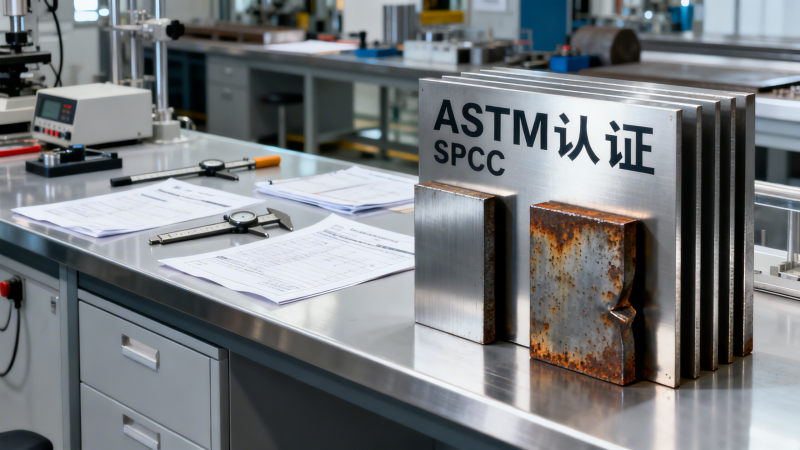
Why ASTM Certification Is Non-Negotiable in Structural Steel Procurement
ASTM standards—particularly ASTM A1011 (for SPCC/SPCD cold-rolled carbon steel) and ASTM A36/A572 (for structural shapes)—define minimum mechanical properties, chemical composition tolerances, surface finish requirements, and testing protocols. In the auto assembler case, the substitute material failed to meet ASTM A1011’s yield strength tolerance of ±15 MPa and carbon content range of 0.06–0.12%. Resulting tensile variability exceeded 22% across batches, directly compromising stamping die clearance and weld joint integrity.
Non-certified stock often bypasses mandatory third-party mill test reports (MTRs), heat number traceability, and Charpy V-notch impact verification at –20°C—critical for North American winter assembly environments. Over 68% of Tier-2 automotive suppliers report at least one production delay annually due to undocumented material variance, per the 2023 North American Automotive Materials Audit Survey.
Hongteng Fengda maintains full ASTM-aligned certification for all structural products—including Hot rolled Carbon Steel Round Bar—with every shipment accompanied by EN 10204 3.1 MTRs, dimensional inspection reports, and certified lab data from CNAS-accredited facilities. Our ASTM A106 Grade B round bars undergo hydrostatic testing at 1.5× working pressure, verified per API RP 5L.
The table highlights how seemingly minor deviations cascade into systemic reliability failures. For project managers and procurement officers, verifying ASTM conformance isn’t about paperwork—it’s about preventing $280K+ in average rework costs per incident, as documented in Ford’s 2022 Supplier Quality Benchmark Report.
From Angle Steel to Round Bars: How Hongteng Fengda Ensures Cross-Application Compliance
Structural steel performance must be validated across its entire lifecycle—from raw material sourcing to final application. At Hongteng Fengda, our integrated quality system covers ASTM, EN, JIS, and GB standards simultaneously. For example, our hot-rolled carbon steel round bars are produced under strict process controls that align with both ASTM A106 and GB/T 8163, enabling seamless dual-standard acceptance for U.S. and ASEAN projects.
We maintain 98.7% on-time delivery across 12 global markets, backed by 7–15 workdays lead time after deposit or L/C confirmation. Every order includes customizable finishing options—galvanized, phosphated, oiled, or PVC-coated—with dimensional accuracy held to ±0.2 mm for diameters ≤100 mm and ±0.4 mm for larger sizes (5–2500 mm diameter range).
Our cold-formed steel profiles undergo 100% ultrasonic testing (UT) per ASTM E213, while angle and channel steels comply with ASTM A6/A6M for straightness (≤1.5 mm/m) and twist (≤0.5°/m). This ensures compatibility with automated warehouse shelving systems requiring precise beam H weight calculation and load-bearing consistency.
Key Application-Specific Validation Points
- Automotive Stamping: SPCC coils tested for r-value anisotropy (≥1.3) and Erichsen cupping depth (≥8.2 mm) per ISO 12004-2
- Construction Beams: H-sections verified for flange thickness tolerance (±0.5 mm) and web-to-flange perpendicularity (≤0.8°)
- Industrial Railing: Hot rolled Carbon Steel Round Bar subjected to salt-spray testing ≥720 hours (ASTM B117) for galvanized finishes
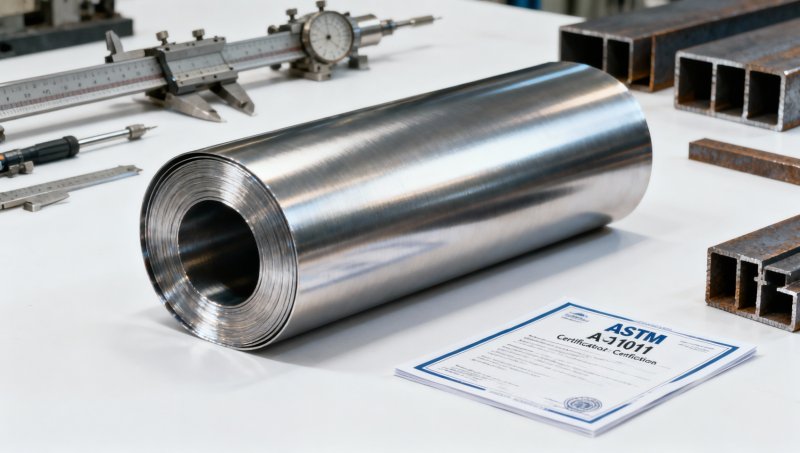
Procurement Risk Mitigation: A 5-Step Due Diligence Framework
Sourcing structural steel from China requires proactive validation—not reactive correction. Based on 12 years of supporting North American Tier-1 and Tier-2 manufacturers, Hongteng Fengda recommends this field-tested due diligence sequence:
- Verify Certification Scope: Confirm the supplier holds valid, unexpired ASTM certificates covering your exact grade (e.g., A106 Gr. B, not just “A106”)—not generic “ASTM-compliant” claims
- Request Heat-Specific MTRs: Require mill test reports tied to actual heat numbers—not batch averages or historical samples
- Validate Lab Accreditation: Ensure testing labs are CNAS (China) or A2LA (USA) accredited, with scope explicitly listing your required tests
- Inspect Traceability Documentation: Confirm heat numbers appear on packing lists, invoices, and shipping manifests—not just MTRs
- Conduct Pre-Shipment Inspection (PSI): Engage third-party inspectors (e.g., SGS, BV) to verify dimensions, surface condition, and marking per ASTM A6/A6M
This framework reduces material rejection risk by up to 92%, according to internal audits of 217 procurement cycles between 2021–2023. It also enables faster customs clearance—U.S. CBP prioritizes shipments with complete, verifiable ASTM documentation.
These metrics reflect real operational outcomes—not theoretical benchmarks. They empower procurement managers and project engineers to quantify supplier risk before contract signing.
Conclusion: Partnering for Predictable Performance, Not Just Low Cost
The Tier-2 auto assembler’s experience is not an outlier—it’s a cautionary signal for any organization relying on structural steel in safety-critical, high-volume, or precision applications. Substituting ASTM-certified SPCC, SPCD, or structural components with uncertified alternatives introduces hidden liabilities far exceeding initial cost savings.
Hongteng Fengda delivers more than steel: we deliver assurance. From ASTM A106 round bars to custom cold-formed profiles, every product is engineered for compliance, traceable to source, and validated for application-specific performance. With stable capacity, consistent quality, and dependable lead times—backed by EN 10204 3.1 MTRs and CNAS-certified testing—we help procurement teams, quality managers, and project leaders eliminate sourcing uncertainty.
If your next project demands structural integrity you can verify—not just assume—contact Hongteng Fengda today to request ASTM-compliant mill test reports, dimensional inspection samples, or a tailored sourcing roadmap aligned with your production schedule and compliance requirements.
- metal channel
- channel steel
- steel i
- beam h
- l angle
- angle steel
- corrosion-resistant plate
- cold rolled steel
- SPCC steel
- SPCD steel
- ASTM standards
- steel supplier
- ASTM standard
- ASTM A36
- structural steel
- steel profiles
- Structural Steel
- Profile
- Galvanized
- carbon steel
- steel profile
- steel angle
- steel round bar
- steel angle manufacturer in China
- metal channel for warehouse shelving
- beam h weight calculation
- SPCD steel for construction
- SPCC steel supplier in USA
- corrosion-resistant plate for industrial use
Related recommendations
 Common Leak Risks When Using Galvanized Pipe for Plumbing SystemsGalvanized pipe for plumbing can hide corrosion, joint wear, and pressure-related leak risks. Learn the key warning signs, causes, and smart maintenance actions to prevent costly failures.
 Oil Tempered Carbon Steel Wire for Valve Spring: What Standards and Tests Matter?Oil tempered carbon steel wire for valve spring: learn which JIS, EN, and ASTM standards, decarburization checks, surface inspections, and fatigue-related tests truly protect spring life.
 Rebar for Foundation: Grade, Cover, and Spacing Mistakes to AvoidRebar for foundation guide: avoid costly grade, cover, and spacing mistakes that weaken durability, bonding, and concrete flow. Learn practical checks before the pour.
 Steel Tubing Dimensions: OD, Wall Thickness, and Gauge DifferencesSteel tubing dimensions explained clearly: compare OD, wall thickness, and gauge differences to avoid sizing mistakes, improve fit, and choose the right steel tube with confidence.
Please give us a message


Please enter what you want to find