Steel manufacturing lead time is often the deciding factor in project planning, cost control, and supplier evaluation. For technical buyers, understanding what affects delivery most—from raw material availability and production scheduling to customization, quality inspection, and export logistics—helps reduce risk and improve sourcing decisions. This article explains the key variables behind lead time and how reliable steel manufacturers support more predictable delivery.
In structural steel procurement, lead time is not a single number. It is the combined result of material sourcing, mill capacity, fabrication complexity, inspection steps, packaging requirements, and shipping arrangements. For technical evaluation teams, the practical question is not only whether a supplier can quote 15 days, 30 days, or 45 days, but whether that promise is realistic under the project’s exact specification, volume, and destination conditions.
For buyers working with angle steel, channel steel, steel beams, cold formed steel profiles, or OEM structural components, delivery risk often appears when one stage is underestimated. A production line may have capacity, but raw material thickness may be limited. Export packing may be ready, but third-party inspection may add 3–7 days. Understanding these variables helps buyers compare suppliers on execution strength rather than quotation speed alone.
What steel manufacturing lead time really includes
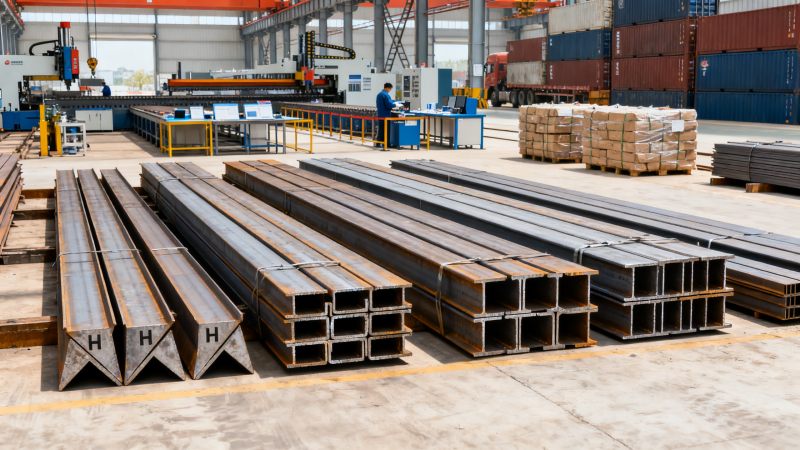
For most steel products, manufacturing lead time covers more than workshop processing. It usually starts from order confirmation and extends through raw material preparation, production scheduling, fabrication, inspection, surface treatment if required, packing, and handover for inland transport or export shipment. In many projects, these 6–8 steps are managed by different teams, so delays often occur at the interface between steps rather than inside a single process.
Typical stages from order to shipment
A standard structural steel order with common grades and dimensions may move faster than a heavily customized order. For example, standard sections under regular mill availability may take 15–25 days for production, while custom fabricated components with hole patterns, welded assemblies, or mixed standards may require 30–45 days. Export documentation and port booking can add another 5–10 days depending on route and season.
The table below shows how technical buyers can break lead time into visible stages instead of relying on one total delivery promise.
The key takeaway is that steel manufacturing lead time should be evaluated stage by stage. A supplier that explains each step with realistic buffers is usually more dependable than one offering a short total lead time without process visibility.
Why technical buyers should look beyond quoted days
Technical evaluation teams typically review grade compliance, tolerances, section properties, welding quality, and coating requirements. Lead time should be assessed with the same discipline. If the order includes ASTM, EN, JIS, or GB compliance, the supplier must align not only production but also traceability, mill test certificates, and final inspection records. Documentation gaps can delay shipment even after fabrication is complete.
- Check whether the quoted lead time includes raw material procurement or assumes stock availability.
- Confirm whether dimensional inspection is internal only or includes third-party verification.
- Ask if export packing, marking, and container loading are counted in the delivery schedule.
- Verify whether the delivery promise is based on one product family or a mixed order of multiple sections.
The biggest factors that affect delivery in steel manufacturing
Although every project is different, 5 factors usually have the strongest impact on steel manufacturing lead time: raw material availability, capacity planning, customization level, inspection scope, and logistics execution. In structural steel exports, these factors often interact. A minor design revision can trigger a new nesting plan, push production to the next slot, and shift the shipping window by 7–14 days.
1. Raw material grade and availability
Steel sections produced from common grades and widely used sizes generally move faster because upstream supply is more stable. When the order requires non-standard dimensions, special chemistry, or dual-standard compliance, the waiting period for feedstock can become the first bottleneck. In practical sourcing, material preparation may represent 15%–30% of the total lead time for standard orders, and more for specialized items.
Typical warning signs
- Unusually thin or heavy section sizes outside regular rolling schedules
- Mixed grades in one purchase order
- Requirement for exact source traceability before fabrication starts
- Small-volume custom components below a supplier’s efficient batching threshold
2. Production line loading and scheduling discipline
A supplier may have strong annual capacity but still face weekly or monthly bottlenecks. For example, cutting, punching, and welding stations may each have different loading rates. If one line is already booked at 85%–95% utilization, an urgent order may not enter fabrication immediately. This is why lead time for identical products can differ by 10 days between two factories with similar equipment lists.
Manufacturers serving global markets often perform better when they have separate planning for standard sections and custom fabrication. This reduces conflicts between fast-turn stock items and engineering-driven OEM orders.
3. Degree of customization and technical complexity
Customization increases delivery risk when drawings are incomplete, revisions continue after order release, or tolerances are unusually tight. In structural steel, complexity is not limited to shape. It may include hole positions with ±1.0 mm control, weld sequence requirements, mixed bundles, part-by-part marking, or destination-specific packing instructions. Each added requirement may seem minor, but in combination it can extend fabrication by 20%–40%.
A useful example is specialized stainless mesh used in industrial support systems, filtration assemblies, and architectural infill. When a project includes inserted items such as 306 Stainless Steel Welded Mesh, lead time depends on more than the product name. Technical details such as stainless steel wire grade options like SS 201, 304, 304L, 316, 316L, or 430, diameter ranges from 0.0008″ to 0.12″, mesh from 2 to 635 mesh, and roll dimensions up to 240″ in width and 2000′ in length all influence whether the item can be produced from standard setup or needs a special run.
For technical buyers, this matters because mixed procurement packages often combine structural sections with auxiliary steel products. If corrosion resistance, chemical resistance, or high micron retention performance is required for filters, sieves, mining, chemical industry, architecture, or residential applications, the evaluation should include compatibility of manufacturing schedules across all included steel items.
4. Inspection, standards, and document control
Quality control protects the project, but it also affects lead time when not planned early. Orders with ASTM, EN, JIS, or GB compliance may require dimensional records, material certificates, weld inspection logs, and packing lists that match shipment marks exactly. If a third-party inspector is involved, booking windows of 2–5 days are common. If non-conformities appear, rework adds further time.
The following table helps technical buyers identify which variables most often change a steel manufacturing lead time estimate.
The practical conclusion is that the most reliable delivery estimate is one built from actual production and export conditions, not a generic sales promise. Technical buyers should request updated timing whenever one of these variables changes.
5. Export logistics and shipment coordination
For overseas buyers, factory completion is not the same as delivered-on-board readiness. Inland trucking, container loading plans, customs document preparation, and port schedules can add 5–12 days in normal conditions. During peak seasons or when special container types are required, that period may become longer. This is especially relevant for long beams, oversized fabricated frames, or mixed cargo with strict load sequencing.
How reliable manufacturers shorten risk without overpromising
A dependable supplier does not simply quote a shorter steel manufacturing lead time. Instead, it controls the variables that create delay. For technical evaluation teams, this means looking at process control, communication discipline, and standardization methods that turn uncertain delivery into a more predictable schedule.
Planning methods that improve delivery accuracy
- Pre-check drawings, standards, and packing instructions before confirming production release.
- Separate stock-supported products from custom fabricated items in the schedule.
- Reserve material early for grades and sizes with longer upstream procurement cycles.
- Define 3 control points: raw material readiness, mid-process progress, and pre-shipment inspection.
- Align production completion with vessel booking instead of treating them as unrelated tasks.
These controls often reduce avoidable delay more effectively than simply adding overtime. In many B2B steel projects, one missed document or one late design approval causes more disruption than machine throughput itself.
What technical buyers should ask before approving a supplier
When evaluating a structural steel manufacturer and exporter from China, buyers should ask how the supplier manages lead time under both normal and variable conditions. A capable manufacturer should explain capacity, inspection sequence, standard compliance, and shipment coordination with specifics rather than broad assurances.
- What is the standard production cycle for common angle steel, channel steel, and steel beams?
- How much additional time is normally needed for OEM fabrication or custom marking?
- Which items are usually stock-supported, and which depend on mill rolling schedules?
- How are ASTM, EN, JIS, and GB documentation requirements handled before shipment?
- What is the internal response time if drawing revisions appear after order confirmation?
- Can the supplier provide milestone updates every 5–7 days for project orders?
Why supplier profile matters in lead time evaluation
Manufacturers serving multiple export regions often have stronger discipline in packaging, standards interpretation, and schedule coordination. Hongteng Fengda, as a professional structural steel manufacturer and exporter based in China, focuses on angle steel, channel steel, steel beams, cold formed steel profiles, and customized structural steel components for global construction, industrial, and manufacturing projects. This kind of product scope matters because stable production capacity and quality control are directly tied to more dependable delivery performance.
For technical buyers in North America, Europe, the Middle East, and Southeast Asia, the value is not only access to steel products but also reduced sourcing risk. When a supplier can support both standard specifications and OEM solutions while working under major international standards, the lead time discussion becomes more transparent and more actionable.
Common mistakes that make steel lead times longer
In many steel procurement projects, delays are not caused by one major failure. They come from a series of smaller decisions made too late. Technical teams can often save 1–2 weeks by preventing these predictable mistakes during inquiry and order release.
Frequent sourcing mistakes
- Sending incomplete drawings and expecting an exact production schedule on day 1
- Mixing urgent stock items with slow custom items in one undifferentiated delivery target
- Confirming quality requirements after production has already started
- Ignoring packaging, labeling, or destination port rules until cargo is ready
- Comparing only quoted lead days instead of comparing process capability and risk control
A better approach
A better sourcing model is to define the technical package in full, identify high-risk items, and request milestone-based delivery planning. For example, separate target dates can be set for material readiness, fabrication completion, inspection release, and shipment booking. This creates measurable checkpoints and makes supplier follow-up more effective.
Steel manufacturing lead time becomes more predictable when engineering, procurement, and logistics are treated as one coordinated flow. That is especially important for complex export orders, where a 3-day design delay can create a 10-day shipment delay if vessel cutoff is missed.
Final guidance for technical evaluation teams
The most important lesson is that steel manufacturing lead time should be verified, not assumed. Reliable delivery depends on upstream material control, realistic production loading, customization planning, inspection readiness, and export coordination. Technical buyers who examine these 5 areas in detail are more likely to avoid hidden delay and protect project schedules.
For buyers looking for a long-term structural steel partner, it is worth choosing a manufacturer that can supply standard and custom steel products with clear process communication, stable capacity, and standards-based quality control. If you need support with structural steel sourcing, delivery planning, or customized steel components for international projects, contact Hongteng Fengda to get a tailored solution, discuss technical details, and explore more reliable delivery options.
Please give us a message


Please enter what you want to find