Is cheap steel from China reliable for long-term use? For business decision-makers, the answer depends on far more than price alone. With the right manufacturer, low-cost Chinese structural steel can deliver consistent performance, certified quality, and strong long-term value. Understanding standards, production control, and supplier capability is key to reducing risk and making smarter sourcing decisions.
Why the market is rethinking whether cheap steel from China is reliable
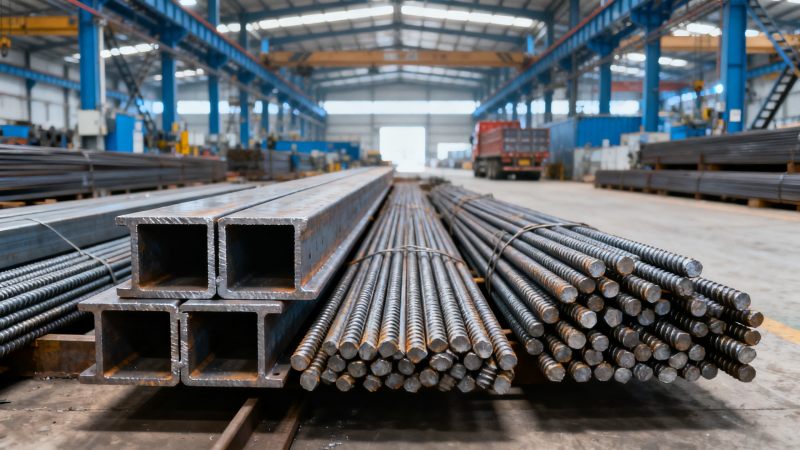
The question “is cheap steel from China reliable” has become more important as global construction and industrial projects face tighter budgets, shorter timelines, and stricter compliance requirements. In the past, low-cost steel was often treated as a high-risk option associated with inconsistent chemistry, weak traceability, or uncertain after-sales support. That perception is changing, but not uniformly.
Today, China supplies a significant share of the world’s structural steel, including angle steel, channel steel, steel beams, cold formed profiles, rebar, and customized fabricated components. At the same time, international buyers are more experienced. They no longer judge quality by origin alone. Instead, they look at mill capability, compliance with ASTM, EN, JIS, and GB standards, inspection systems, and production stability. This shift means the real issue is not simply whether cheap steel from China is reliable, but under what sourcing conditions it becomes reliable for long-term use.
Another trend is that price transparency has improved. Buyers can compare steel grades, tensile performance, coating options, dimensional tolerances, and testing documentation more easily than before. As a result, lower pricing from China is increasingly understood as a combination of scale, supply chain efficiency, and manufacturing depth rather than automatic evidence of inferior material. Still, low price without process control remains risky, especially in load-bearing or safety-critical applications.
The strongest signals behind long-term reliability are no longer price-based
If the goal is to assess whether cheap steel from China is reliable for long-term use, the most useful indicators are technical and operational. Long service life depends on consistency from batch to batch, not on the invoice value alone. In structural steel sourcing, long-term performance usually comes from a predictable combination of metallurgy, forming quality, surface condition, and logistics discipline.
These signals explain why some low-cost steel performs well over years of service while other material fails early. The difference often lies in supplier discipline, not country of origin. A professional structural steel exporter with modern production facilities and strict quality control can offer competitive pricing without sacrificing reliability.
Why cheaper Chinese steel can be dependable in real construction applications
There are practical reasons why lower-cost Chinese steel can still meet long-term performance expectations. China’s steel industry benefits from integrated supply chains, high output, mature rolling capacity, and broad export experience. For many common grades and profiles, these advantages reduce manufacturing and procurement costs. That is very different from cutting corners on raw material quality.
- Large-scale production lowers unit cost through efficiency.
- Frequent export to North America, Europe, the Middle East, and Southeast Asia improves familiarity with international standards.
- OEM and customized manufacturing allow products to match project-specific design requirements.
- Advanced testing and controlled processing improve consistency in structural applications.
A clear example appears in reinforcing steel. In many construction projects, reliable rebar must combine predictable yield strength, suitable dimensions, and standard compliance. Mid-project sourcing decisions often compare cost and durability at the same time. In that context, HRB400 Rebar is relevant because it is designed as a primary load-bearing rebar with standard yield strength of no less than 400 MPa, and it is available in mainstream diameters from 6mm to 50mm and common lengths such as 5m to 14m. When supplied with compliance to standards such as ASTM, JIS, DIN, BS, EN, and GB, this type of product shows how Chinese steel can be both economical and structurally dependable when sourcing is controlled properly.
This is especially true for mainstream hot-rolled ribbed bars and common structural sections, where manufacturing methods are mature and quality benchmarks are well established. In these categories, the question “is cheap steel from China reliable” often has a positive answer when the supplier can demonstrate repeatable quality rather than relying on broad promises.
Where the real risks still exist in long-term steel sourcing
Even though the market has become more sophisticated, not all low-priced steel offers the same long-term value. Reliability risks still exist, particularly when orders are placed through traders with weak traceability, unclear production origin, or inconsistent quality documentation. In long-service environments, small defects at delivery can turn into major maintenance costs later.
Common weak points that undermine long-term performance
- Grade substitution or unclear material identification
- Insufficient control of yield strength, elongation, or chemical content
- Poor corrosion protection during storage and ocean transport
- Inadequate packaging leading to deformation or surface damage
- Lack of third-party inspection support for larger projects
- Unstable lead times that affect project continuity and replacement planning
These issues explain why the phrase “cheap steel” can be misleading. Extremely low price may reflect efficient production, but it may also reflect reduced inspection frequency, downgraded raw material, or weaker logistics management. For long-term use, the cost of rework, delay, corrosion, or structural nonconformity can quickly outweigh initial savings.
How changing buyer expectations are reshaping steel reliability standards
The global steel market is moving toward verification-based sourcing. Buyers increasingly expect documented quality, not just verbal assurance. This shift affects every business stage, from quotation and sampling to packing and final delivery. As expectations rise, suppliers that invest in process transparency gain a stronger competitive advantage, even when offering low-cost material.
For structural projects, this means reliable Chinese steel is more likely to come from exporters that can provide consistent production capacity, customized solutions, and dependable lead times along with international standard compliance. Companies such as Hongteng Fengda reflect this direction by combining modern manufacturing with strict quality control and supplying products including angle steel, channel steel, steel beams, cold formed profiles, and customized structural steel components for overseas markets.
What deserves the closest attention before choosing low-cost steel for long service life
To answer whether cheap steel from China is reliable in a practical way, focus on measurable checkpoints before ordering. This reduces uncertainty and turns a price comparison into a durability decision.
- Confirm the exact steel grade and applicable international standard.
- Request mill test certificates for chemistry and mechanical properties.
- Verify whether dimensions, lengths, and tolerances match the project drawings.
- Review coating, oiling, galvanizing, or painting options based on storage and end-use environment.
- Check if the supplier can support third-party inspection and batch traceability.
- Evaluate production capacity and lead-time consistency, not just first-order pricing.
- Ask for references in similar structural or industrial applications.
A smarter judgment on whether cheap steel from China is reliable
So, is cheap steel from China reliable for long-term use? Yes, it can be reliable when low cost comes from manufacturing scale, process maturity, and export efficiency rather than reduced quality control. The long-term outcome depends on standard compliance, production discipline, traceability, and supplier accountability. Cheap steel is not automatically risky, and expensive steel is not automatically better.
A better sourcing strategy is to compare total life-cycle value: certified quality, stable supply, technical fit, and reduced failure risk. For structural steel applications, working with an experienced Chinese manufacturer and exporter that provides customized solutions, international standard compliance, and dependable delivery can make cost-effective sourcing a sound long-term choice.
If the next step is to evaluate steel for an upcoming project, prepare a specification-based inquiry, request full testing documents, and review the supplier’s real production capabilities before placing volume orders. That approach gives the clearest answer to the question is cheap steel from China reliable—and helps turn price advantage into lasting project value.
Please give us a message


Please enter what you want to find