A steel beam weight calculator can deliver misleading results if key inputs are missing or inaccurate. For operators and project users, even small errors in beam size, steel grade, length, or section type can affect material planning, transport, and cost control. Understanding what data the calculator really needs is essential for getting reliable numbers and avoiding expensive mistakes.
Why steel beam weight calculator results often fail in real jobs
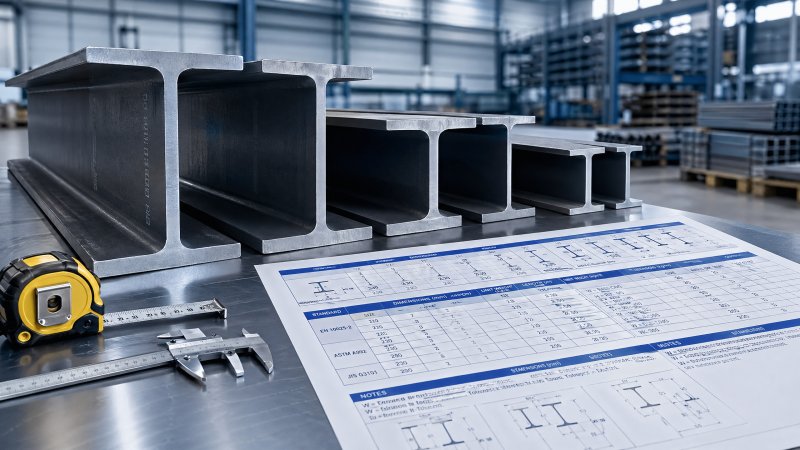
Many users treat a steel beam weight calculator as a simple answer tool. In practice, it is only as accurate as the data entered. On workshop floors, at construction sites, and during procurement checks, the most common problem is not the calculator itself. The real issue is incomplete input. If an operator enters only beam length and a rough size description, the result may look precise, but it may still be wrong enough to affect lifting plans, truck loading, or purchase quantities.
In the steel industry, beam weight affects at least 4 core decisions: material ordering, fabrication scheduling, transport arrangement, and installation safety planning. A difference of even a few kilograms per meter can become significant when the order includes 20 pieces, 50 pieces, or full container quantities. This is especially true for H-beams, I-beams, channels, and custom-formed structural profiles where section standards vary by region.
Another reason for inaccurate results is that steel beam naming is not always standardized in daily communication. One operator may say “200 beam,” another may refer to a local standard designation, while a supplier may need exact flange width, web thickness, and section series. Without these details, a steel beam weight calculator may match the wrong profile family and return a value based on assumptions rather than actual production data.
For global projects, confusion increases when ASTM, EN, JIS, and GB dimensions are mixed. Two beams with similar nominal depth can have different section geometry and different theoretical mass per meter. That is why experienced buyers and operators do not rely on one input line alone. They verify section type, standard, density basis, and cut length before using the result for procurement or handling.
Typical sources of error operators should watch
- Using nominal size instead of the exact standard section designation, such as entering a rough height without flange and web details.
- Ignoring the difference between theoretical weight and actual delivered weight, especially after cutting, drilling, coping, or welding.
- Selecting the wrong unit system, for example mixing mm with inch or meter with foot in the same calculation workflow.
- Assuming all steel grades have the same handling implication, even though grade selection can affect procurement and compliance review.
Which inputs actually matter before you trust the number
If you want dependable steel beam weight calculator results, there are 5 key inputs that must be confirmed before calculation begins. These are section type, exact section size, steel grade or standard reference, beam length, and quantity. In many project environments, at least 1 of these 5 items is assumed instead of checked. That is where error enters the workflow.
Section type is the first filter. An H-beam, I-beam, channel, angle, or cold formed profile cannot be treated as interchangeable. Their cross-sectional geometry determines unit weight. Even a difference of 2mm to 4mm in web or flange thickness changes total tonnage over a full order. When operators work from verbal instructions, they should always convert them into a standard profile code before calculation.
Length sounds simple, but it creates frequent mistakes. Some users enter commercial stock length, such as 6m or 12m, while the actual cut length may be 5.85m, 7.2m, or mixed lengths in one batch. In export and fabrication planning, a 150mm to 300mm difference per piece can change nesting, packaging, and freight estimates. The calculator must reflect the real cut schedule, not only the mill supply length.
Grade and standard reference matter for more than chemistry. Operators may assume the weight is identical as long as the shape is similar, but procurement teams often need the correct standard designation to validate whether the chosen beam fits ASTM, EN, JIS, or GB project requirements. The calculation process should therefore connect geometry with compliance, not treat them as separate tasks.
Minimum input checklist for reliable use
Before running any steel beam weight calculator, use the following checklist. This helps operators avoid entering partial information and gives buyers cleaner data for quotation review and shipment planning.
This checklist is practical because it connects shop-floor use with purchasing control. If these 5 items are confirmed, the steel beam weight calculator becomes much more useful for quotation comparison, container loading, and pre-installation planning. If 1 or 2 items are missing, the result should be treated as preliminary only.
A note on related steel products in mixed projects
Many projects do not use beams alone. They also include patterned plates, channels, and custom structural parts. In platform, machinery, or floor access areas, buyers may source beam sections together with S335JR Patterned steel plate for anti-skid walking surfaces or equipment zones. In that case, weight calculation should be separated by product type because plate thickness from 2mm to 8mm, width from 600mm to 1800mm, and length from 2m to 12m create a different tonnage logic than beam sections.
For operators, this matters because mixed-product shipping often fails when total tonnage is estimated using only beam data. Patterned plate orders may also require tolerance review, such as thickness tolerance of +/-0.02mm and width tolerance of +/-2mm, especially when the materials are going to construction, transportation, shipbuilding, or machinery applications. Good calculation discipline reduces loading surprises later.
How to compare theoretical weight, actual weight, and procurement weight
One of the biggest misunderstandings around any steel beam weight calculator is assuming there is only one “correct” weight. In real steel supply chains, you may work with 3 different figures: theoretical weight, actual measured weight, and procurement weight. These numbers serve different purposes, and mixing them causes disputes in ordering, fabrication, and receiving.
Theoretical weight is based on section dimensions and standard steel density. It is useful for fast planning and is often the reference value in quotations. Actual weight can differ because of mill tolerances, length variation, cutting loss, surface condition, and processing details. Procurement weight may also include practical allowances for bundle count, mixed lengths, or fabrication reserve, especially in projects with tight installation schedules of 2 to 4 weeks.
For operators, the important question is not which number is “more correct” in isolation. The important question is which number fits the task. Use theoretical weight for early estimation. Use actual or verified fabrication weight for lifting, transport, and packing confirmation. Use procurement weight when planning total buy quantity and cost control across multiple sections.
A reliable supplier helps align these numbers before production starts. Hongteng Fengda, as a structural steel manufacturer and exporter from China, supports global buyers with standard sections, OEM solutions, and clear communication on specifications, tolerances, and applicable standards. This reduces the gap between what the calculator shows and what the project really receives.
Practical comparison for daily use
The table below helps users decide which weight basis to use at each stage. This is especially useful when the same steel beam weight calculator result is being shared by operators, estimators, procurement staff, and freight coordinators.
This comparison shows why one calculator output cannot answer every project question. When teams define the target weight basis in advance, they reduce rework and avoid miscommunication between engineering, operations, and suppliers.
What operators and buyers should confirm before ordering steel beams
Before converting a steel beam weight calculator result into a purchase order, users should complete a short verification process. In many steel projects, this takes less than 15 minutes but can prevent delays of 7 to 15 days caused by incorrect section ordering or shipment mismatch. The goal is not to slow down the workflow. The goal is to make sure the calculated number matches the supply reality.
First, confirm whether the beam is a standard mill section or a custom structural component. Standard beams are usually easier to verify against published section data. Custom fabricated members may require drawing-based weight confirmation, especially when there are holes, stiffeners, end plates, or welded assemblies. A standard calculator is less reliable when geometry moves beyond a basic profile.
Second, check the project standard and destination market. A beam acceptable under one specification may need a different designation or documentation package for another market. Buyers serving North America, Europe, the Middle East, or Southeast Asia often need alignment with ASTM, EN, JIS, or GB references. This affects not just compliance but also cross-checking of section tables used in the steel beam weight calculator workflow.
Third, review supply conditions such as stock range, production lead time, and shipment split. For example, common lengths may move faster than special cut lengths, while mixed orders combining beams, channels, cold formed sections, and plate products may require staged packing. An accurate weight calculation supports better freight and container planning, but only when linked to actual supply capabilities.
A 4-step verification process before release
- Match the section code to the applicable standard table and confirm whether the profile is hot rolled, fabricated, or cold formed.
- Verify cut length list, quantity, and any processing details that may change actual handling weight.
- Check project documentation needs, including grade references and common certifications such as mill documents tied to ASTM, EN, JIS, or GB requirements.
- Confirm packaging, shipment batch, and delivery timing, especially for export orders with 2-stage or 3-stage dispatch arrangements.
Why this matters for cost control
A wrong weight value does not only affect the price per ton. It also changes truck utilization, container loading, crane selection, and receiving plans. For users operating under limited budgets, the most expensive mistake is often not steel price alone. It is the chain reaction of miscalculated tonnage across transport, handling, and installation. That is why the steel beam weight calculator should be treated as part of a decision process, not a stand-alone answer.
Hongteng Fengda supports this process by supplying structural steel products with stable production capacity, consistent quality control, and customized solutions for global construction and industrial use. When buyers need angle steel, channel steel, steel beams, cold formed steel profiles, or matched accessory materials, early parameter confirmation helps reduce sourcing risk and improves delivery predictability.
FAQ: common questions about steel beam weight calculator accuracy
Can I use a steel beam weight calculator if I only know the beam height?
Only for a very rough estimate. Height alone is not enough for reliable ordering or transport planning. You still need the profile family and exact section dimensions or standard designation. Two beams with similar height may have noticeably different flange width, web thickness, and unit mass. For purchasing, a rough estimate should be replaced by verified section data before release.
Does steel grade change the weight result?
For most practical beam calculations, geometry is the main driver of theoretical weight. However, grade still matters because it affects sourcing, project compliance, and substitution decisions. If the calculator result is being used for quotation comparison, the grade and standard should remain attached to the calculation record. This is especially important in export projects where equivalent grades are reviewed carefully rather than assumed.
How accurate should the length input be?
As accurate as the final use requires. For budget planning, rounded values may be acceptable. For shipment and installation, real cut length is better. In fabrication-heavy jobs, a difference of 0.1m to 0.3m per piece across 30 to 50 pieces can change the total tonnage enough to affect logistics planning. Operators should follow the latest cutting list, not outdated stock assumptions.
When should I ask a supplier to review the calculation?
Ask for supplier review when the order includes custom sections, mixed standards, multiple product categories, or strict shipping limits. It is also wise to ask when you combine beams with plates, channels, or fabricated structural components in one export batch. A manufacturer with experience in international structural steel supply can help verify section data, tolerance interpretation, and packaging impact before production or dispatch.
Why choose us for steel beam selection, calculation support, and export supply
For users and operators, the value of a supplier is not just product availability. It is the ability to turn calculation data into a workable supply plan. Hongteng Fengda is a professional structural steel manufacturer and exporter from China, serving construction, industrial, and manufacturing projects with standard structural steel products and customized solutions. We understand that a steel beam weight calculator is only useful when the specification behind it is correct.
We support buyers with product confirmation across angle steel, channel steel, steel beams, cold formed steel profiles, and related structural steel components. Our manufacturing facilities and quality control processes are aligned with common international standards such as ASTM, EN, JIS, and GB. This helps customers compare section data more clearly and reduce the risk of mismatched sourcing across different markets.
If your team is checking calculator results before purchase, you can contact us to confirm 6 practical items: section designation, grade reference, cut length range, quantity mix, delivery schedule, and documentation needs. We can also discuss OEM solutions, sample support where applicable, export packing, and lead time coordination for project-based orders. That is especially useful when your requirement includes both standard sections and additional items such as S335JR Patterned steel plate or other matched steel products.
If you want more reliable steel beam weight calculator results, send your beam type, size, standard, length, and quantity list for review. We can help you confirm calculation inputs, evaluate suitable product options, discuss certification expectations, and provide quotation and delivery guidance based on your actual project needs rather than rough assumptions.
Please give us a message


Please enter what you want to find