Ordering metal wire for fencing may seem straightforward, but small specification mistakes can lead to higher costs, installation delays, and performance issues. For procurement professionals, understanding the most common ordering errors is essential to securing the right wire type, coating, strength, and standards for each project. This article outlines key pitfalls and helps buyers make more accurate, cost-effective sourcing decisions.
In steel-related supply chains, fencing wire is often treated as a low-risk item compared with beams, channels, or fabricated structural components. In practice, however, a wrong order can create 2 to 6 weeks of disruption, especially when fencing is tied to site security, livestock control, perimeter protection, or industrial zoning. Buyers who work across construction, agriculture, and manufacturing projects need a more disciplined approach to ordering metal wire for fencing.
For international sourcing teams, the challenge is not only price. It also involves matching wire diameter, tensile level, coating mass, roll weight, corrosion resistance, and applicable standards to the actual service environment. A reliable steel manufacturer and exporter with experience in ASTM, EN, JIS, and GB requirements can reduce these risks and support more stable procurement outcomes.
Misunderstanding Wire Type and End Use
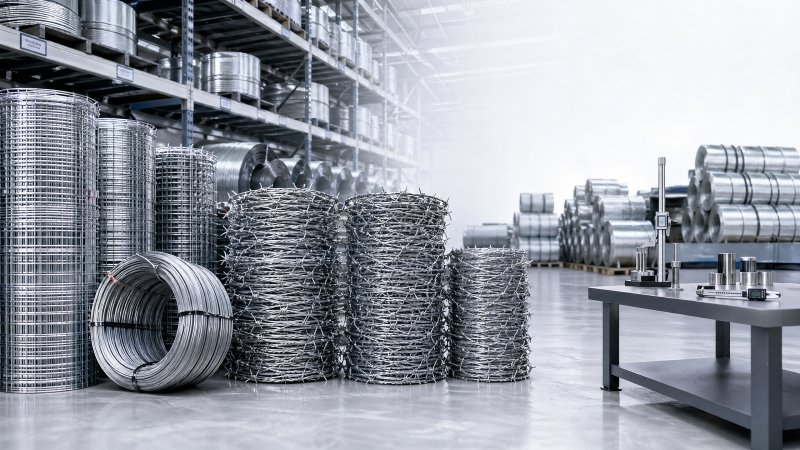
One of the most common ordering errors in metal wire for fencing is assuming all fence wire serves the same purpose. In reality, low-carbon binding wire, galvanized line wire, barbed wire, welded mesh wire, and high-tensile field fence wire are designed for different loads and installation methods. Ordering by appearance alone often leads to underperformance in outdoor or heavy-duty environments.
Procurement teams should first define the fencing application in concrete terms. Is the project for temporary construction fencing, permanent industrial perimeter protection, agricultural enclosures, or animal control? A wire suitable for a 12-month temporary barrier may fail quickly in a 10-year perimeter installation exposed to humidity, salt, or repeated mechanical stress.
Another mistake is mixing product categories during RFQ preparation. Buyers may request “metal wire for fencing” without clarifying whether they need straight wire, coils, woven fence material, or post-compatible accessories. This can result in quotations that are impossible to compare, because suppliers price different base products under the same general description.
Why application mapping matters
A good purchasing brief should connect at least 4 factors: site environment, fence height, expected lifespan, and installation method. For example, an industrial yard near coastal air may require heavier zinc coating than an inland warehouse. Likewise, a livestock enclosure often needs flexibility and impact tolerance, while a security fence may prioritize rigidity and cut resistance.
Basic application checklist
- Define service life target, such as 3 years, 5 years, or 10+ years.
- Confirm exposure level: dry inland, humid region, chemical atmosphere, or coastal zone.
- Specify installation format: chain link, welded mesh, barbed line, or field fence.
- State required mechanical behavior: flexibility, impact resistance, or high tensile strength.
The table below shows how ordering errors often begin with poor application definition rather than with the wire itself.
The key takeaway is simple: before asking for price, buyers should define performance. That step alone can eliminate many early-stage mistakes and make supplier comparisons much more meaningful.
Ignoring Diameter, Tensile Strength, and Coating Details
A second major error is ordering metal wire for fencing based only on nominal size, such as “2.5 mm galvanized wire,” without identifying the required tensile range or zinc coating level. Two wires with the same diameter can behave very differently in the field. One may be easy to bend but weak under tension, while the other may offer stronger line retention but be less forgiving during installation.
For procurement personnel, the specification should normally include at least 5 technical points: wire diameter tolerance, tensile strength range, coating type, coating mass, and packing format. If even 1 of these is missing, the supplier may quote an alternative grade that appears competitive but does not match project needs. This is especially common in cross-border sourcing where local trade habits differ.
Coating is another area where small wording differences can create major cost or durability gaps. “Galvanized” may refer to different zinc mass levels. In mild inland conditions, a lighter coating may be acceptable. In humid agricultural or coastal environments, the extra cost of heavier zinc protection can be justified by a longer replacement cycle and lower maintenance frequency over 5 to 10 years.
Specification points buyers should lock in
- Diameter range and tolerance, for example 2.50 mm ±0.05 mm.
- Tensile strength appropriate to installation load and fence span.
- Coating method, such as electro-galvanized or hot-dip galvanized.
- Coating mass target where required by buyer or project standard.
- Coil weight, inner diameter, and handling method for site efficiency.
The following comparison helps procurement teams understand how incomplete technical descriptions can affect sourcing results.
When buyers ask suppliers to quote the same technical baseline, they get more accurate price comparisons and fewer surprises after delivery. In most cases, the cost of writing a detailed specification is far lower than the cost of replacing an unsuitable batch.
Overlooking Standards, Testing, and Material Compatibility
Many procurement problems start when buyers do not specify which standards or inspection criteria apply to metal wire for fencing. A supplier may manufacture to common commercial practice, but a government, industrial, or export project may require alignment with ASTM, EN, JIS, or GB expectations. If these are clarified only after production, the order may need retesting, repacking, or even replacement.
Testing requirements should also match project risk. Not every fencing order needs a complex inspection regime, but it is wise to confirm at least basic checks on diameter, coating uniformity, tensile performance, and packing condition. For larger orders, such as 20 tons or more, a pre-shipment review can reduce claims and simplify warehouse acceptance on arrival.
Material compatibility is often ignored. Fence wire is not always a standalone purchase. It may be installed together with galvanized posts, structural steel frames, welded brackets, or sheet-based enclosures. In some industrial or agricultural settings, buyers also procure related corrosion-resistant steel items from the same source to improve coating consistency across the project. For example, projects that include fence accessories, protective covers, or fabricated enclosures may also review Galvanised Sheet Steel Suppliers for complementary material planning.
What to verify before placing the PO
- Confirm the governing standard or buyer specification for mechanical and coating requirements.
- Ask whether the supplier can provide mill test data or routine inspection records.
- Check whether the wire will be used with galvanized posts, clips, frames, or sheet components.
- Review packaging, labeling, and traceability requirements for import clearance and warehouse handling.
Related steel items can affect procurement decisions
In broader steel procurement, coating compatibility matters beyond wire. Some buyers sourcing fencing systems also compare other galvanized products by grade and application. For example, galvanized sheet grades such as DX51D, SGCC, S250GD, or S350GD are commonly selected in construction, agriculture, transportation, and light industrial use, with thickness ranges from 0.12 mm to 6.00 mm and widths from 600 mm to 1500 mm. These details are not fence-wire specifications, but they show why integrated corrosion planning matters.
The broader lesson is that procurement should not isolate one line item from the whole steel package. Suppliers with modern manufacturing facilities and strict quality control can often help buyers coordinate standards, coatings, and delivery schedules across multiple products, reducing sourcing risk in multi-item projects.
Underestimating Packaging, Logistics, and Lead Time Risk
Even when the technical specification is correct, buyers still make mistakes by neglecting packaging and logistics details. Metal wire for fencing is typically supplied in coils, spools, bundles, or rolls, and each format affects loading efficiency, unloading safety, and on-site labor. A 25 kg coil may suit manual handling, while a 500 kg compact coil may reduce freight cost but require mechanical lifting equipment at destination.
Lead time is another overlooked factor. Some standard items can move quickly, but special tensile requirements, nonstandard coil weights, or export-specific marking may add 7 to 15 days to production. If the order also includes structural steel items such as angle steel, channel steel, beams, or custom cold formed profiles, shipment planning becomes even more important. Procurement should align delivery windows with installation sequence, not just purchase approval timing.
For international buyers, packaging mistakes can create hidden costs after arrival. Broken ties, poor moisture protection, unclear labels, or mixed batch identification can increase warehouse sorting time by 1 to 3 days and complicate acceptance checks. These are avoidable problems when packaging instructions are included in the PO and confirmed before dispatch.
Practical logistics questions to ask suppliers
Before confirming an order, procurement teams should ask how the wire will be packed, how many coils fit per pallet or container, and whether labels include diameter, net weight, gross weight, batch reference, and destination mark. These details are especially useful when the cargo will be handled through multiple ports or regional warehouses.
From a total-cost perspective, a slightly higher ex-works price may still be the better choice if the supplier offers more reliable packaging, steadier production, and fewer delivery interruptions. This is particularly relevant for project buyers managing multiple steel categories under one procurement schedule.
A Better Ordering Process for Procurement Teams
The best way to avoid ordering errors in metal wire for fencing is to standardize the sourcing workflow. Instead of ordering from memory or from a previous invoice, buyers should use a short technical and commercial checklist for every project. This reduces variation between purchasers, improves quotation quality, and makes supplier evaluation more objective.
A practical process usually has 5 steps: define application, freeze technical specification, confirm standards and inspection, verify logistics details, and compare suppliers on total delivered value. This method is especially useful for companies sourcing from overseas manufacturers where communication accuracy directly affects cost and lead time.
For B2B buyers working with Chinese steel exporters, the advantage of an experienced partner is not only manufacturing. It is also the ability to support documentation, customized dimensions, multi-product coordination, and stable delivery planning. This matters when fence wire procurement is linked to broader purchases such as structural steel sections or fabricated components for construction and industrial projects.
Recommended internal checklist
- Use a written spec sheet instead of a short email description.
- Include target service environment and expected lifespan.
- State diameter, tensile expectation, coating type, and packaging method.
- Require confirmation of standards, inspection method, and lead time.
- Review total landed cost, not just unit price per kilogram or per roll.
FAQ for buyers
How do I choose between standard and high-tensile wire? Start with fence span, impact load, and installation method. High-tensile wire is often preferred for long agricultural runs and tensioned systems, while standard wire may be sufficient for shorter spans or light-duty barriers.
How much detail should an RFQ include? At minimum, include 5 items: diameter, tensile level, coating type, coil weight, and standard or inspection requirement. Fewer details usually increase quotation variance and sourcing risk.
What lead time should buyers expect? For common specifications, production can be relatively quick, but customized coating, special packaging, or mixed steel orders may extend timelines by 1 to 3 weeks depending on capacity and shipment planning.
Should buyers source related steel items from one supplier? In many cases, yes. A capable supplier can help coordinate quality control, export documents, and delivery schedules across wire, sections, and galvanized steel components, which can reduce administrative friction and compatibility issues.
Ordering metal wire for fencing is less about buying a simple commodity and more about managing specification accuracy, corrosion performance, logistics, and project fit. The most expensive mistake is often not the unit price, but the hidden cost of a wrong order that causes rework, replacement, or site delay.
For procurement professionals seeking a dependable steel supply partner, Hongteng Fengda supports global buyers with stable production capacity, strict quality control, and experience across international standards and customized steel solutions. If you want clearer specification support, coordinated delivery, or a tailored quotation for fencing wire and related steel products, contact us today to get a practical sourcing solution.
Please give us a message


Please enter what you want to find