Choosing the right galvanized pipe for plumbing is not as simple as matching size and price. Many after-sales maintenance teams face leaks, corrosion, or early failure because of overlooked specifications, coating quality, or application limits. Understanding these common selection mistakes can help reduce repair costs, improve system reliability, and ensure safer long-term performance in demanding projects.
Understanding What Galvanized Pipe for Plumbing Really Means
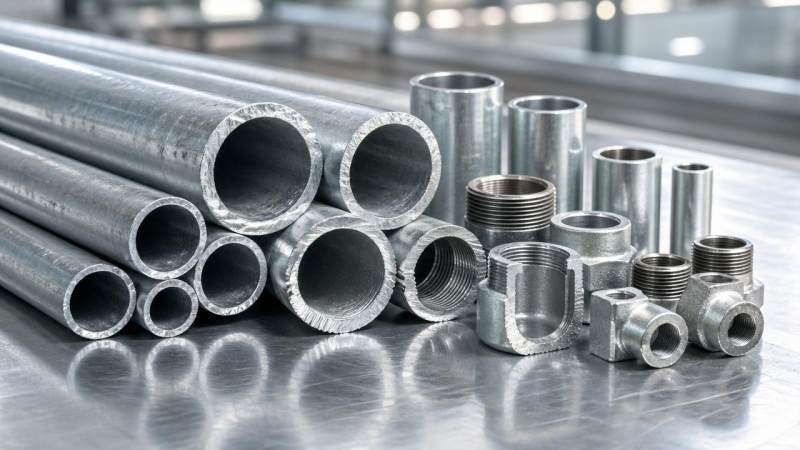
In steel-based plumbing systems, galvanized pipe for plumbing usually refers to carbon steel pipe protected by a zinc coating. The zinc layer acts as a sacrificial barrier and delays rust formation when the steel is exposed to moisture, air, and changing service conditions. For maintenance teams, this matters because the pipe is often selected not only for initial installation, but also for replacement, retrofit, extension, and mixed-material repair work.
A frequent misunderstanding is assuming all galvanized pipe performs the same way. In practice, service life can vary widely depending on coating thickness, manufacturing process, water quality, operating temperature, joint method, and storage conditions before installation. In moderate service environments, a properly selected pipe may perform for many years, while a mismatched product can show internal scaling, thread damage, or localized corrosion much earlier than expected.
For after-sales maintenance personnel, the key issue is not just whether galvanized pipe is available, but whether it fits the pressure range, corrosion exposure, repair urgency, and compatibility requirements of the site. A 1-inch branch line in a residential utility area has very different demands from a 4-inch industrial service line exposed to vibration, outdoor weather, and intermittent flow. Good selection starts with understanding this distinction.
Why This Material Still Receives Attention
Although many modern systems use copper, stainless steel, PPR, or other alternatives, galvanized steel remains relevant in certain maintenance scenarios. It is often found in older buildings, external utility lines, temporary modifications, agricultural service systems, and projects where mechanical strength is a priority. In these cases, choosing the right galvanized pipe for plumbing can help avoid unnecessary redesign and allow faster restoration of service.
Maintenance teams also value galvanized steel because it can tolerate handling impact better than many brittle materials and can be sourced in multiple schedules and diameters. However, that advantage becomes a liability if the product is selected only on external appearance. A bright zinc surface does not automatically indicate a suitable coating structure, correct wall thickness, or compliance with the intended operating standard.
Another reason the topic deserves attention is the hidden cost of repeat repairs. A low-cost pipe can become expensive if it leads to one leak in 6 months, thread failure during installation, or a shutdown that affects tenant service, factory operation, or fire-related piping support functions. For maintenance departments, the true cost is usually material plus labor, access time, drainage, rework, and reputation risk.
Core Selection Factors at a Glance
- Base steel quality and wall thickness consistency
- Zinc coating uniformity and adhesion
- Pressure rating, service temperature, and joint method
- Water chemistry, especially hardness, chloride level, and stagnation risk
- Compatibility with legacy system materials and local standards
Common Selection Mistakes Seen in Maintenance Work
The most common mistake is selecting galvanized pipe for plumbing by nominal size alone. Nominal size does not tell you the actual wall thickness, pressure capability, or thread engagement depth. Two pipes marked with the same diameter can behave differently if one has thinner walls or lower coating quality. This becomes critical during emergency replacement, when teams may grab available stock without checking schedule or manufacturing tolerance.
A second mistake is ignoring the actual service environment. Galvanized steel is often used in utility spaces, rooftops, pump rooms, wash areas, and outdoor support zones. If the pipe will face condensation, cyclic wetting, chemical cleaning agents, or temperatures above typical domestic water conditions, coating durability becomes far more important. In some cases, the exterior survives while the interior degrades because water quality was never considered during selection.
A third error is mixing materials without checking galvanic compatibility and joint details. Maintenance work often connects new sections to old copper, stainless, carbon steel, or brass components. Without proper isolation or transition planning, electrochemical reactions may accelerate corrosion at the connection points. Failures often appear within 12 to 36 months, especially where moisture remains trapped around fittings or where flow is intermittent.
The table below summarizes frequent mistakes and their likely field consequences. For after-sales teams, this kind of mapping is useful because it links selection behavior directly to maintenance outcomes rather than treating material choice as a purchasing-only decision.
These mistakes are common because maintenance teams often work under time pressure. Still, a 10-minute verification step can prevent several hours of return work. Checking thread quality, coating consistency, wall thickness, and connection compatibility before installation is usually more efficient than correcting a leak after the system is refilled and back in operation.
Mistakes Related to Standards and Documentation
Another overlooked issue is failing to verify which standard the pipe is produced to. In global steel supply, products may align with ASTM, EN, JIS, or GB references depending on project destination and customer requirement. Even when dimensions appear similar, documentation, coating expectations, and testing routines may differ. For maintenance personnel handling replacements in commercial buildings or industrial plants, matching the original specification is often more important than simply matching the outside diameter.
Documentation also affects traceability. When a replacement section fails, after-sales teams need to know the material source, batch, production process, and intended use. Without this information, it becomes difficult to distinguish product mismatch from installation error, water quality problems, or system design issues. Reliable steel suppliers reduce this risk by providing stable quality control and clear specification records.
How to Evaluate Suitability Before You Replace or Retrofit
A practical evaluation process begins with identifying whether the line carries potable water, non-potable utility water, drainage support, external washdown service, or limited industrial fluid. Not every galvanized pipe for plumbing application has the same risk profile. A small repair on a non-critical branch may accept a standard replacement approach, while a system tied to daily occupancy or production continuity requires much tighter control over specification and installation quality.
Next, review the three operating basics: pressure, temperature, and exposure. Even a general service pipe should be checked against expected pressure fluctuations, not just steady-state values. If pressure cycles sharply during pump starts, or if water temperature regularly moves above common domestic ranges, marginal products may fail at threads or fittings sooner than expected. In maintenance planning, these operating conditions should be confirmed within the first 24 hours of diagnosis.
Inspection of the old line is equally important. If the removed pipe shows heavy internal deposits, white zinc corrosion products, or deep pitting near joints, the problem may not be solved by replacing one section with the same material. In that case, the maintenance team should assess whether the corrosion pattern suggests stagnant flow, trapped moisture, incompatible fittings, or a larger system issue affecting multiple branches.
A Practical Site Checklist
- Confirm nominal size, wall thickness, and joint type before cutting or threading.
- Check whether the line is indoor, outdoor, buried, exposed to condensation, or near chemicals.
- Review water quality history if recurring corrosion appears within 1 to 3 years.
- Inspect adjacent fittings for brass, copper, stainless steel, or old black steel transitions.
- Record product standard, heat or batch reference, and installation date for future service tracing.
Where Broader Steel Knowledge Helps Maintenance Teams
Even when the task is pipe repair, broader steel product knowledge improves decision-making. For example, after-sales teams working in industrial facilities or building envelopes often deal with surrounding steel components exposed to the same moisture and weather cycle. In such projects, corrosion strategy should not be isolated to the pipe alone. Roof edges, wall cladding supports, equipment covers, and service enclosures can influence drainage, condensation, and long-term maintenance frequency.
This is why structural steel manufacturers with a wider product range can be helpful partners. For projects involving service rooms, utility shelters, rooftop protection structures, or equipment housing, materials such as PPGL Steel Sheet may be considered for external architectural and industrial applications. Its pre-painted galvalume steel base, typical thickness range of 0.2mm to 1.2mm, and service life potential of more than 25 years make it relevant where maintenance planners also need durable covering materials around plumbing-related infrastructure.
For example, if a plumbing line repeatedly suffers from weather exposure due to inadequate enclosure, the problem may not be pipe selection alone. A roof or wall upgrade using corrosion-resistant sheet material with top coating thickness in the 11 to 35μm range can help reduce direct moisture exposure around service areas. In that sense, maintenance reliability sometimes depends on coordinated steel solutions rather than single-component replacement.
Typical Use Scenarios and What Changes the Selection Priority
Not every maintenance case should be treated alike. A residential service branch, an agricultural wash line, and an industrial utility connection may all use galvanized pipe for plumbing, but the decision criteria shift. In lower-risk residential repair, accessibility and standard size compatibility may lead the process. In industrial service, coating durability, pressure behavior, and documentation usually become higher priorities. Maintenance personnel should classify the scenario before selecting replacement stock.
Age of the system also changes the recommendation. In buildings that are 15 to 30 years old, the visible failure point may represent general aging rather than isolated damage. Replacing a short section with a new galvanized component may solve the immediate leak but not the broader internal scaling problem. In contrast, a newer line damaged by handling or impact may only require localized correction if the rest of the system remains sound.
The table below organizes common scenarios and the selection priority for each. This kind of classification helps after-sales teams prepare more accurate recommendations and avoid one-size-fits-all replacements.
This scenario-based approach helps reduce over-selection and under-selection at the same time. Instead of defaulting to the cheapest available option or the heaviest available option, the team can align the product with actual service demands. That usually improves reliability and keeps maintenance budgets more predictable over 12-month and 24-month review periods.
What Maintenance Teams Should Document After Installation
Post-installation records are often neglected, but they are essential for diagnosing recurring failures. At minimum, teams should document installation date, pipe standard, nominal size, wall schedule if available, fitting materials, sealant type, and any visible condition of the removed section. When a follow-up issue appears, these records can quickly reveal whether the cause is product mismatch, environmental exposure, or workmanship.
In facilities with multiple service zones, creating a simple replacement map can also help. If three galvanized repairs occur in the same area within 18 months, it may be time to inspect the broader branch or riser instead of continuing isolated patchwork. This kind of pattern tracking turns after-sales work from reactive repair into preventive control.
Practical Recommendations for Reducing Failures and Service Calls
The best way to reduce failure rates with galvanized pipe for plumbing is to combine material review with site diagnosis. Do not treat corrosion, leakage, or low flow as purely a pipe purchase issue. A stable result usually comes from matching the pipe specification to pressure, exposure, connection design, and maintenance accessibility. This is especially important in projects where repeated shutdowns disrupt tenants, production, or public-facing operations.
For routine maintenance teams, a simple rule works well: verify first, replace second. Spend time confirming standard, dimensions, and surrounding conditions before installation. In many cases, adding one isolation fitting, improving drainage around supports, or upgrading enclosure materials can extend service life more effectively than replacing a short section with the same specification that failed before.
It is also wise to work with steel suppliers that understand both product consistency and project variability. A manufacturer serving global construction, industrial, and manufacturing projects can often support not only standard steel products but also customized solutions when the maintenance situation is not typical. That matters when buyers need specification matching, OEM support, stable lead times, or coordination across several steel components in the same project.
Recommended Decision Steps
- Identify the line function and criticality of downtime.
- Confirm size, wall thickness, and connection method from the existing system.
- Review environmental exposure, water condition, and temperature range.
- Check material compatibility at joints and nearby fittings.
- Record the selected product data for future maintenance traceability.
Why Choose Us
Hongteng Fengda is a professional structural steel manufacturer and exporter from China, supporting global construction, industrial, and manufacturing projects with reliable steel products and customized solutions. Our experience across angle steel, channel steel, steel beams, cold formed steel profiles, and custom structural steel components helps customers solve broader steel-related challenges around repair, retrofit, and facility maintenance.
For buyers and maintenance teams evaluating material options, we can support practical discussions around specification confirmation, product selection, delivery timing, customized solutions, standard references, and sample arrangements. If your project involves galvanized steel applications, surrounding structural components, or corrosion-resistant enclosure materials, we can help you review the requirement more clearly before ordering.
Contact us to discuss parameters, replacement scenarios, steel product matching, lead time expectations, OEM needs, certification-related document requirements, or quotation planning. A clearer specification at the beginning usually means fewer service calls, lower sourcing risk, and more dependable field performance over time.
Please give us a message


Please enter what you want to find