S235JR steel is a versatile structural material valued for strength, weldability, and cost efficiency in construction and fabrication. Whether compared with Q235 steel, steel beams, or API pipe applications, it remains a practical choice for engineers, buyers, and project managers seeking reliable performance, standard compliance, and stable supply from an experienced structural steel manufacturer.
What exactly is S235JR steel, and why is it widely specified?
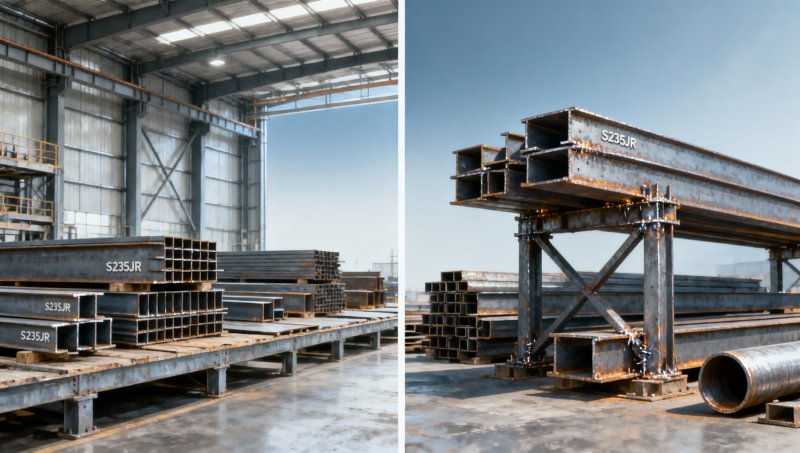
S235JR steel is a commonly used non-alloy structural steel grade defined in the EN standard system. In practical terms, it is selected because it offers a balanced combination of yield strength, weldability, machinability, and commercial availability. For many fabricators and project owners, that balance matters more than chasing unnecessary high-strength grades that increase processing difficulty and procurement cost.
The designation itself helps technical teams read the material quickly. “S” refers to structural steel, “235” indicates a minimum yield strength of 235 MPa for typical thickness ranges, and “JR” refers to impact testing at 20°C under the relevant standard conditions. This is one reason S235JR steel is frequently used in buildings, platforms, frames, supports, brackets, and general welded steel structures.
For information researchers and procurement teams, the real value of S235JR steel lies in predictability. It is easier to source in standard sections, plates, and fabricated components. It also fits a wide range of projects with normal static loads, moderate fabrication complexity, and standard compliance requirements. In many cases, it supports shorter qualification cycles than less common grades.
For project managers, quality control staff, and commercial evaluators, the question is not simply “Is S235JR strong enough?” but “Is it the right engineering and sourcing choice for this specific load case, fabrication route, and delivery schedule?” In routine structural applications, the answer is often yes, especially when the project demands stable lead times in the range of 2–6 weeks for standard items and clear documentation against EN, ASTM, JIS, or GB references where applicable.
Key features that make S235JR steel commercially practical
S235JR steel is not marketed as an exotic performance material. Its advantage is that it works well in a broad middle zone of steel demand: common fabrication, standard welding, routine machining, and cost-sensitive projects. This makes it useful for distributors, OEM buyers, and end users who need dependable structural performance without overengineering.
- Good weldability for common joining methods used in workshops and construction sites.
- Minimum yield strength around 235 MPa for standard thickness categories, suitable for many load-bearing frames and supports.
- Broad availability in beams, angles, channels, plates, and custom fabricated components.
- Lower material cost than many higher-strength or alloyed alternatives, which helps financial approval and budget control.
Because structural steel selection affects fabrication cost, logistics, and on-site installation, S235JR steel often becomes the baseline grade for comparison. If the design does not require higher yield strength, low-temperature toughness beyond standard JR conditions, or specialized corrosion resistance, a higher grade may not create real project value.
Which applications are a good fit for S235JR steel?
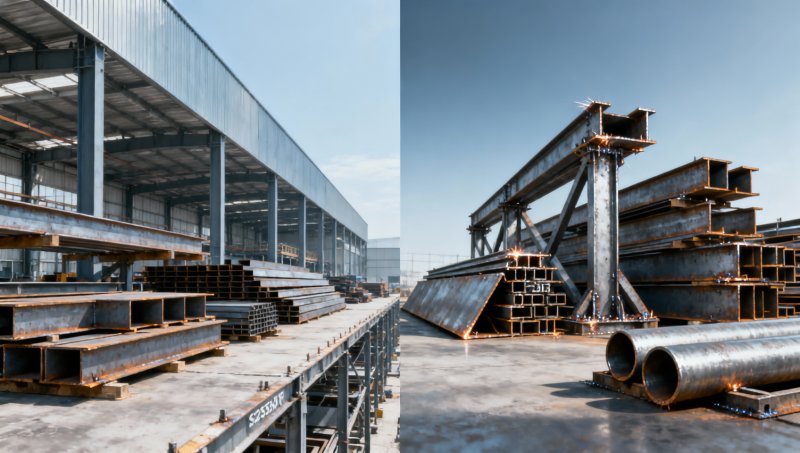
S235JR steel is best suited to conventional structural and fabrication environments where load requirements are clear, welding is frequent, and cost discipline is important. In construction, it is commonly used for secondary steel structures, platforms, stair systems, support frames, warehouse components, and equipment housings. In manufacturing, it is often used for machine bases, non-pressurized supports, and fabricated assemblies.
It is also relevant in mixed-material procurement. A project may use S235JR steel for beams, channels, and support structures while selecting different steel grades for fluid transport or pressure-related applications. That is why buyers should evaluate the steel package as a whole instead of judging one material in isolation. Correct grade matching can reduce fabrication waste, simplify supplier coordination, and improve total project efficiency.
For projects involving fluid conveyance, boiler lines, machinery piping, or chemical engineering, structural steel and pipe steel often appear together in the same bill of materials. In such cases, buyers may also review options from a Carbon Steel Pipe Supplier to align pipe specifications with the structural package. Common models such as Q345B, Q345e, and ASTM A106 Gr.B are used in construction, municipal works, fluid pipe, hydraulic pipe, gas pipe, oil pipe, structure pipe, and related industrial applications.
Where piping and structure are both required, compatibility in supply capability matters. Pipe ranges like Round, API Pipe, EMT Pipe, thick wall pipe, and other custom forms, with thickness from 2.0mm to 80mm and tolerance around ±1%, can support integrated procurement planning. Processing options such as welding, punching, cutting, bending, and decoiling are especially useful when contractors want fewer vendors and more coordinated delivery windows.
Typical sectors and task conditions
The following table helps engineering teams and purchasing departments decide whether S235JR steel matches common industrial scenarios. It is not a substitute for structural calculation, but it is a practical screening tool during early selection and supplier discussions.
The main takeaway is simple: S235JR steel performs well in projects where fabrication convenience and budget discipline matter as much as structural adequacy. If service conditions become more demanding, such as lower temperature exposure, higher design stress, or stricter impact requirements, the evaluation should move to a higher-grade comparison instead of relying on habit-based material choice.
How does S235JR steel compare with Q235, higher grades, and pipe-related materials?
Comparison is where many buying mistakes happen. Some teams assume S235JR steel and Q235 are interchangeable in every case. Others compare S235JR with higher grades such as S275 or S355 and focus only on yield strength. In reality, equivalence depends on standard system, mechanical property range, impact requirements, thickness, fabrication route, and final use environment.
S235JR steel and Q235 are often treated as roughly comparable for general structural use, but they do not come from the same standards framework. This matters during project review, export documentation, and third-party inspection. Technical evaluators should verify not only nominal strength, but also chemical composition limits, test requirements, and the exact grade condition stated on the mill test certificate.
Higher grades such as S275 and S355 offer greater yield strength, which may reduce section weight in some designs. However, that advantage is not always enough to offset higher unit cost, possible fabrication adjustments, and longer sourcing cycles in certain markets. For budget holders and finance approvers, total installed cost is often more important than material price per ton alone.
Pipe materials add another layer. S235JR steel is primarily a structural grade, while ASTM A106 Gr.B or API pipe grades are selected according to pipe service requirements, dimensional standards, and process expectations. This distinction is important for EPC teams and distributors managing 3–5 material families in one project package.
Practical comparison table for engineering and purchasing teams
The table below highlights the decision logic most buyers actually use: not only strength, but standard fit, processing convenience, and whether the material matches the function of the component.
For many buyers, this comparison leads to a useful conclusion: use S235JR steel where the function is structural, move to pipe-specific grades where the function is conveyance or pressure-related service, and upgrade structural grade only when engineering requirements clearly justify it. This avoids both under-specification and unnecessary overspending.
Three decision questions before substitution
- Does the governing standard require EN, GB, ASTM, or another system for approval and documentation?
- Is the component structural, fluid-carrying, or part of a mixed assembly with different compliance rules?
- Will a higher-grade material reduce total section weight enough to offset increased purchase and fabrication cost over a 1–3 stage procurement cycle?
These questions save time during technical review and reduce costly re-approval later in the project schedule.
What should buyers check before ordering S235JR steel?
A successful S235JR steel purchase depends on more than the grade name. Buyers should verify dimensions, section type, required processing, surface condition, standard references, quantity range, inspection documents, and shipment timing. In global trade, many delays come from incomplete technical confirmation during the quotation stage rather than from production itself.
For procurement officers and project coordinators, a practical review often includes 5 key checkpoints: grade confirmation, dimensional tolerance, fabrication scope, quality documents, and delivery plan. If one of these is vague, commercial comparison becomes unreliable because suppliers may be quoting different assumptions. That can create disputes over unit price, acceptable tolerance, or processing inclusions after the order is placed.
For quality and safety personnel, compliance is equally important. If the project references EN grades but also requests cross-reference with ASTM, JIS, or GB systems, the supplier should clarify equivalence limits instead of making broad substitution claims. This is especially important when the order includes fabricated beams, channels, cold formed sections, or combined packages shipped to North America, Europe, the Middle East, or Southeast Asia.
Hongteng Fengda supports this kind of multi-market sourcing by supplying angle steel, channel steel, steel beams, cold formed steel profiles, and custom structural steel components with modern manufacturing and strict quality control. For buyers managing 2–4 simultaneous project priorities such as cost, lead time, compliance, and fabrication readiness, that integrated supply capability can reduce coordination risk.
A practical supplier evaluation checklist
Use the following checklist when comparing offers for S235JR steel or mixed structural steel packages. It helps align technical review with commercial decision-making instead of treating them as separate workflows.
A supplier that can explain these points clearly is usually easier to work with over the full order cycle. In B2B steel sourcing, transparency often saves more money than chasing the lowest headline quote.
A four-step sourcing process that reduces risk
- Step 1: Confirm the engineering basis, including loads, environment, applicable standard, and whether S235JR steel is used alone or with pipe and fabricated sections.
- Step 2: Freeze the commercial scope, including quantities, processing services, document requirements, and delivery stages over 1 shipment or multiple lots.
- Step 3: Review inspection and quality points, such as material certificates, dimensional checks, and visual condition before dispatch.
- Step 4: Coordinate packaging and logistics based on project sequence, especially for export orders and site-specific unloading constraints.
This process is especially helpful for distributors, project managers, and decision-makers who need predictable execution rather than material supply alone.
What are the common mistakes, compliance concerns, and cost questions?
One frequent mistake is assuming that all structural steels with similar strength are directly interchangeable. They are not. S235JR steel may be appropriate mechanically, but documentation, impact class, and project specification can still block approval. Another mistake is ignoring the cost of downstream fabrication. A material that appears cheaper per ton may become more expensive if it requires extra cutting, sorting, or supplier coordination.
Compliance is not only about certificates. It also includes traceability, dimensional consistency, surface condition, and whether the supplied form actually matches the drawing. For example, a project may approve standard beams under one reference but require separate checks for cold formed profiles or mixed structural-and-pipe packages. This is why technical and commercial teams should review the order together at least once before release.
Cost questions should be framed correctly. The better question is not “What is the cheapest steel?” but “Which steel grade and supplier combination gives acceptable performance, manageable processing cost, and dependable delivery?” In many routine applications, S235JR steel remains attractive because it achieves that balance without unnecessary specification escalation.
For buyers who also need carbon steel pipe, standards such as ASTM, API, JIS, GS, and ISO9001-related quality management references often become part of supplier evaluation. A Carbon Steel Pipe Supplier offering hot rolling and non-oiled finish options, standard and OEM support, and process capabilities across welding, cutting, punching, and bending can simplify multi-category procurement when project scopes overlap.
FAQ for engineers, buyers, and project teams
Is S235JR steel suitable for all structural applications?
No. It is suitable for many general structural applications, but not all. If the project requires higher yield strength, lower-temperature impact performance, specialized corrosion resistance, or pressure-related service, another grade may be more appropriate. A proper check should review at least 3 factors: design load, environment, and applicable standard.
Can S235JR steel replace Q235 directly?
Sometimes, but not automatically. They are commonly compared for general structural use, yet they come from different standards systems. Replacement should be based on project documentation, required properties, and approval needs. Buyers should ask for clear standard references and mill certificates before accepting substitution.
What delivery timeframe is typical for structural steel orders?
For standard structural items, a common lead time may fall within 2–6 weeks depending on section type, quantity, processing scope, and port schedule. Custom fabricated components, mixed packages, or export documentation requirements can extend that window. Early drawing confirmation usually reduces schedule risk more than last-minute expediting.
What should quality control teams inspect on receipt?
They should inspect 5 core items: grade identification, dimensions, tolerance, surface condition, and accompanying documents. If the order includes processed components, hole positions, cut lengths, and weld preparation should also be checked against approved drawings. This is particularly important when shipments arrive in multiple lots over a 1–3 stage project schedule.
Why work with a structural steel manufacturer and exporter that understands global project needs?
Steel buyers today are not only buying material. They are buying schedule reliability, documentation clarity, and lower coordination burden. Hongteng Fengda focuses on structural steel manufacturing and export from China, supporting global construction, industrial, and manufacturing projects with angle steel, channel steel, steel beams, cold formed steel profiles, and customized structural steel components. That matters when your team needs one supplier to understand both engineering detail and export execution.
For procurement managers and business evaluators, the advantage is practical: stable production capacity, consistent quality control, and dependable lead times help reduce sourcing risk. For technical teams, support across ASTM, EN, JIS, and GB frameworks helps streamline cross-market communication. For project leaders, coordinated supply reduces the friction that often appears between drawing approval, workshop processing, and shipment scheduling.
If you are evaluating S235JR steel for frames, beams, supports, or custom fabricated components, or if you also need matching pipe solutions for construction, machinery, municipal works, chemical engineering, or structure pipe applications, the next step should be a specification-based discussion rather than a price-only inquiry. That approach usually produces faster quotations and fewer revision rounds.
You can contact Hongteng Fengda to discuss 6 practical topics: grade confirmation, section or pipe selection, thickness and tolerance requirements, processing scope, certification and inspection documents, and delivery schedule. If your project includes OEM components, mixed structural steel packages, or phased export shipments, sharing drawings, target standards, and quantity ranges at the start will help build a more accurate and efficient quotation plan.
Please give us a message


Please enter what you want to find