When evaluating whether 2 tube steel is strong enough, factors like load, span, wall thickness, and material grade such as Q235 steel all matter. From stainless steel square pipe and seamless steel tube to API pipe and carbon pipe, choosing the right section can affect safety, cost, and long-term performance. This guide helps engineers, buyers, and project teams assess practical strength requirements with confidence.
In real projects, the question is rarely just about the outside size. A 2-inch tube may work well for light frames, equipment bases, handrails, racks, or short-span supports, but it may be inadequate for long spans, impact loading, dynamic vibration, or structural members that must meet strict code requirements. That is why technical assessment, procurement review, and quality control need to look beyond simple dimensions.
For buyers and project managers, strength decisions also affect total cost. Selecting a tube that is too light can increase safety risk, rework, and maintenance frequency. Selecting one that is too heavy may raise steel consumption by 15% to 40%, increase transport weight, and complicate fabrication. The right answer comes from matching section properties, steel grade, wall thickness, and service conditions to the actual job.
What Determines Whether 2 Tube Steel Is Strong Enough?
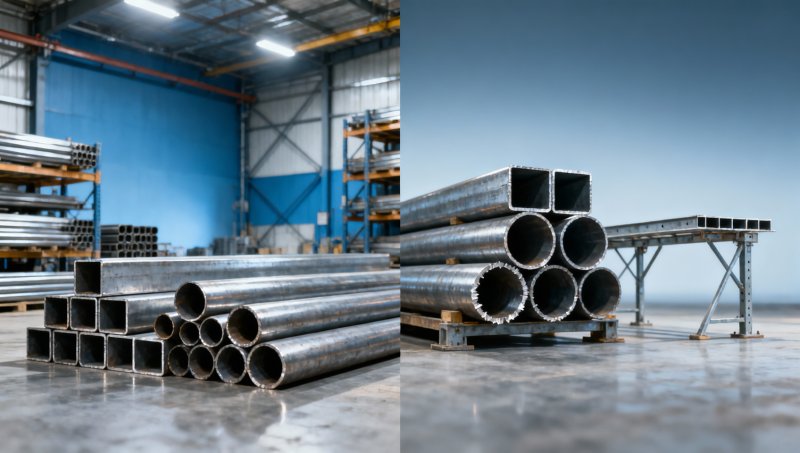
A 2 tube steel section is usually identified by its outside dimension, such as 2" x 2" square tube or a 2-inch round tube. However, the outside size alone does not define load capacity. A 2" x 2" x 1.2 mm tube and a 2" x 2" x 4.0 mm tube can have dramatically different bending strength, stiffness, and buckling resistance. In many practical cases, wall thickness changes performance more than buyers initially expect.
Material grade is another key factor. Mild steel such as Q235 or equivalent low-carbon structural steel is commonly used because it offers good weldability and cost efficiency. Higher-strength grades can improve load performance, but they may also affect forming, welding procedures, and price. For projects that must comply with ASTM, EN, JIS, or GB standards, the selected tube should match both mechanical requirements and documentation needs.
Span length matters just as much as section size. A 2-inch tube carrying 300 kg over a span of 600 mm behaves very differently from the same tube spanning 2,400 mm. Deflection often becomes the limiting factor before the steel actually yields. This is especially important for machine frames, mezzanine details, walkways, racks, and support arms where visible sagging can affect function even if failure does not occur.
Load type also changes the answer. Static vertical loads are easier to manage than shock loads, torsion, cyclic vibration, or off-center loading. A tube that is acceptable for a sign frame may not be suitable for a forklift barrier or an industrial base exposed to repeated impact. Engineers and safety managers should consider at least 4 variables together: load magnitude, support condition, span, and service environment.
Key Variables That Affect Performance
- Outside size and shape: square, rectangular, or round tube sections behave differently under bending and torsion.
- Wall thickness: common ranges such as 1.2 mm, 2.0 mm, 3.0 mm, and 4.0 mm can produce major strength differences.
- Steel grade: Q235, ASTM A500-type materials, and other structural grades offer different yield and tensile values.
- Span and support: simply supported, fixed-end, or cantilever conditions significantly change stress distribution.
- Use environment: corrosion, humidity, temperature fluctuation, and fatigue loading can reduce long-term reliability.
The table below gives a practical, non-code-based reference for how 2-inch tube steel is commonly judged in industrial and construction-related applications. Actual engineering verification is still recommended before final selection.
The main takeaway is clear: 2 tube steel can be strong enough, but only within the right design window. Once loads become heavier, spans longer, or service conditions harsher, a larger section, thicker wall, or different profile may be a safer and more economical option.
Typical Applications and When 2-Inch Tube Works Well
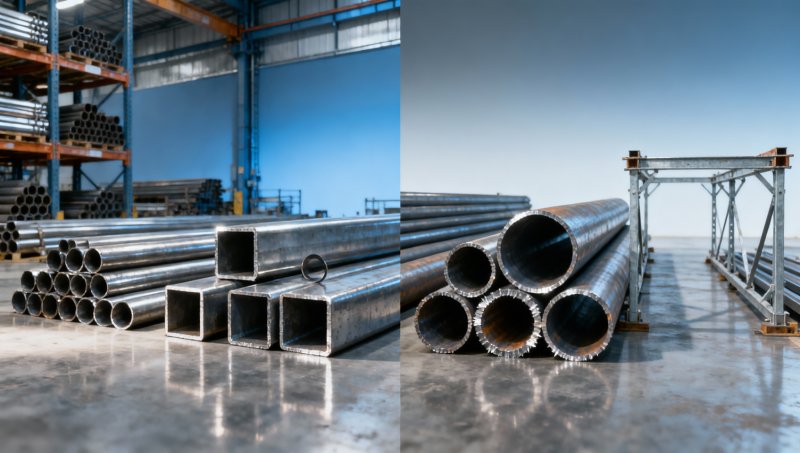
In many commercial and industrial settings, 2-inch steel tubing performs very well when used appropriately. Common applications include guard frames, equipment stands, warehouse carts, light support structures, partitions, trailer subframes, furniture frames, and protective enclosures. In these uses, the tube often benefits from short load paths, multiple connection points, and distributed loading rather than one heavy concentrated force.
For light to medium-duty fabrication, square and rectangular tubes are often chosen because they are easier to weld, align, and mount than round tubes. Operators also prefer them for stable contact surfaces and efficient fabrication. A 2" x 2" tube with a 2.0 mm to 3.0 mm wall is a common range for many fabricated assemblies, though actual thickness should depend on drawing requirements and safety factors.
However, not all 2-inch tube applications are equal. A short machine stand with a 500 mm unsupported section may perform safely under routine use, while a canopy frame exposed to wind uplift and outdoor corrosion may need stronger design checks. Procurement personnel should therefore request service details instead of ordering by size only. Knowing whether the tube will face compression, bending, torsion, or weather exposure prevents costly mis-specification.
Distributors and project estimators can also reduce sourcing risk by separating decorative tube demand from structural or semi-structural demand. Stainless steel square pipe may be selected for corrosion resistance and surface finish, while carbon steel tube may be preferred for cost-sensitive welding projects. Seamless steel tube or API pipe can be required in pressure, fluid, or energy-related uses, where manufacturing route and standard compliance matter more than simple shape.
Application Suitability by Use Case
The following table helps compare where 2 tube steel is often suitable, where it needs careful review, and where it may not be the first choice.
For many buyers, this comparison prevents a common mistake: assuming all 2-inch tubes offer the same real-world strength. The application environment determines whether a basic hollow section is adequate or whether a beam, channel, cold formed profile, or custom fabricated component is the better answer.
How Engineers and Buyers Should Evaluate Strength Before Ordering
A reliable evaluation process should combine technical review and commercial review. On the technical side, teams should confirm 5 core items before placing an order: section size, wall thickness, steel grade, required standard, and end-use loading. On the commercial side, they should verify mill tolerance, coating requirement, test documents, fabrication method, and delivery schedule. This avoids the frequent problem of buying a dimensionally correct tube that still fails the project requirement.
For imported structural steel and tubing, standard matching is especially important. A buyer may request 2-inch tube steel for a global project, but the actual compliance path may depend on ASTM, EN, JIS, or GB. The mechanical values should align with the project specification, and tolerances should be clear. A wall tolerance difference of even ±0.2 mm can influence weight, stiffness, and fabrication planning in volume orders.
Project leaders should also distinguish between yield strength and service performance. A section may not reach yielding under the design load, but if deflection, vibration, or local denting is excessive, the part may still be unacceptable. This is why many industrial buyers use a practical screening process: first check mechanical adequacy, then check serviceability, then confirm cost-effectiveness and supply stability.
Manufacturers with broad structural steel capability can add value here. Instead of supplying only one tube size, they can recommend alternate profiles such as angle steel, channel steel, steel beams, cold formed steel profiles, or custom components when 2 tube steel is not the most efficient section. This reduces redesign risk and helps procurement teams control both steel consumption and lead time.
A Practical 6-Step Selection Checklist
- Define the real load: static, dynamic, impact, or repeated cyclic use.
- Measure the unsupported span and identify support conditions.
- Confirm required steel grade and applicable standard.
- Check wall thickness, section shape, and fabrication method.
- Review corrosion exposure, coating needs, and maintenance cycle.
- Verify documentation such as MTC, inspection reports, and dimensional tolerances.
In some projects, the best answer is not a thicker tube but a coated steel sheet or formed section used as part of the assembly. For example, cladding, covers, forming parts, and corrosion-resistant panels may benefit from DX52D Galvalume Steel Coil . This low-carbon steel material is designed for cold forming and can withstand plastic deformation without fracturing. Its yield strength does not exceed 260 MPa, tensile strength ranges from 300 to 360 MPa, and elongation after fracture is no less than 28%.
As a mid-project material option, it is available in widths from 500 to 1500 mm, thicknesses from 0.12 mm to 4 mm, and lengths from 100 mm to 12000 mm. Certified options can include ISO 9001, SGS, and BV. In corrosive environments, its long-term corrosion resistance can outperform conventional galvanized coating by about 2 to 6 times, making it useful where both forming performance and coating durability are important.
Common Mistakes, Risk Control, and Quality Checks
One common mistake is choosing tube steel by appearance rather than by section properties. Two tubes may look nearly identical in the yard, but a thinner wall can significantly reduce moment capacity and impact resistance. Another frequent issue is using decorative or light-gauge tube in semi-structural applications. This may reduce upfront material cost, but it can create higher lifecycle cost through deformation, weld cracking, or early replacement.
A second mistake is ignoring joining details. The real performance of 2 tube steel depends not only on the tube itself but also on weld length, connection plate thickness, bolt arrangement, and hole placement. Poor connection design can cause premature failure even when the tube section appears adequate on paper. Quality managers should inspect cut ends, weld penetration, heat-affected zones, and dimensional consistency before acceptance.
Corrosion is another major risk, especially in coastal, humid, or chemical-exposure environments. Carbon pipe and hollow sections used outdoors may require galvanizing, painting, or aluzinc-based protection depending on the service life target. If the intended maintenance cycle is 3 to 5 years, the coating strategy may differ from a project targeting 10 to 20 years of use. Environmental exposure should therefore be defined early in the sourcing process.
For import buyers, risk control should include supplier capability review. A dependable structural steel manufacturer should be able to support custom dimensions, stable production capacity, inspection records, and compliance with major standards. That matters for distributors, project contractors, and OEM buyers who need repeat orders with consistent quality rather than one-time spot purchasing.
Recommended Incoming Inspection Points
The table below summarizes quality checks that help reduce field issues after delivery.
These checks are practical for procurement teams, QC personnel, and site managers. They also help financial approvers understand that a lower unit price is not always lower total project cost if dimensional inconsistency or poor coating quality leads to field delays.
FAQ: Practical Questions About 2 Tube Steel Selection
Is 2-inch tube steel strong enough for structural use?
It can be, but only for the right type of structural use. For secondary frames, guards, bracing details, light platforms, and short spans, a 2-inch tube may be fully adequate. For primary load-bearing members, long-span beams, or high-impact duty, a larger hollow section, beam, or channel is often more appropriate. The deciding factors are load, span, wall thickness, and connection design.
What wall thickness is commonly used for 2 tube steel?
Common commercial ranges include about 1.2 mm, 2.0 mm, 3.0 mm, and 4.0 mm, although exact availability depends on market and standard. Light decorative use may accept thinner walls, while industrial frames and supports often move toward 2.5 mm to 4.0 mm. Buyers should not finalize thickness until loading and service conditions are reviewed.
How does stainless steel square pipe compare with carbon tube?
Stainless steel square pipe offers better corrosion resistance and surface appearance, making it useful in food equipment, public-facing installations, and wet environments. Carbon steel tube is usually more cost-effective and easier to source in many structural applications. The better choice depends on whether the priority is corrosion life, finish quality, fabrication economy, or structural efficiency.
What should import buyers ask a steel supplier before ordering?
At minimum, ask for the applicable standard, steel grade, section tolerance, wall thickness range, coating option, inspection method, and lead time. For custom or OEM projects, also confirm drawing review, sample approval, packaging method, and shipment schedule. A dependable supplier should be able to support both standard specifications and customized structural steel solutions.
If your team is deciding whether 2 tube steel is strong enough, the most reliable approach is to evaluate the real loading scenario rather than rely on nominal size alone. For global construction, industrial, and manufacturing projects, Hongteng Fengda supports buyers with structural steel products, cold formed profiles, customized components, and consistent quality control aligned with major international standards.
Whether you need angle steel, channel steel, steel beams, hollow sections, or formed steel solutions, a supplier with stable production capacity and practical engineering support can help reduce sourcing risk and improve project efficiency. To compare section options, review specifications, or request a tailored solution for your application, contact us today to get technical support, product details, and a customized quotation.
Please give us a message


Please enter what you want to find