Q235 steel is widely used in structural and industrial applications, but is it the right choice for your project? From cost and weldability to strength and supply options, buyers often compare Q235 steel with materials like S235JR steel, seamless steel tube, API 5L pipe, and steel sheet products. This guide helps engineers, purchasers, and project managers evaluate performance, standards, and sourcing factors before making a decision.
What Makes Q235 Steel a Common Choice in Structural Projects?
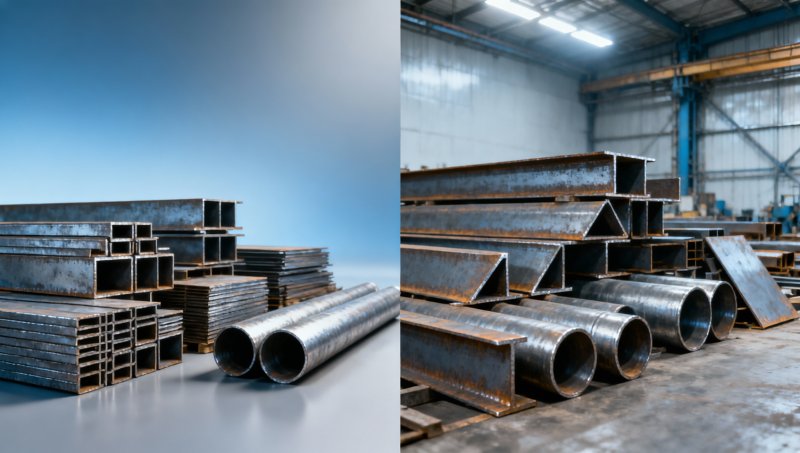
Q235 steel is one of the most commonly specified carbon structural steels in the Chinese GB standard system. In practical purchasing and engineering discussions, it is often selected because it balances mechanical performance, processing convenience, and budget control. For many buyers, the key question is not whether Q235 steel is widely available, but whether its actual performance fits the load condition, fabrication route, and compliance target of the project.
In general structural use, Q235 steel is valued for good weldability, stable formability, and broad application across beams, channels, angle steel, plates, tubes, and cold formed sections. It is frequently used in factory buildings, light steel structures, equipment frames, supports, brackets, and general fabrication. For projects with moderate strength demand and normal atmospheric exposure, it often serves as a practical and cost-conscious base material.
For technical evaluators, Q235 steel should be understood as a grade suitable for many standard-duty applications rather than a universal answer for every environment. If your project involves low-temperature toughness, corrosive media, pressure transport, or higher yield requirements, then comparison against alternatives becomes necessary. This is especially true when teams are comparing Q235 steel with S235JR steel, API 5L pipe grades, or higher-strength structural steels.
For procurement teams and project managers, Q235 steel also has a commercial advantage: it is commonly available in multiple product forms, which can shorten sourcing cycles. In many export-oriented supply chains, standard items may be prepared within 7–15 days, while customized dimensions, surface treatment, or OEM fabrication may require 2–4 weeks depending on quantity, testing needs, and packing method.
Why do buyers often start with Q235 steel?
- It is widely used in structural steel fabrication, making design communication and supply matching easier across manufacturers, distributors, and contractors.
- It supports common processing methods such as welding, bending, cutting, drilling, and roll forming, which helps reduce workshop complexity.
- It is generally cost-competitive for medium-volume and high-volume orders, especially when compared with special alloy or higher-strength grades.
- It can be supplied in different forms including sections, plates, and wire-based products for construction and industrial use.
Basic understanding before specification
Before confirming Q235 steel, decision-makers should separate three different issues: grade suitability, product form suitability, and supplier capability. A suitable steel grade can still fail a project if the wrong profile, thickness range, or coating method is selected. Likewise, a suitable product form may still create risk if mill tolerances, packing, traceability, or inspection records do not match the buyer’s approval workflow.
This is where an experienced structural steel manufacturer matters. Hongteng Fengda supports global buyers with angle steel, channel steel, steel beams, cold formed steel profiles, and customized structural steel components. For buyers handling multi-region sourcing, the ability to align production with ASTM, EN, JIS, and GB related requirements can reduce communication gaps and avoid rework during technical review.
How Does Q235 Steel Compare with Similar Materials?
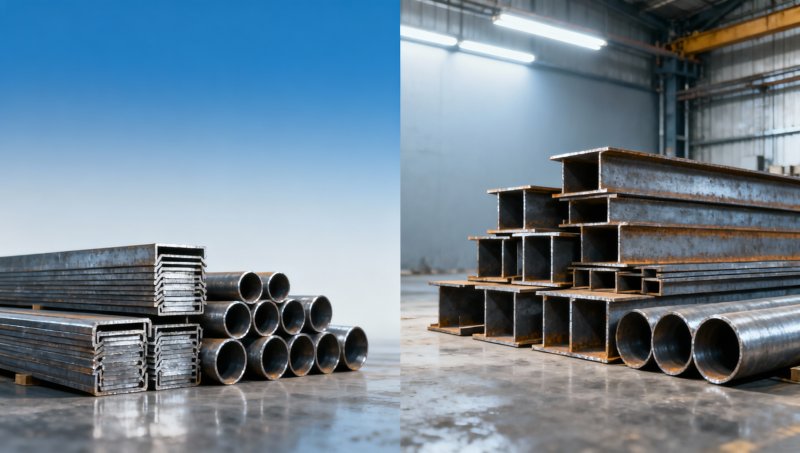
A common reason buyers search for Q235 steel is comparison. In many projects, Q235 steel is not evaluated alone. Instead, teams compare it with S235JR steel for structural equivalency, with seamless steel tube when pressure or precision matters, with API 5L pipe for pipeline applications, and with steel sheet products for forming and enclosure uses. The right decision depends on application logic, not on name similarity.
Q235 steel and S235JR steel are often discussed together because both are used in general structural applications. However, they belong to different standard systems, and direct substitution should not be assumed without checking chemical composition, mechanical properties, impact requirements, and project acceptance criteria. For export projects, this distinction becomes important during drawing approval, third-party inspection, and customs documentation.
When compared with seamless steel tube or API 5L pipe, Q235 steel usually serves a different function. General Q235 structural products are not automatically designed for fluid transport, pressure containment, or pipeline-specific compliance. A lower-cost material may appear attractive at the quotation stage, but if it does not satisfy service conditions, the total project cost can increase through redesign, replacement, or certification delays.
The table below summarizes how Q235 steel is typically positioned against other frequently compared steel products in engineering and purchasing scenarios.
This comparison shows why Q235 steel works well in many structural applications but should not be treated as a universal substitute. A useful purchasing rule is to review 3 core dimensions before approving substitution: service environment, required standard, and downstream processing. If any of these 3 variables differ significantly, a one-to-one replacement can create quality and compliance risk.
When is Q235 steel the stronger value option?
Best-fit situations
Q235 steel is often a strong value option when the project requires standard structural performance, broad process compatibility, and efficient sourcing. It is especially suitable for warehouse structures, machinery supports, brackets, fencing systems, non-pressure industrial parts, and light to medium-duty construction elements. In these cases, keeping procurement simple can be just as important as maximizing nominal strength.
It is also advantageous when supply flexibility matters. Buyers may need mixed product forms in one shipment, such as beams, channels, angles, and customized fabricated items. Working with a supplier that can coordinate standard products and OEM structural steel components within one export process can reduce handling time, documentation burden, and shipment fragmentation.
What Technical and Product Factors Should You Review Before Buying?
When evaluating Q235 steel, many teams focus too much on price per ton and too little on usability. In practice, 5 checkpoints usually decide whether the purchase performs well in fabrication and final use: mechanical suitability, dimensional tolerance, weldability, surface condition, and compliance documentation. A lower initial quote can lose value quickly if any of these 5 items are overlooked.
Mechanical suitability should be reviewed against the actual load path and connection design. For moderate structural use, Q235 steel is commonly acceptable, but design engineers still need to check section size, thickness, and joining method. Fabricators should also confirm whether the project will involve repeated bending, punching, or site welding, because these operations affect the importance of ductility and consistency across batches.
Surface condition and coating are also practical decision points, especially for exposed or humid environments. In some applications, buyers combine Q235-based products with galvanized or coated finishing to improve corrosion resistance. For wire applications and light industrial uses, a product such as Mild Steel Wire Rod can be relevant where low carbon steel, flexibility, and cost-efficiency are required together.
For example, this wire rod is available in Q195 and Q235 models, with wire diameter from 0.25 mm to 5.0 mm, zinc coating thickness from 8 to 25 g/m2, and tensile strength from 350 to 550 Mpa. Typical applications include construction, handicrafts, wire mesh, packaging, breeding, barrier isolation, fences, hangers, filter baskets, barbed wire, and tie ropes. For distributors and manufacturers handling mixed demand, this kind of product fills the gap between bulk structural steel and light fabricated steel goods.
Key technical checks for purchasing approval
Before placing an order, it is useful to ask suppliers for a clear review package covering 4 areas: grade confirmation, size specification, production route, and inspection method. This helps align engineering expectations with procurement execution. It also reduces the chance of confusion when the same project includes beams, channels, formed profiles, and wire-based auxiliary materials.
For quality control teams, these checks are more than paperwork. They directly affect weld quality, installation rhythm, and final acceptance. In export projects, inspection expectations can differ by region, so it is helpful to define required documentation early, especially when the same shipment must satisfy customer engineering review, internal QA approval, and customs clearance.
A practical fit for wire and light fabrication demand
Where projects require flexible low carbon steel material rather than heavy sections, Mild Steel Wire Rod can support applications ranging from wire mesh making to barrier isolation and packaging. Common packaging options include 50–1,000 kg in coil with plastic film inside and woven bag outside, as well as wire bobbin packing. This is especially relevant for distributors and project buyers who need light-gauge steel products alongside mainstream structural items in one sourcing plan.
The combination of low cost, bright and smooth appearance, relatively pure and durable coating, and excellent ductility makes this category attractive for practical, high-turnover use. Still, buyers should match it to the correct function. Wire products are suitable for mesh, fences, wire ropes, tie ropes, and decorative use, but they should not be confused with load-bearing rolled sections used in primary structural frameworks.
How Should Procurement Teams Evaluate Cost, Lead Time, and Supply Risk?
The right material decision is rarely based on unit price alone. In B2B steel purchasing, the more useful question is total procurement value across 4 dimensions: material cost, processing cost, delivery certainty, and quality risk. Q235 steel often performs well because it is broadly available and easy to process, but project economics can still shift depending on thickness, finishing, quantity, and inspection scope.
For example, an apparently cheaper offer may exclude cutting, surface treatment, export packing, or test documentation. Another offer may look higher at first but reduce total cost by consolidating multiple steel products into one shipment. This matters for contractors, distributors, and project owners who want fewer supply handoffs and fewer approval bottlenecks. One delayed item can affect the whole installation sequence, especially when project teams work within a 2–6 week site schedule.
Lead time should also be reviewed in layers. Standard stock-like products may move faster, while custom sections, OEM structural components, and mixed-container orders usually need more planning. A realistic workflow often includes 4 steps: drawing or specification confirmation, production scheduling, inspection and packing, then export arrangement. If any specification is unclear at step 1, delays tend to appear at step 3 or step 4 rather than immediately.
For global buyers, supply risk is not only about production. It also includes communication accuracy, standard matching, and shipment consistency. Hongteng Fengda supports customers across North America, Europe, the Middle East, and Southeast Asia with stable production capacity and dependable lead times. This matters when buyers need repeat orders, phased delivery, or customized structural steel solutions without restarting technical alignment each time.
A simple procurement checklist for Q235 steel projects
- Confirm whether the project needs general structural steel or a material governed by a specific pipe, tube, or pressure standard.
- Review 3 commercial variables together: quantity, finishing requirement, and delivery deadline.
- Ask for inspection scope before quotation approval, not after production starts.
- Check whether one supplier can support standard products plus customized fabrication to reduce coordination cost.
- Align packing method with unloading conditions, warehouse handling, and inland transportation needs.
Where buyers often lose money
The most common cost mistakes are not dramatic. They include ordering the right grade in the wrong form, accepting unclear tolerances, underestimating coating requirements, and assuming standards are interchangeable. These errors can add hidden costs through scrap, field modification, extra freight, or delayed approval. For finance approvers and commercial evaluators, this is why technical clarification early in the process often saves more than aggressive price negotiation later.
What Standards, Misconceptions, and Final Questions Should You Address?
Standards and compliance are central to any serious Q235 steel decision. Because structural steel projects often cross borders, a buyer may need to align Chinese material grades with project documents written around ASTM, EN, JIS, or local specifications. That does not always mean direct equivalence. It means the supplier and buyer should confirm the required performance, product form, and acceptance basis before production begins.
Another common misconception is that all low carbon structural steel behaves the same in every fabrication setting. In reality, processing route, thickness range, coating, and dimensional consistency can noticeably influence workshop efficiency. A project may pass the grade check but still encounter problems in welding sequence, galvanizing quality, or assembly fit if these details are not reviewed. For quality and safety teams, these practical factors often matter as much as nominal grade designation.
The final decision should therefore combine 3 perspectives: engineering suitability, procurement feasibility, and commercial stability. If your application is structural and general-duty, Q235 steel may be the right choice. If your application is pressure-related, highly corrosive, low-temperature critical, or tied to a specific overseas standard, then additional comparison is necessary before approval.
The FAQ below addresses several issues that frequently affect specification, quotation review, and supply planning.
Is Q235 steel equivalent to S235JR steel?
They are often compared because both are used in general structural applications, but they come from different standards and should not be treated as automatically identical. For real projects, review the required standard, chemistry, mechanical performance, and acceptance documents. If a client drawing or contract explicitly calls for one standard, substitution should be approved before procurement, not after shipment.
Is Q235 steel suitable for outdoor use?
It can be used outdoors in many structural and general fabrication applications, but the environment matters. In normal atmospheric exposure, coating or galvanizing is often used to improve service life. In high humidity, coastal, or chemically aggressive areas, buyers should review corrosion protection carefully and may need a different material strategy. A 3-part check is useful here: environment, coating system, and expected maintenance cycle.
What should purchasers ask a supplier before ordering?
At minimum, ask about grade confirmation, available product forms, size range, tolerance control, test documentation, coating options, packing method, and delivery schedule. For export projects, also confirm standard references, marking, and shipment arrangement. These points help procurement, QA, and project management work from the same baseline instead of solving preventable issues after production.
How long does supply usually take?
For common specifications, supply may often be arranged within 7–15 days, while custom fabrication, special inspection, or mixed-order coordination may take 2–4 weeks. Actual timing depends on quantity, processing steps, and export packing requirements. The most reliable way to shorten lead time is to finalize specification details early, especially for multi-item structural steel orders.
Why Work with a Structural Steel Manufacturer That Understands Global Project Requirements?
Choosing the right supplier is part of choosing the right material. A strong Q235 steel decision depends not only on grade selection but also on manufacturing consistency, communication clarity, and export execution. Hongteng Fengda provides structural steel products and customized solutions for construction, industrial, and manufacturing projects, with product coverage that includes angle steel, channel steel, steel beams, cold formed steel profiles, and customized structural steel components.
For buyers managing technical review and commercial approval at the same time, this integrated capability helps reduce sourcing risk. Instead of splitting supply among multiple vendors, you can discuss standard specifications, OEM requirements, packaging details, and lead time planning in one workflow. This is especially useful when your project involves 3 or more product categories, phased shipments, or mixed market standards such as ASTM, EN, JIS, and GB.
If you are still deciding whether Q235 steel is right for your project, you can contact us for practical support rather than generic sales talk. We can help review application suitability, compare structural options, confirm dimensions and processing needs, discuss coating and corrosion considerations, estimate delivery windows, and align documentation with your purchasing or project approval process.
You can also consult us for sample support, quotation communication, OEM structural steel solutions, and multi-product export planning. If your team is comparing Q235 steel with S235JR steel, seamless steel tube, API 5L pipe, or steel sheet products, share your drawings, specifications, quantity range, and delivery target. A clearer technical and sourcing review at the beginning usually leads to faster approval, better cost control, and fewer project surprises later.
Please give us a message


Please enter what you want to find