Understanding MOQ requirements for structural steel orders is essential for procurement professionals balancing cost, lead time, and supply reliability. Whether sourcing angle steel, channel steel, beams, or custom profiles, minimum order quantities can directly affect project budgets and purchasing flexibility. This guide explains how MOQ works in structural steel sourcing and how buyers can make smarter decisions when working with Chinese manufacturers.
What do MOQ requirements for structural steel orders really mean in procurement?
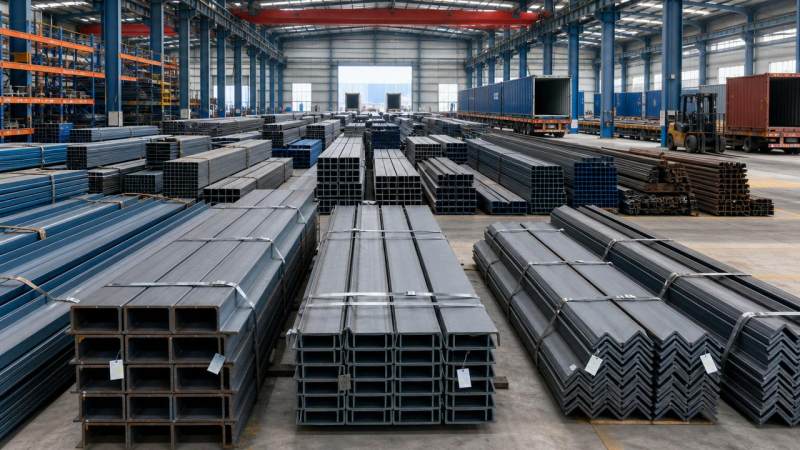
MOQ stands for minimum order quantity, the lowest volume a mill, processor, or exporter is willing to produce or ship under a given commercial condition. In structural steel sourcing, MOQ requirements for structural steel orders are not only about tonnage. They often also involve specification complexity, grade availability, rolling schedule, surface treatment, packaging method, and destination market requirements.
For procurement teams, MOQ affects unit price, supplier willingness, lead time, and inventory pressure. A buyer may need only a small quantity of angle steel or custom cold formed profiles, but the manufacturer may need a larger batch to justify setup cost, raw material allocation, cutting loss, or export handling. That gap is where many sourcing problems begin.
In practice, MOQ can be defined in several ways:
- By tonnage, such as a minimum of 25 tons for standard structural sections.
- By item or size mix, such as a minimum quantity per dimension or per profile type.
- By production batch, especially for custom punching, cutting, galvanizing, or OEM fabrication.
- By container loading efficiency, where suppliers prefer one full container to control freight and handling costs.
This is why procurement personnel should not treat MOQ as a rigid number without context. The same exporter may quote different MOQ conditions for standard channel steel, welded assemblies, or special grade steel beams. Understanding the reason behind the threshold gives buyers more room to negotiate effectively.
Why do Chinese suppliers set MOQ for structural steel products?
MOQ requirements for structural steel orders usually come from production economics rather than arbitrary policy. Structural steel manufacturing involves raw material procurement, rolling or forming schedules, machine setup, labor planning, testing, packing, inland transport, and export documentation. Small-volume orders can disrupt efficiency if they require uncommon specifications or urgent scheduling.
A professional manufacturer and exporter like Hongteng Fengda typically evaluates MOQ based on both factory and logistics realities. When supplying angle steel, channel steel, steel beams, cold formed steel profiles, and customized components to buyers across North America, Europe, the Middle East, and Southeast Asia, consistency in production planning becomes important for controlling quality and lead time.
The main drivers behind MOQ include:
- Raw material batch purchasing, especially when a project requires a specific grade, standard, or chemistry range.
- Mill rolling efficiency, because frequent size changes increase downtime and reduce output.
- Processing loss, particularly for cut-to-length, drilling, punching, or special profile forming.
- Inspection and compliance cost, including third-party checks when ASTM, EN, JIS, or GB standards apply.
- Export packing and freight efficiency, since partial loads often raise the landed cost per ton.
For buyers, this means MOQ is often negotiable when specifications are standardized, delivery windows are flexible, or several items can be consolidated into one shipment. It becomes less flexible when the order involves niche sizes, custom fabrication, or strict certification requests.
How MOQ changes by product type, processing level, and order complexity
MOQ requirements for structural steel orders vary significantly by product family. Standard sections with stable export demand usually allow more flexibility than heavily customized components. Procurement teams should therefore compare MOQ not only by supplier, but also by processing route.
The table below helps buyers understand how MOQ often shifts across typical structural steel sourcing situations.
The key takeaway is simple: the more standard the product, the easier it is to work with lower minimums. The more customized the job, the more buyers should expect either a higher MOQ or a premium price to offset setup and handling costs.
A practical example from reinforced steel procurement
Even though this guide focuses on structural sections, procurement logic is similar in reinforcing steel. For example, HPB300 Rebar is commonly used in load-bearing, structural, and stirrup scenarios within concrete structures. Available grades may include HPB300, HRB300, HRB400, HRB500, A615 GR40, GR60, and BS4449 GR460, while common sizes range from 6mm to 50mm.
If a buyer requests mixed diameters, specific shape patterns such as spiral, herringbone, or crescent, plus certification documents like API, ISO9001-2008, SGS, or BV, MOQ and pricing can change. Coil supply for 6mm to 12mm and straight rebar supply for 10mm to 22mm may also affect production grouping. This illustrates a wider steel sourcing principle: when requirements become more specific, minimum quantities often become more important.
How procurement teams should evaluate MOQ against total landed cost
Many buyers focus on ex-works or FOB unit price and overlook the broader cost impact of MOQ requirements for structural steel orders. In reality, MOQ decisions influence more than purchase cost. They shape inventory carrying cost, storage pressure, internal cash flow, and project execution risk.
Before accepting or rejecting a supplier's MOQ, compare the following dimensions:
- Unit price reduction versus excess inventory cost.
- Freight efficiency of full-container loading versus partial shipment frequency.
- Production lead time of one consolidated order versus several urgent small orders.
- Risk of stock mismatch if project drawings or schedules change.
- Supplier consistency benefits when one partner handles multiple steel categories together.
The table below gives a useful comparison framework for procurement decision-making.
For project-driven steel buying, the cheapest quoted tonnage is not always the lowest total cost. A well-managed MOQ strategy reduces reordering, avoids fragmented logistics, and improves schedule reliability across the entire procurement cycle.
How to negotiate MOQ requirements for structural steel orders without increasing risk
Negotiating MOQ works best when buyers provide commercial clarity. Suppliers are more flexible when they can see repeat demand, realistic delivery plans, and specification stability. If a procurement team simply asks for a lower MOQ without offering any planning confidence, the supplier may keep the threshold unchanged or compensate with higher pricing.
Methods that often improve MOQ flexibility
- Combine several standard sizes or related products into one booking, such as angle steel, channel steel, and beams for the same project.
- Accept nearby equivalent specifications already in the supplier's production schedule, when project standards allow it.
- Use phased delivery from one larger contract, which helps the factory plan production while reducing your site-side storage burden.
- Discuss alternative commercial terms, such as adjusted packaging, fewer custom markings, or simplified bundle composition.
- Start with a trial order on standard items, then expand into OEM or custom components after supplier performance is verified.
Experienced exporters can often recommend which specifications are easiest to consolidate and which combinations trigger extra cost. This is one reason global buyers work with suppliers that understand both manufacturing and export execution, not only production itself.
What documents and standards influence MOQ decisions?
Standards and certification requirements can materially change MOQ requirements for structural steel orders. When a project specifies ASTM, EN, JIS, or GB compliance, the manufacturer may need to allocate stock differently, schedule testing, or prepare traceability documents. These steps increase the administrative and operational burden on smaller lots.
Procurement teams should confirm the following items early in the RFQ stage:
- Grade and standard required for each item and whether equivalents are acceptable.
- Mechanical property expectations, dimensional tolerances, and coating requirements.
- Need for mill test certificates, third-party inspection, or destination-specific compliance paperwork.
- Whether mixed heats, mixed lots, or substitute origins are allowed under the contract.
When these details are unclear, suppliers often protect themselves by quoting more conservative MOQ, longer lead times, or wider price buffers. Clarity reduces uncertainty and usually improves commercial terms.
Common mistakes buyers make when reviewing minimum order quantities
Many sourcing delays happen not because MOQ is high, but because the buyer interprets it too narrowly. Procurement teams can avoid this by watching for a few common mistakes.
Mistake 1: Comparing MOQ without comparing scope
One supplier may quote MOQ for bare material only, while another includes cutting, marking, inspection, and export packing. The numeric MOQ may look different, but the commercial scope is not equal.
Mistake 2: Ignoring mixed-load possibilities
If your project requires several structural steel items, combining them may solve the MOQ problem more effectively than negotiating one line item in isolation.
Mistake 3: Chasing lower MOQ at the expense of delivery reliability
A supplier willing to accept very small orders may still struggle with schedule stability, document accuracy, or consistent quality. For procurement professionals, dependable execution is often worth more than a nominally lower threshold.
Mistake 4: Not planning repeat demand
If your company purchases similar steel products regularly, present forecast demand during negotiation. Annual or project-based visibility often helps suppliers support smaller first shipments.
FAQ: practical answers about MOQ requirements for structural steel orders
Can MOQ requirements for structural steel orders be waived for samples or trial business?
Sometimes yes, but usually with conditions. For standard items already in stock or scheduled for production, a supplier may support smaller trial quantities. For custom profiles or special-grade beams, the supplier may instead offer a paid sample, a prototype charge, or a higher unit price for the first order.
Are MOQ rules the same for standard and custom steel products?
No. Standard sections usually have more flexible minimums because they fit existing demand and stocking patterns. Custom fabricated components often require drawing review, tooling, labor planning, and dedicated inspection, so minimums tend to be higher or less negotiable.
How can buyers reduce MOQ pressure when project volume is small?
The most effective methods are specification standardization, item consolidation, flexible delivery windows, and early communication. Buyers should also ask whether equivalent grades or nearby sizes acceptable under project standards can improve sourcing efficiency.
Does a higher MOQ always mean a better price?
Not always, but it often creates the possibility of a better price structure. Price still depends on steel grade, market conditions, processing complexity, freight mode, and inspection scope. Buyers should evaluate total landed cost rather than assuming volume alone guarantees savings.
Why work with a structural steel manufacturer and exporter that understands MOQ strategy?
MOQ requirements for structural steel orders are easier to manage when your supplier understands both manufacturing constraints and export-side procurement realities. Hongteng Fengda supports global construction, industrial, and manufacturing buyers with structural steel products ranging from angle steel and channel steel to steel beams, cold formed profiles, and customized components.
With modern manufacturing facilities, strict quality control, and familiarity with major international standards such as ASTM, EN, JIS, and GB, the company can help buyers evaluate which specifications are easier to source, which order combinations improve container efficiency, and how to balance cost with delivery reliability.
If you are planning a new inquiry, it is useful to discuss these points in advance:
- Required grades, sizes, and standards for each structural steel item.
- Whether standard specifications can replace low-volume custom requests.
- Expected delivery schedule, shipment method, and destination port.
- Need for OEM processing, testing documents, or third-party inspection.
- Possibility of mixed-load planning to improve MOQ and freight economics.
For procurement personnel, a productive supplier conversation should go beyond price. It should cover parameter confirmation, product selection, realistic lead time, certification needs, customized solutions, sample support where applicable, and quotation planning based on the actual project scope. That approach helps reduce sourcing risk and leads to more workable steel purchasing decisions.
Please give us a message


Please enter what you want to find