In large-scale construction, the quality and consistency of steel rebar play a decisive role in structural safety and project longevity. Understanding key quality control parameters helps ensure that each steel pile and carbon steel component meets international standards. As a trusted structural steel manufacturer and exporter, Hongteng Fengda focuses on precision engineering, advanced testing, and strict production processes to deliver reliable steel solutions for complex construction projects worldwide. For engineers, project managers, and procurement teams, recognizing and managing these quality indicators are essential for reducing risk, ensuring compliance, and achieving optimal structural integrity.
Key Material Composition and Mechanical Property Control
Material composition remains the foundation of steel rebar performance. Each steel pile or carbon steel rod used in heavy-duty construction is expected to meet specific chemical balance requirements to guarantee elasticity, ductility, and load-bearing strength. Essential elements such as carbon, manganese, silicon, sulfur, and phosphorus must remain within narrow permissible limits according to standards like ASTM A615, EN10080, or JIS G3112. Excessive carbon, for instance, can improve tensile strength but will severely reduce the steel’s ductility and weldability. Therefore, modern manufacturers rely on spectroscopic analyzers and advanced metallurgical testing to validate every batch.
At Hongteng Fengda, precision control in smelting and rolling ensures that carbon steel and alloy compositions remain uniform throughout each lot. High-strength steel rebar production incorporates process automation to control cooling rates, mechanical stretching, and micro-alloying. Tensile strength, yield stress, and elongation at fracture are regularly tested using calibrated universal testing machines. These mechanical indexes are documented and traceable for international clients across regions from North America to the Middle East. This structured verification minimizes site failures and enhances the long-term reliability of reinforced structures such as bridges, towers, and industrial foundations.
Dimensional Accuracy and Surface Condition Monitoring
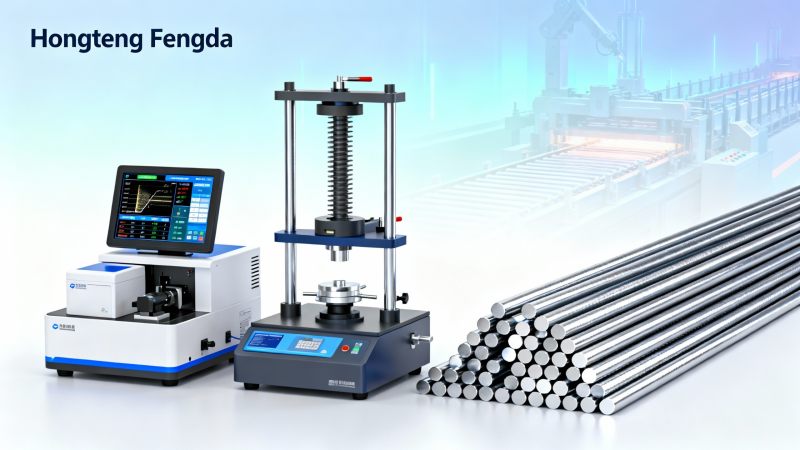
Dimensional control is a vital quality control parameter for steel rebar and related components. Tolerances on diameter, length, and rib geometry influence both mechanical interlocking with concrete and the consistency of structural loads. According to most global standards, the deviation in nominal diameter should not exceed ±0.5%, and mass per meter should correspond to standard tables exactly. Hongteng Fengda employs automated laser measurement systems to inspect uniformity during continuous rolling. Any abnormal fluctuation in bar thickness or ovality triggers real-time correction signals to maintain constant precision.
Surface inspection is another critical step. Corrosion, rust, and rolling scale can compromise adhesion in concrete and shorten lifespan. Hongteng Fengda applies advanced descaling and oil removal before delivery. Non-destructive testing methods—such as eddy current scanning and ultrasonic wave evaluation—are used for detecting internal discontinuities. These technologies ensure that every steel pile and carbon steel bar entering the market meets its design intent in durability and consistency. Moreover, dimensional quality management data is digitally archived and shared with international clients through the company’s quality assurance documentation system, ensuring transparency and traceability throughout global logistics chains.
Thermal Treatment and Microstructure Consistency
Beyond basic mechanical tests, heat treatment and microstructural control determine the ultimate performance of structural steels. Controlled quenching and tempering influence the grain size and the distribution of ferrite and pearlite within the matrix, which subsequently determines the yield ratio and fatigue resistance. In large-scale construction where steel rebar is exposed to cyclic loads, ensuring microscopic uniformity is indispensable. Hongteng Fengda’s facilities use programmable thermal furnaces, precision-controlled cooling beds, and microstructure sampling analysis. Micrographs are regularly captured to verify grain distributions, and hardness testing is performed to quantify phase transformation effectiveness.
For specialized applications—such as bridge piles, high-rise reinforcement, or shipbuilding beams—custom thermal cycles align with ASTM, EN, and JIS standards. This comprehensive approach extends to structural items like the H Girder, whose optimized cross-sectional design (with flange thickness ranging 8–64 mm and web thickness of 5–36.5 mm) benefits directly from precise thermal treatment and folding control. These processes deliver strong bending resistance, light weight, and stable mechanical performance even under extreme environmental conditions. Heat treatment uniformity ensures that every ton of steel achieves the expected life cycle cost efficiency, providing developers and builders greater confidence in the structural safety of their projects.
Testing Standards, Certification, and International Compliance
Global construction projects depend on adherence to certified testing norms. Quality assurance for steel rebar, carbon steel sections, and related steel pile components must comply with precise international standards, including ASTM A615, ASTM A706, BS4449, GB/T 1499.2, or equivalent EN10025 frameworks. Each standard outlines detailed chemical and mechanical expectations, verification methods, and labeling requirements. Hongteng Fengda’s laboratories are equipped with full-scale quality testing devices, from tensile test machines to chemical spectrometers, to ensure conformity. Material traceability is maintained via batch coding, heat number labeling, and mill test certificates.
Furthermore, Hongteng Fengda fulfills multiple third-party inspections such as SGS, BV, and TUV according to buyer requests. The internal quality management system is ISO 9001 certified, and production documentation fully aligns with CE marking and REACH compliance standards. Each steel pile or rebar shipment undergoes final sampling and random testing before export, ensuring every delivery meets its intended tensile level and chemical composition. The integration of digital inspection reports and electronic data transmission strengthens communication with overseas clients. This strict compliance ecosystem assures long-term durability and superior service reliability.
Applications and Performance Optimization in Structural Design
In practical engineering scenarios, the role of steel rebar and related steel components extends far beyond simple reinforcement. Large-scale infrastructure—such as metropolitan subway systems, highway bridges, industrial halls, and marine terminals—demand rebar with predictable tensile properties and weldability. Engineers focus on minimizing differential stress and improving construction efficiency. Hongteng Fengda offers a variety of structural solutions, including hot-rolled steel beams, angle steels, channels, cold-formed profiles, and specialized products like the H Girder, fabricated from materials such as Q235, S355JR, or A572. These components integrate seamlessly into modern design frameworks requiring consistent performance.
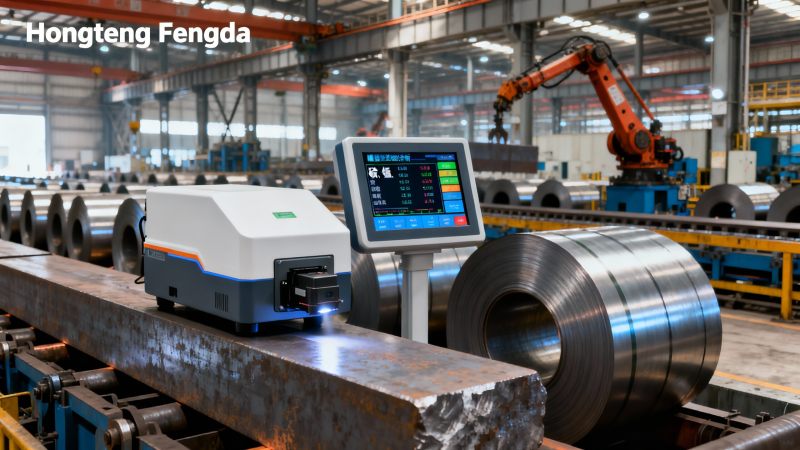
Optimization also involves simulation-based engineering: finite element analysis models are applied to forecast how steel piles and rebar arrangements perform under mechanical load. Through continuous optimization of section geometry and welding accuracy, Hongteng Fengda’s manufacturing approach promotes high bending resistance and lightweight efficiency. In structural applications ranging from shipbuilding to mechanical manufacturing, the combination of quality steel materials and precise design substantially reduces maintenance costs, improves project turnover time, and elevates sustainability scores. By enabling resource-efficient construction, each product adds measurable value to global civil engineering ventures.
Practical Case Studies and Market Trends
Recent market data suggests an increasing demand for premium-grade carbon steel and customized steel rebar driven by infrastructure investments in renewable energy and urban expansion. Clients are not only looking for volume supply but also sustainability and traceable quality performance. Hongteng Fengda has participated in numerous international projects, supplying high-tensile steel piles for offshore platforms in Southeast Asia and heavy-duty rebar for metro tunnel projects in Europe. These collaborations underline the importance of maintaining tight control over dimensional tolerance, elongation rate, and fatigue strength. With sustainable production practices emphasizing low-carbon smelting and recycling, modern manufacturers can differentiate themselves in an increasingly competitive steel market.
Technological advances continue to reshape the industry. Smart sensors now enable real-time process feedback throughout billet casting and rolling. Data-driven quality monitoring allows correlation between input steel chemistry, temperature distribution, and final product properties. For stakeholders such as quality control managers and project supervisors, adopting suppliers proficient in these technologies becomes a decisive procurement criterion. Hongteng Fengda’s integration of automation and big-data quality management exemplifies a modern approach to achieving the highest consistency in steel manufacturing, aligning with the evolving expectations of global construction markets.
Conclusion and Cooperation Outlook
Comprehensive quality control is vital for maintaining strength, durability, and performance across every steel rebar and carbon steel component deployed in large-scale projects. By meticulously controlling chemical composition, dimensional precision, microstructure consistency, and compliance with international standards, Hongteng Fengda provides construction partners a robust foundation for success. The company’s commitment to advanced testing, certified production lines, and responsive service ensures that all steel piles and related products consistently achieve required benchmarks.
As infrastructure demands continue to rise, partnering with a structural steel manufacturer capable of combining engineering expertise with global delivery assurance becomes crucial. Hongteng Fengda remains dedicated to being that reliable partner—offering custom structural solutions, on-time delivery, and the assurance of long-term safety. For detailed technical consultation or quotation inquiries, please contact our professional engineering team and discover how our certified steel rebar, steel pile, and customized components can elevate your next construction project. Reach out today to learn more about our manufacturing capabilities and reliable international supply network.
Related recommendations
 Is acero galvanizado para exterior vulnerable to white rust formation during monsoon storage?Acero galvanizado para exterior *is* vulnerable to white rust in monsoons — but it’s preventable. Discover proven storage & handling strategies that protect your structural steel.
 Does ASTM A 36 plate meet impact toughness requirements for low-temperature bridge girders?Does ASTM A 36 plate meet low-temp bridge requirements? Short answer: no—unless specially tested. Discover why toughness matters more than strength in cold climates.
 Does ASTM A653 certification cover both zinc-coated and zinc-iron alloy coated steels?ASTM A653 covers both zinc-coated and zinc-iron alloy coated steels—but they’re not interchangeable. Learn key differences in testing, performance & certification.
 Does acero prepintado require surface pretreatment before welding or cutting?Does acero prepintado require pretreatment before welding or cutting? Discover when grinding is essential—and when it’s not—for safety, weld integrity & corrosion resistance.
Please give us a message


Please enter what you want to find