Corrosion-resistant steel is widely used as a dependable Steel Construction Material for projects exposed to rain, humidity, and long-term outdoor conditions. From U Channel Steel and Hot Rolled Beams to perforated steel and C-beam steel, buyers and engineers need to understand how corrosion performance changes over time. This article explains real-world durability, maintenance needs, and selection factors to help global sourcing teams choose reliable Construction Materials with confidence.
What really happens to corrosion-resistant steel after years outdoors?
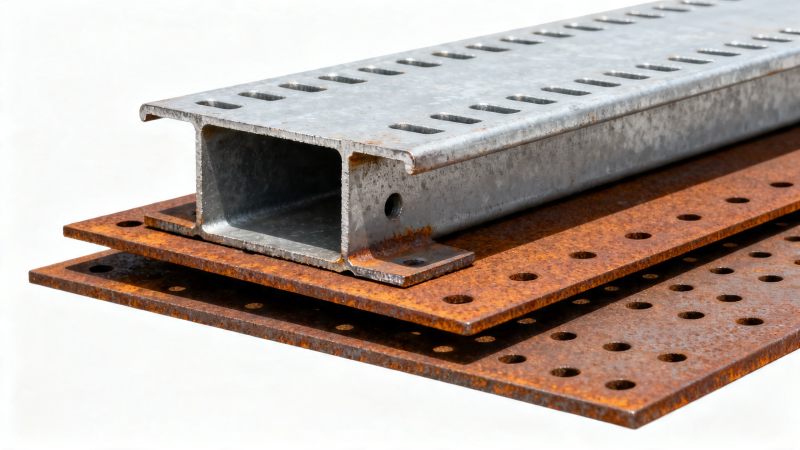
Corrosion-resistant steel does not behave like ordinary carbon steel when it stays outdoors for 2–10 years or longer. Its long-term performance depends on alloy design, surface condition, drainage details, atmospheric exposure, and whether the structure faces industrial pollution, coastal salt, or repeated wet-dry cycles. In practical steel construction, the question is not simply whether rust appears, but whether corrosion remains stable, slow, and structurally manageable over the service period.
In many outdoor projects, the surface of corrosion-resistant steel develops a protective oxide layer. When the environment supports stable drying between rain events, this layer can reduce further metal loss compared with standard steel. However, if moisture stays trapped in lap joints, crevices, or debris-filled channels for weeks at a time, the benefit becomes less predictable. That is why design details are as important as material grade.
For project managers, procurement teams, and technical evaluators, long outdoor use should be assessed through 3 core dimensions: expected exposure severity, maintenance access, and acceptable life-cycle cost. A beam used in a dry inland industrial yard may perform very differently from a channel section installed 500–1000 meters from a shoreline, even if both are ordered under similar strength requirements.
This is also where supplier capability matters. Hongteng Fengda, as a structural steel manufacturer and exporter from China, supports buyers with standard sections, cold formed steel profiles, steel beams, and custom structural components manufactured under controlled production and inspection processes. For global sourcing teams, that means material selection can be linked more closely to actual project exposure instead of relying on generic assumptions.
The most common outdoor exposure patterns
Not all outdoor service conditions create the same corrosion rate. In steel industry practice, buyers usually separate exposure into at least 4 working categories before finalizing specifications. This helps align technical decisions with budget control, delivery schedules, and inspection expectations.
- Rural or low-pollution inland exposure: regular rain, moderate humidity, and good air circulation usually support more stable surface protection.
- Urban or industrial exposure: sulfur compounds, dust, and airborne contaminants can interrupt protective oxide formation and increase staining.
- Marine or coastal exposure: chloride deposition is a major risk factor, especially on surfaces that remain damp for long intervals.
- Sheltered but humid exposure: under-canopy structures, undersides, and poorly ventilated zones can corrode faster than openly washed surfaces.
A technical review done before purchase can often prevent 6–12 months of avoidable appearance complaints, remedial coating work, or premature replacement planning. This is especially important for distributors, EPC contractors, and end users that need predictable field performance across multiple climates.
Which factors decide long-term outdoor durability?
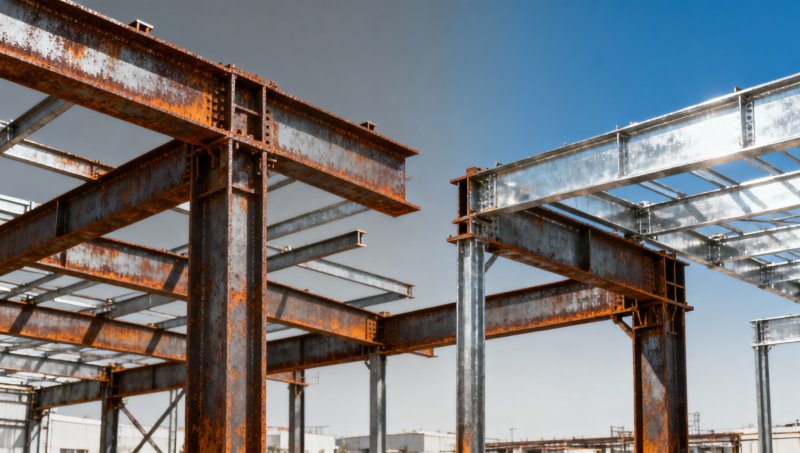
Long-term durability depends on more than the words corrosion-resistant steel. In structural applications, service life is influenced by chemical composition, section geometry, exposure orientation, fabrication quality, and maintenance planning. A well-selected profile with proper drainage may remain serviceable for many years, while a poorly detailed component can show localized attack in far less time.
For users and safety managers, the first practical factor is water retention. Flat surfaces, bolt pockets, unsealed overlaps, and blocked drain paths keep moisture in contact with steel for longer periods. Repeated wetness lasting 24–72 hours after rainfall is often more damaging than short, intense rain followed by fast drying. The second factor is contamination, especially salts, cement residue, and industrial deposits that stay on the surface.
The third factor is fabrication and post-processing. Cutting, welding, punching, or bending can alter local surface behavior. If heat-affected zones are left with residue or rough scale, they may weather differently from the surrounding steel. For this reason, quality control should cover visual checks, dimensional tolerance, and surface condition before shipment, particularly for export orders with 2–4 week production windows and tight installation schedules.
The fourth factor is whether the steel is expected to work alone or with a coating system. In some projects, buyers choose corrosion-resistant steel for reduced maintenance without paint. In other cases, they use it under a duplex strategy together with primer or topcoat to extend repainting intervals. The right answer depends on appearance expectations, access cost, and local climate rather than a single universal rule.
Key performance variables procurement teams should compare
Before placing an order, it helps to review the technical and commercial variables side by side. The table below summarizes the factors that usually influence long outdoor use in structural steel projects.
The table shows why two projects using similar steel sections can deliver very different long-term results. For commercial buyers and financial approvers, the lowest unit price is rarely the full cost picture. Inspection frequency, repainting access, shutdown risk, and replacement complexity should all be considered in the procurement decision.
Where reinforcement steel also matters in outdoor durability planning
Outdoor corrosion performance is not limited to exposed beams and channels. In bridges, roads, foundations, culverts, tunnels, and concrete structures, reinforcement steel selection also affects long-term durability, construction speed, and compliance planning. For buyers sourcing multiple steel categories in one project package, it is often efficient to align structural sections and reinforcement materials through the same supply discussion.
As an inserted example, Rebar can be specified in models such as HRB335, HRB400, and HRB500, with common sizes ranging from 6mm to 50mm and typical lengths including 5m–14m, 5.8m, 6m, 9m/12m, and 10m–12m. It is widely used in civil engineering construction, houses, bridges, highways, railways, dams, beams, columns, walls, and slabs.
For technical and procurement evaluation, common checks include Grade A to Grade C, spiral section shape, hot rolled or cold rolled technique, and tolerance around ±1%. Buyers may also review surface options such as galvanized, PVC, black and color painting, transparent oil, or anti-rust oil, together with standards including BS4449-2005, GB1449.2-2007, JIS G3112-2004, ASTM A615-A615M-04a, ISO, SGS, and BV depending on project and market requirements.
This kind of product integration is useful for contractors that need one supplier conversation covering both exposed structural steel and internal reinforcement steel. It can reduce coordination gaps, shorten 1–2 rounds of technical clarification, and improve consistency in export documentation, delivery planning, and quality control.
How does corrosion-resistant steel compare with galvanized or painted steel outdoors?
A common sourcing question is whether corrosion-resistant steel should replace galvanized steel or coated carbon steel. The answer depends on project goals. If the priority is low initial complexity and a natural industrial appearance, corrosion-resistant steel may be suitable in favorable atmospheres. If the project is close to chloride exposure or demands a specific visual finish for 8–15 years, galvanized or painted systems may offer better control.
From a cost perspective, buyers should evaluate both upfront price and maintenance interval. Corrosion-resistant steel can reduce coating steps, which may simplify fabrication and site touch-up. However, in highly aggressive environments, a coating system can be more economical over the full service period because it slows corrosion more consistently. The best procurement decision is usually made after comparing environment, maintenance access, and appearance tolerance.
Distributors and project owners should also remember that corrosion-resistant steel develops changing surface color during the first months of exposure. This is normal, but it may not suit decorative facades or projects with strict color uniformity requirements. In those cases, galvanized or painted steel can provide a more stable appearance from day 1.
Hongteng Fengda supports this decision process by supplying standard structural steel sections and customized steel components according to project requirements, while aligning material options with international standards such as ASTM, EN, JIS, and GB. That is valuable when engineering teams, procurement departments, and commercial decision-makers need one technically consistent basis for comparison.
Quick comparison for outdoor project planning
The following comparison table can help buyers evaluate which outdoor steel solution is more appropriate for a specific project phase, budget, or climate condition.
This comparison is most useful when a project team must balance 3 practical targets at once: structural reliability, maintenance budget, and delivery schedule. It also helps financial approvers see why a slightly higher material cost can sometimes reduce total cost over a 5–10 year operating horizon.
What should buyers, engineers, and QC teams check before ordering?
Outdoor steel procurement should not stop at section size and tonnage. A strong purchase review normally includes at least 5 checkpoints: material standard, fabrication scope, surface condition, inspection plan, and packing or shipping method. These checks are especially important for export projects where transport time can add 2–6 weeks before installation begins.
For engineers and project managers, drawings should clearly identify whether the steel is fully exposed, partially sheltered, or built into mixed-material assemblies. Hidden water traps often begin as drawing omissions rather than manufacturing defects. For QC staff, visual inspection criteria should be agreed before dispatch so the receiving team knows how to assess surface condition after sea freight, storage, and unloading.
For procurement and business evaluators, supplier capability should include more than price. Stable production capacity, dimensional consistency, document accuracy, and reliable lead times directly affect project cost. A supplier with experience in ASTM, EN, JIS, and GB related requirements can often reduce back-and-forth clarification during the contract stage and prevent late technical disputes.
Hongteng Fengda serves customers across North America, Europe, the Middle East, and Southeast Asia with structural steel products and customized solutions. For buyers managing risk across multiple markets, that export experience supports smoother communication on specification alignment, packaging expectations, and shipment planning for standard and OEM structural steel orders.
A practical 6-point procurement checklist
- Confirm the exposure environment in writing, including inland, industrial, marine, or sheltered humid service conditions.
- Match the steel solution to the required maintenance plan, whether annual inspection, quarterly cleaning, or limited-access operation.
- Review fabrication details such as welds, holes, bends, and drainage openings before mass production starts.
- Define dimensional tolerances, visual acceptance criteria, and documentation requirements before shipment.
- Check packing, rust prevention during transit, and storage advice for port-side or long-route delivery conditions.
- Align standards and certificates with the target market to avoid customs, project approval, or installation delays.
These 6 points are simple, but they solve many real sourcing problems. They help users avoid overbuying, support QC teams in incoming inspection, and give decision-makers clearer control over total project risk rather than only unit price.
Typical lead-time and implementation considerations
For standard structural steel products, production lead time often depends on section type, tonnage, and whether extra fabrication is required. In many B2B orders, standard runs may move faster than custom assemblies, while export packing, port booking, and customs documents add additional time. Buyers usually benefit from planning in 3 stages: specification confirmation, manufacturing and inspection, then shipping and site receipt.
When deadlines are tight, early confirmation of steel grade, dimensions, tolerance, and inspection scope can save 7–15 days that might otherwise be lost to technical revisions. This is one reason many international buyers prefer manufacturers that can support both standard specifications and OEM solutions under one quality management process.
FAQ: common mistakes and practical answers for outdoor steel use
The questions below reflect frequent concerns from information researchers, technical reviewers, purchasers, and end users who need clear decisions for outdoor steel projects.
Is visible rust always a sign of failure?
No. On corrosion-resistant steel, a surface oxide layer is part of the normal weathering process. The real issue is whether corrosion remains uniform and slow, or whether deep pitting, water-trap attack, flaking, and section loss begin to appear. Inspection should focus on localized risk zones such as joints, horizontal ledges, and sheltered undersides rather than color alone.
How often should outdoor steel be inspected?
A common practice is to inspect more frequently during the first 6–12 months, then move to periodic checks based on environment and criticality. In moderate environments, annual review may be enough for non-critical structures. In industrial or marine conditions, quarterly or semiannual inspection can be more appropriate, especially where water accumulation or contamination is likely.
Can corrosion-resistant steel be used in coastal projects?
It can be used in some coastal applications, but caution is necessary. Chloride-rich air and prolonged dampness can reduce the benefit of the protective oxide layer. Buyers should assess distance from shore, splash exposure, surface washing by rain, and whether protective coating is still needed. In many coastal cases, galvanized or coated systems deserve serious comparison before final specification.
What is the biggest procurement mistake?
The biggest mistake is buying only by initial price and strength grade without evaluating exposure details and maintenance cost. A lower-cost section can become more expensive if it needs earlier repair, difficult repainting, or unplanned replacement. Good procurement compares at least 3 layers of value: material performance, fabrication quality, and life-cycle maintenance burden.
Why work with a structural steel manufacturer that understands outdoor service conditions?
When outdoor performance matters, buyers need more than a product catalog. They need a supplier that understands how section choice, fabrication details, standards compliance, and export execution connect to real project outcomes. For construction, industrial, and manufacturing projects, that reduces sourcing uncertainty and helps teams make decisions faster with fewer revision cycles.
Hongteng Fengda provides angle steel, channel steel, steel beams, cold formed steel profiles, and customized structural steel components for global buyers. With modern manufacturing facilities and strict quality control, the company supports standard specifications as well as OEM requirements, helping customers balance cost, consistency, and dependable lead time across different markets.
If your team is evaluating corrosion-resistant steel for long outdoor use, the most useful next step is a technical-commercial review based on 4 items: project environment, required standards, section or component list, and delivery schedule. That allows material options, fabrication scope, and inspection requirements to be clarified before quotation and order placement.
You can contact us for parameter confirmation, product selection, coating or non-coating comparison, certification alignment, sample support, OEM customization, packing method discussion, and lead-time planning. This is especially valuable for contractors, distributors, and project owners who need a practical structural steel supply plan rather than only a basic price list.
Please give us a message


Please enter what you want to find