When wire mesh fails too early, the first warning signs often point to corrosion, poor material selection, or unsuitable use in demanding construction environments. For buyers and engineers working with industrial wire, construction wire, perforated steel, and other Steel Construction Material, understanding these early causes is essential to reduce safety risks, control replacement costs, and choose more reliable Corrosion Resistant Steel solutions for long-term project performance.
What usually fails first when wire mesh starts breaking down?
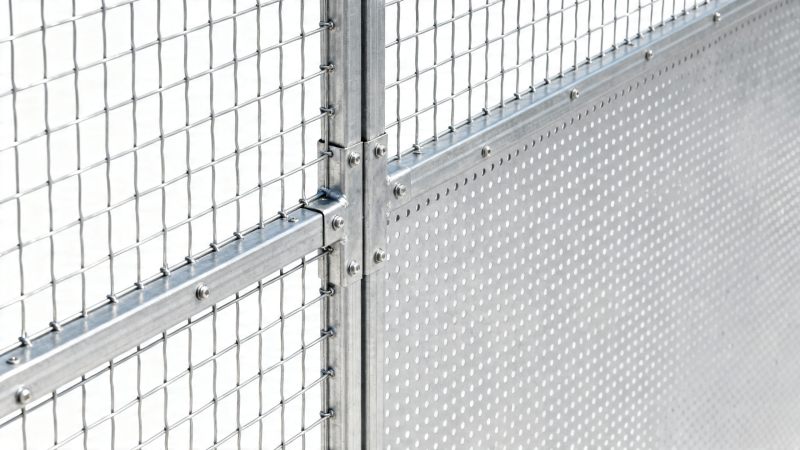
In steel construction projects, wire mesh rarely fails without visible early indicators. The first signs often appear within 3 areas: surface corrosion, weld point weakness, and deformation under repeated load. For operators, quality teams, and procurement staff, these signals matter because early mesh failure can affect worker safety, maintenance schedules, and total project cost across construction, industrial, and manufacturing environments.
Corrosion is often the earliest and most visible problem. In humid, coastal, chemical, or outdoor applications, a standard finish may begin showing rust staining, coating damage, or pitting much sooner than expected. Once the protective layer is compromised, steel wire can lose section thickness over time. In demanding sites, inspection cycles every 1–3 months are often more practical than waiting for annual checks.
A second warning sign is movement where rigidity should remain stable. If wire mesh bows, loosens, or changes aperture shape after installation, the root cause may include underspecified wire diameter, poor base steel quality, or mismatch between mesh design and load conditions. This is especially common where mesh is used near machinery, storage systems, protective barriers, or vibration-prone industrial lines.
Welded mesh can also fail first at connection points rather than across the entire panel. Spot weld inconsistency, heat-affected brittleness, or uneven coating coverage can create local weak zones. Technical evaluators should not only review nominal dimensions, but also look at weld integrity, edge condition, flatness tolerance, and whether the product is intended for indoor, semi-exposed, or fully exposed service.
- Visible rust at joints or cut edges often appears before full structural weakening.
- Panel distortion during handling may indicate insufficient resistance to deformation.
- Premature failure near supports usually suggests installation stress concentration.
- Repeated replacement within 6–12 months is a sign that the original material selection was unsuitable.
Early symptoms that procurement and QA teams should not ignore
For purchasing teams, the risk is not only buying low-cost mesh. The larger risk is buying a product that looks compliant on paper but does not match the actual service environment. A lower initial unit price can lead to higher replacement labor, site downtime, and more frequent reorder cycles. In many projects, avoiding one premature replacement cycle already changes the total cost equation.
Quality control and safety managers should document 5 key observations during incoming inspection: coating consistency, wire diameter tolerance, weld condition, flatness, and edge finishing. These basic checks can be completed before installation and can prevent unsuitable material from moving into critical use areas such as guard partitions, floor reinforcement zones, cages, supports, and fenced equipment areas.
The table below helps different stakeholders identify the earliest failure clues and likely causes before wire mesh reaches a costly damage stage.
These signs are often simple to observe but expensive to ignore. In steel sourcing, the first problem is not always catastrophic failure. More often, it is an early signal that the material, finish, or design basis was wrong for the environment. That is why a supplier with stable quality control and application-based guidance is important from the start.
Why do corrosion, wrong steel choice, and installation mismatch cause early failure?
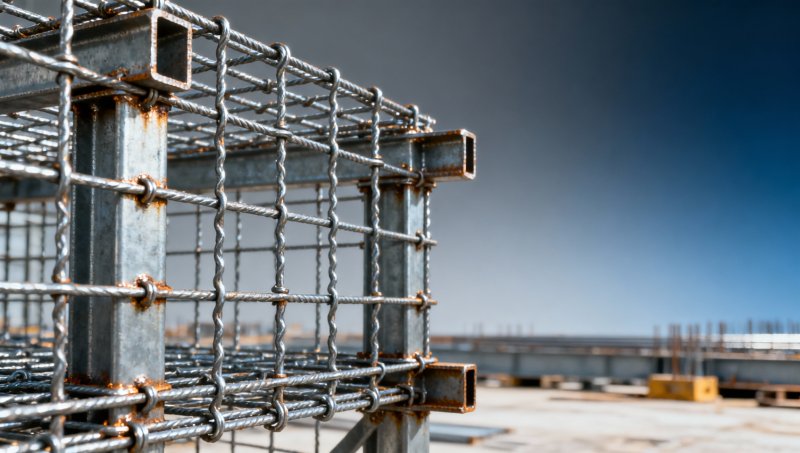
Early wire mesh failure is usually not caused by one factor alone. In most steel construction material applications, it results from a combination of 3 linked issues: environmental exposure, material specification mismatch, and installation practice. Buyers may focus on unit price and delivery, while engineers focus on load and design. The most durable result comes when both sides assess service conditions together before ordering.
Environmental exposure changes the performance requirement immediately. A mesh panel used indoors in dry storage has a very different risk profile from one installed in coastal air, agricultural facilities, chemical surroundings, or semi-open industrial buildings. The same nominal steel may perform acceptably in one site and fail too early in another if the corrosion-resistant finish is not aligned with moisture, salts, or contaminants.
Material selection also goes beyond choosing “steel mesh.” Procurement teams should review base steel quality, coating method, dimensional consistency, and whether the product is designed for static guarding, reinforcement, screening, or structural support. For example, when the application includes framework integration, cold formed sections may provide better load distribution than mesh alone, especially in partitions, support rails, and fabricated assemblies.
Installation mismatch is another overlooked cause. Even good steel products can fail early when support spans are too wide, fasteners are unsuitable, edges are cut without protection, or contact with dissimilar metals accelerates corrosion. In many cases, failure begins at interfaces rather than in the field of the mesh panel itself. This is where project managers and site teams should apply clear installation checklists.
Where structural support profiles help reduce risk
In projects where wire mesh is part of a larger support or enclosure system, choosing the right companion steel section can reduce deformation and extend service life. Mid-project redesign often reveals that mesh needs better framing, more accurate dimensional control, or stronger edge support. In such situations, C-Shaped Steel is commonly considered for machinery frameworks, storage racks, prefabricated buildings, purlins, partition walls, equipment housings, and renewable energy support structures.
This profile is valued because it combines high load-bearing capacity, lightweight yet robust structure, and accurate dimensional control. For technical teams, that means easier integration with mesh, perforated steel, or other steel construction material components. It is also available with galvanized, painted, or hot-dip finishes, which helps match indoor and outdoor corrosion demands while supporting ASTM, EN, JIS, and GB-based project requirements.
For buyers comparing system durability over a 2–4 week procurement cycle, the real question is not just the cost of one component. It is whether the combined structure resists deformation, maintains alignment, and reduces future replacement frequency. In applications such as warehouse shelving systems, production lines, conveyors, and solar panel mounts, well-matched support profiles improve the long-term behavior of the overall assembly.
Three practical causes seen in field evaluation
- Corrosion starts early when coating type does not match outdoor, humid, or chemical exposure.
- Premature bending appears when support spacing and actual load exceed the intended design range.
- Joint failure increases when mesh is installed without stable framing, edge reinforcement, or dimensional accuracy.
The next table compares common failure causes from a sourcing and engineering viewpoint so teams can make a more balanced decision before purchase approval.
This comparison shows why early failure is often a specification problem rather than a simple product problem. When sourcing from an experienced structural steel manufacturer and exporter, buyers can review finish, profile selection, standards, and fabrication suitability in one coordinated process instead of fixing errors after delivery.
How should buyers evaluate wire mesh and related steel construction material before ordering?
A reliable purchasing decision starts with a structured review, not only with price comparison. For procurement staff, technical evaluators, finance approvers, and project leaders, there are usually 4 decision layers: application condition, mechanical demand, compliance requirement, and supply reliability. If one layer is skipped, the chance of early wire mesh failure increases, especially in projects with tight installation windows or strict inspection procedures.
Application condition should be defined first. Ask whether the material will be used indoors, outdoors, semi-exposed, or in contact with moisture, chemicals, or frequent cleaning. Then define whether the mesh serves for guarding, screening, reinforcement, separation, enclosure, or support integration. These distinctions matter because a product suitable for light partitioning may not be suitable for industrial protection or heavy-use framing zones.
Mechanical demand should be reviewed through practical performance indicators rather than general claims. Buyers should check deformation resistance, load behavior, section stability, and compatibility with fasteners or support members. If the system includes cold formed profiles, steel beams, angle steel, or channels, dimensional coordination becomes especially important. A tolerance issue of even a small range can create site fitting delays across dozens or hundreds of units.
Compliance and supply reliability should be evaluated together. Projects serving North America, Europe, the Middle East, or Southeast Asia often require alignment with ASTM, EN, JIS, or GB standards depending on application and buyer expectations. At the same time, stable production capacity, consistent lead time, and clear quality control are essential. For many B2B buyers, dependable delivery over 2–6 weeks can be as important as the steel specification itself.
A practical 5-point procurement checklist
- Confirm the service environment, including humidity, outdoor exposure, and contact risks.
- Match the steel product to the actual function, not only to the drawing title.
- Review dimensional control, flatness, and connection compatibility before approval.
- Check applicable standards such as ASTM, EN, JIS, or GB for the target market.
- Ask the supplier about production consistency, coating options, and realistic delivery schedule.
Questions that reduce sourcing risk
Before placing an order, business evaluators and project managers should ask 6 practical questions: What is the expected service environment? Which finish is recommended? What tolerances are controlled? Is the material suitable for load-bearing support or only for enclosure use? What standards are referenced? What is the expected production and shipping lead time? These questions often reveal whether the supplier understands real project needs.
Hongteng Fengda supports this process by supplying structural steel products and customized solutions for construction, industrial, and manufacturing projects. With modern manufacturing facilities and strict quality control, the company helps global buyers reduce sourcing risk, align materials with application requirements, and plan around dependable lead times instead of reactive replacement after failure.
What standards, coatings, and service practices help prevent premature steel failure?
Preventing early failure in wire mesh and related steel components depends on a combination of specification discipline and supply-side execution. In steel projects, the best results usually come from 3 coordinated actions: choosing a suitable base material, selecting the correct surface treatment, and controlling fabrication quality. None of these should be evaluated in isolation because performance on site depends on how all three work together.
Standards matter because they create a common language between engineering, purchasing, inspection, and export documentation. Depending on destination market and product category, buyers often refer to ASTM, EN, JIS, or GB. These standards do not remove the need for project-specific review, but they help define expectations for dimensions, material properties, and manufacturing consistency in cross-border supply chains.
Coating and surface treatment should be selected according to use conditions. Galvanized, painted, and hot-dip finishes each have their place. For indoor dry applications, a basic protective system may be acceptable. For outdoor structures, agricultural facilities, transport infrastructure, or renewable energy installations, a stronger corrosion-resistant approach is often justified. The wrong finish may look acceptable at delivery but become the first source of failure during service.
Service practice is the final control point. Even a suitable steel product can underperform if documentation is incomplete, inspections are rushed, or installation guidance is missing. Strong suppliers usually support buyers with parameter confirmation, finish selection, OEM discussion, production planning, and shipment coordination. This is particularly useful for distributors, contractors, and project owners managing mixed product categories in one order cycle.
Common prevention measures used in real projects
- Review material and coating choice before final quotation, not after production starts.
- Set an incoming inspection routine covering appearance, dimensions, finish, and fit-up.
- Use support members with accurate dimensional control in fabricated assemblies.
- Plan periodic site checks every quarter in aggressive service environments.
FAQ for buyers, engineers, and project teams
How do I know whether corrosion is the main reason for early mesh failure?
If rust appears first at welds, cut edges, or contact points, corrosion is often the primary cause. This is especially likely in outdoor, humid, or chemical-prone areas. Review the exposure level, finish type, and inspection interval. If the mesh was specified only as general steel without a coating requirement, the original purchase description may have been too broad.
What should be checked before approving a steel mesh or support profile supplier?
Check 5 items first: manufacturing capability, quality control process, supported standards, coating options, and delivery reliability. Then ask whether the supplier can assist with custom dimensions, OEM requirements, or matching products for a complete structural assembly. This helps avoid sourcing from multiple parties without coordination.
Is lower price always a higher risk in steel construction material sourcing?
Not always, but low price without clear specification usually creates risk. A lower-cost offer can be reasonable if the material, dimensions, finish, and compliance basis are clearly defined. The problem begins when quotes compare unlike products. Finance teams should review total cost across purchase, transport, installation, maintenance, and probable replacement interval.
How long is a typical lead time for structural steel supply?
Lead time depends on standard or custom requirements, finish type, order volume, and export destination. In many practical cases, buyers review a 2–6 week production window for standard items, while customized structural steel assemblies may require additional coordination. The key is to confirm schedule at quotation stage rather than after drawing approval.
Why work with a structural steel manufacturer that understands both product and project risk?
When wire mesh fails too early, the lesson is usually bigger than one damaged component. It shows that sourcing, engineering, and application planning were not fully aligned. For buyers and project teams, the safer approach is to work with a structural steel manufacturer that can support both standard steel supply and customized solutions across multiple use scenarios, from building supports to machinery frameworks and renewable energy infrastructure.
Hongteng Fengda provides angle steel, channel steel, steel beams, cold formed steel profiles, and customized structural steel components for global construction, industrial, and manufacturing projects. With modern manufacturing facilities and strict quality control, the company supports customers who need reliable specifications, consistent product quality, and practical communication across technical review, procurement, and export coordination.
For distributors, contractors, OEM buyers, and end users, the advantage is not only supply availability. It is the ability to discuss application fit, finish options, compliance expectations, and lead-time planning before the order is locked. That reduces sourcing risk, avoids avoidable rework, and improves cost control over the full project cycle rather than only at purchase stage.
If you are comparing steel construction material options for a new project or trying to solve premature failure in an existing one, you can contact Hongteng Fengda for parameter confirmation, product selection support, coating and finish discussion, standard and certification alignment, sample support, delivery schedule review, OEM customization, and quotation communication. A clearer specification at the beginning usually prevents the earliest failures from showing up later.
Please give us a message


Please enter what you want to find