When comparing angle vs channel steel for structural framing, the real difference lies in load behavior, connection efficiency, and project cost. For project managers and engineering leaders, choosing the right section can directly affect fabrication speed, structural stability, and procurement risk. This guide explains how angle and channel steel perform in practical applications, helping you make a more reliable and cost-effective framing decision.
How angle vs channel steel for structural framing changes project outcomes
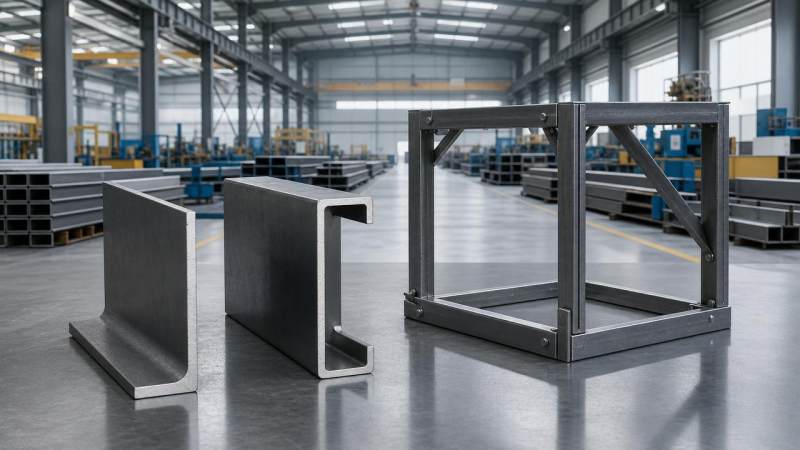
In structural framing, angle steel and channel steel may appear interchangeable at first glance, but they behave differently once loads, joints, and site conditions are considered. For project managers, that difference often shows up in fabrication hours, erection sequence, and long-term maintenance.
Angle sections are simple, versatile, and widely used in bracing, secondary framing, support frames, and connection components. Channel sections offer a more directional profile and are commonly selected for members that need better bending performance along one axis.
The key issue is not which shape is generally better. The better question is this: under your project’s load path, connection detail, standard requirement, and budget target, which section reduces total risk?
- Angle steel is often easier to adapt in simple frames, bracing assemblies, supports, and retrofit work.
- Channel steel is often preferred when greater stiffness and cleaner web-based connections are needed.
- The final decision should include fabrication method, hole layout, galvanizing or coating requirements, and available section sizes.
Why this comparison matters to project managers
Engineering teams may focus on structural calculations, but project leaders must balance design practicality with procurement reality. A section that works on paper can still cause issues if supply is unstable, weld access is poor, or the connection design increases workshop time.
This is why the angle vs channel steel for structural framing decision should be reviewed early, ideally before the bill of materials is fixed. Early alignment reduces revision cycles and helps avoid material substitutions under schedule pressure.
Angle steel vs channel steel: what are the practical structural differences?
The table below gives a practical comparison of angle and channel steel in framing applications. It focuses on the points most relevant to engineering coordination, fabrication planning, and material sourcing.
This comparison shows why angle vs channel steel for structural framing is rarely a purely geometric question. It is a coordination decision involving structural demand, fabrication simplicity, and supply chain consistency.
Load path and stability
Angle steel performs well in tension members, light braces, and support details where compact geometry is useful. However, because the shape is not symmetric in the same way as some other sections, eccentricity and orientation need careful attention in design and installation.
Channel steel often provides better stiffness in applications such as side rails, edge framing, equipment supports, and members subjected to directional bending. Its web gives a clear load path, which can simplify some connection layouts and improve practical constructability.
Fabrication and site handling
For workshops handling mixed framing packages, angle steel can reduce complexity in lighter assemblies because cutting, drilling, and fitting are straightforward. Channel steel may require slightly more planning for orientation, but it can reduce the number of added stiffening pieces in some applications.
Which applications are better for angle steel and which fit channel steel?
Selection becomes easier when the framing use case is clearly defined. The following table helps project teams judge angle vs channel steel for structural framing across common industrial and construction scenarios.
The pattern is clear. Angle steel usually wins in simpler, lighter, and more connection-driven details. Channel steel becomes stronger in cases where member stiffness, repetitive support function, or cleaner bolt access matters more.
A useful rule for fast project screening
- Choose angle steel first when the member acts mainly as a brace, clip, seat, or compact support.
- Choose channel steel first when the member acts as a rail, edge frame, or support with clear directional bending.
- Recheck both options when corrosion protection, welding access, or local stock availability affects total project cost.
What should buyers evaluate beyond section shape?
Many framing delays do not come from incorrect engineering assumptions. They come from overlooked procurement details such as tolerances, coating sequence, mill standard, and packaging for export shipment. That is where experienced supply partners add value.
Hongteng Fengda supplies angle steel, channel steel, steel beams, cold formed profiles, and customized structural steel components for global projects. For buyers working across ASTM, EN, JIS, and GB requirements, practical support during section selection can reduce mismatches between design intent and delivered material.
Mid-project detail: when complementary materials also matter
Some framing packages include more than load-bearing members. Screens, filters, protective partitions, ventilation covers, or architectural infill panels may also be required in industrial facilities. In such cases, matching the support frame with corrosion-resistant mesh products can improve lifecycle performance.
For projects that also involve filtration, screening, or enclosure elements, 306 Stainless Steel Welded Mesh can be inserted into the material plan as a complementary product. It is produced from stainless steel wire in grades such as SS 201, 304, 304L, 316, 316L, and 430, with diameter ranges from 0.0008″ to 0.12″ and mesh options from 2 to 635 mesh.
Its applications include filters, sieve systems, chemical industry equipment, mining use, architecture, and residential components. For project teams, the value is not in mixing unrelated products, but in consolidating industrial material sourcing when structural framing and corrosion-resistant mesh are both needed in one package.
Procurement checklist for framing steel
- Confirm the governing standard before quotation, especially where ASTM, EN, JIS, or GB equivalency is under review.
- Check whether the member will be galvanized, painted, or delivered black steel, because surface treatment affects hole quality, rework, and lead time.
- Review section orientation in drawings to avoid ordering a theoretically equivalent but fabrication-unfriendly substitute.
- Ask for realistic mill and fabrication lead times rather than relying only on material availability claims.
- Where OEM components are needed, align tolerances, drilling patterns, and marking requirements before production starts.
How do cost, lead time, and risk differ in angle vs channel steel for structural framing?
The cheapest section by unit price is not always the lowest-cost framing option. Total cost should include processing, scrap, welding hours, transport density, coating treatment, and the chance of design revision after procurement.
The table below summarizes how project teams can compare commercial factors when evaluating angle vs channel steel for structural framing.
For most projects, the smart approach is to compare total installed cost rather than section price alone. A slightly heavier or more expensive section may still save money if it reduces welding, gusset plate count, or installation time on site.
Where sourcing risk usually appears
Risk often appears when buyers approve a section without confirming standard equivalence, processing capability, or export packing requirements. This is especially relevant for international projects where multiple design offices, contractors, and regional standards must align.
A manufacturer with stable production capacity and strict quality control can help reduce those gaps. That matters when your target is not just buying steel, but completing framing packages on schedule with fewer disputes over dimensions and compliance documents.
What standards and compliance points should be checked?
For exported structural steel, compliance is not only about the nominal section. Buyers should confirm material grade, dimensional tolerance, section designation, chemical and mechanical expectations, and any project-specific inspection requirement.
- Check whether the project references ASTM, EN, JIS, or GB, and do not assume one standard can be replaced without technical review.
- Confirm whether mill test documentation, coating reports, or third-party inspection may be requested by the contractor or owner.
- Review tolerances for cut length, hole position, and straightness if the framing package includes pre-fabricated assemblies.
Hongteng Fengda supports global buyers with standard specifications and OEM solutions across structural steel categories. This is useful when the project needs not only raw sections, but also processed framing components aligned with schedule and drawing requirements.
FAQ: practical questions buyers ask before choosing
Is angle steel always cheaper than channel steel for structural framing?
Not always. Angle steel may have a lower material cost in many light-duty uses, but total project cost depends on connection design, required stiffness, labor hours, and whether additional plates or stiffeners are needed. In some frames, channel steel lowers overall cost by simplifying the member function.
Which section is better for fast-track industrial projects?
It depends on the framing role. For secondary supports, braces, and connection pieces, angle steel is often faster to process. For repetitive support lines, rails, and directional load members, channel steel may shorten installation because the geometry is easier to align and connect.
What is the most common mistake in angle vs channel steel for structural framing?
The most common mistake is evaluating only section size and weight while ignoring connection efficiency and orientation. A section can meet the strength target yet still create fabrication delays, bolt access issues, or coating complications if the detail was not reviewed from a production perspective.
How early should procurement teams join the section selection process?
Ideally before the structural package is frozen. Early procurement review helps verify stock availability, standard matching, coating sequence, and processing feasibility. This reduces late substitutions and protects the schedule, especially in international sourcing.
Why choose us for structural framing supply and project support?
For project managers comparing angle vs channel steel for structural framing, the real need is not only product supply. It is dependable coordination across specification, production, quality control, export delivery, and customization. Hongteng Fengda provides structural steel products and tailored solutions for construction, industrial, and manufacturing projects across global markets.
Our product range includes angle steel, channel steel, steel beams, cold formed steel profiles, and customized structural steel components. With modern manufacturing facilities and controlled production processes, we support buyers that need stable supply, consistent quality, and practical communication for international orders.
You can contact us to discuss specific section parameters, project drawings, applicable standards, delivery schedules, OEM processing, coating requirements, sample support, and quotation planning. If you are still deciding between angle and channel sections, we can help review the framing application and align the choice with cost, lead time, and compliance needs.
Please give us a message


Please enter what you want to find