Round steel wire is widely used across construction, manufacturing, and industrial fabrication thanks to its strength, versatility, and broad size range. For buyers researching materials, understanding the common applications and basic sizing of round steel wire is essential for choosing the right specification, controlling costs, and ensuring reliable project performance.
What Is Round Steel Wire and Why Does Size Matter?
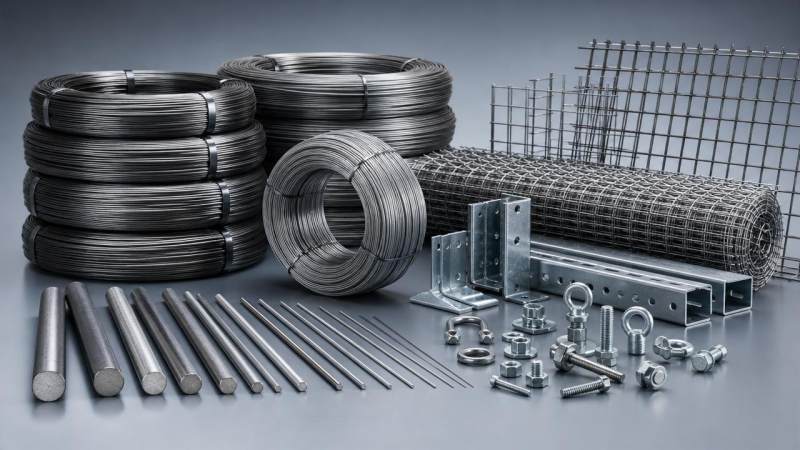
In the steel industry, round steel wire usually refers to solid wire with a circular cross-section, produced in carbon steel, alloy steel, stainless grades, or coated versions depending on the end use. It may be supplied in coils, cut lengths, or further processed into mesh, fasteners, springs, ties, nails, and reinforcement accessories.
For information-stage buyers, the challenge is not only identifying the product name but also understanding how diameter, tolerance, surface condition, mechanical properties, and processing method affect performance. A wire that works well for binding may be completely unsuitable for drawing, welding, or load-bearing applications.
Size matters because it influences tensile capacity, flexibility, forming behavior, weight per coil, coating consumption, and downstream fabrication efficiency. Even a small change in diameter can alter purchasing cost, handling convenience, and the final durability of the part or assembly.
- Smaller diameters are easier to bend, twist, and weave, making them common in binding, mesh, and light fabrication.
- Medium diameters often serve in general manufacturing, fencing, hanger systems, and welded products.
- Larger diameters are more relevant where rigidity, structural support, or higher mechanical resistance is required.
Where Is Round Steel Wire Commonly Used?
Round steel wire appears in many sectors because it can be formed, welded, coated, and cut into different products. The exact application depends on the required strength, corrosion resistance, finish, and dimensional consistency. Buyers should begin with the operating environment, then narrow down the wire grade and size.
The table below helps connect common round steel wire applications with practical sizing logic and selection concerns. This is useful when comparing supplier quotations or checking whether a proposed wire specification matches the real service condition.
A useful takeaway is that round steel wire is rarely selected by diameter alone. Application environment, forming method, coating requirement, and downstream process all influence whether plain, annealed, high-carbon, galvanized, or specialty wire is the better choice.
Construction and infrastructure use
In construction, round steel wire is commonly used for tying reinforcing bars, securing temporary supports, producing mesh, and supporting light structural assemblies. In these scenarios, buyers often prefer easy-to-handle coils, stable ductility, and dependable supply volume, especially when labor efficiency on site matters.
Manufacturing and metalworking use
Manufacturers use round steel wire for wire forms, baskets, shelves, hooks, stamped accessories, and welded fabrications. Here, surface consistency and forming behavior are often more important than raw material price alone. If wire cracks during bending or varies in diameter, downstream scrap rates can rise quickly.
Outdoor and corrosive service
For fencing, agriculture, marine-adjacent projects, or humid environments, coating becomes a major decision factor. In many supply chains, round steel wire is selected alongside coated sheet or profile materials to maintain comparable corrosion resistance across the full project system.
For buyers who also source complementary steel materials for enclosures, roofing, equipment housings, or fabrication parts, Galvanized Steel Sheet can be a practical pairing option. Common grades such as DX51D, SGCC, DX52D, and S250GD are used across construction, industry, transportation, and light manufacturing, with thickness from 0.12mm to 6.00mm and width from 600mm to 1500mm. Its resistance to atmospheric corrosion, forming convenience, and compliance with standards such as ASTM, EN, JIS, and GB help buyers build more consistent procurement plans when a project includes both wire-based and sheet-based steel components.
How Are Round Steel Wire Sizes Usually Understood?
When people ask about round steel wire size basics, they usually mean diameter first. However, professional sourcing also requires attention to coil weight, tolerance range, unit weight, tensile level, and surface finish. These factors affect both the usability of the wire and the real landed cost.
The table below summarizes the main size-related terms buyers should confirm before placing an order for round steel wire. This can reduce misunderstandings between technical teams, purchasing departments, and overseas suppliers.
A buyer comparing quotations should verify whether the offer is based on nominal diameter only or includes tolerance, coating, and mechanical property requirements. Two round steel wire offers may look similar in price but differ significantly in processing yield and field performance.
Common size logic in real purchasing
Smaller wire is generally selected for flexibility and fine fabrication. Medium sizes often balance strength and workability. Larger sizes tend to support heavy-duty industrial functions. The best approach is to map the wire size to the actual forming method and service load rather than choosing only by habit or past project memory.
How to Choose the Right Round Steel Wire for Your Project
Information-stage buyers often know the end product but not the exact wire requirement. A practical selection method is to define the application, then narrow the specification through environment, processing route, compliance need, and supply risk. This reduces costly revisions after the order is placed.
A practical selection checklist
- Clarify the end use: binding, welding, forming, spring making, fencing, or structural support.
- Define the environment: indoor dry use, outdoor exposure, high humidity, or corrosive contact.
- Confirm the process: manual handling, automatic feeding, bending, welding, drawing, or heat treatment.
- Check dimensional and mechanical requirements: diameter tolerance, strength level, elongation, and coating.
- Review logistics needs: coil size, packing method, destination port, and lead time expectations.
This process is especially important for overseas procurement. A supplier may be able to produce round steel wire in several variants, but the correct match depends on how precisely the buyer explains the use case and acceptance criteria.
Questions worth asking before requesting a quote
- Is the wire for direct use, or will it be further drawn, welded, or coated?
- Do you need compliance with ASTM, EN, JIS, GB, or another project standard?
- Will a plain carbon steel wire be sufficient, or is galvanized or higher-strength material required?
- What level of diameter consistency is necessary for your equipment or finished product?
Round Steel Wire vs Other Steel Forms: What Changes the Decision?
Buyers often compare round steel wire with rods, bars, strips, and sheet-based fabricated parts. The decision depends on whether the project values flexibility, shaping ease, coil-based supply, or larger rigid sections. Understanding these differences helps avoid over-specifying material and raising total cost.
The comparison below is useful when evaluating whether round steel wire is the right starting material or whether another steel format may deliver better fabrication efficiency.
In many projects, round steel wire is not a standalone decision. It is one material in a broader steel package that may also include structural sections, profiles, and coated sheet products. A supplier with wider steel manufacturing and export experience can often help align these items for more consistent quality and delivery planning.
What Standards, Quality Checks, and Sourcing Risks Should Buyers Watch?
For global buyers, quality risk usually comes from mismatched specifications rather than obvious defects. A round steel wire order can fail if the diameter tolerance is unclear, the coating requirement is not defined, or the tensile range does not match the intended forming process.
Key points to verify
- Applicable standards: confirm whether ASTM, EN, JIS, or GB references are required by the project or market.
- Material grade: identify carbon content or special performance needs before finalizing the order.
- Inspection scope: define whether checks cover diameter, coil weight, surface quality, tensile properties, and coating mass.
- Packing and shipment: ask how the wire is protected from rust, deformation, and transport damage during export.
Hongteng Fengda supports global buyers with structural steel manufacturing and export experience across North America, Europe, the Middle East, and Southeast Asia. For customers handling multiple steel categories, this matters because specification control, packing coordination, and lead-time reliability often affect project cost as much as unit price does.
FAQ: Common Questions About Round Steel Wire
How do I choose round steel wire diameter if I only know the application?
Start with the process requirement. If the wire must bend easily, feed through automated equipment, or be woven into mesh, smaller diameters are usually considered first. If the wire must provide more rigidity or support, larger diameters may be needed. A supplier can help narrow the range once you provide the end use, environment, and processing method.
Is galvanized round steel wire always the best choice for outdoor use?
Not always, but it is often a practical choice. Outdoor service involves different levels of humidity, pollution, and mechanical wear. Galvanized wire improves resistance to atmospheric corrosion, yet the appropriate coating level depends on service life expectations and cost targets. In some applications, plain wire with additional finishing or a different alloy may also be considered.
What is the most common mistake when sourcing round steel wire?
The most common mistake is specifying diameter only. Buyers should also define tolerance, mechanical properties, surface finish, packaging, and intended processing route. Without these details, the received wire may be technically acceptable in general terms but still unsuitable for efficient production.
Can one supplier support both round steel wire and other structural steel products?
Yes, and that can simplify procurement. Buyers managing construction or industrial projects often need sections, beams, channels, cold formed profiles, and other steel components together with wire-related items. Working with a supplier experienced in broader steel solutions can reduce communication gaps, improve consistency, and help coordinate shipment planning.
Why Work With a Professional Steel Export Partner?
For research-stage buyers, the goal is not just to find round steel wire but to confirm what specification will actually perform well and arrive on schedule. That requires more than a catalog. It requires practical support on standards, processing suitability, customization, and export coordination.
Hongteng Fengda is a professional structural steel manufacturer and exporter from China, supplying angle steel, channel steel, steel beams, cold formed steel profiles, and customized structural steel components. With modern manufacturing facilities and strict quality control, the company supports global buyers seeking stable production capacity, consistent quality, and dependable lead times.
What you can discuss with us
- Round steel wire application matching based on your actual use scenario and budget target.
- Specification confirmation for diameter, coating, processing route, and relevant standards.
- Coordination of related steel products for one project, including structural sections and coated materials.
- Lead time planning, export packing, sample support, and quotation communication for global orders.
- Customized solutions for OEM requirements or project-based sourcing with multiple steel categories.
If you are comparing options for round steel wire, a clear technical discussion at the inquiry stage can save time, reduce sourcing risk, and improve total project efficiency. You can contact us to review parameters, selection ideas, delivery schedules, customization needs, certification expectations, and sample arrangements before moving to final quotation.
Please give us a message


Please enter what you want to find