Five Common Design Mistakes When Selecting Hot Rolled I Beam for Building Projects
Selecting the right Hot Rolled I Beam for structural support is crucial to ensuring safety, stability, and cost efficiency in any construction project. Many professionals—whether sourcing from Shandong steel for shipbuilding industry or considering C section steel for trailer manufacturing—often overlook critical design factors that affect long-term performance. In this article, Hongteng Fengda, a leading Structural Steel Manufacturer & Exporter from China, explores five common design mistakes and practical ways to avoid them, helping you make informed decisions for steel structure construction for stadiums and other demanding applications.
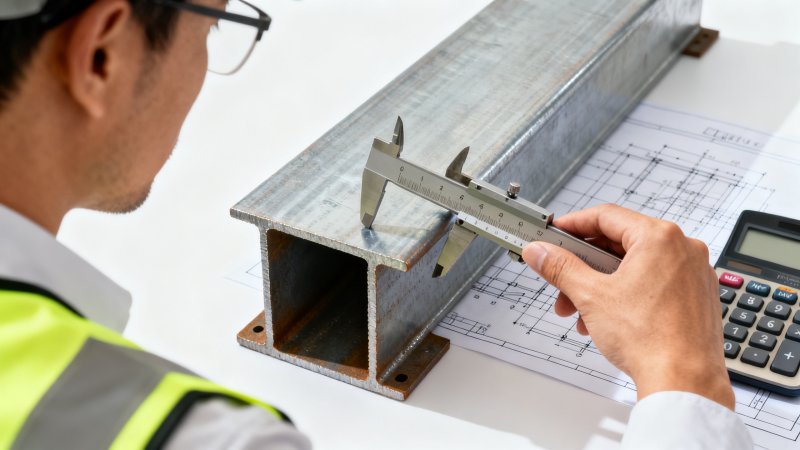
1. Ignoring Load Path and Beam Span Calculations
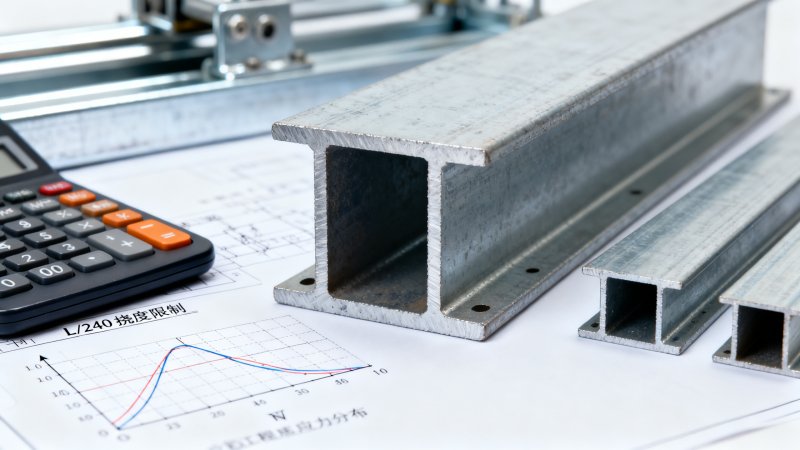
The first and most common design mistake when selecting a Hot Rolled I Beam is failing to perform accurate load path and span analysis. Engineers sometimes rely on generic tables or outdated assumptions, resulting in underdesigned or overdesigned members. An I beam designed without considering full load distribution may experience deflection beyond the allowable limit of L/240 or L/360, leading to excessive vibration or cracking in the floor system.
To mitigate this, load calculation must consider live load, dead load, and environmental factors such as wind or seismic forces. For instance, a 12 m beam supporting 20 kN/m distributed load will require a section modulus of at least 1,200 cm³ to maintain stiffness under service conditions. Even a 10% miscalculation can lead to a 25% reduction in load capacity, which significantly affects the structure’s life span.
Advanced finite element modeling (FEM) can be used to verify the relationship between stress concentration and beam performance. Hongteng Fengda recommends verifying each beam type through ASTM A6 or EN 10025 tolerance requirements before installation. Additionally, ensure that splice length and bearing plate design comply with the project’s load class—usually Class 2 for commercial buildings or Class 3 for large-span stadiums.
Practical Checkpoints:
- Calculate effective span considering end restraints and bearing conditions.
- Check deflection limits according to local codes (e.g., 1/240 span ratio).
- Compare section modulus (Sx) and moment of inertia (Ix) across alternative grades like Q235B, Q345B, and S355.
- Perform a 3D load simulation for beams longer than 9 m.
Proper load path design not only guarantees structural performance but also minimizes unnecessary steel consumption by about 5–8%, leading to better cost efficiency during mass procurement.
2. Overlooking Material Grade and Section Compatibility
Choosing the correct material grade is often underestimated. A mismatch between design strength and actual steel grade can compromise safety. For example, substituting S235 for S355 may reduce the yield strength by nearly 45%, resulting in structural instability under dynamic loads. In multi-story projects, yield strength differences beyond 30 MPa can be decisive for column-beam joint integrity.
Below is a comparative table summarizing popular Hot Rolled I Beam material grades and their recommended applications in building projects worldwide.
As the table shows, higher-strength materials are better suited for applications involving long spans, high dynamic loads, or dead load reduction requirements. Hongteng Fengda’s process control ensures tolerances as low as ±1%, while complying with CE and ISO standards to ensure consistent quality across batches.
3. Neglecting Connection and Welding Design
Even with the correct beam section, improper connection detailing can undermine performance. Around 60% of beam failures during stress testing occur at joints due to poor welding geometry, insufficient penetration, or incorrect plate thickness. Especially for large-span trusses, continuous fillet welds with throat thickness of 6 mm–10 mm are typically required under 400 MPa stress conditions.
Design engineers must verify compatibility between Hot Rolled I Beams and supplementary members such as channels, purlins, or Z-beam. Since the Z-shaped steel profile often functions as a secondary purlin in lightweight roof structures, its thickness (commonly 6–25 mm) and tolerance (±1%) must align with the load class of main beams. This integrated approach prevents misalignment and reduces project assembly time by up to 20%.
The table below demonstrates how connection design affects weld efficiency and load-bearing capacity under variable load cycles.
By aligning welding type and joint design with the project’s functional category, fabricators can achieve consistent performance under loading cycles exceeding 1 × 10⁶ cycles, minimizing fatigue failure risks.
4. Ignoring Corrosion Protection and Surface Treatment
Another costly mistake involves inadequate corrosion control. Over 30% of premature structural deterioration in coastal projects originates from insufficient coating thickness or poor surface preparation. For Hot Rolled I Beams, corrosion allowance of at least 0.3 mm is typically recommended for environments with humidity above 70%.
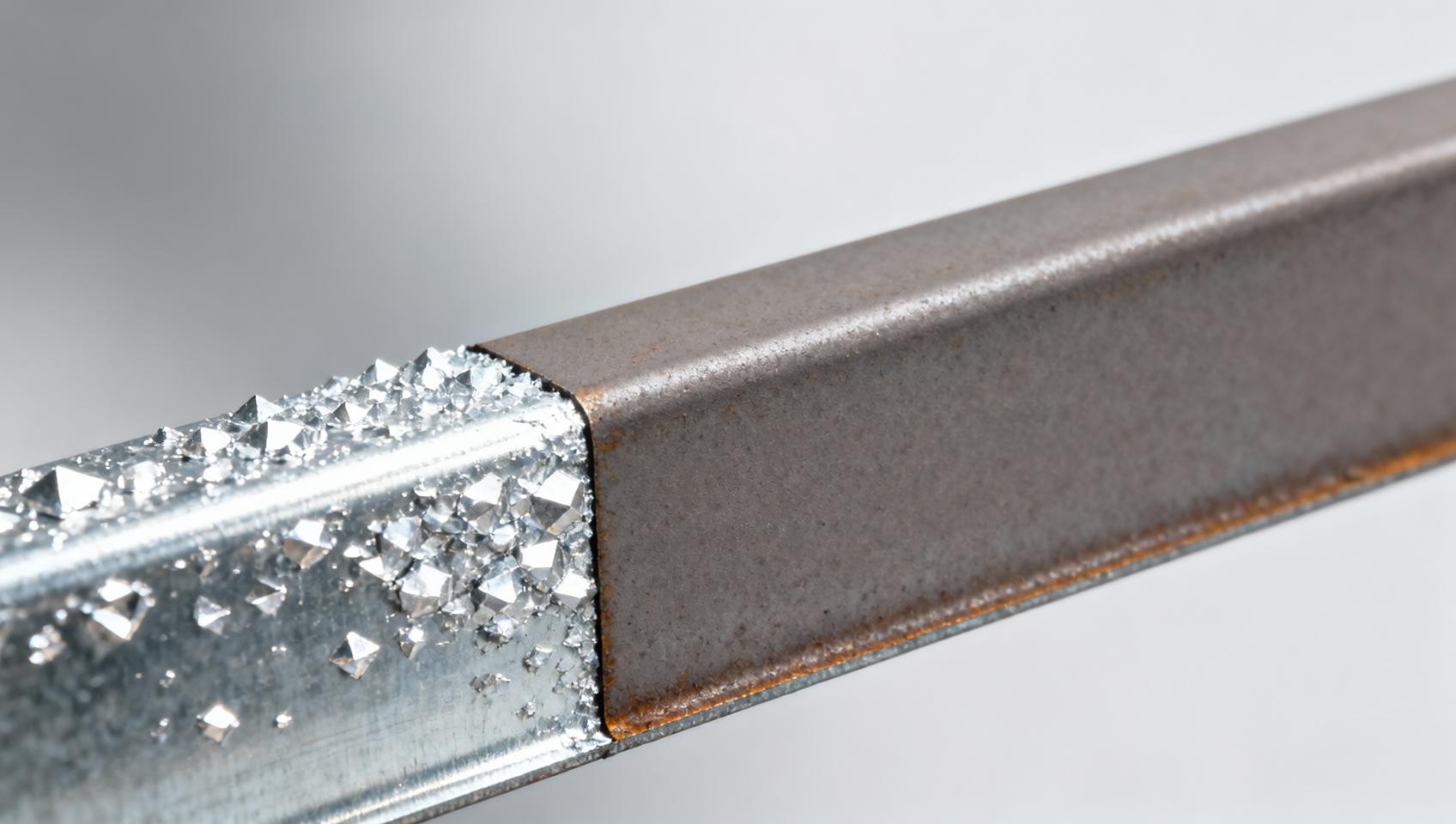
Hongteng Fengda offers galvanized and zinc-coated options for its full range of structural sections, ensuring resistance against atmospheric and chemical corrosion. Similarly, complementary members such as the galvanized Z-beam are manufactured using roll-forming technology and conform to SGS and BV certification standards. Such integration ensures surface uniformity when beams are used in steel workshops or roof purlin systems.
Surface protection should follow three basic steps:
- Shot-blasting to achieve Sa2.5 cleanliness.
- Application of primer coating (40 μm minimum dry film thickness).
- Hot-dip galvanizing or zinc spraying up to 70–100 μm total coating thickness.
Each of these treatments enhances life span by 10–15 years, reducing maintenance requirements and ensuring compliance with ISO 12944 corrosion protection standards.
5. Overlooking Manufacturing Tolerance and Quality Control
Tight tolerance control is vital for structural reliability. Even a 2 mm deviation in flange thickness may lead to 5% eccentricity during assembly, complicating site welding. Many designers neglect to verify manufacturing tolerance against ASTM A6/A6M or EN 10024, especially when sourcing beams from multiple suppliers.
Hongteng Fengda enforces dimensional tolerance within ±1%, verified through ultrasonic inspection and third-party certification. Each Hot Rolled I Beam undergoes visual inspection, straightness check (≤3 mm per meter), and ultrasonic testing up to Level C quality class. For projects demanding customized profiles or longer spans (up to 12 m), OEM production allows flexibility while maintaining consistency in mechanical properties.
The following checklist outlines essential quality verification steps before delivery:
- Dimensional check: length 2–12 m according to order specification.
- Straightness: deviation ≤0.3% of beam length.
- Chemical composition analysis per ASTM A36 or Q345B.
- Weld and coating inspection prior to final packaging.
Such consistent quality assurance ensures predictable performance at site assembly, shortening erection time by nearly 15% and minimizing rework frequency during onsite adjustment.
FAQ: Practical Guidance for Engineers and Procurement Managers
How do I choose between a Hot Rolled I Beam and other profiles like H-beam or channel steel?
Hot Rolled I Beams are ideal for longer spans (6–12 m) and applications requiring high bending resistance, while H-beams are preferred for heavier axial loads. Channel steels suit smaller secondary framing components. Selection depends on moment capacity, spacing, and load uniformity.
What is the standard lead time for customized Hot Rolled I Beams?
For standard sizes, delivery typically takes 10–15 days. Customized or non-standard profiles produced under OEM arrangements may extend to 20–25 days depending on quantity and coating requirements. Hongteng Fengda maintains stable capacity to ensure consistent delivery schedules.
How does coating thickness influence maintenance cost?
A 70 μm zinc coating can double the corrosion resistance time compared to uncoated steel, reducing repaint frequency from every 5 years to every 10 years, thus lowering lifetime maintenance cost by roughly 40% for coastal applications.
Can Hot Rolled I Beams be combined with cold-formed profiles in one structure?
Yes. It’s common to integrate hot rolled beams with cold-formed sections like angles, channels, and Z-shaped purlins in large-scale workshops. The key is ensuring uniform material grade (Q235B–Q345B) and proper load matching to avoid buckling differentials during service.
Conclusion and Next Steps
Selecting the right Hot Rolled I Beam involves more than checking size and price—it requires engineering insight into load behavior, material grade, joint detailing, corrosion protection, and tolerance control. Avoiding the five common mistakes discussed above helps ensure long-term structural safety, efficiency, and cost optimization across construction and industrial projects.
As a trusted Structural Steel Manufacturer & Exporter from China, Hongteng Fengda offers comprehensive support for global buyers, from technical consultation to customized production following ASTM, EN, JIS, and GB standards. Whether you need heavy-load I beams, precision-formed purlins, or integrated fastener systems, our engineering team can provide solutions designed for performance and reliability.
For inquiries about tailored beam solutions, certified quality documentation, or OEM cooperation, contact Hongteng Fengda today to obtain a detailed quotation and engineering recommendation for your next structural project.
- channel steel
- h beam
- Hot Rolled I Beam
- ASTM A36
- structural steel
- Shandong steel
- C section steel
- Steel structure construction
- Structural Steel
- Hot Rolled Beams
- Profile
- Z-beam
- H-beam
- Galvanized
- steel profile
- Steel structure construction for stadiums
- C section steel for trailer manufacturing
- Shandong steel for shipbuilding industry
- Hot Rolled I Beam for structural support
Related recommendations
 Is acero galvanizado para exterior vulnerable to white rust formation during monsoon storage?Acero galvanizado para exterior *is* vulnerable to white rust in monsoons — but it’s preventable. Discover proven storage & handling strategies that protect your structural steel.
 Does ASTM A 36 plate meet impact toughness requirements for low-temperature bridge girders?Does ASTM A 36 plate meet low-temp bridge requirements? Short answer: no—unless specially tested. Discover why toughness matters more than strength in cold climates.
 Does ASTM A653 certification cover both zinc-coated and zinc-iron alloy coated steels?ASTM A653 covers both zinc-coated and zinc-iron alloy coated steels—but they’re not interchangeable. Learn key differences in testing, performance & certification.
 Does acero prepintado require surface pretreatment before welding or cutting?Does acero prepintado require pretreatment before welding or cutting? Discover when grinding is essential—and when it’s not—for safety, weld integrity & corrosion resistance.
Please give us a message


Please enter what you want to find