When sourcing from a carbon steel pipe stockist, verifying documentation before delivery isn’t just procedural—it’s critical for compliance, safety, and project continuity. A reputable carbon steel pipe stockist—like Hongteng Fengda, a certified structural steel manufacturer and exporter from China—must provide traceable, standards-aligned documents including mill test reports (MTRs), material certificates (EN 10204 3.1/3.2), packing lists, commercial invoices, and third-party inspection reports where required. These ensure conformity with ASTM, EN, JIS, or GB specifications—and safeguard your procurement against quality risks, customs delays, or on-site rejection. Whether you’re a procurement officer, project manager, or quality controller, knowing what to request—and why—empowers smarter, faster, and safer steel sourcing.
Why Documentation Integrity Matters More Than Ever in Global Steel Procurement
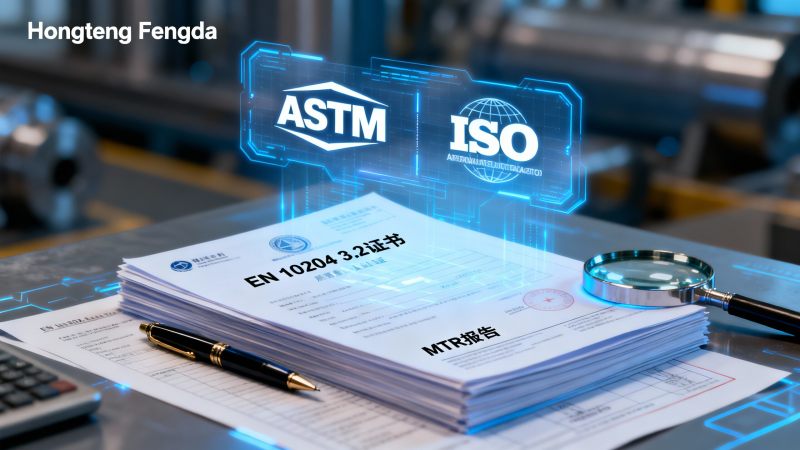
In today’s tightly regulated construction and industrial supply chains, documentation is not ancillary—it’s foundational. A single missing EN 10204 3.2 certificate can halt customs clearance in Rotterdam; an unverified MTR may trigger full retesting at the job site in Dubai—delaying commissioning by weeks. For multinational EPC contractors, inconsistent documentation from a carbon steel pipe stockist introduces cascading liabilities: non-compliance penalties under ISO 9001:2015 Clause 8.5.2, audit failures during ASME Section III inspections, or even contractual breach if material traceability falls short of project spec sheets. Hongteng Fengda addresses this proactively—not as a transactional supplier but as a compliance partner. Every shipment originates from fully accredited production lines certified to ISO 9001, ISO 14001, and ISO 45001, with documented process controls aligned to ASTM A53/A106 and EN 10217-1. Our internal traceability system links each heat number to raw material batch logs, rolling parameters, NDT records, and final dimensional checks—ensuring every document reflects physical reality, not paper compliance. This rigor extends beyond pipes: our Carbon Steel Plate inventory, for instance, carries dual-certification MTRs covering both mechanical properties and chemical composition per SPCC–SPCG grade specifications, enabling seamless integration into automotive chassis or switchboard fabrication where surface finish and tensile consistency are mission-critical.
The Non-Negotiable Core Documents: What You Must Receive—and Verify
A trustworthy carbon steel pipe stockist delivers more than steel—it delivers auditable assurance. Below are the five indispensable documents, with verification checkpoints every professional should apply:
- Mill Test Report (MTR): Not just a printout—this must list actual test results (tensile strength, yield point, elongation, hardness) tied to the specific heat number stamped on the pipe. Cross-check ASTM A53 Grade B requirements: min. 30,000 psi yield, 70,000 psi tensile. Reject generic “typical values.”
- EN 10204 Material Certificate (3.1 or 3.2): 3.1 confirms conformity per order specs; 3.2 adds independent verification. Ensure it references exact standards (e.g., EN 10217-1 P235GH) and includes signatory authority with company stamp—not just a PDF footer.
- Packing List & Commercial Invoice: Must itemize pipe dimensions (OD, WT, length), quantities per bundle, and UN marking for hazardous cargo classification—even for non-hazardous steel, correct HS code (7306.30 for welded carbon pipes) prevents tariff disputes.
- Third-Party Inspection Report (e.g., SGS, BV, TÜV): Required for nuclear, offshore, or pressure vessel projects. Verify inspector’s accreditation scope covers the relevant standard (e.g., ASME BPVC Section V for NDT).
- Origin Certificate (Form A or CO): Essential for preferential tariffs under trade agreements (e.g., ASEAN-China FTA). Must bear Chamber of Commerce seal and match invoice details exactly.
Hongteng Fengda issues all documents digitally via secure portal—with blockchain-backed timestamping for tamper-proof audit trails—and provides bilingual (English/Chinese) versions upon request. This eliminates version control errors common with emailed PDFs.
Beyond Paperwork: How Technical Specifications Anchor Document Validity
Documents gain meaning only when anchored to precise technical parameters. A carbon steel pipe stockist claiming “ASTM A106 compliance” without specifying Grade A/B/C—or omitting hydrostatic test pressure (e.g., 2.5× SMYS for Grade B)—offers hollow assurance. At Hongteng Fengda, every document package maps directly to our manufacturing execution system: pipe OD tolerances per ASTM A53 Table X1 (±1% for ≥NPS 12), wall thickness verification via ultrasonic thickness gauging (not calipers), and surface inspection per API RP 5L3 for seam weld integrity. Similarly, our Carbon Steel Plate documentation specifies SPCE-grade limits (C ≤0.08%, S ≤0.030%) and hardness bands (1/4 hard: 65–80 HRBS), validated through quarterly inter-lab proficiency testing against NIST SRM 2241. This granularity lets quality controllers instantly flag discrepancies—e.g., a reported 0.09% carbon in SPCE violates JIS G3141 outright—preventing costly rework.
Real-World Impact: Case Insights from Global Projects
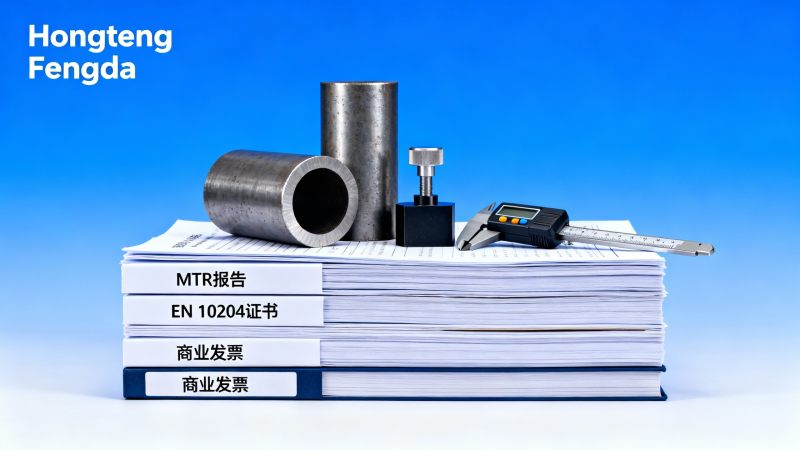
Consider a 2023 LNG terminal project in Qatar: the EPC contractor rejected 127 tons of pipes from an uncertified supplier due to mismatched MTR heat numbers and missing EN 10204 3.2 certification. Delivery slipped 42 days. By contrast, Hongteng Fengda supplied 890 tons of ASTM A672 Gr. C60 pipes for a U.S. power plant with zero documentation exceptions—enabled by our pre-shipment digital document review with the client’s QA team. Another example: a European rail infrastructure project mandated SPCD-grade cold-rolled plates for noise-dampening panels. Our documentation included microstructure analysis reports (per EN ISO 643) confirming ferrite grain size ≤8.0—critical for vibration absorption. Such precision transforms documentation from bureaucratic overhead into a strategic enabler: reducing inspection time by 60%, cutting customs dwell time from 5 days to 8 hours, and eliminating field rejection risk.
Your Action Plan: What to Request, When, and How to Validate
Don’t wait until PO placement. Integrate documentation validation into your sourcing workflow:
- Pre-qualification: Require sample MTRs and EN 10204 certificates from past projects—verify heat number traceability and signatory authenticity.
- PO Stage: Specify required documents in purchase terms (e.g., “EN 10204 3.2 with third-party witness for all lots >5 tons”).
- Pre-shipment: Request digital copies 72h prior; use free tools like ISO 9001 Clause 8.5.2 checklists to audit completeness.
- Receipt: Physically match heat stamps on pipes to MTR numbers; verify dimensional data against packing list using calibrated tools.
As a structural steel manufacturer and exporter, Hongteng Fengda embeds this discipline across 12 global certifications—including CNAS-accredited lab reporting—and offers complimentary documentation gap analysis for new partners. We don’t just ship steel—we ship confidence.
For procurement officers, project managers, and quality leaders seeking zero-document-risk sourcing: partner with a carbon steel pipe stockist that treats paperwork as engineering, not administration. Request your customized documentation checklist and sample MTR package today—contact Hongteng Fengda now.
Related recommendations
 Is acero galvanizado para exterior vulnerable to white rust formation during monsoon storage?Acero galvanizado para exterior *is* vulnerable to white rust in monsoons — but it’s preventable. Discover proven storage & handling strategies that protect your structural steel.
 Does ASTM A 36 plate meet impact toughness requirements for low-temperature bridge girders?Does ASTM A 36 plate meet low-temp bridge requirements? Short answer: no—unless specially tested. Discover why toughness matters more than strength in cold climates.
 Does ASTM A653 certification cover both zinc-coated and zinc-iron alloy coated steels?ASTM A653 covers both zinc-coated and zinc-iron alloy coated steels—but they’re not interchangeable. Learn key differences in testing, performance & certification.
 Does acero prepintado require surface pretreatment before welding or cutting?Does acero prepintado require pretreatment before welding or cutting? Discover when grinding is essential—and when it’s not—for safety, weld integrity & corrosion resistance.
Please give us a message


Please enter what you want to find