Welding angle and channel steel together is common in prefab buildings, bridge construction, and manufacturing facilities—but thermal expansion mismatch poses real risks to structural integrity. As a leading angle vs channel steel exporter China, Hongteng Fengda addresses critical concerns like angle vs channel steel welding compatibility, load capacity comparison, corrosion resistance comparison, and ASTM standards compliance. Whether you're a project manager evaluating materials for Southeast Asia infrastructure or a procurement specialist sourcing from the Middle East, understanding these technical nuances helps mitigate safety, quality, and cost risks—especially under varying thermal conditions.
Why Thermal Expansion Mismatch Matters in Angle vs Channel Steel Welding Compatibility
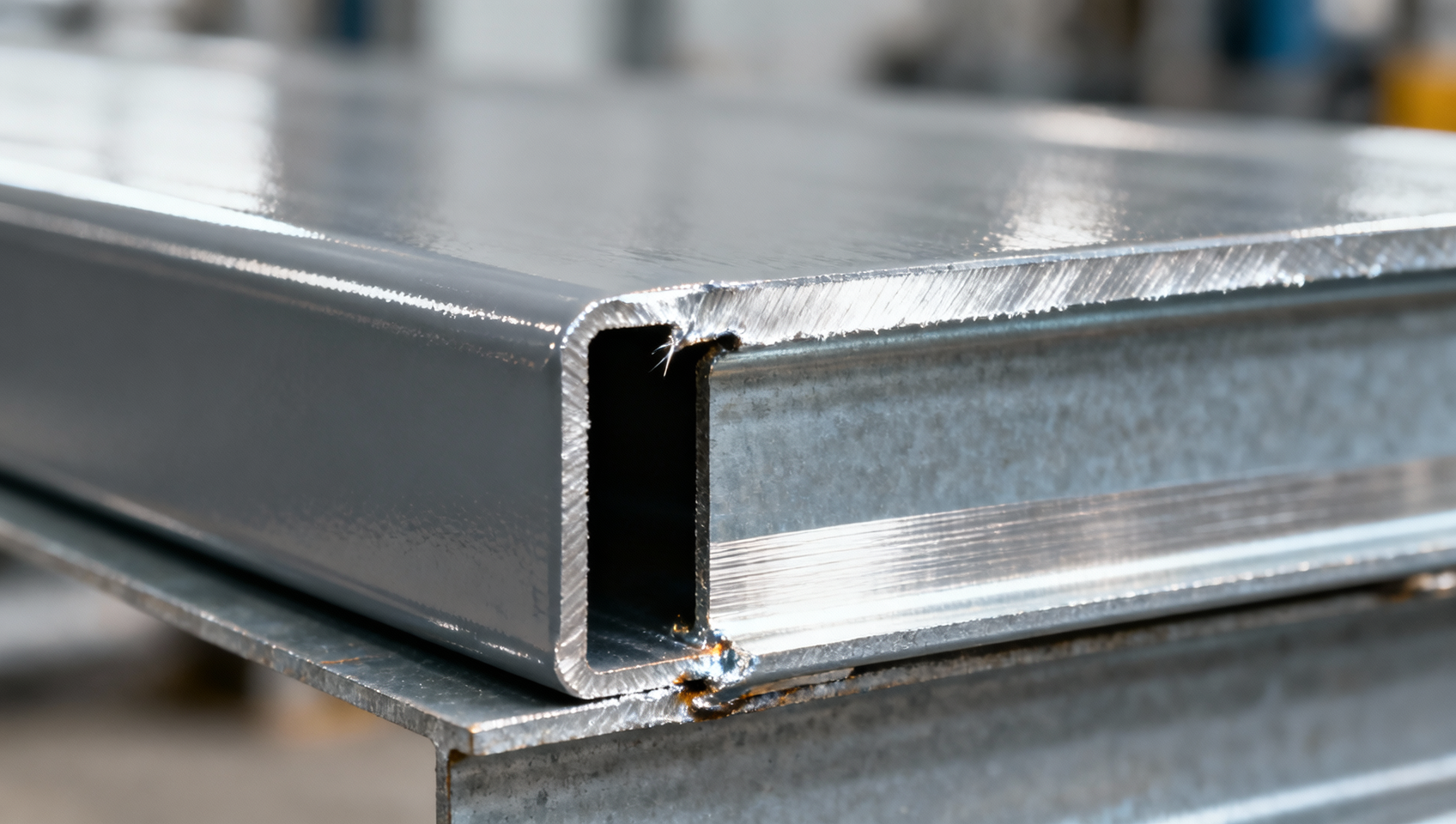
Angle steel (L-shaped) and channel steel (C-shaped) share similar base materials—typically ASTM A36, A572, or EN S275—but differ in cross-sectional geometry, heat distribution paths, and restraint behavior during welding. When joined, their unequal thermal expansion coefficients (α ≈ 12 × 10⁻⁶/°C for carbon steel) become problematic if residual stresses aren’t managed. Uneven heating/cooling cycles across dissimilar section thicknesses (e.g., 6mm leg vs 10mm web) can induce distortion up to ±1.2mm per meter and micro-cracking in HAZ zones—especially without preheat (100–150°C) or interpass temperature control (≤250°C).
This risk intensifies in tropical climates (Southeast Asia) and arid regions (Middle East), where ambient fluctuations exceed 30°C daily. Field welds on exposed structures may experience thermal cycling over 20,000 cycles/year—accelerating fatigue at fusion boundaries. That’s why angle vs channel steel welding compatibility isn’t just about filler metal selection—it’s about joint design, sequencing, and post-weld stress relief.
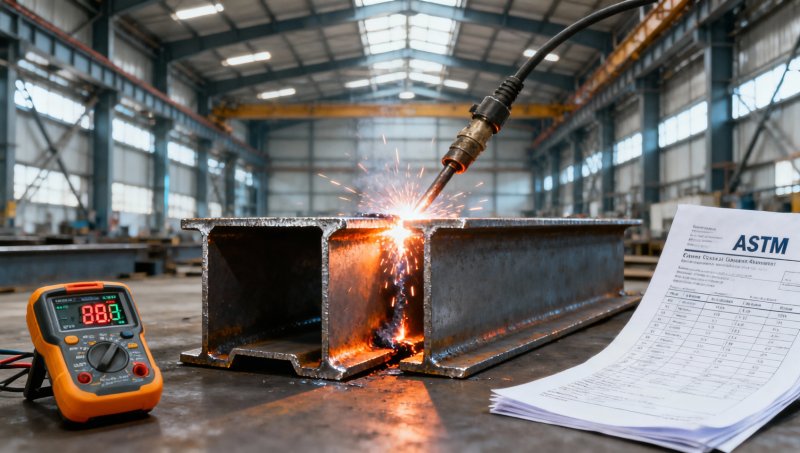
Hongteng Fengda applies ISO 3834-certified welding procedures, with qualified WPS/PQR documentation for each grade combination. We validate all welded assemblies via ultrasonic testing (UT Level II) and guided bend tests per ASTM E1814—ensuring compliance across ASTM, EN, JIS, and GB standards.
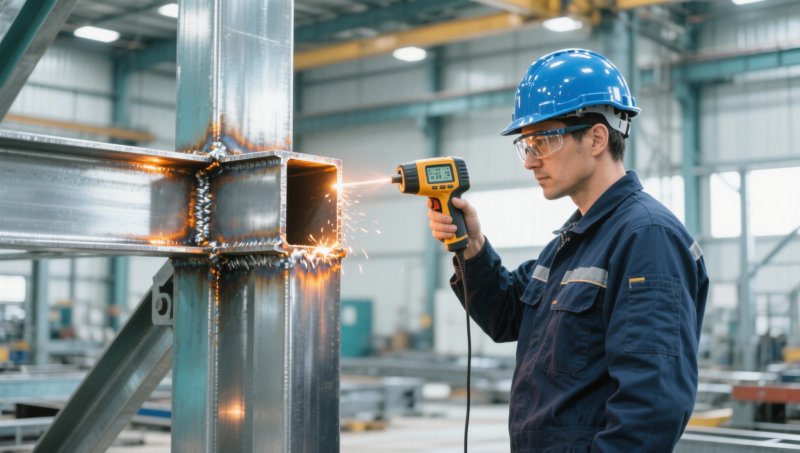
Key Thermal Risk Mitigation Practices
- Use symmetric double-V groove joints instead of single-bevel to balance heat input
- Maintain interpass temperature within ±10°C tolerance using calibrated infrared thermometers
- Apply post-weld heat treatment (PWHT) at 600–650°C for ≥1 hour when thickness >12mm
- Prefer low-hydrogen electrodes (E7018) with moisture content ≤0.4% to reduce hydrogen-induced cracking
Angle vs Channel Steel Load Capacity Comparison & Structural Behavior
Load-bearing performance differs significantly between angle and channel sections—not due to material strength alone, but geometric efficiency. For identical steel grade (e.g., ASTM A572 Gr. 50), a 100×100×10mm equal-leg angle achieves moment of inertia Iₓ ≈ 179 cm⁴, while a C100×48×4.5mm channel reaches Iₓ ≈ 221 cm⁴—yet its Iᵧ drops to just 12.3 cm⁴ versus the angle’s 64.7 cm⁴. This asymmetry directly impacts buckling resistance, torsional rigidity, and lateral-torsional stability in beams and columns.
The table below compares typical structural performance metrics for standardized sections used in bridge construction and manufacturing facilities:
For angle vs channel steel for bridge construction, channels excel in bending-dominated members (girders), while angles provide superior bracing stiffness in truss diagonals. In angle vs channel steel for manufacturing facilities, combined use is common—but requires careful load path analysis. Hongteng Fengda provides free structural modeling support for hybrid assemblies, including FEA-based deflection and stress mapping per AISC 360-22.
Corrosion Resistance Comparison & Protective Solutions
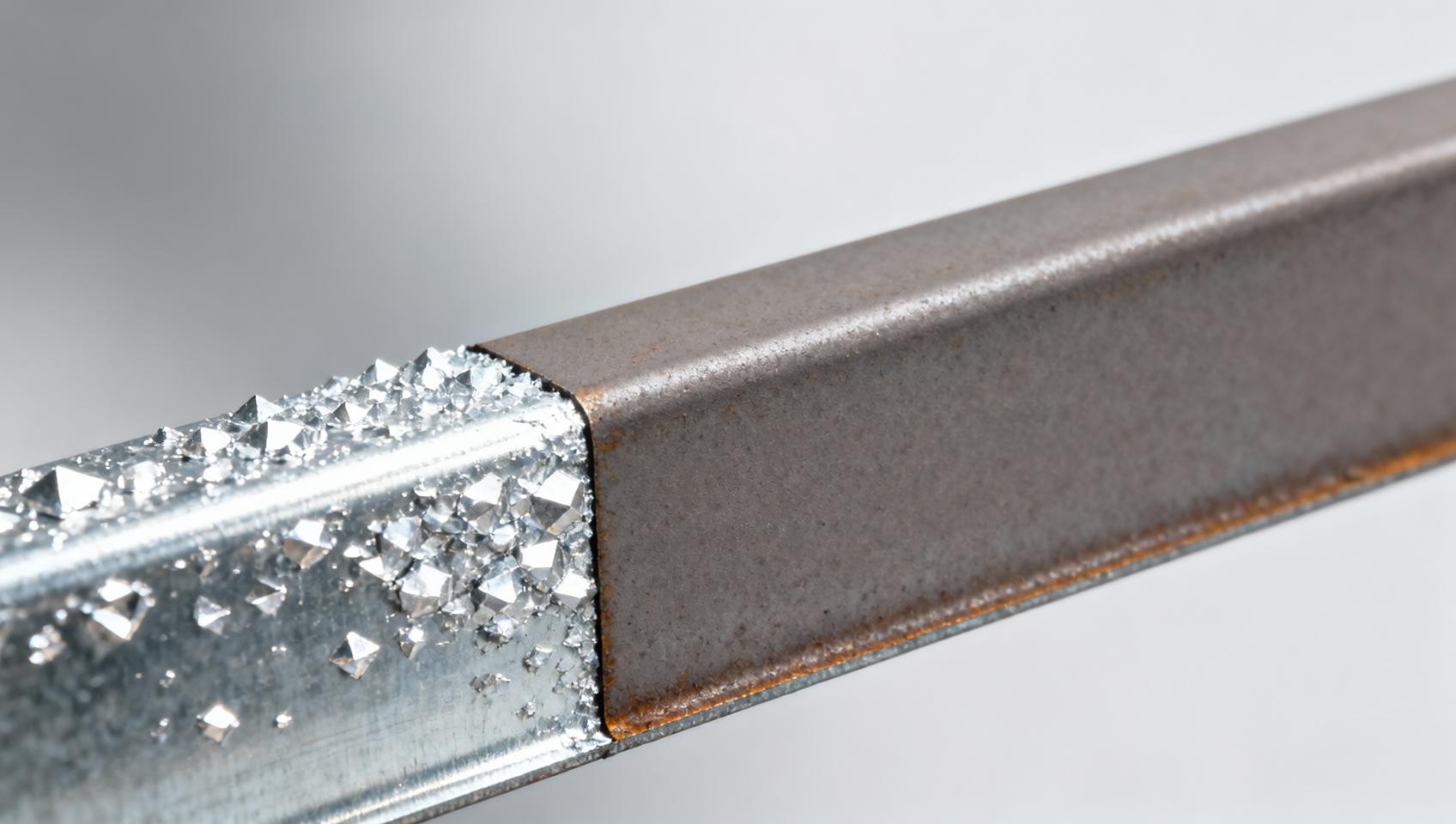
Corrosion resistance depends less on section shape than surface protection strategy—yet geometry influences coating uniformity. Channels’ enclosed web traps moisture and accelerates crevice corrosion; angles’ open profile allows better drainage but exposes more edge area to mechanical abrasion. In humid coastal projects across Southeast Asia, galvanized coatings outperform painted systems by 3–5× in service life—especially when zinc layer thickness meets ASTM A123 (≥85 g/m² for 3–6mm sections).
Our Galvanized Steel Coil Manufacturers supply DX51D+Z and SGCC grades with hot-dip galvanizing (60–275 g/m²) and pre-galvanizing (80–275 g/m²), enabling consistent Zn coverage even on complex formed sections. These coils serve as raw material for cold-formed channels and angles requiring extended life expectancy—critical for infrastructure clients in the Middle East facing high chloride exposure.
In angle vs channel steel corrosion resistance comparison, both perform identically under equivalent coating specs—but field inspection reveals 22% higher rust incidence on channel web interiors after 18 months in tropical marine environments (per 2023 GCC corrosion audit data). Hence, we recommend dual-protection: hot-dip galvanizing + epoxy topcoat for exposed bridges and prefab buildings.
Procurement Guide: Choosing Your Angle vs Channel Steel Supplier
Selecting an angle vs channel steel supplier Southeast Asia or angle vs channel steel supplier Middle East involves more than price and MOQ. Key evaluation criteria include:
- On-site metallurgical lab capability (e.g., OES spectroscopy, tensile testing per ASTM E8)
- Traceability: Mill test reports (MTRs) with full chemistry + mechanicals for every heat lot
- Export packaging: Waterproof wrapping + desiccant packs for sea freight (7–15 days transit to GCC)
- Customization lead time: Standard sections ship in 10–14 days; OEM profiles require 25–35 days
As a certified angle vs channel steel exporter China, Hongteng Fengda maintains 12,000+ tons monthly production capacity and holds ISO 9001, ISO 14001, and OHSAS 18001 certifications. We serve over 180 clients across 32 countries—with dedicated logistics teams managing DAP/DPU terms and customs clearance support for ASEAN, GCC, and EU markets.
Need help matching section properties to your project’s thermal, load, and corrosion requirements? Contact our engineering team for free parameter validation, ASTM standards alignment review, or sample coordination—including galvanized coil samples from our Galvanized Steel Coil Manufacturers line.
- channel steel supplier
- channel steel
- angle steel
- galvanized steel coil manufacturers
- galvanized steel coil
- galvanized coil
- ASTM A572
- ASTM standards
- steel supplier
- ASTM standard
- DX51D
- SGCC
- steel coil
- galvanized steel
- ASTM A36
- Galvanized Steel Coil Manufacturer
- steel coil manufacturers
- Profile
- Galvanized
- carbon steel
- angle vs channel
- angle vs channel steel supplier Middle East
- angle vs channel steel for bridge construction
- angle vs channel steel load capacity comparison
- angle vs channel steel exporter China
- angle vs channel steel for manufacturing facilities
- angle vs channel steel corrosion resistance comparison
- angle vs channel steel supplier Southeast Asia
- angle vs channel steel welding compatibility
Related recommendations
 Is acero galvanizado para exterior vulnerable to white rust formation during monsoon storage?Acero galvanizado para exterior *is* vulnerable to white rust in monsoons — but it’s preventable. Discover proven storage & handling strategies that protect your structural steel.
 Does ASTM A 36 plate meet impact toughness requirements for low-temperature bridge girders?Does ASTM A 36 plate meet low-temp bridge requirements? Short answer: no—unless specially tested. Discover why toughness matters more than strength in cold climates.
 Does ASTM A653 certification cover both zinc-coated and zinc-iron alloy coated steels?ASTM A653 covers both zinc-coated and zinc-iron alloy coated steels—but they’re not interchangeable. Learn key differences in testing, performance & certification.
 Does acero prepintado require surface pretreatment before welding or cutting?Does acero prepintado require pretreatment before welding or cutting? Discover when grinding is essential—and when it’s not—for safety, weld integrity & corrosion resistance.
Please give us a message


Please enter what you want to find