Can rebar for beam be used without design changes? In structural steel and concrete projects, even small reinforcement decisions can affect safety, cost, and compliance. This article explains when rebar for beam may require adjustment, how steel angle for construction can support load paths, and what buyers, engineers, and project teams should evaluate before sourcing from a reliable structural steel manufacturer.
When can rebar for beam remain unchanged, and when is redesign necessary?
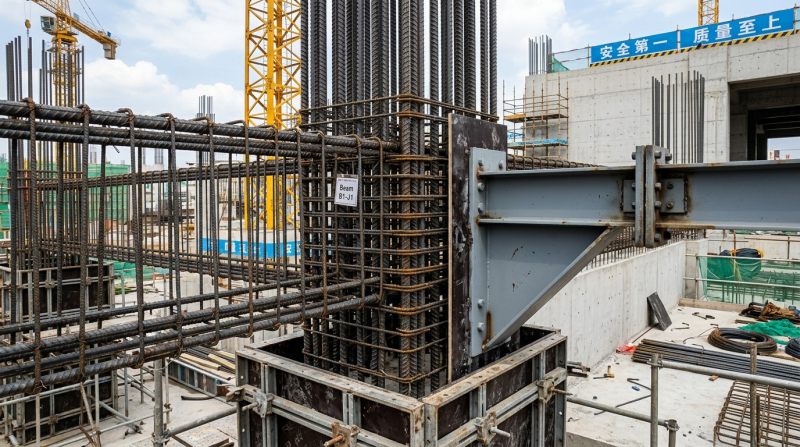
In most projects, rebar for beam should not be changed casually after drawings are issued. Beam reinforcement is tied to load assumptions, span length, support conditions, concrete strength, cover, anchorage length, and crack control requirements. A beam that looks similar on site may still behave differently if one variable changes by even a small range, such as a longer span, heavier live load, or different connection detail.
There are limited situations where no major design adjustment may be required. For example, if a replacement bar has the same grade, same diameter, same quantity, same spacing, and equivalent code compliance under ASTM, EN, JIS, or GB requirements, the engineer may approve it as an equal substitution. Even then, review usually covers 3 core checks: strength equivalence, detailing compatibility, and constructability on site.
Redesign becomes necessary when the proposed change affects section capacity or serviceability. Typical triggers include changing bar diameter, reducing bar count, altering stirrup spacing, replacing one grade with another, or modifying beam geometry. In reinforced concrete and composite steel structures, these changes can influence bending resistance, shear resistance, deflection, and congestion around joints within 1 design cycle.
For project managers and procurement teams, the practical rule is simple: equivalent material replacement is different from design substitution. If the change alters load path behavior, detailing, or compliance records, it should be treated as a technical change order rather than a simple sourcing decision.
What usually triggers a review from engineers or quality teams?
Site teams often focus on delivery and installation speed, but technical reviewers look for risk concentration points. In beam work, the most common review zones are support regions, lap splice areas, beam-column joints, and openings near service penetrations. These are the locations where small changes can produce larger structural effects over a 2-stage installation and inspection process.
- A change in bar grade that affects yield strength, weldability, or bend behavior.
- A reduction in stirrup density, especially in high shear zones near supports.
- A congestion issue that forces field bending, cutting, or re-spacing beyond drawing tolerance.
- A coordination change between rebar and structural steel components such as angles, channels, or embedded plates.
How do steel components affect beam reinforcement decisions in real projects?
Many buyers search only for rebar, but beam behavior in modern construction is often influenced by surrounding steel members. Steel angle for construction, channel sections, steel beams, and custom fabricated parts can all affect how loads transfer into supports, brackets, slab edges, or connection zones. That is why reinforcement decisions should be coordinated with the structural steel package rather than treated in isolation.
In industrial plants, warehouses, and mixed-material buildings, a beam may connect to seats, clips, brackets, or stiffened supports. If a steel angle changes connection stiffness or support bearing length, the engineer may revisit anchorage, top bar continuity, or local shear reinforcement. This review is especially important when projects involve 2 to 4 interfacing trades at the same time.
Hongteng Fengda supports this kind of coordination by supplying angle steel, channel steel, steel beams, cold formed steel profiles, and customized structural steel components under standard or OEM requirements. For overseas buyers, this matters because sourcing risk often appears at the interface between materials, not only within one item category.
A practical example is support reinforcement near embedded steel. If the embed plate, angle, or secondary beam detail changes, site teams may need confirmation on cover, spacing, and installation sequence. In many cases, the fastest way to avoid rework is to verify drawings, steel fabrication tolerances, and reinforcement clearances before production starts.
Typical project scenarios where coordination matters
The table below shows how beam reinforcement decisions are commonly affected by structural steel interfaces across several project scenarios. This helps technical evaluators and procurement teams identify where a “simple substitution” may actually create a review requirement.
The key takeaway is that reinforcement and steel detailing should be reviewed as one system. This approach reduces field cutting, protects compliance records, and helps contractors avoid delays that can extend procurement and installation by 7 to 15 days.
What should buyers and engineers check before approving a substitution?
For procurement teams, the issue is not only whether the beam rebar is available, but whether the replacement can be documented, fabricated, transported, and accepted without reopening structural calculations. A good review process usually includes 5 key checks: grade, dimensions, compliance standard, fabrication compatibility, and delivery impact.
This is also where a broader steel supply partner becomes useful. Some projects require related materials for boiler plate, fabricated parts, or secondary structural members during the same procurement window. For example, Rolled Coil in carbon steel grades such as Q235, Q235B, Q345, Q345B, St37, and St52.4 may be considered when downstream processing involves bending, stamping, hot rolling, or welded parts associated with project steel packages.
Its common specification range includes thickness or width references from 0.1mm to 300mm with tolerance around ±1%, and technical chemistry may include carbon content from 0.12% to 0.20%, manganese from 0.30% to 0.70%, silicon not exceeding 0.30%, and phosphorus or sulfur not exceeding 0.045%. These values do not replace project structural design criteria, but they help buyers assess process compatibility and sourcing alignment.
When reviewing substitutions, quality teams should also check whether the related material route changes welding or forming behavior. A supply item that is easy to purchase may still create problems later if its fabrication characteristics differ from the approved project assumptions.
Procurement and technical evaluation checklist
The following table can be used during RFQ review, technical clarification, or pre-shipment confirmation. It helps different stakeholders compare whether a beam reinforcement change is merely administrative or requires engineering approval.
For finance approvers and commercial evaluators, this checklist helps connect technical risk with cost risk. A cheaper substitute can become more expensive if it triggers redesign, additional inspection, or partial demolition after installation.
A 4-step approval workflow that reduces sourcing risk
- Collect the original beam schedule, structural notes, and applicable material standard.
- Compare the proposed substitute against 3 dimensions: mechanical equivalence, detailing compatibility, and supply lead time.
- Submit the change for engineer or consultant review before fabrication or cutting begins.
- Lock approved documents into purchasing, inspection, and installation records for traceability.
Common misconceptions, compliance points, and cost consequences
One common misconception is that “same weight means same performance.” In beam reinforcement, equal total steel weight does not automatically mean equal moment capacity or crack control. Bar placement, effective depth, spacing, and anchorage often matter as much as gross quantity. This is why site substitutions based only on stock availability can be risky.
Another misconception is that international standards are always interchangeable. ASTM, EN, JIS, and GB can often be compared, but one designation should not be treated as a direct equivalent without checking mechanical properties, chemistry limits, and project specification language. Cross-standard review is especially important in export projects moving across North America, Europe, the Middle East, and Southeast Asia.
From a cost perspective, buyers should compare total project impact rather than line-item price. If a substitute saves 2% to 5% on material but adds one redesign cycle, extra consultant review, or 1 failed inspection, the final cost can move in the wrong direction. For fast-track projects, schedule protection is often worth more than a small unit-price difference.
Compliance teams should also verify traceability documents, inspection plans, and receiving checks. A practical acceptance routine may include 6 items: heat number review, grade confirmation, dimensional check, visual condition, coating or surface condition if relevant, and document match against PO and approved drawings.
FAQ for buyers, site teams, and technical reviewers
Can rebar for beam be replaced by a higher strength grade without redesign?
Not automatically. A higher strength grade may improve nominal strength, but it can also change ductility assumptions, bend behavior, lap length requirements, or code acceptance conditions. The engineer should verify the full detailing impact before approval.
What if the diameter changes but the total area is similar?
Similar steel area does not guarantee equivalent performance. Effective depth, spacing, crack distribution, and congestion may change. This is especially important at support zones and beam-column joints where detailing tolerance is tight.
How long does technical confirmation usually take?
For straightforward equivalency checks, internal review may take 1 to 3 working days if all documents are complete. If the change affects calculations, multiple standards, or custom steel interfaces, the process can extend to 1 to 2 weeks depending on project controls.
When should procurement involve the structural steel supplier early?
Early involvement is recommended when projects include OEM components, mixed standards, welded assemblies, boiler-related plates, or installation interfaces between concrete reinforcement and fabricated steel. Early coordination usually reduces rework and document revision pressure.
Why work with a structural steel manufacturer that understands design coordination?
For international buyers, the best supplier is not simply the one offering material. The better partner helps reduce technical uncertainty across sourcing, fabrication, inspection, and delivery. Hongteng Fengda provides structural steel products and customized solutions for construction, industrial, and manufacturing projects, with experience supporting buyers who need stable production capacity, consistent quality, and dependable lead times.
This matters when your project requires angle steel, channel steel, steel beams, cold formed steel profiles, or customized structural components under ASTM, EN, JIS, or GB-related requirements. Instead of handling each issue separately, your team can align design intent, manufacturing feasibility, and delivery planning in one communication chain.
If you are assessing whether rebar for beam can be used without design adjustments, we can support the surrounding decisions that often determine project success: parameter confirmation, steel component matching, standard review, supply scope clarification, OEM discussion, and shipment scheduling. For many projects, resolving these 5 to 6 items early prevents later procurement and installation conflict.
Contact us if you need support on structural steel selection, related material coordination, lead time planning, sample communication, certification requirements, or quotation comparison. If your team is reviewing substitutions, mixed-standard sourcing, or custom fabrication interfaces, sharing drawings, specifications, and quantity ranges can help us respond with a more practical recommendation.
Please give us a message


Please enter what you want to find