When sourcing stainless steel pipe wholesale, buyers often ask whether pricing by weight or by length delivers better value. For importers, engineers, and project managers comparing ASTM A106 Gr.B specification, ASTM A106 Gr B pipe options, and stainless steel pipe exporter capabilities, the answer affects cost control, material accuracy, and procurement efficiency. This guide explains the practical differences to help you make a smarter purchasing decision.
What Does Wholesale Pipe Pricing by Weight or by Length Really Mean?
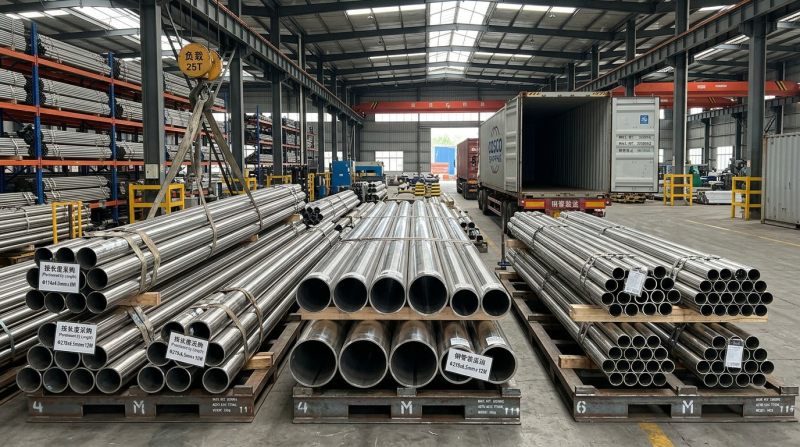
In steel procurement, buying pipe by weight means the supplier calculates cost from theoretical or actual mass, usually in kg or ton. Buying by length means the quote is based on meters, feet, or fixed cut lengths such as 6 m or 12 m. Both methods are common across export trade, but each one changes how buyers estimate project cost, yield, wastage, and freight planning.
For technical teams, weight-based purchasing is often easier when comparing different wall thicknesses within the same outer diameter range. For site users and project managers, length-based purchasing can be simpler because installation drawings, spool layouts, and onsite cutting plans are usually prepared in linear dimensions. This is why the better method depends on whether cost control or installation control is the primary objective.
In real B2B sourcing, the decision is rarely only financial. It also connects with mill tolerance, material traceability, customs declaration, container loading efficiency, and the risk of under-supply. A difference of just ±1% in tolerance or a change from Sch 40 to a thicker wall can alter total tonnage noticeably across a batch of 20 to 50 tons.
Chinese manufacturers and exporters serving global construction and industrial projects often provide both quote formats. Hongteng Fengda, as a structural steel manufacturer and exporter from China, supports buyers who need standard specifications, OEM processing, and practical guidance across ASTM, EN, JIS, and GB-related sourcing expectations.
Why This Choice Matters Across Departments
- Procurement teams need a quote basis that allows clean supplier comparison across 3 core indicators: unit price, freight impact, and wastage risk.
- Engineers need dimensional accuracy because 2 mm to 5 mm wall variation across models changes pressure class, weight, and support spacing.
- Finance approvers focus on total landed cost, where ton-based buying can align better with bulk freight and customs calculations.
- Site operators care about usable length, especially when common stock lengths like 6 m and 12 m affect cutting efficiency.
Which Option Gives Better Cost Visibility in Stainless Steel Pipe Wholesale?
If your project uses multiple pipe schedules or mixed diameters, pricing by weight usually gives clearer cost visibility. Stainless steel pipe cost is heavily influenced by alloy content, wall thickness, and total mass. When the same 6 m length is supplied in different thicknesses, the price difference is not linear by length, but it is more transparent by kilogram or ton. This is especially useful for bulk orders shipped in 1 to 3 containers.
Length-based pricing can look simpler at first, but it may hide material differences if buyers do not normalize the wall thickness and grade. Two suppliers can both quote per meter, yet one may offer heavier actual material and the other may calculate from minimum tolerance. Without checking theoretical weight tables and mill tolerance, a lower meter price may not mean a lower real cost.
For importers and distributors, weight-based quotations also fit better with ocean freight, warehouse handling, and customs paperwork, because these are often tonnage-driven. For contractors buying for direct installation, length-based pricing can still be useful when takeoff sheets are prepared from drawings and the material is consumed in exact meter quantities over a short schedule such as 2 to 4 weeks.
The most reliable practice is to ask for both figures in one quotation: price per ton and price per meter, with outer diameter, wall thickness, grade, length tolerance, and theoretical unit weight clearly shown. This reduces the risk of hidden cost shifts during contract review and final settlement.
Direct Comparison for Buyers
The table below helps compare stainless steel pipe wholesale by weight and by length across cost, planning, and execution dimensions. It is especially useful for purchasing teams evaluating 3 to 5 suppliers in parallel.
The key takeaway is simple: if your focus is commercial comparison and freight efficiency, weight-based buying is usually stronger. If your focus is exact installation length and field consumption, length-based buying may be more practical, provided technical specifications are locked first.
How Should Engineers and Buyers Evaluate Technical Accuracy?
Technical accuracy is where many wholesale stainless steel pipe purchases succeed or fail. The quote basis does not matter if the specification sheet is incomplete. Buyers should confirm at least 5 key items before price comparison: grade, outer diameter, wall thickness, length, tolerance, and applicable standard. If one of these is missing, per-ton and per-meter prices can both become misleading.
Although the introduction mentions ASTM A106 Gr.B and ASTM A106 Gr B pipe, buyers should be careful with terminology because project documents sometimes mix carbon steel pipe references with stainless steel sourcing language during early-stage inquiry. This is common in international trade. A professional exporter should help clarify the actual material requirement before production or quotation starts, especially when substitute grades or equivalent standards are being reviewed.
For fabricated steel structures, the same decision logic appears in profiles as well. For example, when a project requires secondary framing members, a cold formed profile such as Z-beam may be chosen in lengths of 2~12 m or customized, with thickness from 6-25 mm and tolerance around ±1%. In those cases, buyers also compare whether tonnage or linear length gives a more useful control point.
Manufacturers with modern production facilities and strict quality control can reduce this ambiguity by issuing complete technical offers. Hongteng Fengda supports global buyers with standard and customized structural steel components, helping engineering teams connect specification review with sourcing execution instead of treating them as separate steps.
Technical Checklist Before Approval
- Confirm whether the quote uses theoretical weight, actual weighed weight, or standard meter weight. This affects settlement in the final invoice.
- Verify standard references such as ASTM, EN, JIS, or GB, and make sure the mechanical and dimensional requirements match your project documents.
- Check standard stock lengths such as 6 m or 12 m and ask whether cut-to-length service is available for project batches.
- Review packaging, marking, and traceability requirements if the goods will move through 2 or more logistics nodes such as port warehouse, distributor, and jobsite.
Useful Specification Review Table
Before placing a stainless steel pipe wholesale order, use the following matrix to align engineering, purchasing, quality, and finance teams. It works well in projects with 4-step approval flows: inquiry, technical review, commercial review, and release.
This review process prevents a common issue in steel procurement: commercial approval happens first, while technical clarification happens later. When that sequence is reversed, delays of 7 to 15 days can appear due to requoting, redrawing, or replacement discussion.
When Is Buying by Length the Better Choice?
Buying by length is usually better when the jobsite consumes pipe according to fixed drawing quantities and cut plans. Mechanical contractors, fabricators, and maintenance teams often work from exact meter or foot requirements. If the project needs 480 m of pipe in defined spool sections and each section has low thickness variation, a per-meter quote simplifies planning, receiving, and issuance.
Length-based purchasing also helps when waste control is a major concern. If standard 6 m or 12 m pipe can be matched closely to the cutting list, buyers can reduce offcut generation and improve installation productivity. This matters in shutdown maintenance or fast-track construction where labor cost during a 10-day to 20-day window may be more critical than tiny material price differences.
Distributors sometimes prefer length pricing for retail or mixed small-batch sales because customers think in pieces and meters, not in kilograms. In these cases, supplier communication should still include reference unit weight to avoid margin erosion when replenishing stock across changing raw material markets.
The caution is that length-only buying can hide density and thickness differences. So even when length is the commercial basis, the technical basis must remain detailed and measurable. A professional supplier should never quote only “pipe per meter” without the full dimensional and grade context.
Scenarios Where Length Pricing Works Well
- Projects with fixed spool drawings and repetitive installation sections over 100 m to 1,000 m.
- Maintenance jobs where quick site issuance matters more than warehouse tonnage accounting.
- Smaller distributor orders sold in pieces, bundles, or stock lengths to local contractors.
- Fabrication packages where cut-to-length service reduces secondary processing time.
What Are the Main Procurement Risks and How Can You Avoid Them?
The biggest risk in stainless steel pipe wholesale is not choosing the wrong pricing method. It is failing to define the settlement basis clearly. A supplier may quote by theoretical weight, but the buyer may assume actual weighed weight. Another supplier may quote by length but base the unit rate on a different wall thickness tolerance. These small differences create claim issues later.
A second risk is disconnect between departments. Procurement may compare quotes only by top-line price, while engineering checks material after order release. Quality teams then discover marking, tolerance, or documentation gaps during inspection. This creates rework across at least 3 teams and can delay project progress by 1 to 2 weeks, especially for import shipments.
The third risk is incomplete supplier evaluation. Buyers should assess not only price, but also production capability, standard familiarity, export packing, and lead time reliability. For structural steel and related products, this is equally true whether sourcing pipe, channel, beam, angle, or cold formed members such as a perforated or non-perforated Z-shaped steel profile used in purlins, wall beams, brackets, and lightweight roof systems.
Working with an exporter that understands both standard specifications and customized processing reduces these risks. Hongteng Fengda serves buyers across North America, Europe, the Middle East, and Southeast Asia, helping align quality control, production planning, and dependable lead times for global projects.
Five Practical Risk-Control Actions
- Request dual quotation format: per ton and per meter, on the same specification sheet.
- Lock 5 critical details in the PO: grade, OD, wall, length, and standard.
- Ask for tolerance and settlement method in writing before deposit payment.
- Confirm lead time by production stage, such as raw material booking, rolling, finishing, and packing.
- Require pre-shipment photos or inspection records for export bundles and markings.
FAQ: What Do Buyers Ask Most Often Before Ordering?
Below are common questions from technical evaluators, procurement officers, distributors, and project managers. These points often decide whether a quotation can move quickly to approval and production scheduling.
Should I always buy stainless steel pipe wholesale by weight?
No. Weight-based buying is usually better for bulk imports, mixed wall thicknesses, and freight budgeting. Length-based buying can be better for fixed installation packages, exact cutting plans, and small distribution sales. The right choice depends on whether your first control point is tonnage cost or usable linear footage.
What if my project documents mention ASTM A106 Gr.B but the inquiry says stainless steel pipe?
Treat that as a clarification point before pricing. In practice, many RFQs mix standard references during early discussion. Ask the supplier to reconfirm material type, operating condition, dimensional standard, and whether the requirement is for carbon steel pipe, stainless steel pipe, or an equivalent project-approved alternative.
What lead time should I expect for wholesale export orders?
Lead time varies by quantity, processing scope, and stock availability. In common export practice, standard sizes may move faster, while customized cutting, coating, or mixed packing can extend the schedule. Buyers should ask for a stage-based plan covering production, inspection, packing, and shipment booking instead of relying on one headline date.
How can I compare two suppliers fairly?
Compare at least 6 items side by side: grade, size, wall, length, tolerance, and settlement basis. Then add 3 commercial items: packing, lead time, and document support. Without this alignment, a lower headline quote may not represent the lower delivered cost or lower project risk.
Why Work With a Manufacturer That Understands Both Steel Specifications and Export Execution?
Choosing between weight and length is easier when the supplier can explain both from a manufacturing and export perspective. That means not only quoting fast, but also translating drawings, standards, tolerances, and delivery expectations into a workable production plan. This is where experienced structural steel exporters add real value.
Hongteng Fengda supplies angle steel, channel steel, steel beams, cold formed steel profiles, and customized structural steel components for global construction, industrial, and manufacturing projects. With modern manufacturing facilities and strict quality control, the company supports buyers who need stable production capacity, standard compliance, and dependable delivery coordination across different markets.
If you are evaluating stainless steel pipe wholesale, steel profiles, or custom structural steel packages, you can ask for support on specification confirmation, product selection, quotation format, delivery cycle, OEM customization, certification expectations, sample arrangements, and export packing details. That helps every stakeholder, from engineering to finance, make a decision with fewer assumptions and better cost visibility.
For your next inquiry, prepare 4 essentials: application, standard, size range, and quantity. With those details, the supplier can provide a more accurate comparison between buying by weight and buying by length, while also recommending suitable steel solutions for related structural needs.
Please give us a message


Please enter what you want to find