Choosing the right Steel Beam starts with reading sizes correctly. Whether you compare I beam vs H beam, check steel beam factory price, or need to know how to calculate i beam weight, understanding beam markings helps avoid costly mistakes. For buyers, engineers, and project teams sourcing structural steel, this guide explains beam size basics in a practical way so you can evaluate specifications, quality, and application requirements with more confidence.
Why steel beam size markings often cause costly mistakes
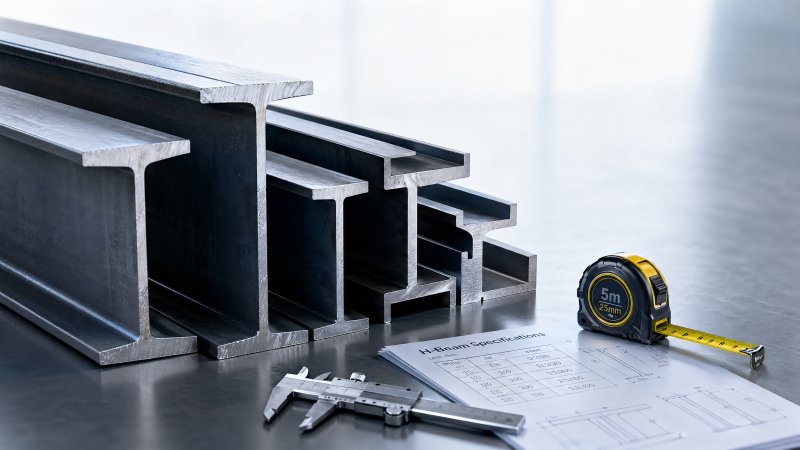
In structural steel procurement, a beam size is never just a number. It can indicate nominal depth, flange width, web thickness, unit weight, or a standard series under ASTM, EN, JIS, or GB. A common mistake happens when users assume one country’s designation system matches another. In practice, a W-beam, an IPE beam, an H-beam, and a UB section may look similar in drawings but differ in dimensions, tolerances, and section properties.
This issue affects more than design engineers. Operators need accurate sizes for handling and installation. Purchasing teams need them for price comparison. Quality control staff need them to verify received goods. Project managers need them to avoid delays caused by wrong cross-sections, and financial approvers care because one wrong container load or fabrication error can add 2–4 weeks of disruption and unnecessary rework costs.
Another source of confusion is the difference between nominal description and actual dimensions. For example, a beam called “200” in one standard may not measure exactly 200 mm in every part of the section. The real decision should be based on 4 core checks: section designation, material grade, standard system, and required length or fabrication condition. If one of these is unclear, downstream errors become likely.
For international sourcing, the problem becomes more sensitive because beam availability, lead time, and substitution options vary by mill and by export market. Hongteng Fengda supports buyers in North America, Europe, the Middle East, and Southeast Asia with standard and custom structural steel supply, helping project teams align drawings, standards, and manufacturing capability before production starts.
What usually gets misunderstood in beam reading
- The designation is read as only height, while flange width and thickness are ignored.
- I beam vs H beam is judged by appearance alone, not by sectional proportions and load use.
- Steel beam weight is estimated visually instead of checking theoretical mass per meter.
- Equivalent grades are assumed across standards without confirming chemistry and mechanical properties.
A disciplined reading method reduces sourcing risk. When teams compare offers from 2–3 suppliers, a standardized review sheet often reveals hidden differences in beam dimensions, tolerances, and delivery condition that directly affect price and usability.
How to read steel beam sizes step by step
A practical beam reading process starts with identifying the naming system. In many projects, beam sizes appear in one of 3 common forms: a designation by depth series, a designation by standard profile family, or a designation including mass per meter. Before reviewing mechanical performance, confirm which system the drawing, quotation, and mill test documentation are using.
The second step is to break the beam into its measurable parts. Most teams should check 5 items: overall depth, flange width, web thickness, flange thickness, and length. If fabrication is involved, also check hole position, cut angle, weld preparation, and camber if specified. Even a 1 item mismatch can create fit-up issues during assembly.
The third step is to connect size with function. A larger depth may improve bending resistance, but flange width also matters for stability and connection design. Unit weight matters for transport, lifting, and total steel consumption. For this reason, reading steel beam sizes correctly is not only a drawing task; it is also a cost-control and installation-planning task.
The fourth step is verification. Ask for the product standard, tolerance basis, material grade, and theoretical weight table. On export orders, this should be confirmed before final purchase order release, not after production. In many B2B projects, 3 documents are especially important: approved drawing, technical specification, and packing list or inspection list.
A simple reading sequence for project teams
- Identify the standard family: ASTM, EN, JIS, or GB.
- Confirm the section type: W, I, H, U, channel, angle, or custom profile.
- Check the full dimensional data rather than only nominal size.
- Verify material grade, quantity, and delivery length such as 6 m, 9 m, or 12 m.
- Match unit weight and total tonnage with budget, freight plan, and lifting conditions.
Key fields that should appear on a quotation or drawing
A reliable quotation should not only state “steel beam.” It should show beam type, standard, grade, size, length range, quantity, and surface or fabrication notes. For many export projects, standard stock lengths are often 6–12 meters, while custom cut lengths can be arranged based on project needs and loading efficiency.
The table below helps non-design teams understand how beam size information should be read in procurement and technical review.
For procurement teams, this table also explains why comparing only unit price is risky. Two beam offers may look close in description, but once dimension details and weight per meter are checked, the total material and installation impact may differ substantially.
I beam vs H beam: what the size difference really means
The phrase “I beam vs H beam” is one of the most searched structural steel topics because many buyers see similar silhouettes and assume they are interchangeable. In reality, the proportions often differ. H-beam sections usually have wider flanges and a more balanced profile, while many traditional I-beams have comparatively narrower flanges. That proportion changes load behavior, connection options, and application preference.
From a reading perspective, the important point is this: never classify a beam only by visual shape or local trade habit. Read the actual section series and dimensional values. In project reviews, 3 checks are especially useful: flange-to-depth proportion, thickness distribution, and unit mass. These indicators help teams avoid accidental substitutions that can affect fabrication details.
For engineering and commercial evaluation, beam choice also depends on stock availability and processing route. Some projects prioritize connection convenience and load distribution. Others prioritize market availability and price stability. A manufacturer with broad structural steel capability can help compare standard sections and custom options before the order is locked.
Hongteng Fengda supplies structural steel products including angle steel, channel steel, steel beams, cold formed profiles, and customized components. This matters when a project needs more than one item in the same package, because coordinated sourcing can reduce handling complexity, align quality documents, and improve shipment planning across multiple steel categories.
Quick comparison for non-specialist buyers
The table below is not a design substitute, but it helps procurement, project, and QA teams understand why section identification should be checked carefully when reading beam sizes.
For teams handling mixed-product orders, it can also be useful to align other stainless or structural items under the same documentation logic. For example, a project that includes support steel together with secondary components may also require Stainless Square steel rod for decorative, manufacturing, or accessory applications. In the provided 201 stainless steel option, common references include square bar sizes from 18 mm to 47 mm, length ranges of 1–6 meters, and standards such as ASTM, AISI, JIS, GB, DIN, and EN.
That insert matters because many buyers face a combined sourcing scenario. They may evaluate beam sizes for structural frames while also checking stainless bar components for kitchenware, outdoor decoration engineering, automotive parts, shipbuilding, or construction-related fabrication. Keeping specification review consistent across carbon steel and stainless items helps avoid document errors during purchasing and inspection.
How to calculate i beam weight and verify what suppliers quote
When buyers search how to calculate i beam weight, they usually want to validate freight cost, compare offers, or estimate project tonnage. The most reliable method is to use the section’s theoretical weight per meter from the relevant standard table, then multiply by total length. If custom fabrication changes length or adds cuts and holes, the final shipped weight should be checked separately in the packing stage.
A basic procurement formula is simple: total weight = unit weight per meter × total meters. For example, if a beam series carries a published mass per meter and the order contains 80 pieces of 9 meters each, the material tonnage can be estimated before packaging. This is useful for container loading, inland transport planning, and commercial approval, especially when the budget is reviewed in stages.
However, practical verification requires 3 more checks. First, confirm whether the quoted weight is theoretical or actual shipment weight. Second, check if the supplier price is based on per ton or per piece. Third, confirm whether accessories, weldments, or surface treatment are included. Misunderstanding one of these points can distort the real steel beam factory price comparison.
Experienced exporters usually help customers review loading efficiency as well. Standard beam lengths such as 6 m or 12 m may be more cost-effective than irregular lengths, but this depends on project fit, scrap control, and container arrangement. In many cases, balancing material utilization and transport efficiency can save more than chasing only the lowest unit offer.
5 checkpoints before approving beam weight and price
- Confirm the beam standard and theoretical mass table used in the quotation.
- Check total ordered length, including cut-to-length requirements.
- Verify whether pricing is per metric ton, per meter, or per finished piece.
- Ask whether fabrication, testing, or special packing adds measurable weight or cost.
- Review shipping mode and loading plan before final approval.
Why price comparison fails without size verification
In steel sourcing, a low price can be misleading if it is based on a lighter section than required, a different standard, or an incomplete delivery scope. Technical evaluators and purchasing managers should ask suppliers to match the same 4 reference points: section designation, actual dimensions, grade, and length. Only then does a true cost comparison become possible.
This is where an export-focused structural steel manufacturer adds value. Hongteng Fengda works with standard specifications and OEM solutions, which helps buyers compare not only stock profiles but also fabricated or customized steel components under a controlled documentation process.
What procurement, QA, and project teams should check before placing a beam order
A good beam order is not approved on drawings alone. It should pass technical, quality, commercial, and logistics review. In most B2B steel projects, at least 6 items should be confirmed before production: section size, grade, applicable standard, quantity, length schedule, and inspection requirements. If fabrication is included, add marking method, tolerance points, and packaging instructions.
For quality teams, standards and traceability are central. Products may need to align with ASTM, EN, JIS, or GB depending on market and project specification. For safety managers and site teams, dimensional consistency matters because incorrect beam sizes can affect bolt alignment, welding preparation, lifting plans, and installation sequence. For finance and commercial reviewers, the key question is whether the quoted steel matches the approved specification exactly.
Global buyers also care about lead time reliability. In steel exports, common project timing may include 7–15 days for technical clarification and order confirmation, then 2–6 weeks for production depending on section type, tonnage, and fabrication scope. Early review of beam size details reduces the risk of restarting production because of documentation gaps.
Because Hongteng Fengda serves international buyers across multiple regions, the company approach is especially relevant for projects that need both stable production capacity and specification discipline. For distributors, contractors, and industrial users, this reduces sourcing risk when multiple steel items and compliance expectations must be coordinated in one supply plan.
Pre-order evaluation checklist
This review method is useful for information researchers, technical assessors, procurement staff, and decision-makers because it turns beam size reading into a cross-functional control process instead of an isolated engineering task.
Common misunderstandings to avoid
“A similar size is close enough”
It is not always close enough. Small dimension differences can change section properties, connection detailing, and installed alignment. Always confirm the exact standard and actual dimensions rather than accepting a visually similar beam.
“The cheapest steel beam factory price is the best deal”
Lowest quoted price may exclude fabrication, inspection scope, or required tolerances. It may also assume a different weight basis. A balanced evaluation should consider at least 3 commercial factors: compliance, total delivered cost, and usable lead time.
“All standards are easy to substitute”
Equivalent substitution should be reviewed carefully. Even when grades appear similar, section geometry and tolerances may not match project requirements exactly. This is especially important in international projects with approval chains and external inspection points.
Why work with a structural steel manufacturer that understands export requirements
Reading steel beam sizes accurately is only the first step. The next step is sourcing from a partner that can translate those requirements into stable production, consistent quality, and dependable delivery. For global construction, industrial, and manufacturing projects, this usually means a supplier that can support both standard profiles and custom structural components under a clear specification workflow.
Hongteng Fengda is a professional structural steel manufacturer and exporter from China, supplying angle steel, channel steel, steel beams, cold formed steel profiles, and customized structural steel components. With modern manufacturing facilities and strict quality control, the company supports buyers who need alignment with common international standards such as ASTM, EN, JIS, and GB.
For procurement managers and distributors, this matters because supply reliability is not only about product availability. It also depends on whether the supplier can manage specification confirmation, production consistency, and delivery timing across different steel categories. For project leaders and QA teams, the value comes from fewer interpretation gaps between drawing, quotation, and delivered goods.
If your team is comparing I beam vs H beam, checking steel beam sizes, estimating weight, or reviewing whether a section can be substituted, early technical communication usually saves time. It can prevent re-quotation cycles, reduce approval delays, and improve shipment planning before fabrication begins.
What you can discuss before requesting a final offer
- Parameter confirmation for beam series, dimensions, grade, and standard system.
- Product selection between standard sections and customized structural steel components.
- Lead time planning based on quantity, processing scope, and shipment schedule.
- Certification and compliance requirements for target export markets.
- Sample support, documentation review, and quotation alignment for project approval.
Contact us for a specification-based review
If you want to avoid mistakes when reading steel beam sizes, send your drawing, required standard, target dimensions, grade, and estimated quantity for review. You can also ask for help with i beam weight calculation, beam type comparison, delivery cycle planning, custom fabrication scope, and export documentation points. A specification-based discussion is the fastest way to move from uncertain inquiry to a workable procurement decision.
Please give us a message


Please enter what you want to find