As a trusted Galvanized Steel Wire Rope supplier and structural steel manufacturer, Hongteng Fengda frequently encounters buyer concerns about material authenticity—especially with 202 stainless steel coil. With rising reports of 201 stainless steel pipe being mislabeled as 202 due to its lower Cr/Ni ratio, procurement teams, technical evaluators, and quality controllers face real risks in construction and industrial applications. Whether you’re sourcing carbon steel pipe for oil and gas, stainless seamless pipe, or comparing SS 304 pipe price per meter, verifying grade integrity is critical. This article helps distributors, project managers, and OEM buyers distinguish genuine 202 stainless steel coil from re-labeled alternatives—backed by ASTM/EN-compliant testing and traceable mill certificates.
Why Mislabeling 201 as 202 Stainless Steel Coil Is a Growing Risk
The chromium-to-nickel (Cr/Ni) ratio is the most decisive factor distinguishing 201 from 202 stainless steel. Genuine 202 contains 16–18% Cr and 3.5–5.5% Ni, while 201 typically carries only 16–18% Cr but just 0.5–2.5% Ni—resulting in significantly lower corrosion resistance and ductility at elevated temperatures.
In real-world procurement, especially across Southeast Asia and the Middle East, unverified coils labeled “202” have been found to test at ≤1.2% Ni—well below the ASTM A240 minimum of 3.5%. That discrepancy increases failure risk in humid coastal environments or chemical processing lines where pitting resistance matters.
Distributors often lack on-site spectrometers or certified lab access. Without third-party PMI (Positive Material Identification) verification, visual inspection or mill certificate review alone cannot confirm composition. At Hongteng Fengda, every stainless coil shipment includes EN 10204 3.1 mill certs with full heat analysis—traceable to melt batch and verified against ASTM A240/A480 limits.
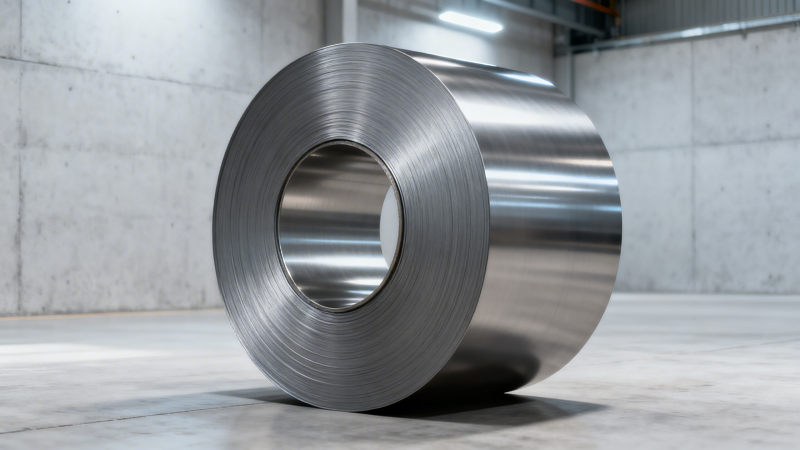
How to Verify Authenticity: 5 Critical Checks Before Acceptance
Procurement and quality teams must go beyond label claims. Here are five non-negotiable verification steps—each grounded in ASTM, EN, and GB standards:
- Require full heat analysis—not just grade designation—in mill certificates (EN 10204 3.1 or 3.2 required)
- Confirm Ni content falls within 3.5–5.5% and Mn ≤7.5% (ASTM A240 Table 1 for UNS S20200)
- Perform handheld XRF or OES testing on ≥3 random coils per lot (minimum 5 samples per coil)
- Validate surface finish consistency: genuine 202 shows uniform matte luster; re-labeled 201 often exhibits micro-pitting after 48h salt-spray exposure
- Cross-check packaging markings with certificate batch numbers—discrepancies indicate repackaging or re-labeling
At Hongteng Fengda, all stainless coil shipments undergo dual-stage verification: pre-shipment lab testing + on-site PMI audit (per ISO 17025-accredited partner). Lead time remains stable at 12–18 days for standard orders—no compromise on compliance for speed.
Key Composition Differences: 201 vs. 202 Stainless Steel
Below is a direct comparison of compositional boundaries per ASTM A240 and EN 10088-1. These ranges are not interchangeable—and deviation in Ni directly impacts weldability, stress corrosion cracking resistance, and service life in thermal cycling applications.
Note: While both grades share similar tensile strength (≥515 MPa), 202 delivers 22–25% higher elongation at break—critical for cold forming, bending, and deep-drawing operations in structural component fabrication.
Where Carbon Steel Coils Fit In—and Why They’re Often Overlooked
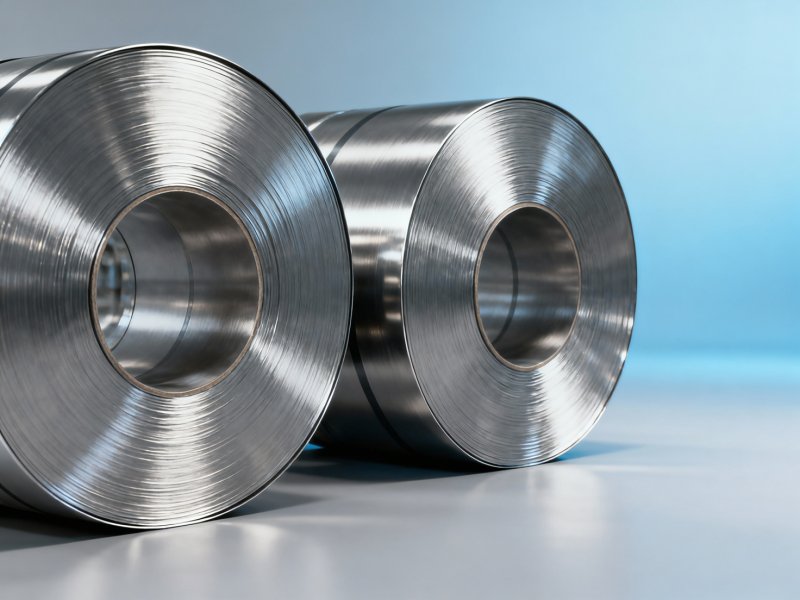
While stainless coil integrity dominates headlines, many projects actually require high-strength, cost-effective carbon steel solutions—especially for structural framing, boiler plates, and load-bearing supports. Our Rolled Coil series covers Q195 through Q345B and St35 to St52.4 grades, compliant with GB/T 700-2006, ASTM A656, and EN 10025.
These coils offer tight tolerances (±1%), consistent carbon content (0.12–0.20%), and low residual phosphorus/sulfur (≤0.045%). Their excellent weldability eliminates post-weld heat treatment needs—reducing labor costs by up to 30% in large-scale fabrication workflows.
For mixed-material projects—e.g., stainless cladding over carbon structural cores—Hongteng Fengda provides coordinated delivery schedules, unified documentation, and joint QA/QC reporting across both product lines. Typical lead time: 7–15 days for standard widths (0.1mm–300mm).
Why Global Buyers Choose Hongteng Fengda for Verified Material Integrity
We don’t just supply steel—we de-risk your supply chain. As a structural steel manufacturer and exporter from China, Hongteng Fengda serves North America, Europe, and the Middle East with fully traceable, standards-aligned products. Every coil—whether stainless or carbon—ships with:
- EN 10204 3.1 mill certificates including full heat analysis and mechanical test results
- Third-party PMI reports (SGS/BV/TÜV available upon request)
- Batch-level traceability via QR-coded packaging labels
- ISO 9001-certified production control—validated across 4 internal QC checkpoints
Our OEM clients report 40% faster project handover when sourcing both structural profiles (angle, channel, beams) and specialty coils from one partner—eliminating cross-supplier coordination delays and certification mismatches.
Ready to verify your next coil order? Contact us today for: free composition verification support, ASTM/EN-compliant sample testing, custom width/annealing options, or a consolidated quote covering Rolled Coil, stainless coil, and structural components—all backed by 100% documented compliance.
- carbon steel coils
- rolled coil
- galvanized steel wire
- carbon steel pipe
- seamless pipe
- carbon steel coil
- steel pipe
- steel coil
- galvanized steel
- structural steel
- Structural Steel
- 202 stainless steel coil
- 201 stainless steel pipe
- stainless steel pipe
- stainless steel coil
- stainless coil
- ss coil
- ss 304 pipe price per meter
- ss pipe
- 1 stainless steel pipe
- stainless seamless pipe
- ss 304 pipe
- 304 pipe
- Profile
- Galvanized Steel Wire Rope
- Galvanized Steel Wire Rope supplier
- Galvanized
- Steel Wire
- carbon steel
- steel wire rope
- carbon steel pipe for oil and gas
Related recommendations
 Is acero galvanizado para exterior vulnerable to white rust formation during monsoon storage?Acero galvanizado para exterior *is* vulnerable to white rust in monsoons — but it’s preventable. Discover proven storage & handling strategies that protect your structural steel.
 Does ASTM A 36 plate meet impact toughness requirements for low-temperature bridge girders?Does ASTM A 36 plate meet low-temp bridge requirements? Short answer: no—unless specially tested. Discover why toughness matters more than strength in cold climates.
 Does ASTM A653 certification cover both zinc-coated and zinc-iron alloy coated steels?ASTM A653 covers both zinc-coated and zinc-iron alloy coated steels—but they’re not interchangeable. Learn key differences in testing, performance & certification.
 Does acero prepintado require surface pretreatment before welding or cutting?Does acero prepintado require pretreatment before welding or cutting? Discover when grinding is essential—and when it’s not—for safety, weld integrity & corrosion resistance.
Please give us a message


Please enter what you want to find