Angle iron thickness issues can quietly trigger costly rework, delays, and safety concerns in steel fabrication and installation. For buyers and engineers sourcing angle iron, L shape mild steel, or other Steel Construction Material, understanding thickness tolerance is essential to quality control, fit-up accuracy, and project performance. This article explains the common causes, inspection points, and practical solutions to reduce waste and improve reliability.
Why do angle iron thickness problems create so much rework?
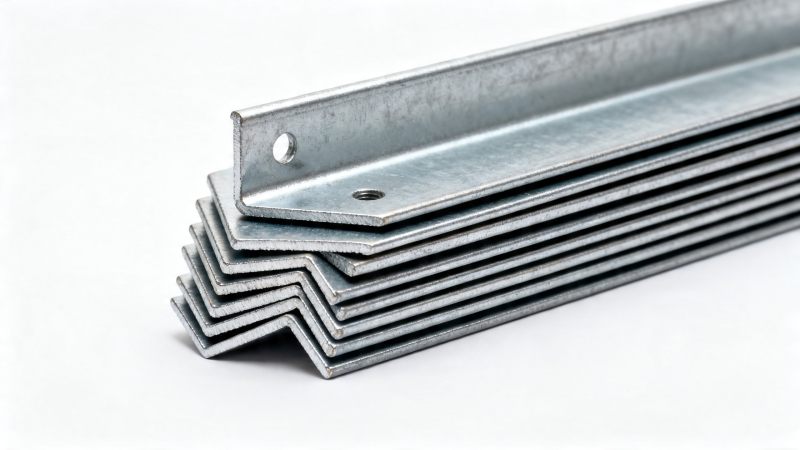
In steel fabrication, angle iron thickness is not just a dimensional detail. It directly affects hole alignment, weld preparation, structural fit-up, galvanizing behavior, and final assembly tolerances. A thickness deviation of even a small range can multiply through cutting, punching, drilling, and site installation, especially when components are prepared in batches of 50, 100, or more pieces.
For operators and project managers, the most common problem is that thickness variation is often discovered late. It may first appear as poor nesting on CNC lines, incorrect bolt grip length, unequal leg stiffness, or unexpected gaps during erection. Once steel reaches the jobsite, correction usually costs more than detection at the mill or warehouse stage.
For procurement teams and technical evaluators, thickness inconsistency also increases sourcing risk. A quotation may look competitive, but if the supplied angle steel falls outside the usable tolerance range for a specific project, hidden costs emerge through additional labor, scrap, schedule extension, and inspection disputes. In many projects, a 2–4 week delivery plan can quickly become a 3–6 week recovery cycle after rework starts.
This is why thickness control matters across the full chain: manufacturer, exporter, distributor, fabricator, installer, quality inspector, and final owner. For global buyers working with ASTM, EN, JIS, or GB requirements, the issue is not only whether angle iron is supplied, but whether it is supplied with stable dimensional consistency and verifiable quality records.
Where the rework usually begins
- Cutting programs are set from nominal dimensions, while actual thickness varies enough to affect edge quality or bevel preparation.
- Connection plates and bolts are selected for a target stack thickness, but assembled members exceed the expected range.
- Welding parameters are based on one thickness level, causing underfill, distortion, or extra passes when material is thicker than planned.
- Hot-dip galvanizing or coating systems behave differently on uneven sections, making appearance and corrosion protection less consistent.
What causes thickness variation in angle iron supply?
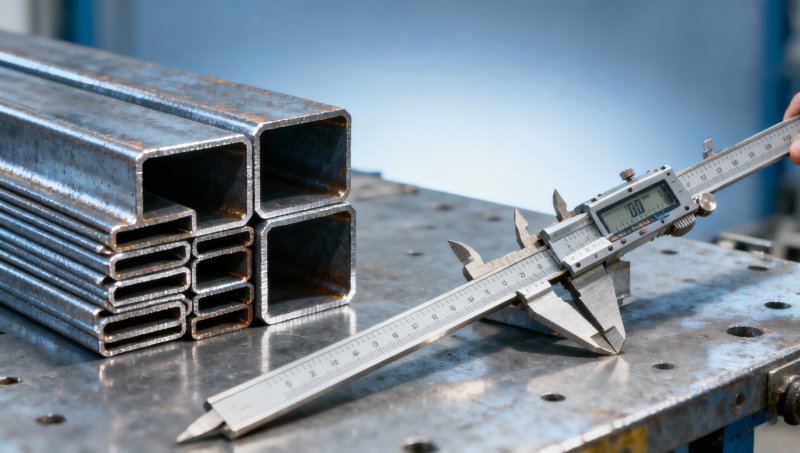
Thickness problems usually come from a combination of rolling variation, standard interpretation, grade substitution, and weak incoming inspection. In the steel industry, angle iron is produced under dimensional tolerances rather than idealized exact sizes. Buyers who use only nominal dimensions on purchase orders often miss the operating range that matters to fabrication.
Another common cause is confusion between standard compliance and application suitability. A section may still be within one standard’s allowable tolerance, yet remain unsuitable for a project that needs tighter fit-up. This is especially important for tower structures, support frames, industrial brackets, and OEM assemblies where repeated hole positions and mating parts require narrow control.
Supply chain mixing is also a practical issue. When angle steel is sourced from multiple heats, mills, or traders without unified inspection records, thickness consistency can change from bundle to bundle. For distributors and EPC contractors handling medium-volume or large-volume projects, this risk grows if material is merged during warehousing or repacking.
At Hongteng Fengda, dimensional stability starts with modern manufacturing facilities, controlled production, and quality checks aligned with international standards such as ASTM, EN, JIS, and GB. For overseas buyers, that matters because inspection is more effective before shipment than after containers arrive and downstream operations have already been scheduled.
Common root causes buyers should investigate
Before placing an order, it helps to review the full process rather than only the invoice price. The table below summarizes frequent sources of angle iron thickness problems and their direct impact on fabrication and installation.
The main takeaway is simple: most thickness-related rework is preventable when buyers define usable tolerance, not just product name and nominal size. A reliable structural steel supplier should help clarify this before production and shipment.
How should buyers inspect angle iron thickness before fabrication starts?
The best time to control rework is before the first cut. Incoming inspection does not need to be complicated, but it must be systematic. For most projects, 5 key checks are enough to catch the majority of thickness-related issues: standard confirmation, bundle identification, measurement method, sampling frequency, and downstream process suitability.
Quality teams should avoid measuring only one point. Angle iron may show localized deviation near edges, legs, or ends. A practical approach is to inspect multiple positions per length and compare actual readings against the project requirement and the relevant standard. If a project includes repetitive bolted frames, tighter internal acceptance criteria may be needed than the standard minimum.
For fabrication workshops, inspection should also connect to process settings. If the material goes into punching, drilling, robotic welding, or galvanizing, the measured thickness should be reviewed against machine setup windows. Even a seemingly small difference can affect tool wear, penetration, or assembly alignment over 20–30 repeated joints.
For international sourcing, buyers often benefit from a pre-shipment review plus receiving inspection. This 2-stage approach reduces the chance that nonconforming angle steel enters production. It is especially useful when delivery windows are tight and replacement material would take another 2–5 weeks.
A practical inspection checklist for angle iron thickness
- Verify the order against ASTM, EN, JIS, or GB reference and confirm whether project tolerance is equal to or stricter than the base standard.
- Measure several points on each sampled length, including near both ends and at the mid-section.
- Record bundle number, heat traceability, and nominal versus actual values for later claim support.
- Review fit-up requirements for bolts, welded joints, plates, and brackets before releasing material to production.
- Separate nonconforming bundles immediately to avoid mixing with accepted stock.
Where inserted product solutions can support broader steel sourcing
Many buyers who source angle steel also purchase related profiles and round products for towers, supports, brackets, fastener parts, and structural accessories. In these cases, consistency across different steel categories matters. As an example, Galvanized Round Steel can be used in electric power tower, communication tower, railway, highway protection, street light pole, marine components, building steel structure components, and many machining applications where corrosion resistance and dimensional control are important.
This product is available in iron material with DC01 model reference, tensile strength of 570 -820 MPa, diameter range 16–250 mm, and customized length options. Its hot galvanizing anti-corrosion surface, heat treatment options, straightening support, surface control, ultrasonic control device, and tighter tolerances on request make it relevant for buyers building a more stable sourcing system across structural steel and processed components.
When procurement teams evaluate suppliers, it is often more efficient to work with a manufacturer that can support angle steel, channels, beams, cold formed profiles, and selected complementary items under one quality logic. That reduces communication gaps, speeds up technical confirmation, and lowers the risk of mismatch between structural members and accessory parts.
What should procurement and engineering teams compare before ordering?
A good procurement decision is rarely based on unit price alone. For angle iron thickness control, buyers should compare at least 6 dimensions: standard compliance, actual tolerance capability, lot consistency, inspection records, packaging traceability, and response speed for technical clarification. These factors affect total project cost more than a small difference in ton price.
Engineering teams should also ask whether the angle iron will be used in simple supports, welded frames, bolted structures, galvanized assemblies, or OEM components. The more precise the application, the more important actual dimensional stability becomes. In a low-tolerance assembly, the cheapest steel may become the most expensive after rework.
For financial approvers and commercial evaluators, the right comparison method is total landed risk, not just initial purchase cost. Rework can add labor hours, machine downtime, site delay penalties, and secondary freight. In many B2B projects, these indirect costs exceed the original price advantage within the first 1–2 correction cycles.
The table below helps procurement, QA, and project teams compare suppliers using criteria that directly influence angle iron thickness reliability and downstream execution.
This comparison framework is especially useful for buyers balancing cost, quality, and lead time. Hongteng Fengda supports this process by combining structural steel manufacturing, export experience, customized solutions, and quality control designed to reduce sourcing uncertainty for international projects.
A 4-step purchasing approach that lowers risk
- Step 1: Define application details, including bolted or welded use, coating process, and required standard.
- Step 2: Confirm nominal size and acceptable thickness range before quotation approval.
- Step 3: Request pre-shipment quality information and receiving inspection plan.
- Step 4: Review total cost impact, including lead time, rework risk, and technical support responsiveness.
Which mistakes do users, QC teams, and project managers often overlook?
One frequent mistake is treating all angle iron as interchangeable. In reality, the same nominal size can behave very differently in fabrication depending on standard, rolling source, and actual thickness distribution. This is a common issue in maintenance purchasing and distributor stock substitution, where availability is prioritized over project-specific suitability.
Another mistake is measuring after processing instead of before it. Once material has been cut, drilled, or welded, it becomes harder to separate original thickness deviation from process error. For quality control personnel, early inspection within the first receiving window is more efficient than root-cause analysis after several operations have already added variation.
Project managers also sometimes underestimate the schedule impact of minor nonconformance. A small issue in 10 pieces may be manageable. The same issue in 300 pieces can disrupt sequencing, labor allocation, galvanizing reservations, and delivery commitments. That is why thickness control should be discussed during kickoff, not only after a NCR is raised.
For safety and compliance teams, overlooking section thickness can also affect performance assumptions. If an assembly was designed around a specific steel profile behavior, unexplained variation should be reviewed carefully before acceptance, especially in towers, support frames, and industrial load-bearing structures.
FAQ: practical questions buyers often ask
How much thickness variation is acceptable for angle iron?
Acceptability depends on the governing standard and the application. Standard tolerance may be acceptable for general construction, but tighter internal limits are often needed for precision fit-up, repetitive bolting, or OEM fabrication. Buyers should confirm both the applicable standard and the project’s usable tolerance range before ordering.
What is the best time to inspect angle iron thickness?
The best practice is a 2-stage check: pre-shipment review at the supplier side and incoming inspection within 24–48 hours after receipt. This timing helps prevent unsuitable material from entering cutting, welding, or installation workflows.
Can low price compensate for thickness-related risk?
Usually not in serious B2B fabrication environments. A lower ton price can be erased quickly by extra labor, scrap, machine adjustment, delayed erection, or replacement freight. Total cost should include quality stability and lead time reliability, not just initial purchase value.
Who should be involved in specification review before purchase?
At minimum, procurement, engineering, QA, and project management should align before release. In larger projects, finance and commercial approvers should also review risk exposure, especially when overseas resupply could take another 2–5 weeks.
Why choose a structural steel partner that understands thickness control from order to delivery?
When angle iron thickness problems lead to rework, the real issue is often not a single piece of steel. It is the gap between specification, manufacturing, inspection, and application. A capable structural steel partner helps close that gap early by clarifying standards, confirming dimensions, supporting customized requirements, and maintaining stable production control.
Hongteng Fengda is a professional structural steel manufacturer and exporter from China, supplying angle steel, channel steel, steel beams, cold formed steel profiles, and customized structural steel components for global construction, industrial, and manufacturing projects. With modern manufacturing facilities and strict quality control, the company supports buyers who need dependable quality, stable production capacity, and practical communication around technical details.
For buyers in North America, Europe, the Middle East, and Southeast Asia, that means better coordination around ASTM, EN, JIS, and GB requirements, clearer lead-time expectations, and reduced sourcing risk. Whether the need is standard material or OEM-based structural steel solutions, early technical alignment can save significant time and cost later in the project lifecycle.
If you are evaluating angle iron, L shape mild steel, or related steel construction material, you can contact Hongteng Fengda for parameter confirmation, thickness tolerance review, product selection, customized structural steel solutions, sample support, certification requirement discussion, delivery schedule planning, and quotation communication. This is often the fastest way to reduce rework risk before it reaches your workshop or jobsite.
Please give us a message


Please enter what you want to find