Galvanized pipe specifications directly affect whether pipe sections fit together smoothly on site or create delays, forced alignment, welding corrections, and added cost. In practice, fit-up problems usually come from a small group of specification issues: outside diameter tolerance, wall thickness variation, ovality, straightness, end squareness, and zinc coating buildup. For engineers, buyers, contractors, and project managers, the real priority is not just choosing galvanized pipe, but choosing pipe with dimensional consistency and the right standard for the installation method, connection type, and jobsite conditions.
Which galvanized pipe specifications most often cause fit-up problems on site?
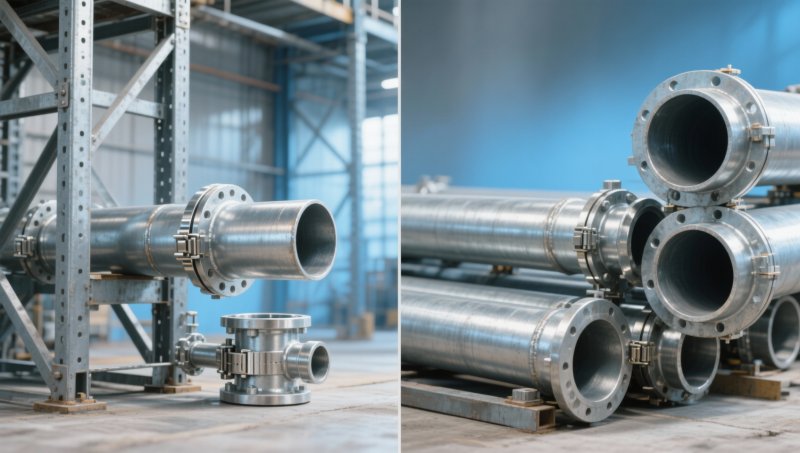
The most common fit-up issues are rarely caused by one dramatic defect. More often, they come from small dimensional deviations that accumulate across multiple pieces. When galvanized pipe is cut, welded, threaded, sleeved, clamped, or bolted into prefabricated systems, even minor inconsistencies can slow installation.
The key galvanized pipe specifications that affect site fit-up include:
- Outside diameter (OD) tolerance – If the OD varies beyond expected limits, couplings, clamps, sleeves, and mating components may not fit correctly.
- Wall thickness tolerance – Uneven wall thickness affects structural capacity, thread quality, welding performance, and alignment.
- Ovality – A pipe that is not truly round may look acceptable at first glance but can create major trouble during joining.
- Straightness – Bent or bowed pipes make long runs difficult to align, especially in steel structures, racks, supports, and fabricated assemblies.
- End squareness and cut quality – If pipe ends are not square, joint gaps become inconsistent and welding or coupling becomes harder.
- Galvanized coating thickness – Zinc buildup can change effective dimensions, especially on threaded ends, sockets, or precision-fit connections.
- Length tolerance – In modular or pre-engineered systems, small length variation can create cumulative fit-up errors.
For most on-site users, the practical takeaway is simple: good fit-up depends on dimensional control as much as corrosion protection. A pipe that meets only basic material requirements but has poor dimensional consistency can still create installation failure, rework, and schedule disruption.
Why do tolerances matter more than many buyers expect?
Many purchasing decisions focus first on grade, price, and coating type. Those factors matter, but on site, tolerances often have a more immediate impact on labor efficiency. A low-cost pipe can become expensive if crews spend extra hours grinding, forcing alignment, recutting, or replacing mismatched sections.
For example:
- If OD is slightly oversized after galvanizing, insertion into fittings or sleeves may become difficult.
- If wall thickness is inconsistent, welding heat input may need adjustment from piece to piece.
- If ends are not clean and square, root gaps may vary, reducing weld consistency.
- If straightness is poor, support frames and pipe racks may require on-site correction.
These are not only workshop concerns. They affect labor hours, safety exposure, equipment usage, and project handover timing. Technical evaluators and quality teams should therefore review pipe tolerance requirements before purchase, not after site complaints begin.
What specifications should engineers and buyers check before ordering?
To reduce fit-up risk, buyers should not rely on a basic product name alone such as “galvanized steel pipe.” They should verify the manufacturing and inspection details tied to the application. A useful pre-order checklist includes:
- Applicable standard
Confirm whether the pipe complies with the required ASTM, EN, JIS, or GB standard and whether the dimensional tolerances in that standard match your project needs. - Pipe manufacturing method
Seamless, ERW, and other production routes may differ in dimensional stability, weld seam behavior, and downstream processing suitability. - Base steel grade
Material strength and weldability should fit the intended structural or mechanical use. - Galvanizing method
Hot-dip galvanizing can create coating thickness variation that may affect thread fit, insertion tolerance, and final dimensions. - Tolerance requirements
State clear requirements for OD, wall thickness, length, straightness, and end preparation in the purchase order. - Connection method
Threaded, welded, grooved, flanged, or slip-fit systems have different sensitivity to dimensional variation. - Inspection documents
Request mill test certificates, coating thickness reports, dimensional inspection data, and visual inspection records when needed.
This is especially important for projects using prefabricated steel assemblies. In many industrial and structural applications, pipe components interface with beams, channels, connection plates, and support systems. Where heavier framing is also involved, buyers often source complementary structural sections together for better dimensional coordination. For example, in plant structures, equipment platforms, and bridging support assemblies, products such as Hot Rolled H Beam may be specified alongside pipe systems. Available in grades such as Q235, Q345B, Q460C, SS400, S275JR, S355JR, A572, and A992, with flange thickness from 8-64mm, web thickness from 5-36.5mm, flange width from 50-400mm, web width from 100-900mm, and lengths from 1m-12m or as required, such sections are commonly used in steel structure, bridging, shipbuilding, and mechanical manufacturing projects. For contractors, coordinated sourcing of pipe and structural steel can reduce interface errors during fit-up and installation.
How does galvanized coating thickness affect installation in real projects?
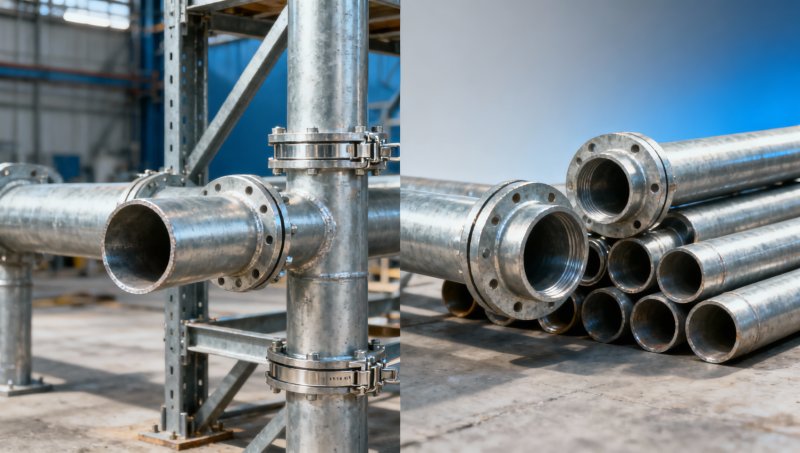
Galvanized coating thickness is essential for corrosion resistance, but thicker is not always better if dimensional control is poor. Excess zinc can influence assembly in several ways:
- Thread interference – Heavy coating on threaded sections can make assembly tight or inconsistent.
- Socket and sleeve fit issues – Build-up on the outer surface may reduce clearance.
- Welding preparation problems – Coated surfaces may require additional cleaning before welding, increasing labor.
- Uneven surface profile – Irregular coating can affect clamp seating or bracket contact.
For this reason, coating specification should be reviewed together with dimensional tolerances, not separately. The right balance depends on service environment, joining method, and fabrication sequence. If field welding is expected, teams should also define how galvanizing will be treated at weld zones and repaired after installation.
What on-site warning signs indicate the pipe specification may be wrong?
By the time pipe reaches site, poor specification control usually shows up in recognizable patterns. Common warning signs include:
- Repeated difficulty inserting pipe into standard fittings
- Visible mismatch at joints despite correct nominal size
- Unexpected root gap variation during welding
- Frequent need for grinding, trimming, or force-fit correction
- Alignment drift across long pipe runs or prefabricated modules
- Thread damage or seizure during assembly
- Inconsistent clamp seating or support contact
When these issues appear repeatedly, the problem is often not site workmanship alone. It may point to incomplete purchasing specifications, unsuitable standards, weak supplier quality control, or inadequate incoming inspection.
How can project teams reduce fit-up risk before materials arrive?
The best way to avoid on-site fit-up trouble is to control risk early. A practical approach includes both technical definition and supplier management.
For buyers and procurement teams:
- Specify the standard, grade, coating method, and tolerance requirements clearly in the RFQ and PO.
- Confirm whether dimensions are measured before or after galvanizing where relevant.
- Ask for sample inspection records for OD, wall thickness, straightness, and coating thickness.
- Verify packaging and transport methods to avoid bending or end damage in transit.
For engineers and technical reviewers:
- Match specification detail to the actual joint design and installation method.
- Review whether field welding, threading, or modular assembly increases sensitivity to dimensional variation.
- Define acceptance limits for critical dimensions rather than assuming default commercial tolerance is enough.
For site and quality teams:
- Inspect random incoming pieces for OD, wall thickness, straightness, and end condition.
- Check coating consistency at mating areas and threaded sections.
- Separate suspect batches early before they disrupt installation.
For distributors, fabricators, and project managers, this kind of front-end control usually delivers a better return than dealing with rework after material arrival. It protects schedule certainty, labor productivity, and quality outcomes.
What makes a supplier more reliable for fit-up-sensitive galvanized pipe orders?
Not all suppliers manage fit-up risk equally. A reliable supplier for galvanized steel products should offer more than basic production capacity. Key signs of a dependable partner include:
- Experience with international standards such as ASTM, EN, JIS, and GB
- Stable manufacturing processes and consistent batch control
- Clear dimensional inspection procedures
- Ability to support customized specifications or OEM requirements
- Quality documentation and responsive technical communication
- Understanding of export packaging, lead time control, and project coordination
For global buyers, especially those managing structural and industrial projects, supplier reliability is not just about product compliance. It is about whether the material can be installed efficiently with minimal uncertainty on site.
Galvanized pipe specifications affect fit-up far more than many teams realize. The most important factors are dimensional tolerances, roundness, straightness, end quality, and zinc coating control, all evaluated in relation to the actual joining method and project use. Buyers, engineers, contractors, and decision-makers can avoid costly delays by focusing less on nominal size alone and more on measurable consistency. When the specification is clear and the supplier has strong quality control, on-site installation becomes faster, safer, and more predictable.
Please give us a message


Please enter what you want to find