Hot Rolled Beams are widely used as Steel Construction Material, but surface issues can directly affect performance, safety, and project cost. Before selecting an I-Beam, I-Shaped Beams, or related structural sections, buyers and engineers should first check rust, scale, cracks, edge defects, and coating condition. This guide explains the key inspection points that help global purchasers, fabricators, and project teams reduce sourcing risks and ensure reliable quality.
Why surface inspection comes first in hot rolled beam procurement
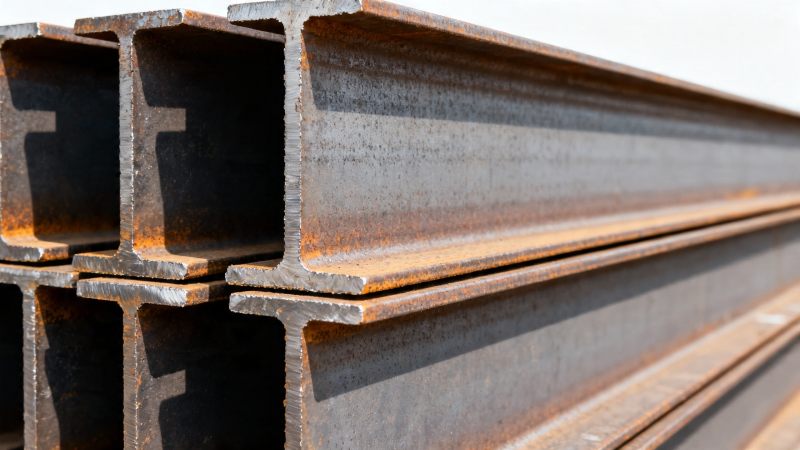
For structural steel buyers, surface quality is not only a visual concern. It is often the first visible signal of how the beam was produced, stored, handled, and protected before delivery. In many projects, a beam may still meet basic dimensional requirements, yet poor surface condition can create downstream problems in welding, painting, galvanizing, fit-up, and site acceptance.
This matters to more than one department. Operators care about safe handling and weldability. QC and safety teams focus on defects that may indicate hidden risk. Procurement teams need to avoid claims, rework, and delayed installation. Financial approvers usually look at total cost, and surface defects can quickly turn a low ex-works price into a higher installed cost after cleaning, repair, rejection, or replacement.
In practical sourcing, there are 5 first-check items that should be reviewed before discussing only price or lead time: rust level, mill scale condition, cracks, edge or flange defects, and coating or oil protection. These checks can often be completed during pre-shipment inspection, warehouse receiving, or sample approval within 15-30 minutes per batch if the checklist is clear and the acceptance standard is agreed in advance.
For importers and project managers working across North America, Europe, the Middle East, and Southeast Asia, consistent quality matters as much as supply continuity. A structural steel manufacturer with stable process control, traceable production, and familiarity with ASTM, EN, JIS, and GB requirements can reduce quality variation between lots and support faster project approval.
- Check the beam surface before fabrication, not after coating or installation.
- Define acceptance by project use: exposed steel, welded structure, galvanized frame, or general support member.
- Separate cosmetic marks from defects that affect structural integrity or finishing performance.
- Record photos, heat number, bundle tag, and quantity by lot to simplify claims and traceability.
Who should pay attention first
Information researchers usually want a simple answer: what can go wrong on the surface of a hot rolled beam? The short answer is that visible issues can point to storage exposure, rolling instability, trimming quality, or coating inconsistency. Technical evaluators and project engineers then go one step further, asking whether the issue is acceptable, repairable, or rejectable for the intended application.
Distributors, OEM buyers, and contractors often need a supplier that can support both standard sections and customized structural steel components. That is especially important when procurement is tied to fixed installation windows of 2-4 weeks, because any dispute over rust grade, crack indication, or edge damage can interrupt the entire fabrication schedule.
What surface issues should be checked on hot rolled beams first
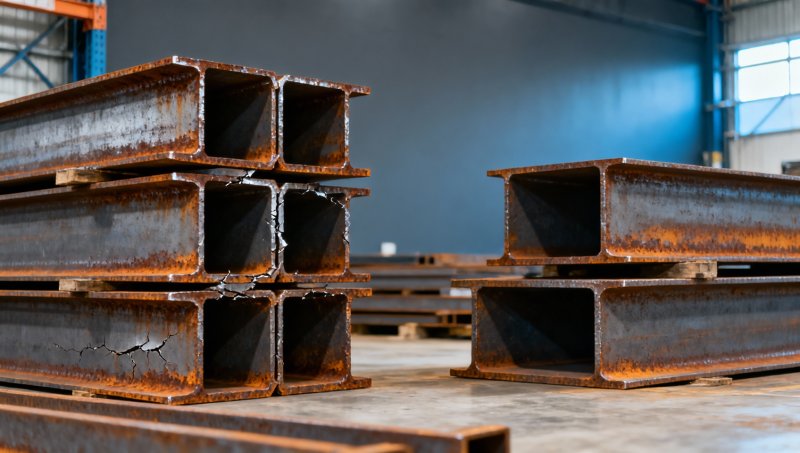
A practical inspection process starts with the defects most likely to affect structural reliability, fabrication efficiency, or finishing cost. While exact acceptance depends on project specification, the first 5 checks are widely relevant in steel beam sourcing. These should be reviewed on the web, flange, corners, cut ends, and bundle exterior before unloading is completed.
The table below summarizes common hot rolled beam surface issues, what they may indicate, and why buyers should react quickly. It is useful for procurement teams, QC inspectors, and fabricators who need a clear evaluation framework during incoming inspection or pre-shipment review.
The key point is prioritization. Cracks and deep gouges need immediate technical review. Rust and scale often require classification by severity and end use. Light surface oxidation on beams for blasting and repainting may be manageable, while the same condition can be unacceptable for exposed architectural steel or stock intended for fast turnover in humid storage conditions.
How to distinguish cosmetic issues from real risk
Not every mark is a rejection issue. Small roller marks, handling scratches, or minor discoloration may have limited impact if they do not reduce section thickness, interfere with fit-up, or compromise surface preparation. In contrast, surface-breaking cracks, layered laps, and repeated edge damage across multiple pieces suggest a process or handling problem that deserves lot-level review.
A useful rule for project teams is to divide findings into 3 groups: acceptable as received, acceptable after agreed repair, and subject to hold or replacement. This simple classification reduces argument between supplier, buyer, and site team. It also helps finance and management teams understand whether the issue affects only appearance, fabrication hours, or structural acceptance.
Quick receiving checklist for beam bundles
- Inspect at least 3 positions per bundle: top exposed beam, middle accessible beam, and one beam near the end strap area.
- Review both flange faces, web area, and cut ends because defects often concentrate at transitions and edges.
- Take close-up photos with a scale reference when rust pits, cracks, or deep edge damage are found.
- Match the issue to application: painted indoor frame, galvanized support, welded assembly, or exposed structural member.
How procurement teams can evaluate acceptance, cost, and alternatives
A common mistake in steel sourcing is evaluating hot rolled beams only by section size, unit price, and shipment time. In reality, surface condition can shift total cost by adding cleaning, grinding, re-coating, inspection delay, and site labor. For buyers comparing multiple suppliers, a structured evaluation matrix is more useful than a simple quotation sheet.
The next table helps compare what action is typically required when different surface conditions are found. It does not replace project specifications, but it gives procurement, QC, and project teams a practical way to estimate risk before issuing approval, non-conformance, or conditional acceptance.
This comparison shows why a slightly higher quoted price from a better-controlled supplier may be commercially better. If a supplier can maintain stable production, use proper protection such as passivation, oiling, lacquer sealing, phosphating, galvanized finish, transparent oil, or anti-rust oil where suitable, and support pre-shipment inspection records, the total landed risk is often lower.
Mid-project buyers also compare beams with related steel items for machining, support fabrication, or accessory production. In some applications, projects may need round bars together with beams for brackets, connectors, or fabricated assemblies. For buyers seeking a matching steel source, 45# Carbon Steel Round Bar can be considered where excellent strength and wear resistance are required, with options such as hot rolled or cold rolled supply, diameter ranges from 5-2500mm, and common lengths including 2m, 5m, 6m, and 12m.
That insert matters because many global buyers prefer supplier consolidation. A manufacturer able to supply beams, channels, angles, cold formed profiles, customized components, and selected bar products under standards such as ASTM, EN, JIS, and GB can simplify communication, reduce split shipments, and make quality coordination easier across 2-3 linked material categories in one project package.
What buyers should confirm before placing the order
- Material grade and standard, such as ASTM, EN, JIS, or GB, with required mill documentation.
- Surface delivery condition, including whether mill scale is acceptable or blasting, oiling, or coating is required.
- Inspection method and acceptance criteria for cracks, pitting, edge defects, and dimensional tolerance.
- Packing, storage protection, and shipping route, especially for sea transit of 2-6 weeks.
- Lead time by quantity tier: sample, trial order, and container-level production.
What standards, inspection methods, and workflow reduce sourcing risk
A reliable structural steel supply process does not rely on visual judgment alone. It combines standards awareness, production control, receiving discipline, and communication between supplier and buyer. For hot rolled beams, the exact standard depends on market and project specification, but international buyers commonly ask suppliers to align production and documentation with ASTM, EN, JIS, or GB frameworks.
For project execution, a 4-step workflow is often the most effective. First, define the beam type, grade, dimensions, and end use. Second, agree the surface acceptance criteria before production or dispatch. Third, complete pre-shipment inspection with photos and lot identification. Fourth, verify receiving condition after unloading and before fabrication starts. This approach reduces disputes and limits delay to early project stages rather than site erection stages.
Hongteng Fengda supports this kind of workflow by combining structural steel manufacturing and export experience with practical quality control. For buyers serving construction, industrial, and manufacturing projects, that means support not only in supplying angle steel, channel steel, steel beams, cold formed steel profiles, and customized structural steel components, but also in clarifying standards, production consistency, and delivery planning.
This is especially useful when procurement must balance 3 core decision targets at the same time: compliance, cost control, and schedule reliability. A supplier familiar with OEM requests and standard specifications can help buyers avoid over-specifying where unnecessary and under-specifying where the risk is high, particularly in export projects exposed to long transit, mixed climates, and strict receiving control.
Typical inspection points before shipment and after arrival
- Verify product marking, quantity, and bundle identity against the packing list and mill documents.
- Check visible beam surfaces for crack indications, rust severity, edge damage, and coating continuity.
- Confirm dimensional tolerance on representative samples, especially flange width, web thickness, and straightness.
- Review storage condition immediately after arrival; even 24-72 hours of wet exposure can worsen surface condition on unprotected steel.
Common mistakes that increase project cost
One mistake is accepting vague wording such as “commercial surface” without defining expected condition. Another is assuming all rust is harmless. Light oxidation may be manageable, but active corrosion with pitting is different. A third mistake is waiting until the steel reaches fabrication or site assembly before opening the dispute. By then, evidence is weaker and schedule pressure is stronger.
Another frequent issue is treating all applications the same. A beam for concealed support in a controlled indoor environment may have a different acceptable surface condition than a beam intended for exposed architecture, offshore-related fabrication, or hot-dip galvanizing. Procurement should always connect acceptance criteria to end use, not to generic assumptions.
FAQ and next step: how to buy hot rolled beams with more confidence
Below are common questions from importers, project teams, distributors, and technical reviewers. These questions usually appear when comparing suppliers, reviewing samples, or preparing a first order for structural steel beams used in construction and industrial applications.
How much rust is acceptable on hot rolled beams?
It depends on the intended use and the agreed delivery condition. Light uniform rust that can be removed during normal surface preparation may be acceptable for some fabricated structures. However, if rust includes pitting, layered corrosion, or large wet-storage stains, buyers should request closer review. For coated or exposed-use beams, tolerance is usually stricter than for beams that will be blasted and repainted anyway.
Are mill scale and cracks equally serious?
No. Loose or heavy mill scale mainly affects finishing, cleaning, and coating adhesion, so it is often a process and cost issue. Cracks are more serious because they may indicate a structural or metallurgical concern, especially if they are surface-breaking and located at stress-sensitive areas such as flange edges or cut ends. Cracks normally require immediate hold and technical assessment.
What lead time should buyers plan for structural steel exports?
Lead time varies by section size, quantity, customization, and port schedule. For standard structural steel with routine production, buyers often plan around 2-4 weeks for production plus shipping time depending on destination. If inspection, coating, OEM processing, or mixed-item consolidation is required, project teams should allow additional time and lock acceptance criteria early.
What documents should procurement request besides price?
At minimum, request material standard confirmation, size list, quantity breakdown, packing method, surface delivery condition, inspection records, and mill test documentation where required. For export orders, it is also practical to ask for bundle photos, marking details, and a short pre-shipment report that identifies any repaired or sorted pieces. This reduces argument after arrival.
Why choose a supplier with both manufacturing and export experience?
Because many sourcing risks happen at the interface between production and delivery. A supplier that understands rolling quality, packing protection, export handling, standard compliance, and buyer communication is better positioned to support stable quality and dependable lead times. That matters when projects involve multiple material types, tight approval cycles, and cost-sensitive schedules.
If you are reviewing hot rolled beams for construction, fabrication, distribution, or project tendering, Hongteng Fengda can support practical discussions on beam specifications, surface condition expectations, applicable ASTM/EN/JIS/GB standards, packaging protection, OEM processing, and combined supply planning. You can also ask about matching structural products, sample support, production scheduling, and export delivery options for different order volumes.
For the next step, send your required beam type, grade, size range, quantity, destination market, and any key concerns such as rust control, coating condition, inspection scope, or delivery timing. This makes it easier to confirm product selection, quotation details, documentation needs, and a workable supply plan before order placement.
Please give us a message


Please enter what you want to find