A Complete Guide for Global Buyers and Engineering Projects
Structural steel products are widely used in construction, infrastructure, industrial plants, and machinery manufacturing. To ensure safety, performance, and compatibility across different markets, international standards for structural steel products play a critical role in global sourcing and project execution.
Understanding these standards helps buyers select the right materials, avoid quality risks, and ensure compliance with local regulations.
Why Structural Steel Standards Matter
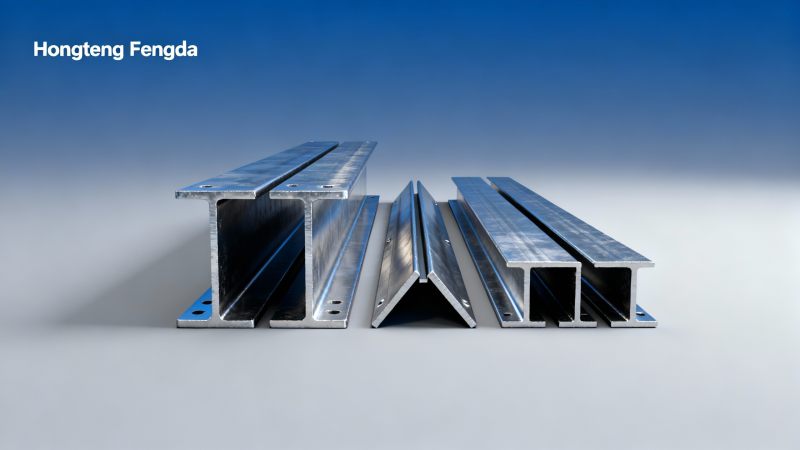
International standards define the chemical composition, mechanical properties, dimensional tolerances, and testing requirements of structural steel products. Without clear standards, steel quality can vary significantly, leading to structural risks, installation problems, or regulatory issues.
For global buyers, standards provide:
A common technical language between suppliers and buyers
Assurance of strength, durability, and safety
Easier comparison between products from different regions
Reduced risk in international procurement
Major International Structural Steel Standards
Different regions adopt different steel standards. The most commonly used international systems include ASTM, EN, JIS, and GB.
ASTM Standards (United States)
ASTM standards are widely used in North America and many international projects.
They focus on mechanical performance, chemical composition, and testing methods.
Typical applications:
Building structures
Industrial facilities
Infrastructure projects
ASTM standards are often required for projects in the U.S., Canada, and export-oriented engineering works.
EN Standards (Europe)
EN standards are applied across European countries and are increasingly accepted worldwide.
They emphasize consistency, traceability, and strict quality control.
Key features:
Clear classification of steel grades
Defined tolerances and performance requirements
Strong focus on safety and compliance
EN standards are commonly required for European construction and industrial projects.
JIS Standards (Japan and Asia)
JIS standards are widely used in Japan and parts of Asia.
They are known for precision, dimensional accuracy, and manufacturing consistency.
Typical usage includes:
Machinery manufacturing
Industrial steel structures
High-precision engineering applications
GB Standards (China)
GB standards regulate structural steel production in China.
Many GB grades are equivalent to ASTM, EN, or JIS standards and are widely used for export manufacturing.
For international buyers, it is important to confirm equivalency and compliance when sourcing GB-standard steel products.
Common Structural Steel Products Covered by Standards
International standards apply to a wide range of structural steel products, including:
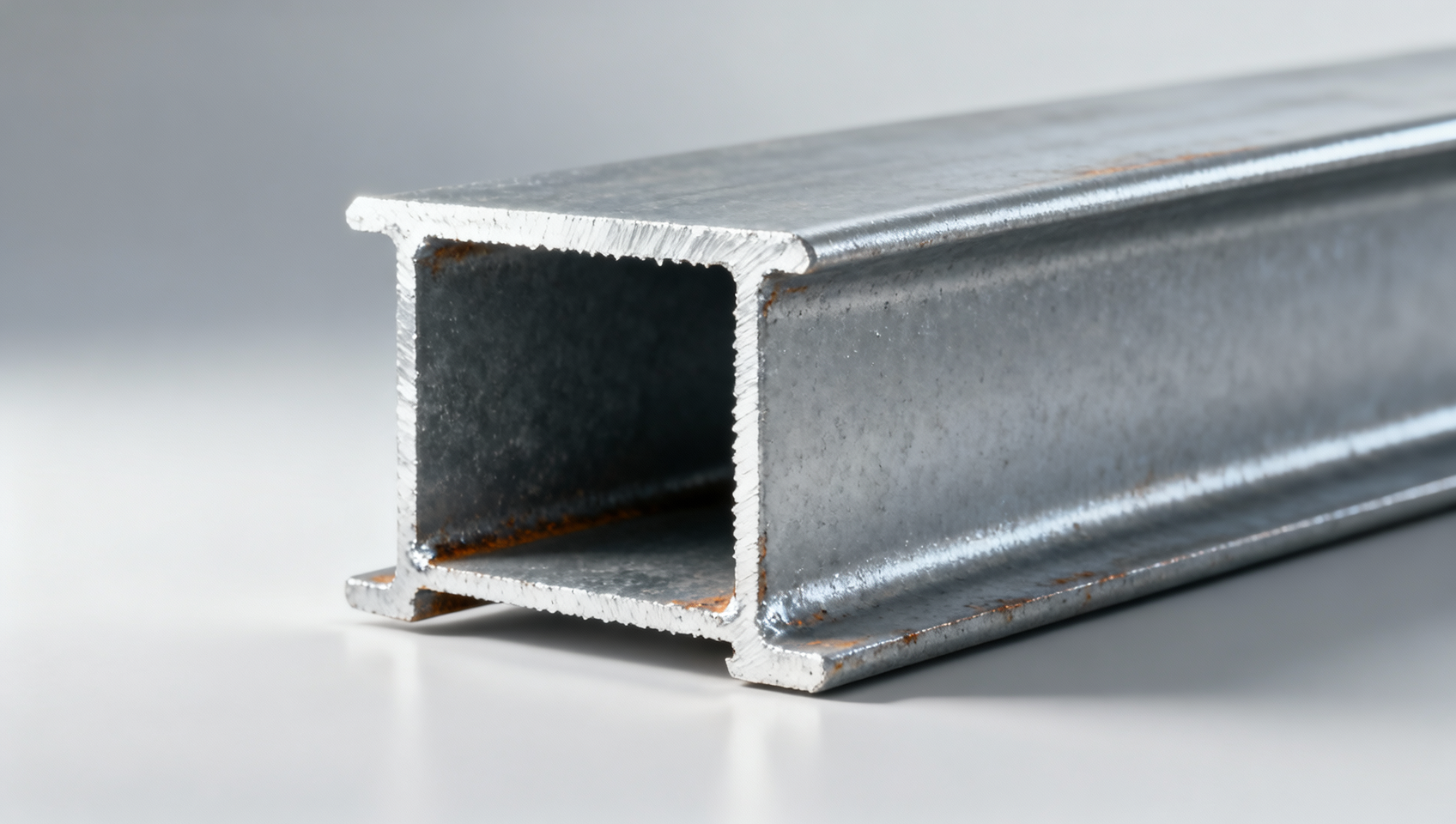
Channel steel and C channels
Steel beams
Cold formed steel profiles
Customized structural steel components
Each product type has specific requirements related to shape, strength, tolerances, and testing.
How Buyers Should Use Structural Steel Standards
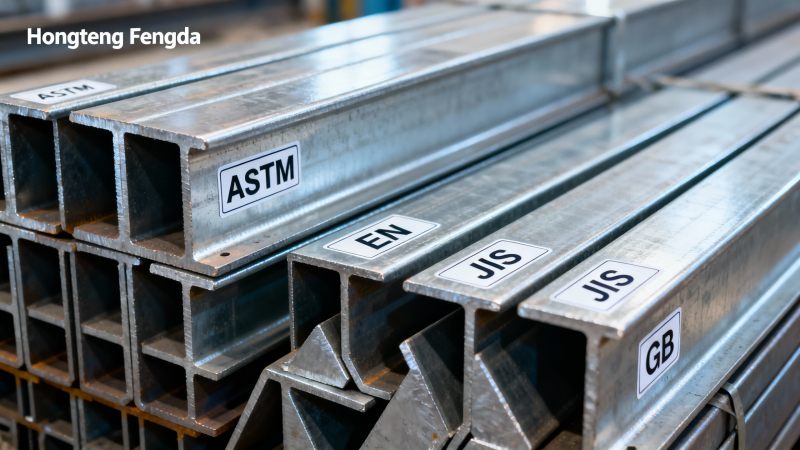
To reduce sourcing risks, buyers should:
Clearly specify the required standard and grade in purchase orders
Request mill test certificates (MTC) for each batch
Verify dimensional and mechanical properties
Confirm surface treatment and tolerance requirements
Conduct third-party inspections for critical projects
Following standards is not only a technical requirement but also a key factor in long-term project reliability.
Conclusion
International standards for structural steel products provide the foundation for quality, safety, and consistency in global construction and industrial projects. By understanding ASTM, EN, JIS, and GB standards, buyers can make informed decisions, reduce procurement risks, and ensure steel products meet project and regulatory requirements.
For global sourcing, standards are not optional—they are essential.
Anchor:what is angle steel
Anchor:how to test structural steel quality
Anchor:angle steel vs channel steel differences
FAQ
What are the main international standards for structural steel products?
How do buyers choose the right steel standard for a project?
What documents should be provided for standards compliance?
Can GB standard steel be used for ASTM or EN projects?
Related recommendations
 How long does acero prepintado retain gloss and color stability in direct desert sunlight?Acero prepintado gloss & color stability in desert sun? Discover real-world performance data, PVDF vs. polyester longevity, and spec-critical insights for GCC projects.
 Does acero pregalvanizado maintain coating integrity after cold bending to 90 degrees?Acero pregalvanizado maintains coating integrity after 90° cold bending — when engineered right. Discover how Hongteng Fengda guarantees real-world performance, adhesion & corrosion resistance.
 Do the advantages of galvanized steel include reduced fire risk compared to untreated carbon steel?Advantages of galvanized steel include measurable fire-risk reduction vs. untreated carbon steel—learn how zinc delays ignition, buys critical escape time, and enhances safety without false 'fireproof' claims.
 How much does 2 inch ss pipe price increase when upgrading from Schedule 40 to Schedule 80 for high-pressure systems?2 inch ss pipe price increases 18–35% when upgrading from Sch 40 to Sch 80—discover why, when it’s truly needed, and how to avoid overpaying.
Please give us a message


Please enter what you want to find