Ensuring the quality and compliance of galvanized steel channel is essential for maintaining structural integrity, safety, and long-term project performance. For QC managers and technical decision-makers, understanding international testing standards and evaluation methods is key to verifying product reliability. This introduction explores how Hongteng Fengda applies rigorous testing processes and aligns with ASTM, EN, JIS, and GB standards to guarantee consistent, high‑grade galvanized steel channel for global construction and manufacturing applications. By implementing advanced galvanizing techniques, precise dimension inspections, and mechanical testing, the company maintains exceptional control over every production batch, securing buyer confidence worldwide.
Definition and Quality Testing Overview
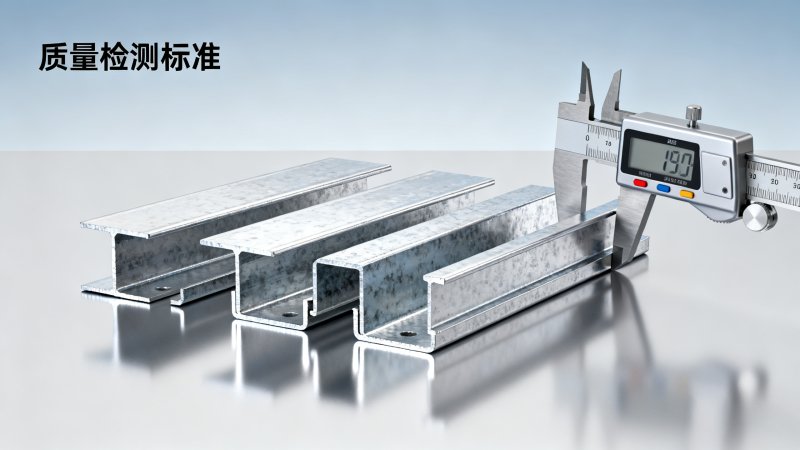
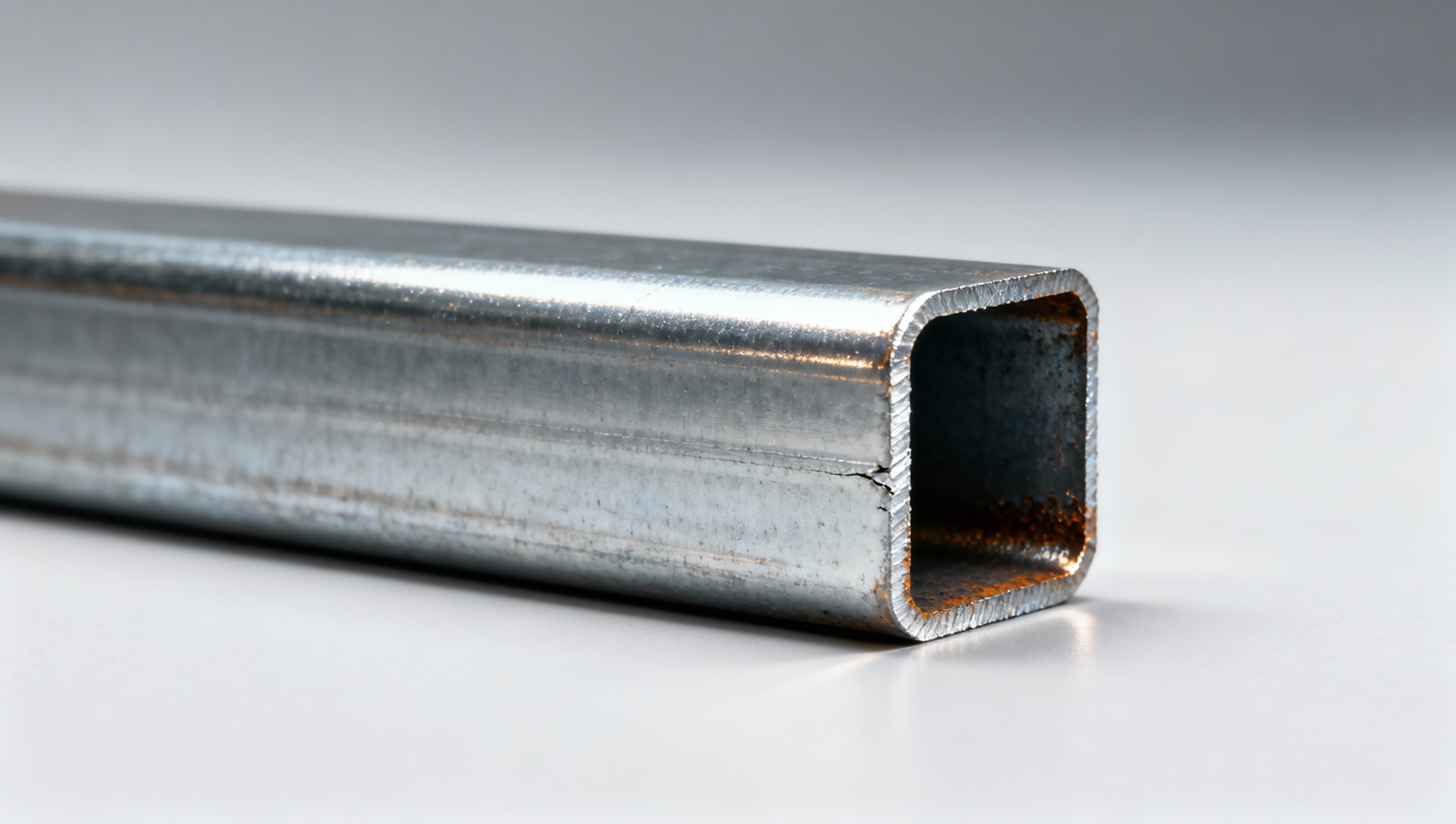
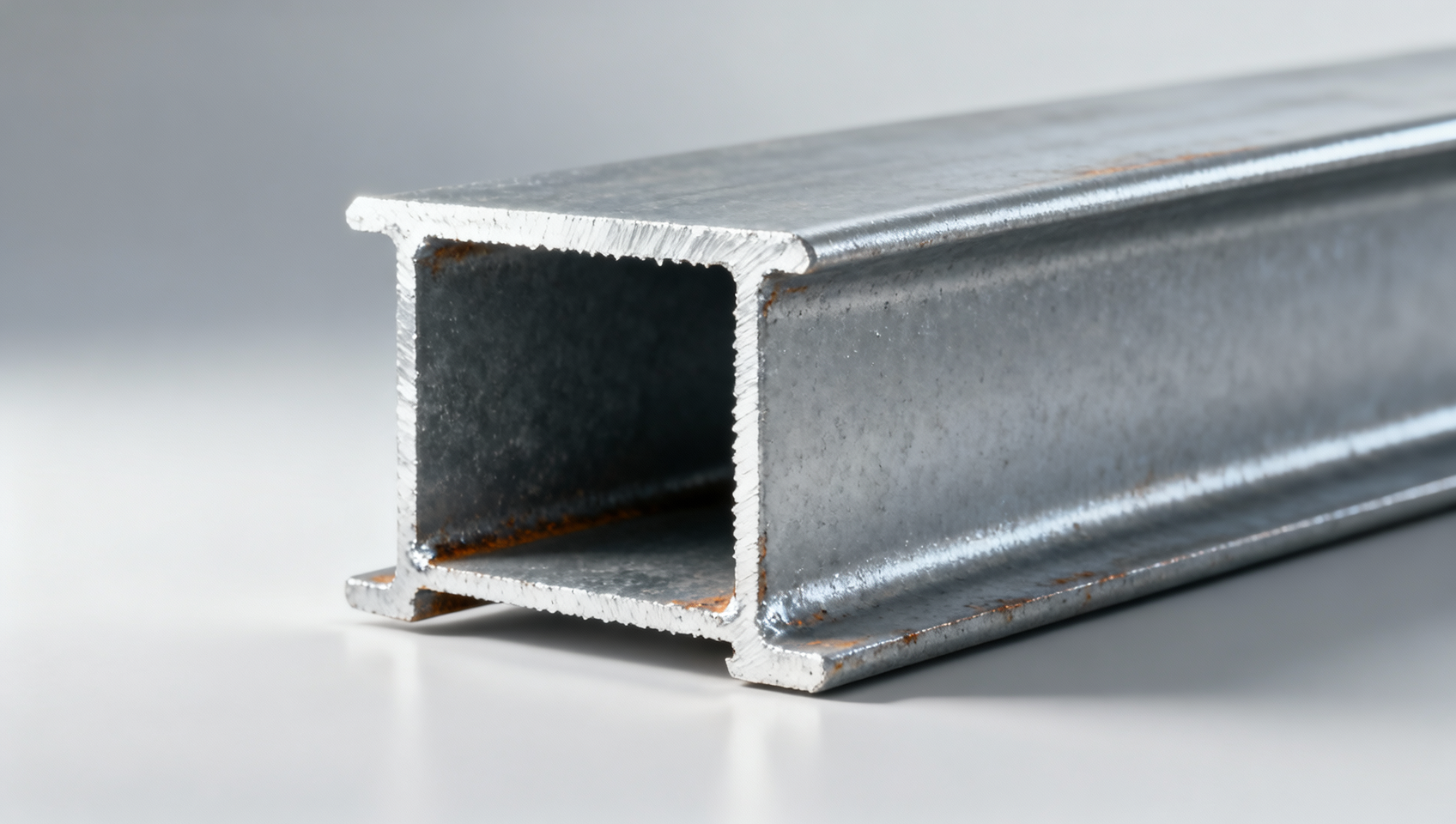
A galvanized steel channel is a hot-dip or electro-galvanized C-shaped structural component designed for strength, corrosion resistance, and machinability. It is widely used in building frames, bridges, machinery, and modular manufacturing systems. For quality control managers, understanding the fundamental properties and test requirements of galvanized channel ensures the selection of safe, compliant, and durable materials. The core quality assessment methods include coating thickness measurement, adhesion testing, tensile and yield strength evaluation, as well as visual and dimensional inspection. Each of these tests helps verify that the product meets specifications defined by ASTM A36, A123, EN ISO 1461, and equivalent JIS or GB standards. The galvanized coating provides sacrificial protection, which is evaluated through accelerated salt-spray tests and immersion corrosion evaluations. Through repeated validation and traceable records, Hongteng Fengda ensures that galvanized steel channels and related products satisfy both structural requirements and environmental durability expectations.
Market Overview and Industry Context
The global demand for galvanized steel channel has been steadily rising in alignment with infrastructure renewal, industrial automation, and modular construction growth. In regions such as North America and Southeast Asia, project owners prioritize long-term corrosion performance due to harsh environmental conditions like coastal atmospheres and humidity. Meanwhile, European markets emphasize traceability and sustainability, requiring recycling documentation and energy-efficient processing. The integration of international standards such as EN 10279 and ASTM A653 provides interoperability among suppliers and contractors. In China, structural steel manufacturers such as Hongteng Fengda adopt digital inspection systems and continuous quality improvement programs to meet these global standards. Their approach integrates advanced galvanizing lines, ultrasonic defect detection, and digital measurement of geometric parameters. This ensures each galvanized steel channel achieves uniform coating distribution and mechanical consistency. The current market trend indicates increasing collaboration between steel producers and project consultants to create standardized material documentation for QA audits. With its strong export experience, Hongteng Fengda supports global construction partners by providing consistent supply chains, timely certifications, and technical consultation that elevate procurement efficiency and compliance reliability.
Technical Performance and Testing Standards
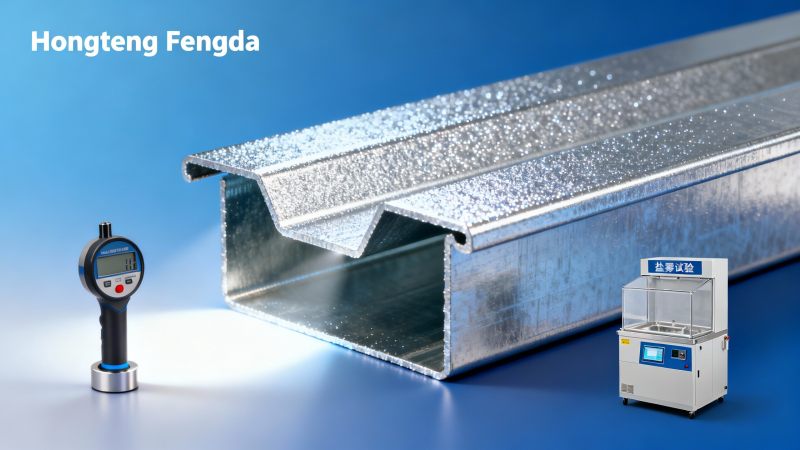
Testing the mechanical properties of galvanized steel channel involves systematic evaluation under both static and dynamic loads. The yield strength, tensile strength, elongation ratio, and hardness play a decisive role in determining load-bearing capability. For example, internal lab tests compliant with ASTM A370 and EN 10025 ensure that the structural sections meet or exceed the nominal values for construction-grade steel. Dimensional accuracy is verified using high-precision laser instruments; flatness and web thickness are recorded within tolerances of ±0.5 mm. The zinc coating, which serves as primary protection against corrosion, is tested through coating thickness gauges and adhesion tests following ISO 1460 and ASTM B571. Inspection reports are cross-referenced with project documentation to assure traceability. Hongteng Fengda maintains independent mechanical laboratories and corrosion chambers to replicate diverse climatic conditions, allowing predictive modeling of product performance. This approach not only guarantees product integrity but also supports engineering teams in designing for longer service life and reduced maintenance frequency. The testing process extends to verifying weldability, galvanic compatibility, and fatigue resistance under cyclic loading, providing comprehensive assurance that every galvanized steel channel will perform reliably under global usage scenarios.
Application Scenarios and Cross-Product Integration
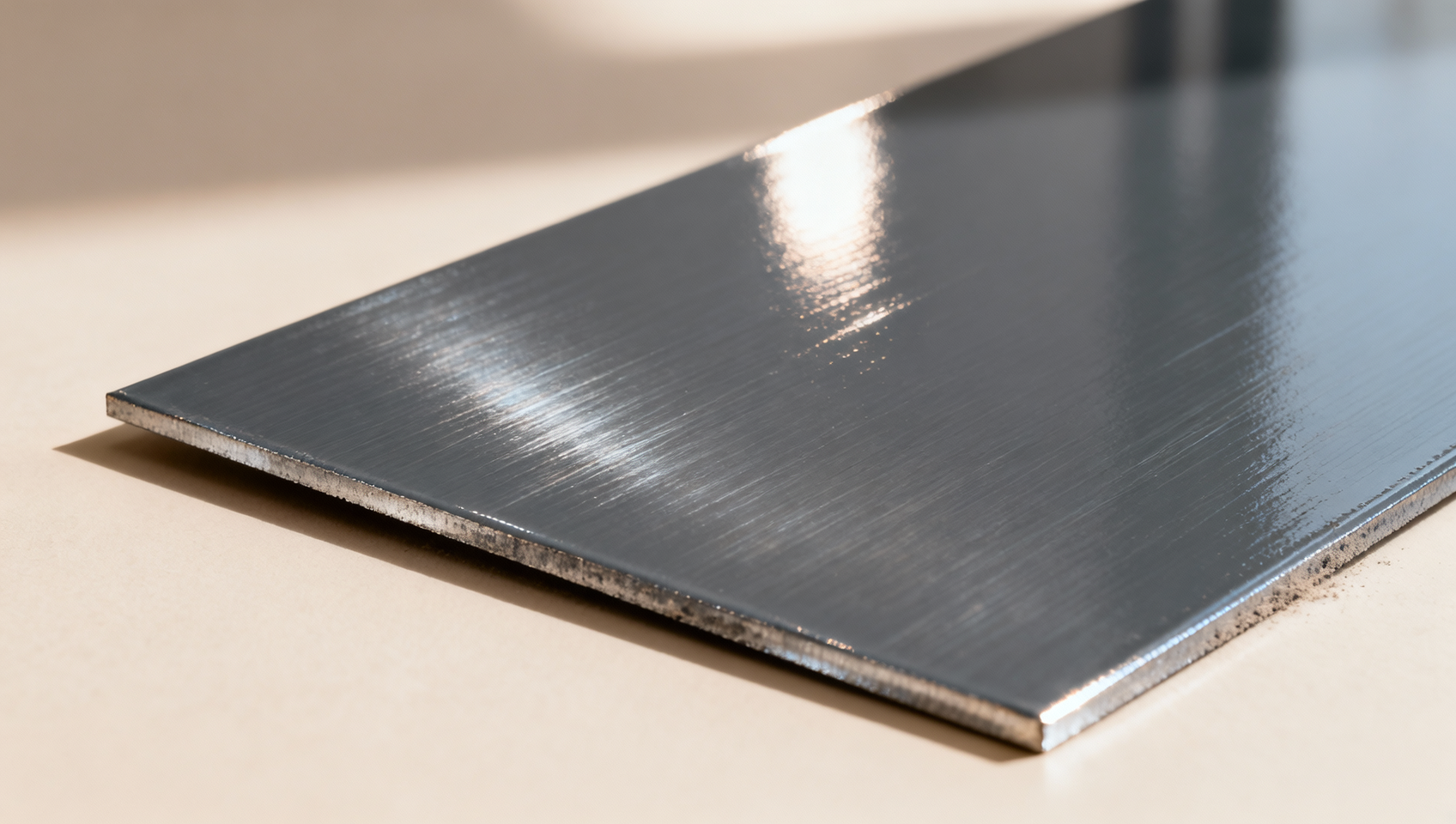
Galvanized steel channel serves as a versatile structural component across multiple fields—commercial buildings, highway guardrails, energy equipment frames, industrial racks, and hot-dip pipeline supports all rely on its balance of rigidity and corrosion resistance. Engineering managers choose these channels for both indoor and outdoor applications requiring robust mechanical capacity and long service life. Construction firms in coastal or chemical environments prefer galvanized profiles due to their superior rustproof performance compared with untreated carbon steel. In customized industrial solutions, Hongteng Fengda integrates complementary materials like the 304 Stainless Steel Plate, which demonstrates excellent corrosion resistance and metallurgical stability in chemical and food applications. By combining galvanized channels for structural framework and stainless plates for surface exposure layers, designers achieve both strength and aesthetic durability. This hybrid material strategy fulfills international safety regulations while optimizing cost-effectiveness. The 304 stainless variant, produced under grades 304 and 201 with tensile strength above 520 MPa and density around 7.93 g/cm³, highlights Hongteng Fengda’s technical depth in providing varied products for different industries. The integration of galvanized steel channel with stainless-steel components improves reliability across manufacturing, food processing, transportation, and shipbuilding projects. Buyers who value multi-material competence appreciate a supplier capable of delivering cohesive engineering solutions rather than isolated products.
Standards, Certification, and Compliance Framework
For any QC manager, mastery of international standard frameworks ensures accuracy when validating galvanized steel channels from different suppliers. Common applicable criteria include ASTM A123/A123M for zinc coating, EN ISO 1461 for hot-dip galvanizing, JIS G3192 for section dimensions, and GB/T 700 for base steel grades. Besides mechanical certification, environmental compliance plays an increasing role. RoHS and REACH adherence confirms that coatings do not contain excessive lead or hazardous substances. Hongteng Fengda maintains a full matrix of international certifications, including SGS and BV testing reports. These documents verify that batch coating thickness, adhesion quality, and tensile test outcomes conform to specification. The company’s internal laboratories utilize traceable calibration instruments inspected by authorized third parties to guarantee precision. Customers in Europe, North America, and the Middle East benefit from this transparency, which simplifies import inspection and reduces project risks. Furthermore, advanced digital traceability systems allow clients to retrieve inspection certificates via QR code scanning—providing instant access to coating profiles, dimensional records, and production dates. Through compliance discipline, Hongteng Fengda exemplifies how adherence to ASTM, EN, and GB standards transforms brand reputation into quantifiable market trust, cementing its status as a preferred structural steel supplier worldwide.
Procurement Guide and Cost Considerations
Selecting the most suitable galvanized steel channel involves balancing technical performance, price stability, and delivery reliability. Procurement professionals typically evaluate four key dimensions: material compliance with standards, surface finish quality, supplier capacity, and after-sales technical support. Choosing a manufacturer with in-house galvanizing equipment, automated cutting systems, and documented process control significantly reduces sourcing risks. Hongteng Fengda’s practical approach helps procurement teams benchmark prices while securing quality guarantees through ISO-certified systems. The cost-performance ratio of galvanized channel steel often surpasses that of painted or powder-coated profiles due to its lower lifetime maintenance. However, correct specification selection—such as coating mass (e.g., 275 g/m² or 450 g/m²), steel grade (Q235B, S235JR), and dimensional tolerance—directly influences both performance and budget. Engineers should also assess compatibility between galvanized channel and auxiliary materials like fasteners or stainless steel plates. Hongteng Fengda assists in technical matching and documentation review, providing mock-up samples before final procurement. Such professional cooperation enables decision-makers to minimize project downtime while guaranteeing consistent installation outcomes. The competitive advantage thus lies not purely in price but in transparent specification management and ongoing collaboration between supplier and buyer to achieve efficient, compliant steel sourcing strategies.
Case Studies and Quality Validation Practice
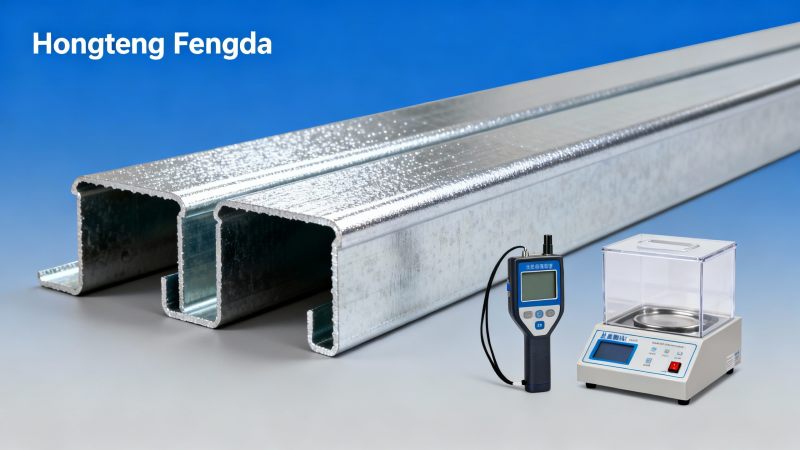
One illustrative example involves a Southeast Asian power plant project requiring over a thousand metric tons of structural sections. The engineering consultant mandated all galvanized steel channel products to pass third-party galvanized coating and bend tests before shipment. Hongteng Fengda implemented double-layer quality screening: in-house adhesion and salt-spray resistance verification followed by external SGS confirmation. The results indicated coating thickness consistently above 80 microns, exceeding the 70-micron requirement outlined in ASTM A123. During installation, the channels’ fit-up accuracy and consistent appearance enhanced construction efficiency and site aesthetics. Another successful practice occurred in a Middle Eastern logistics warehouse extension, where Hongteng Fengda supplied both galvanized channels and precision-finished stainless materials such as 304 Stainless Steel Plate. The combination allowed the client to optimize corrosion defense for outdoor supports and interior hygiene-critical areas in food packaging operations. After three years of service, inspection reports confirmed no coating peeling or corrosion spots, demonstrating the company’s long-term value proposition. These real-world cases highlight how strict quality control, immediate inspection feedback, and global standard compliance converge to guarantee durable performance, ultimately safeguarding end-customer investments while reinforcing trust in China’s professional structural steel manufacturing capability.
FAQ and Common Misconceptions
Many professionals occasionally misunderstand the purpose and definition of galvanizing quality standards. One frequent misconception is that a thicker zinc layer automatically means better quality. In reality, coating uniformity and adhesion matter more than simple thickness, since excessively heavy coatings may crack during bending or fabrication. Another myth claims that galvanized steel channel does not need maintenance at all. While galvanizing extends service life, periodic cleaning and inspection remain necessary to detect mechanical damage. QC managers also sometimes overlook the importance of coating continuity at weld joints, which can become early corrosion centers. Therefore, appropriate post-weld touch-up and visual verification procedures should be part of quality inspection checklists. When evaluating suppliers, another mistake is focusing solely on the lowest cost without verifying measured data reports. Reliable manufacturers like Hongteng Fengda provide comprehensive documentation including mill test certificates, galvanizing bath analysis, and third-party validation results. Clarifying these aspects during procurement eliminates post-delivery disputes. Finally, end users often wonder if galvanized steel channel can be mixed with stainless components—yes, it can if insulating gaskets prevent galvanic reactions. Thus, establishing collaborative technical communication between project engineers and manufacturers ensures that every product meets both specification and performance targets without compromise.
Trend and Future Insights
The evolution of galvanized steel channel production is moving toward automation, sustainability, and digital twin inspection systems. Smart galvanizing lines already integrate real-time temperature monitoring, robotic dipping, and AI-based image analysis to detect coating anomalies. The global industry also sees a growing emphasis on green zinc alloys that reduce energy consumption and minimize waste. Digital certification platforms, based on blockchain and cloud archiving, will soon replace traditional paper test reports, offering secure, verifiable data exchange among producers, inspectors, and buyers. Hongteng Fengda participates actively in these innovations, adopting automated quality records that streamline QC reporting and cut administrative delays. In parallel, structural engineers increasingly require performance simulation models showing fatigue behavior under dynamic loading conditions, encouraging manufacturers to run advanced finite element analysis. As construction projects adopt modular and prefabricated methods, galvanized steel channel will remain a core modular element due to its precise dimensional consistency. The next decade will likely witness extended applications in renewable-energy infrastructures, solar mounting systems, and smart factory installations, where material longevity and precision tolerance are paramount. Through continued R&D and standard alignment, Hongteng Fengda reinforces its mission to supply future-ready galvanized steel solutions that meet evolving global expectations.
Why Choose Hongteng Fengda
Hongteng Fengda stands as a trusted structural steel manufacturer and exporter from China, combining decades of know-how with modern automation. Its product lines of angle steel, channel steel, beams, and cold-formed sections are supported by strict internal QC systems and internationally accredited laboratories. Customers benefit from complete specification coverage, reliable logistics, and technical assistance throughout project execution. For QC managers, partnering with Hongteng Fengda means gaining a transparent, cooperative counterpart familiar with ASTM, EN, JIS, and GB compliance, capable of customizing documentation to satisfy local audit requirements. For procurement specialists, it provides stable cost control and flexible lead time arrangements. Engineers and project managers gain assurance that every galvanized steel channel delivered will perform exactly as designed. To explore technical solutions or request detailed testing reports, interested parties are encouraged to contact Hongteng Fengda’s expert service team for tailored guidance and quotations. Partnering with such a professional manufacturer ensures long-term reliability, reduced project risk, and genuine confidence in every structural steel component supplied.
- channel steel
- angle steel
- steel supplier
- galvanized steel
- ASTM A36
- structural steel
- Galvanized Channel Steel
- galvanized channel steel
- Structural Steel
- stainless steel plate
- 304 stainless steel plate
- stainless plate
- ss plate
- ss steel plate
- steel plate
- stainless steel plates
- Profile
- galvanized steel channel
- Galvanized
- Steel Channel
- carbon steel
Related recommendations
 How long does acero prepintado retain gloss and color stability in direct desert sunlight?Acero prepintado gloss & color stability in desert sun? Discover real-world performance data, PVDF vs. polyester longevity, and spec-critical insights for GCC projects.
 Does acero pregalvanizado maintain coating integrity after cold bending to 90 degrees?Acero pregalvanizado maintains coating integrity after 90° cold bending — when engineered right. Discover how Hongteng Fengda guarantees real-world performance, adhesion & corrosion resistance.
 Do the advantages of galvanized steel include reduced fire risk compared to untreated carbon steel?Advantages of galvanized steel include measurable fire-risk reduction vs. untreated carbon steel—learn how zinc delays ignition, buys critical escape time, and enhances safety without false 'fireproof' claims.
 How much does 2 inch ss pipe price increase when upgrading from Schedule 40 to Schedule 80 for high-pressure systems?2 inch ss pipe price increases 18–35% when upgrading from Sch 40 to Sch 80—discover why, when it’s truly needed, and how to avoid overpaying.
Please give us a message


Please enter what you want to find